Comparing quantities Adding up to 50 Worksheets
3 filtered results
-
From - To
Welcome to our "Comparing Quantities Adding up to 50 Worksheets" page! Designed for early grade learners, these engaging worksheets focus on developing essential math skills through comparison exercises involving quantities that total up to 50. Students will explore greater than, less than, and equal concepts while honing their number sense. Our visually appealing and interactive worksheets foster critical thinking and reinforce the understanding of relationships between numbers. Ideal for classroom or home practice, these resources support diverse learning styles. Help your child build confidence in math as they enjoy hands-on practice comparing quantities. Download and start exploring today!
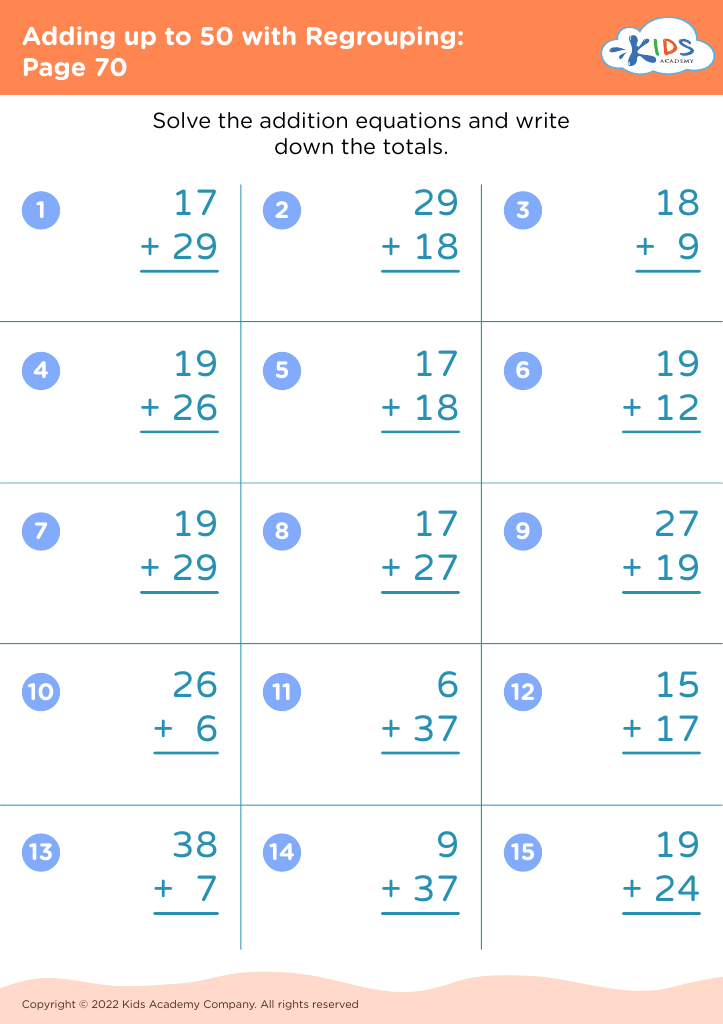
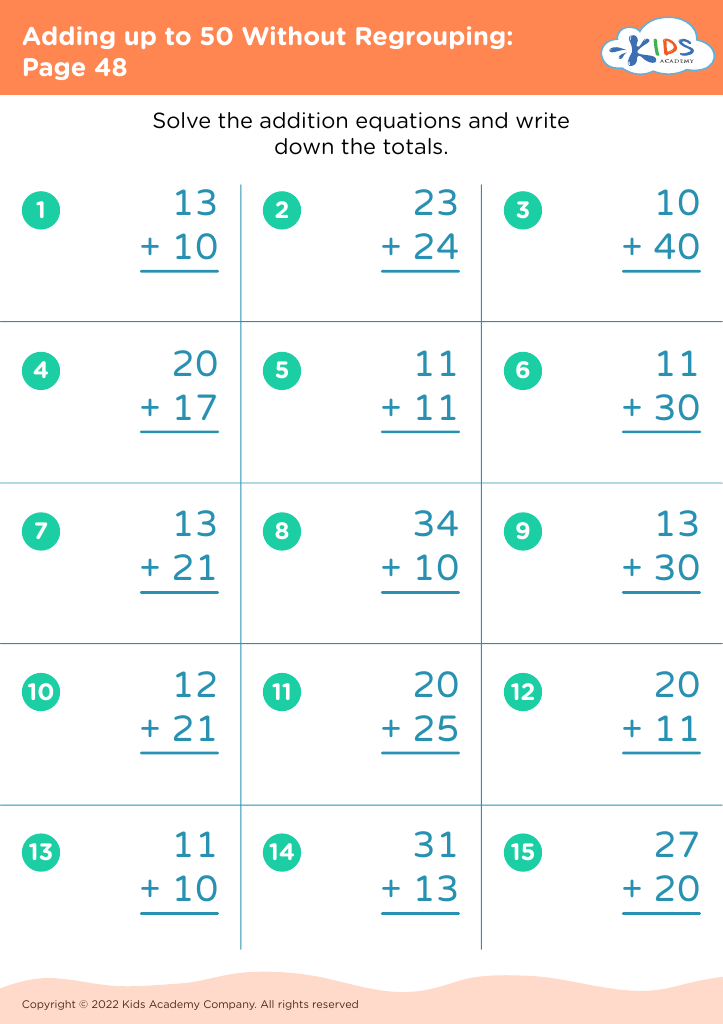
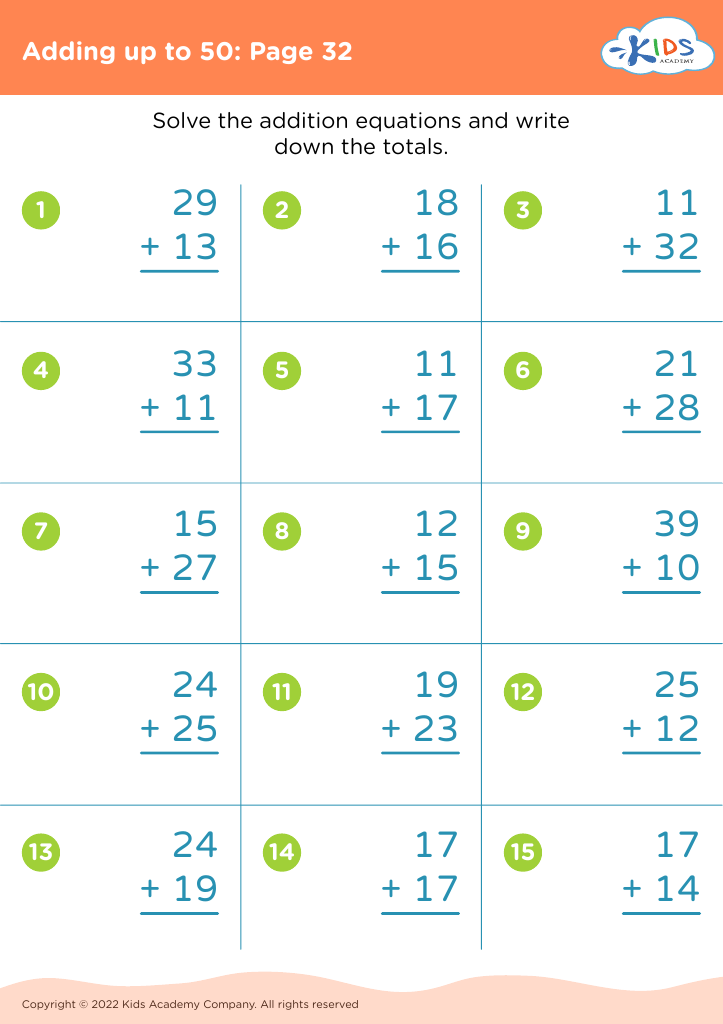




Understanding how to compare quantities, especially when adding up to 50, is crucial for young learners and their development. Firstly, this skill forms the foundation for basic arithmetic, which is essential in everyday life— from grocery shopping to cooking. Children who grasp this concept are better equipped to handle financial literacy later on, learning to manage budgets and understand expenditures.
Moreover, comparing quantities enhances critical thinking skills. It teaches children how to evaluate different amounts, fostering analytical skills that are vital both in academics and real-life problem solving. These skills encourage them to develop strategies for addition, helping them recognize patterns and relationships between numbers.
Additionally, as children learn to add up to 50, they are working on memory and number recognition, which supports their overall cognitive development. Teachers and parents who pay attention to these skills can provide tailored support, helping children gain confidence in their mathematical abilities.
Fostering an understanding of comparing quantities also supports collaborative learning. Children can engage in discussions, collaborate with peers, and learn to explain their reasoning, all of which contribute to social and communication skills. Thus, developing these mathematical skills is vital for both academic success and personal growth.








