
Develop fine motor skills Adding up to 50 Worksheets
4 filtered results
Difficulty Level
Grade
Age
-
From - To
Subject
Activity
Standards
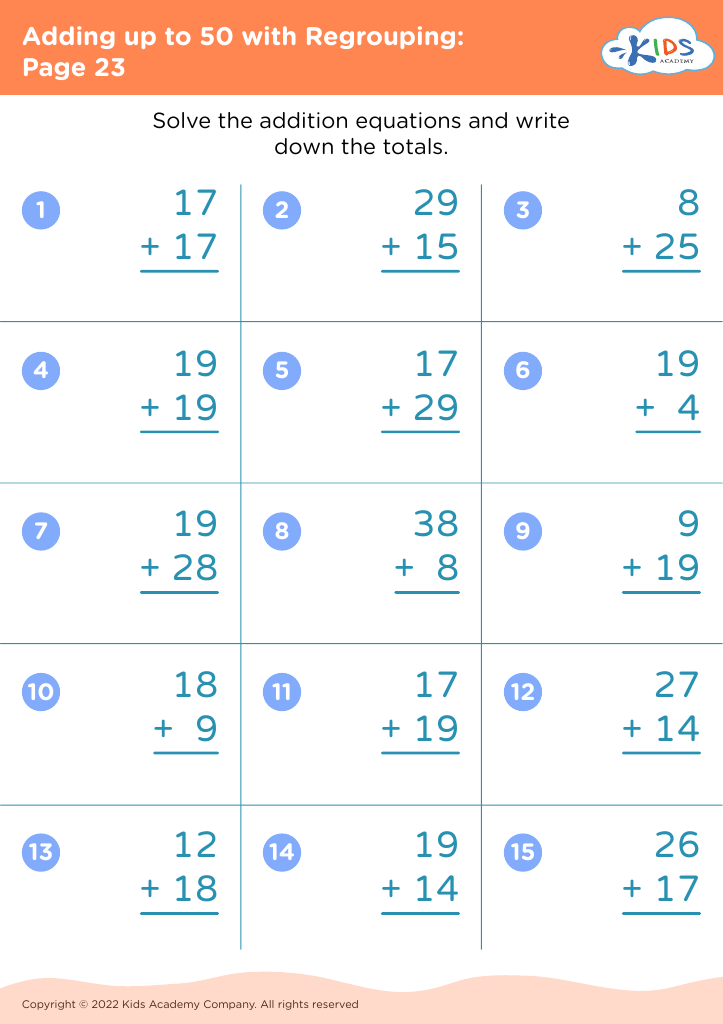
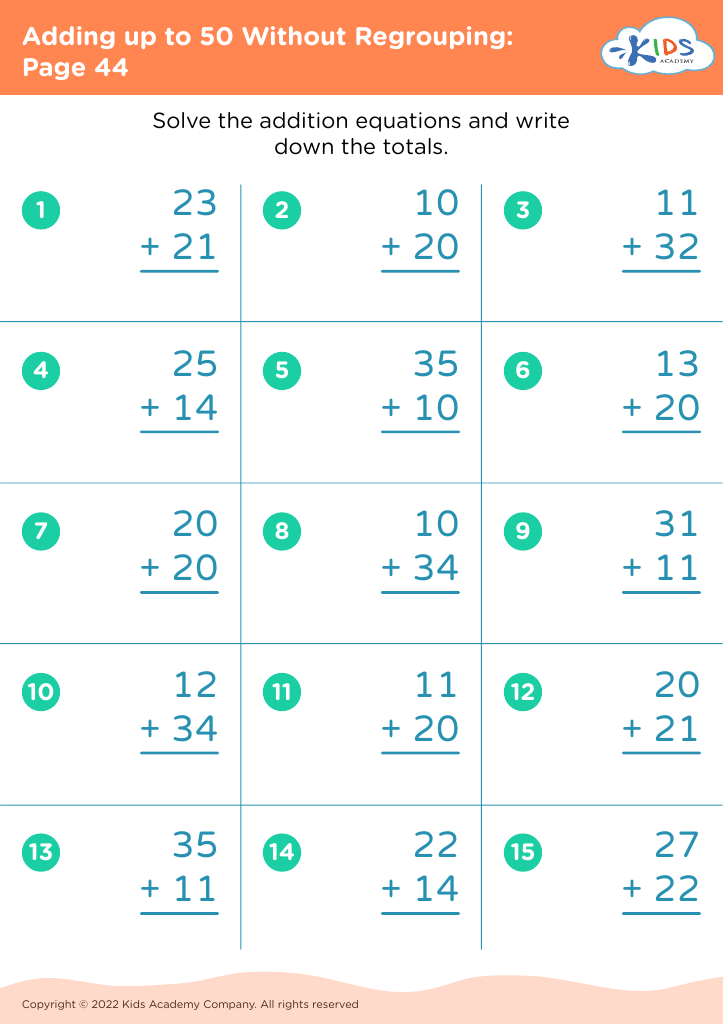
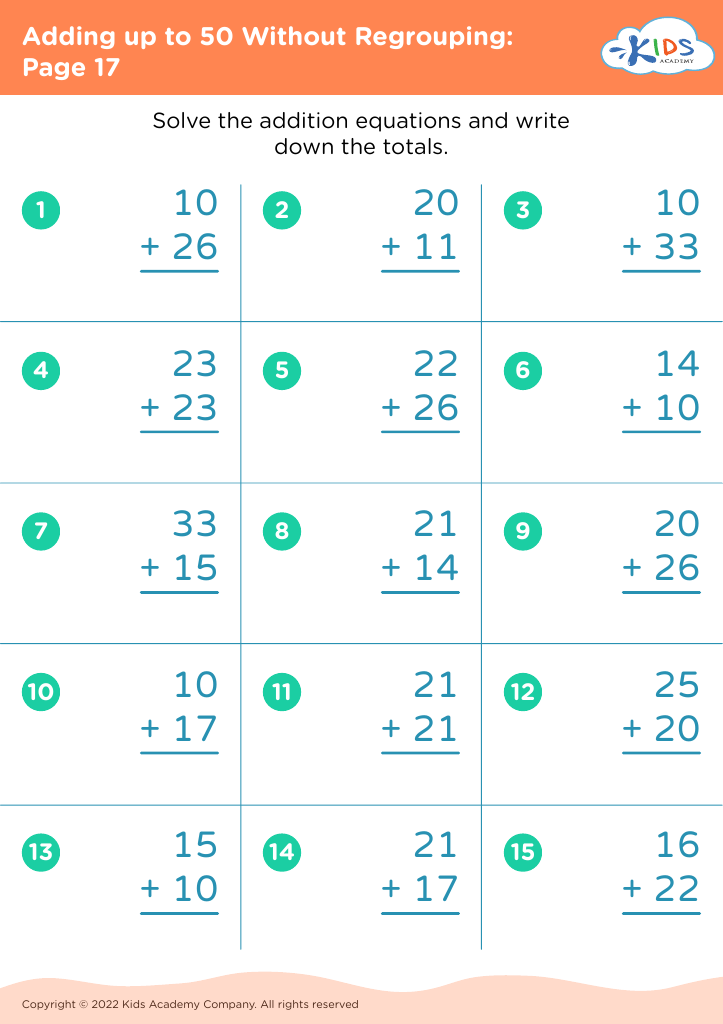
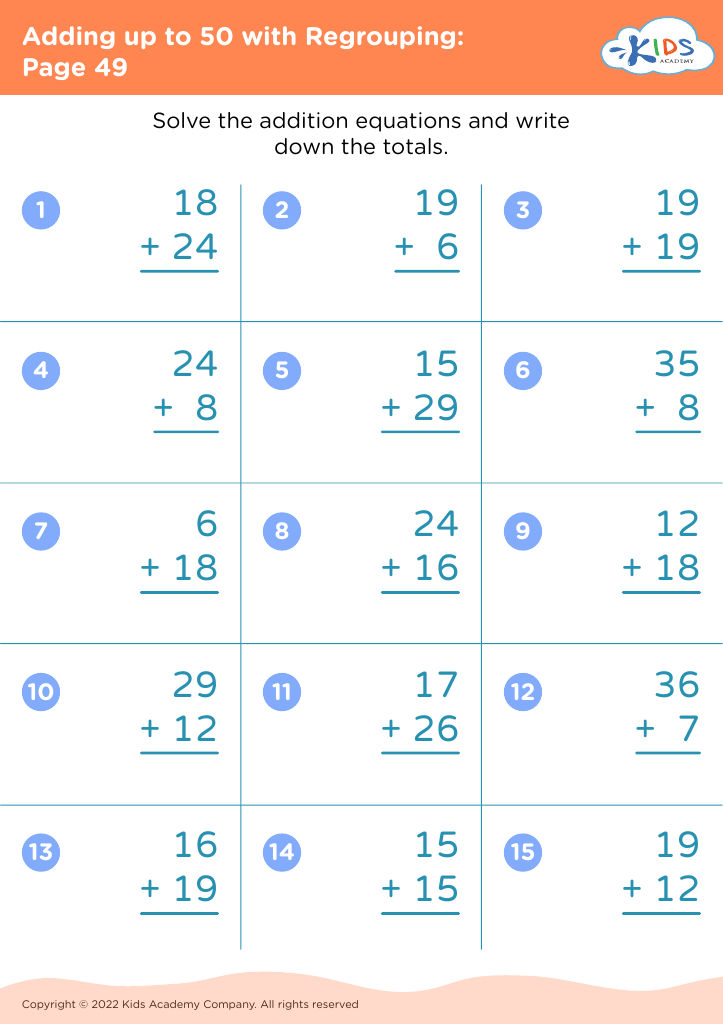
Enhance your child's fine motor skills while introducing them to addition with our "Adding Up to 50 Worksheets." Designed for early learners, these engaging worksheets combine math practice with activities that develop dexterity and hand coordination. Each worksheet features fun designs and exercises that encourage children to write, draw, and manipulate objects, fostering essential skills needed for writing and self-care. By combining fine motor skill development with math, your child will become more confident in both areas. Perfect for classrooms, homeschool settings, or extra practice at home, these worksheets offer a creative and educational way to learn and grow. Start today!
Favorites
With answer key
Interactive
Join Kids Academy for Free
Who is primarily going to use this learning content?




Developing fine motor skills in young children is crucial, as these skills are foundational for various aspects of their growth and learning. Fine motor skills involve the coordination of small muscles in the hands and fingers, which is essential for tasks such as writing, typing, buttoning clothes, and using utensils.
For parents and teachers, fostering these skills can enhance a child's confidence and independence. Children who struggle with fine motor tasks may become frustrated, which can hinder their overall learning and participation in classroom activities. By supporting fine motor development, adults can help children gain competence in tasks that contribute to their academic success, particularly in literacy and math.
Moreover, engaging in activities that strengthen fine motor skills, such as cutting with scissors, playing with building blocks, or crafting, also promotes cognitive development, problem-solving abilities, and creativity. These playful activities can foster visual and spatial awareness, crucial for later skills in science and math.
Ultimately, emphasizing fine motor skill development in early childhood not only prepares children for immediate tasks but lays the groundwork for future learning and personal growth, making it essential for parents and educators to prioritize.








