Fraction Addition Adding up to 50 Worksheets
5 filtered results
-
From - To
Unlock the joy of math with our "Fraction Addition Adding up to 50 Worksheets." These expertly designed printable worksheets help young learners grasp the basics of fraction addition while navigating numbers that sum up to 50. Ideal for enhancing classroom learning or supplementing students' practice at home, each worksheet features engaging problems that build confidence and mastery in math. With colorful visuals and step-by-step problems, these resources make learning fraction addition both effective and enjoyable. Perfect for early graders seeking a fun and educational boost in their math skills. Download now and watch your students thrive!
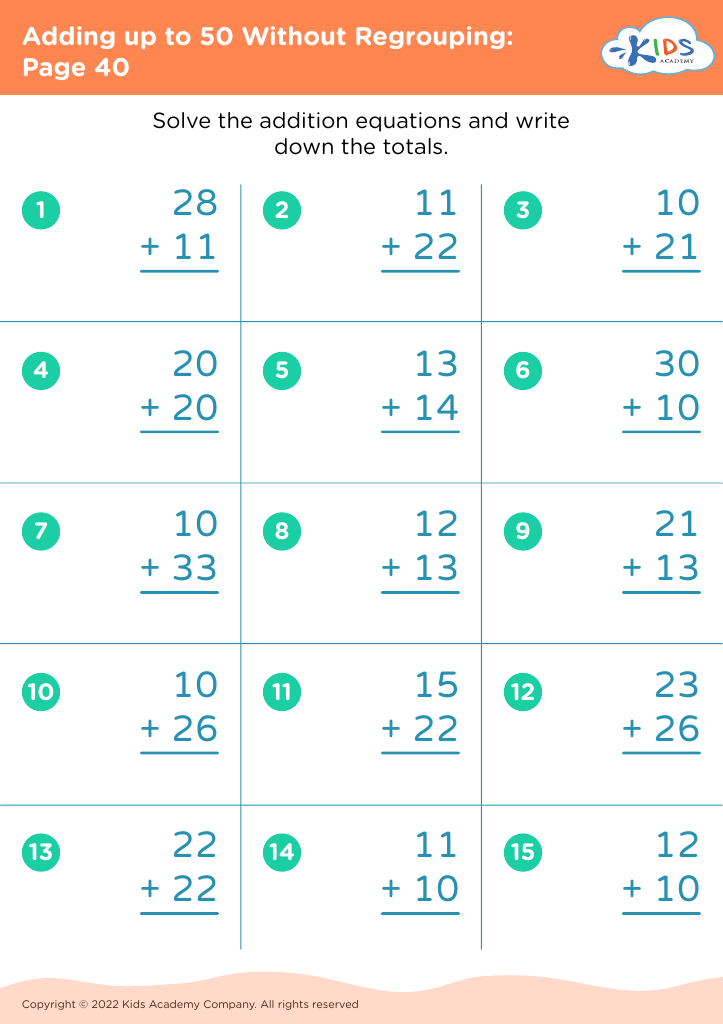
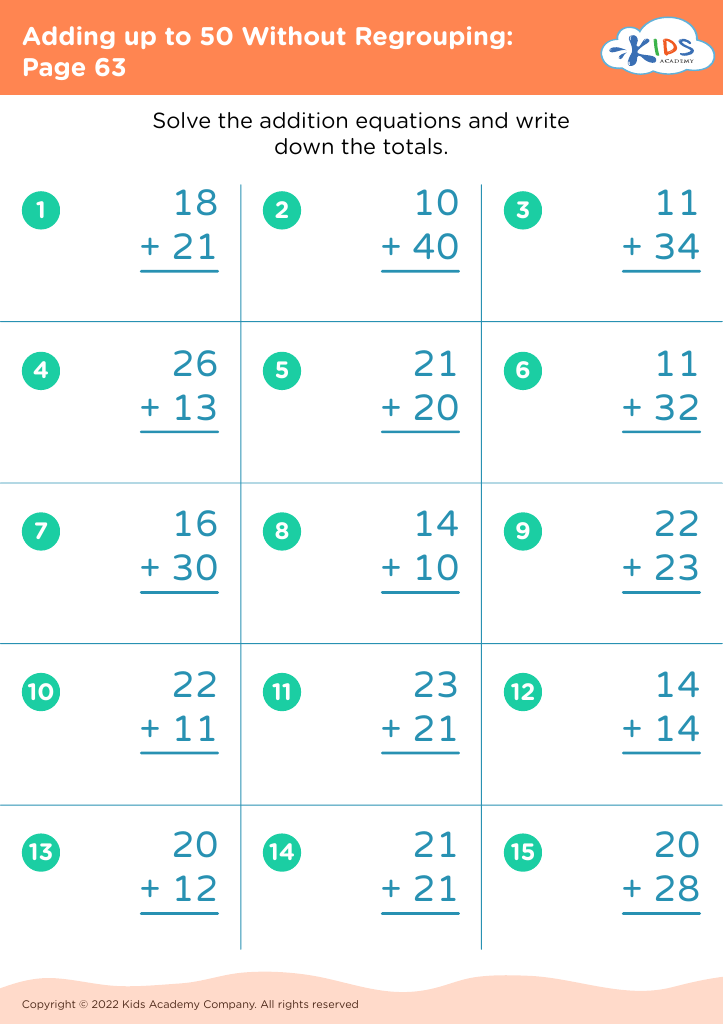
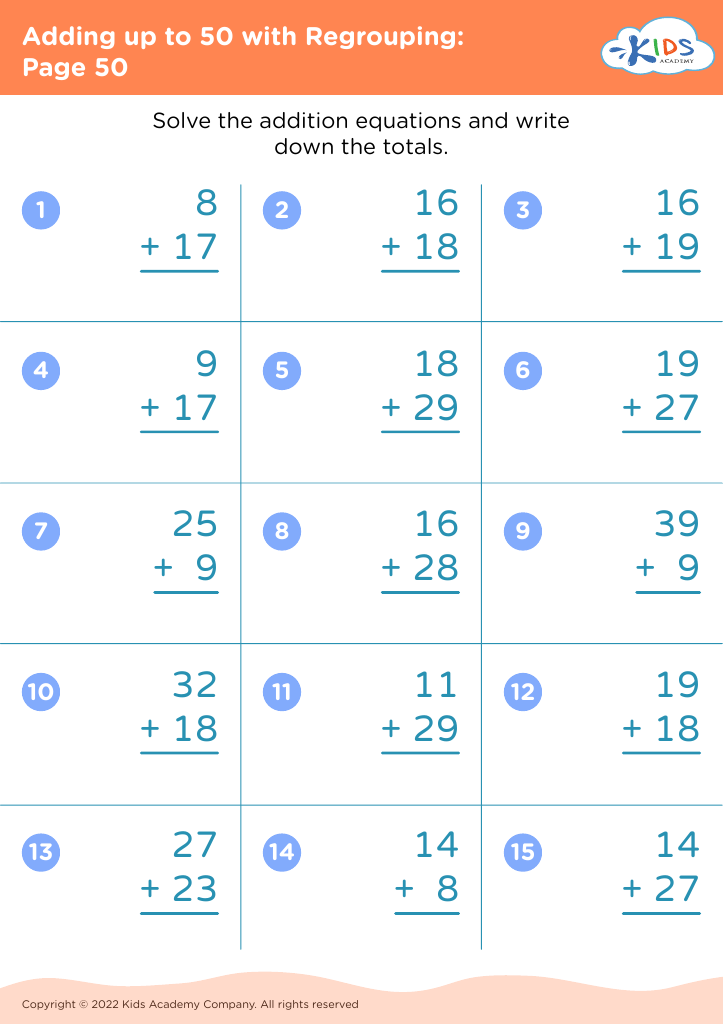
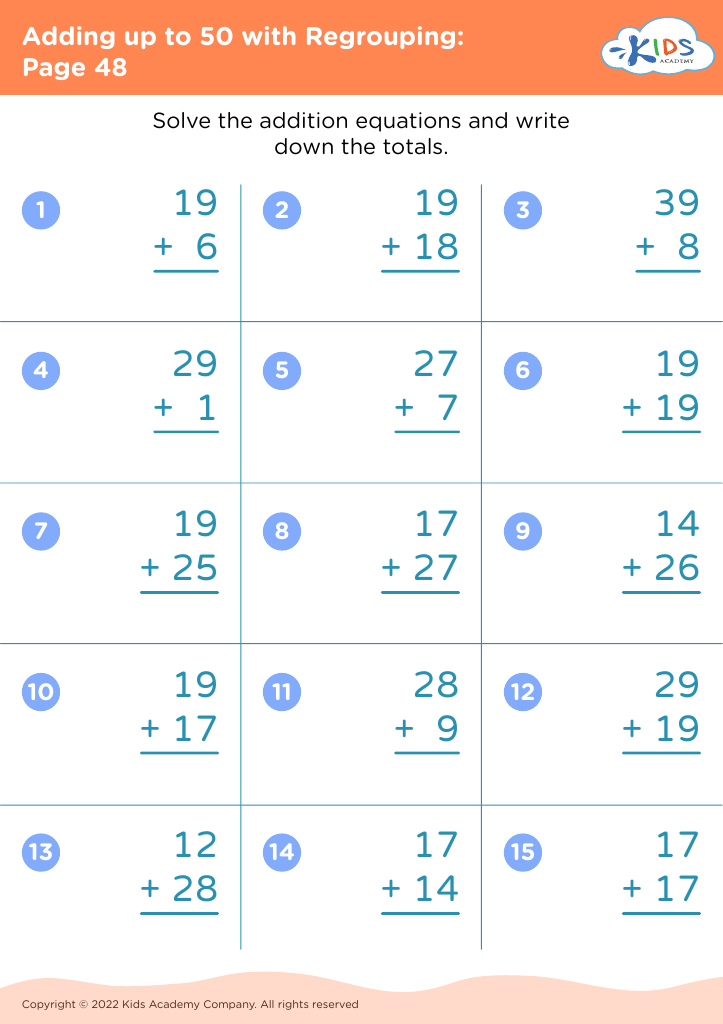
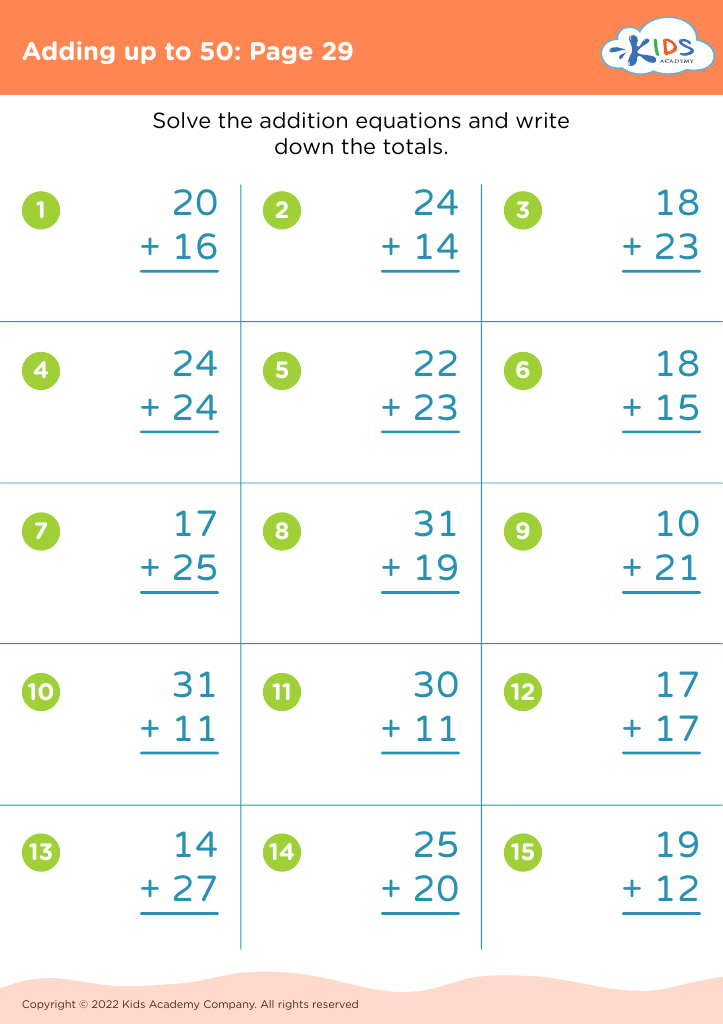




Understanding fraction addition is crucial for students because it lays the foundation for advanced mathematical concepts and daily life skills. For parents and teachers guiding young learners, focusing on adding fractions up to equivalent values like 50 can make abstract concepts more tangible and manageable.
Firstly, fraction addition enhances numeracy skills that are genuinely applicable in real life—cooking, crafting, splitting bills, or even understanding proportions in various tasks. Grasping how smaller parts combine into wholes and larger sums makes it easier for kids to tackle real-world problems.
Secondly, fraction addition signals a deep level of comprehension in mathematics. It's not merely about crunching numbers but about understanding parts, wholes, and how they interact. This comprehension improves logical thinking and problem-solving skills, essential across subjects and activities.
Focusing on sums that can combine up to 50 helps keep the examples practical yet challenging, allowing children to recognize patterns and build confidence. Encouraging practice in this area will cultivate a positive mathematical mindset, making more complex concepts approachable as they progress in their education.
In essence, when adults stress the value of learning fraction addition, they aren't just teaching math—they are enhancing life skills, practical logic, and a solid academic foundation.








