
Fraction simplification Adding up to 50 Worksheets
20 filtered results
Difficulty Level
Grade
Age
-
From - To
Subject
Activity
Standards
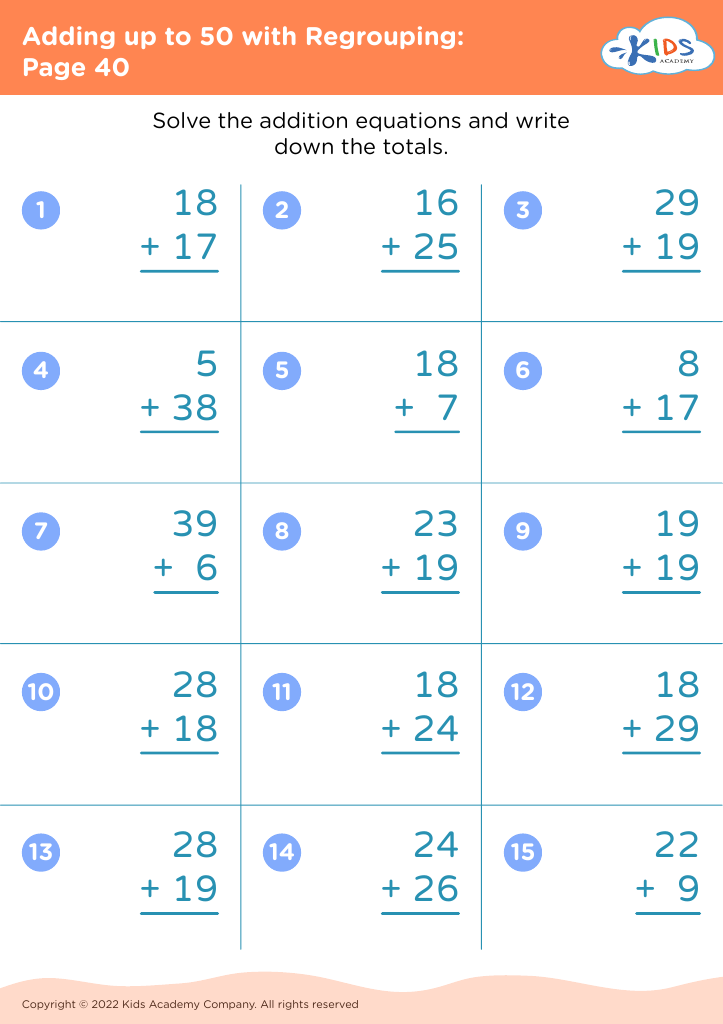
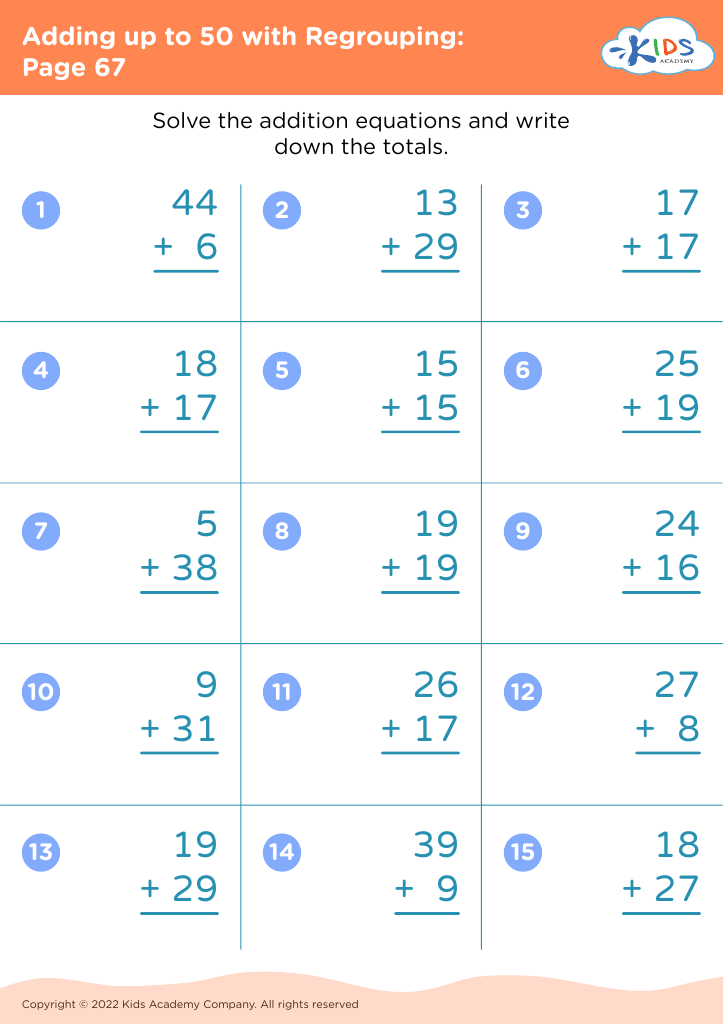
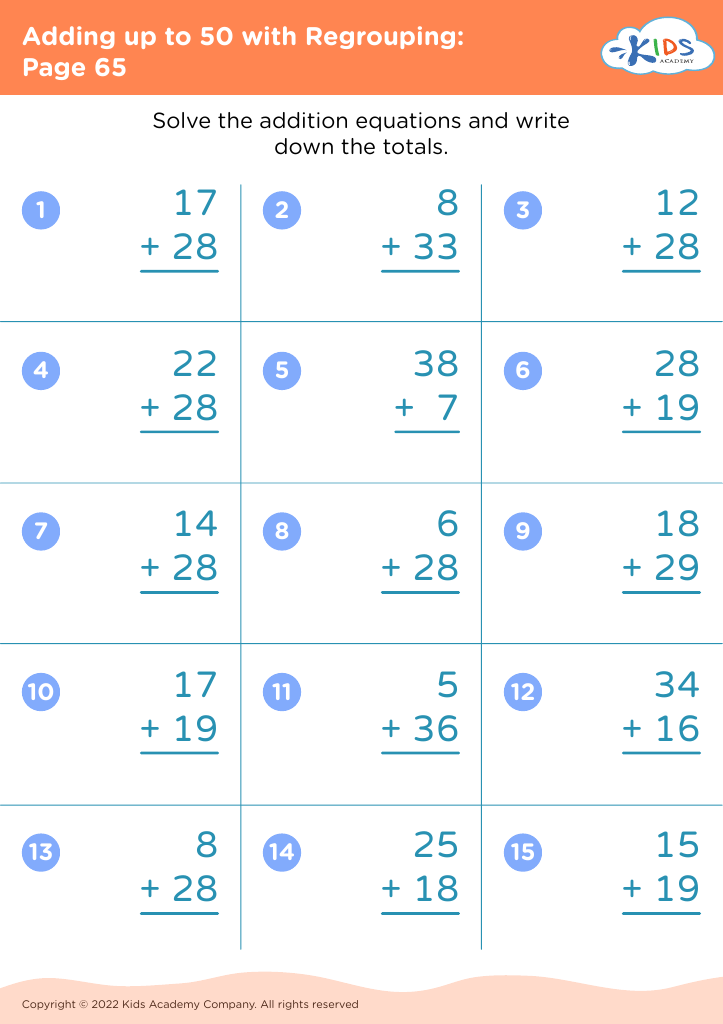
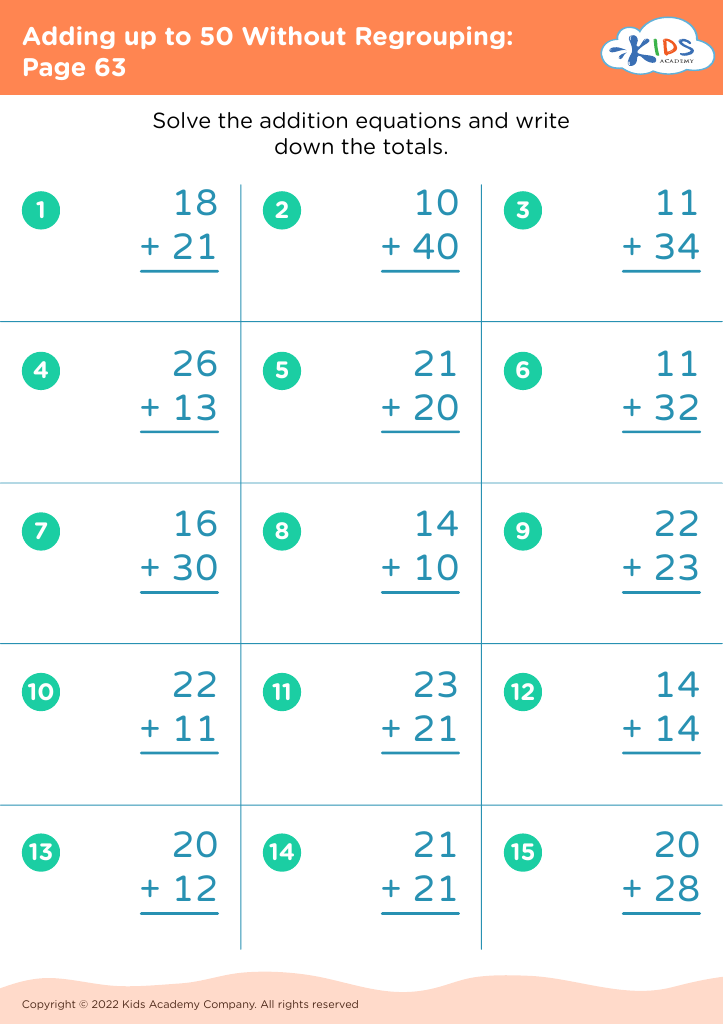
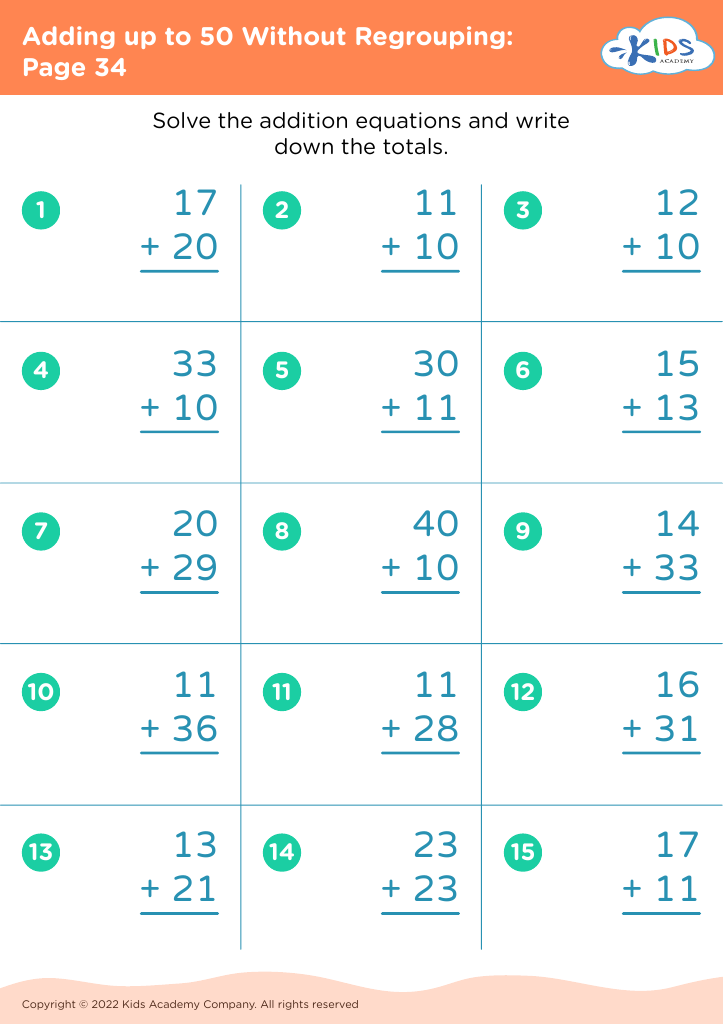
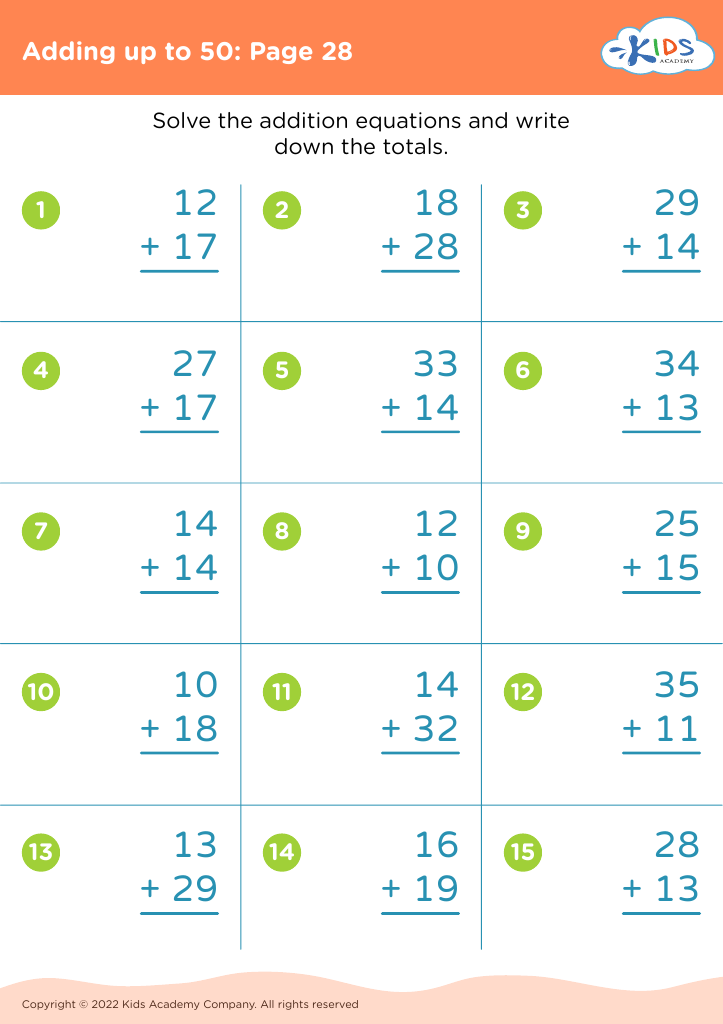
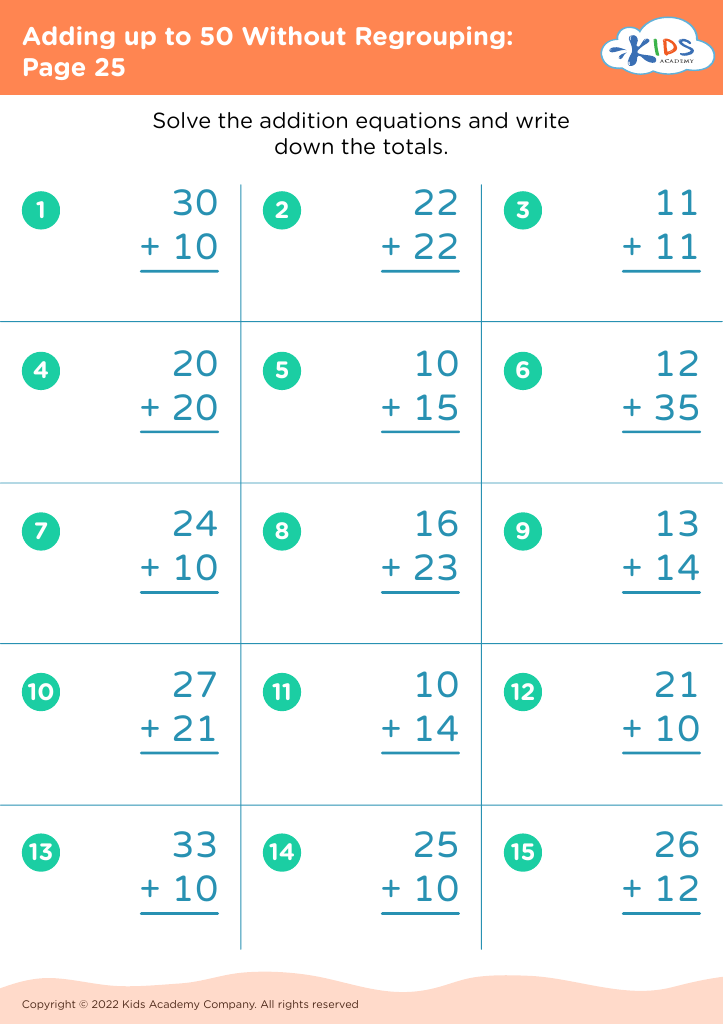
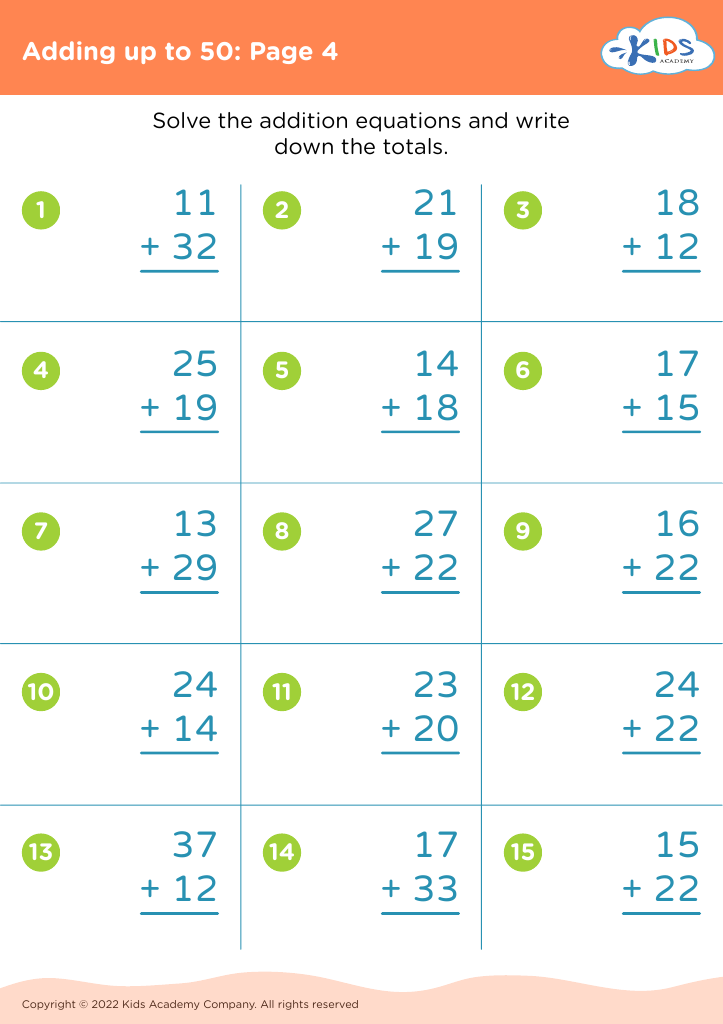
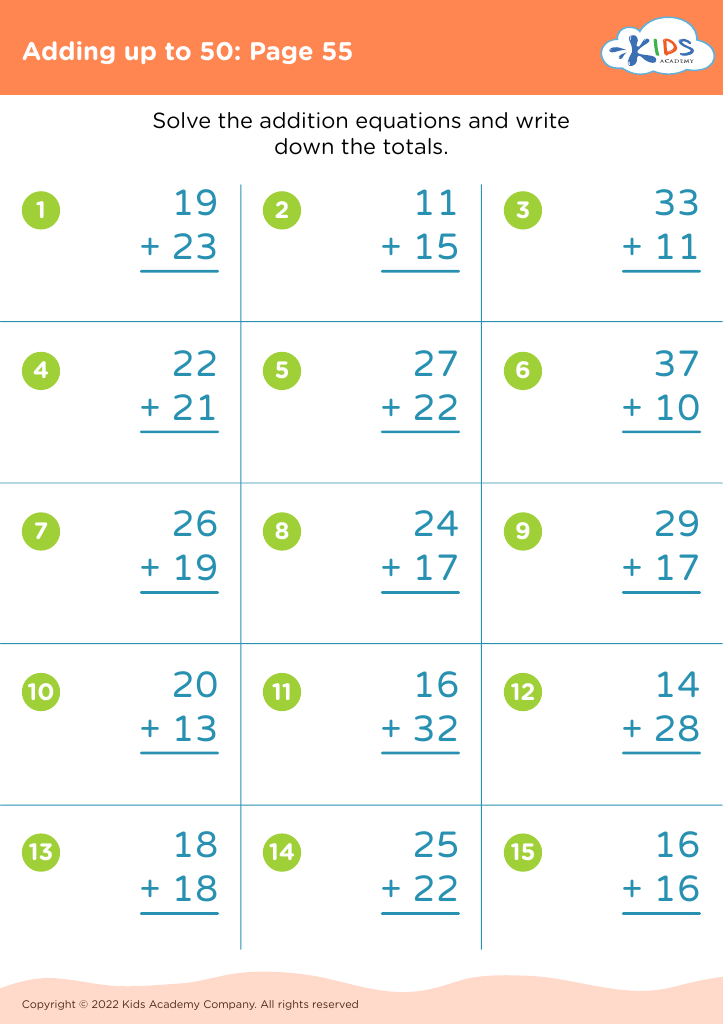
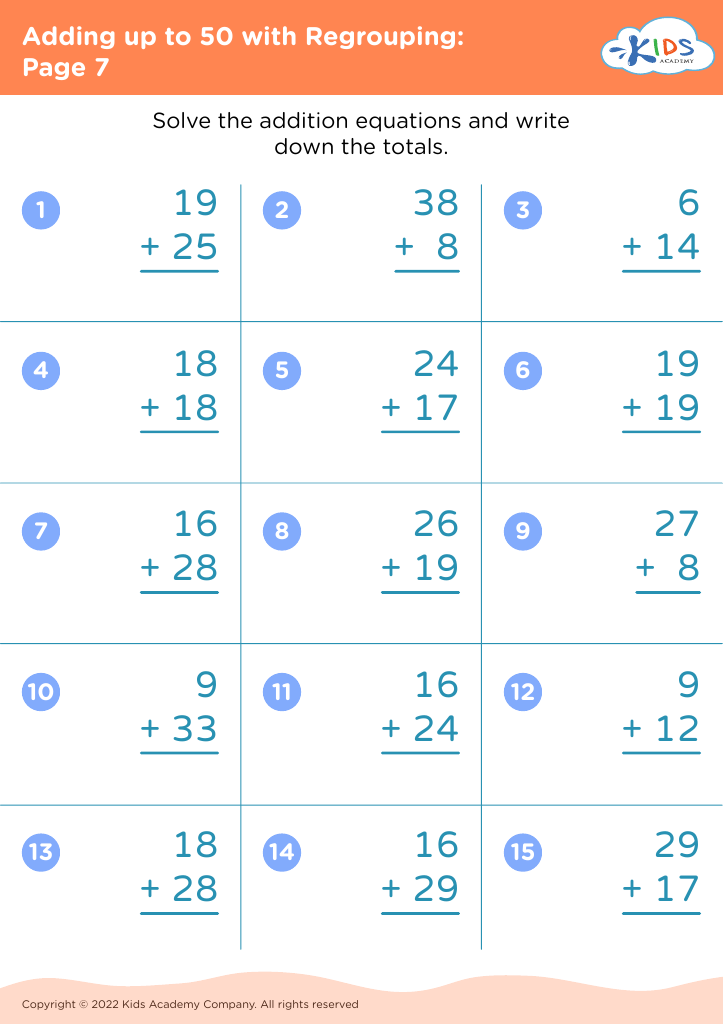
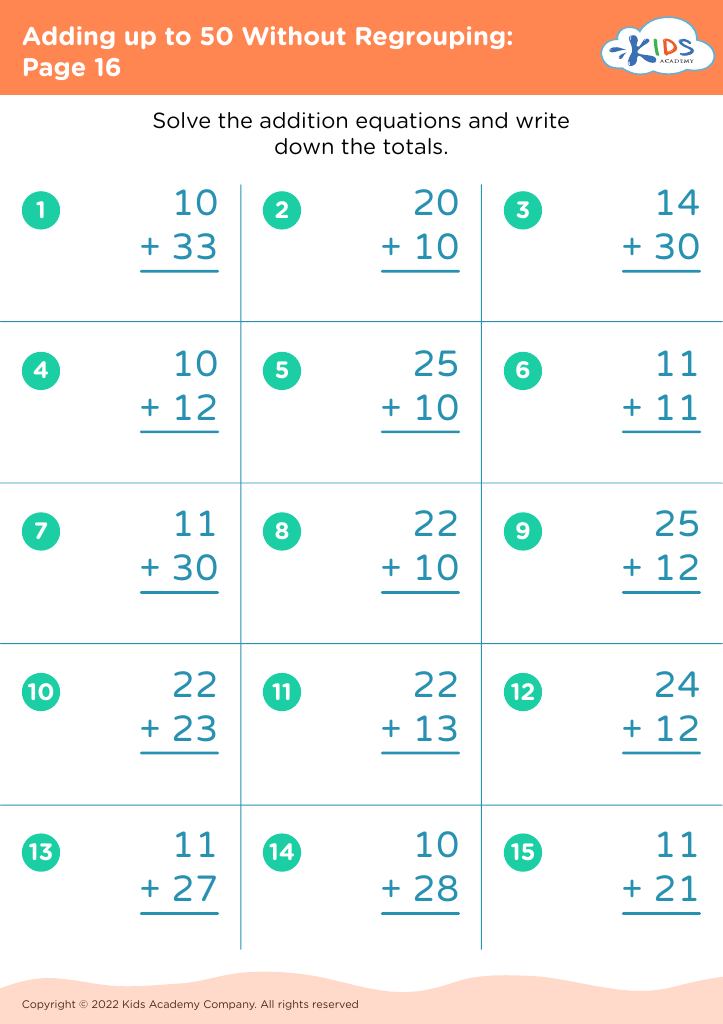
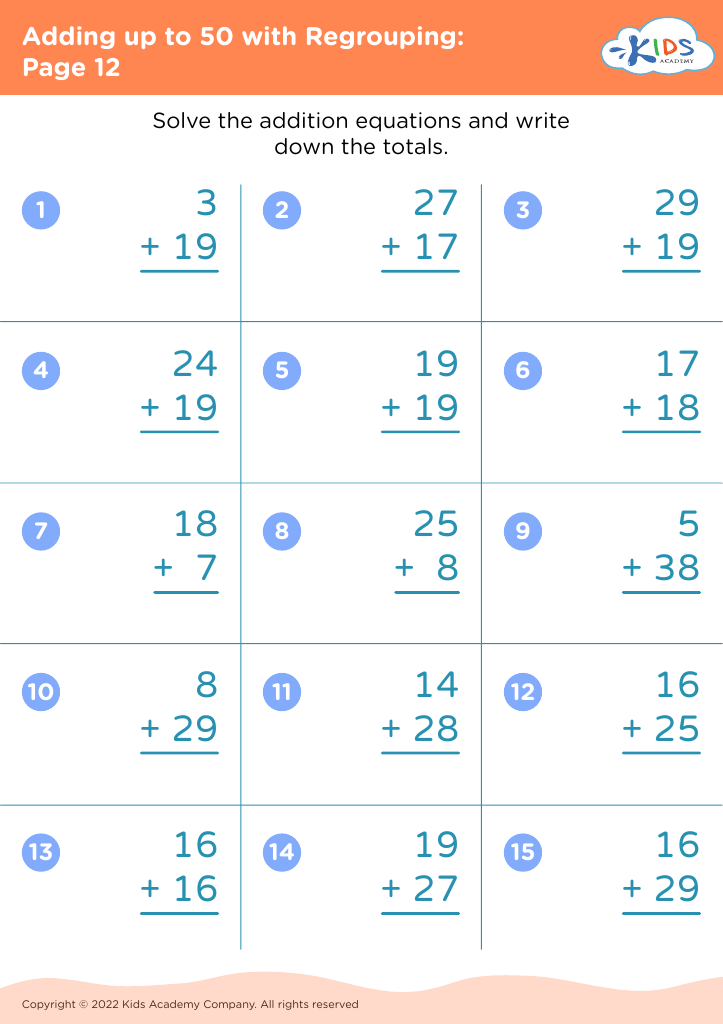
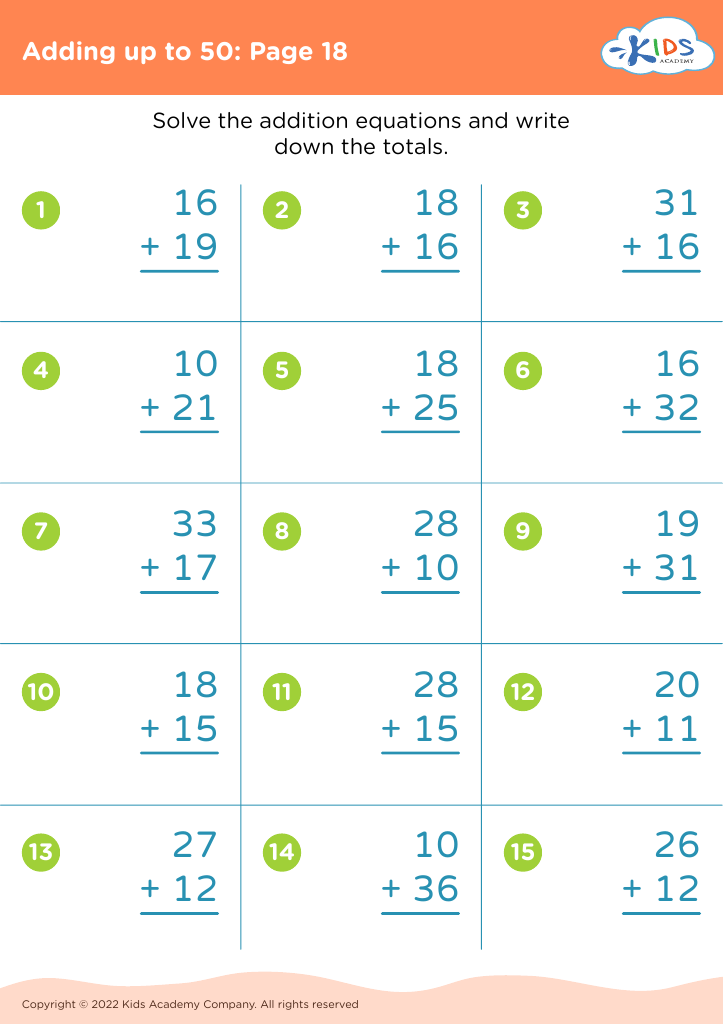
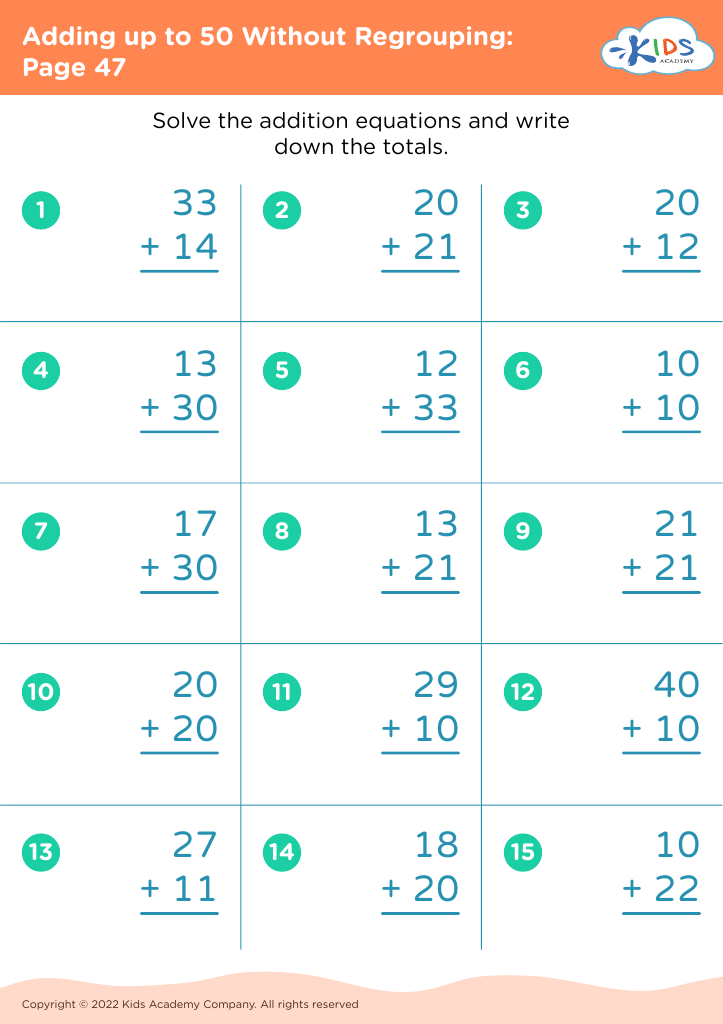
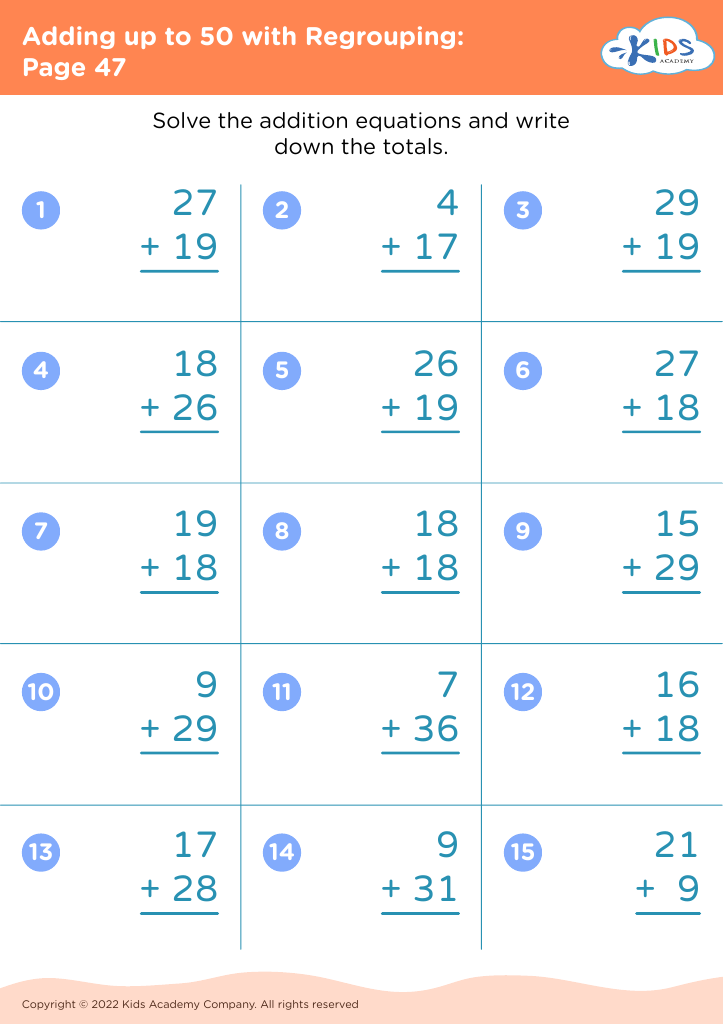
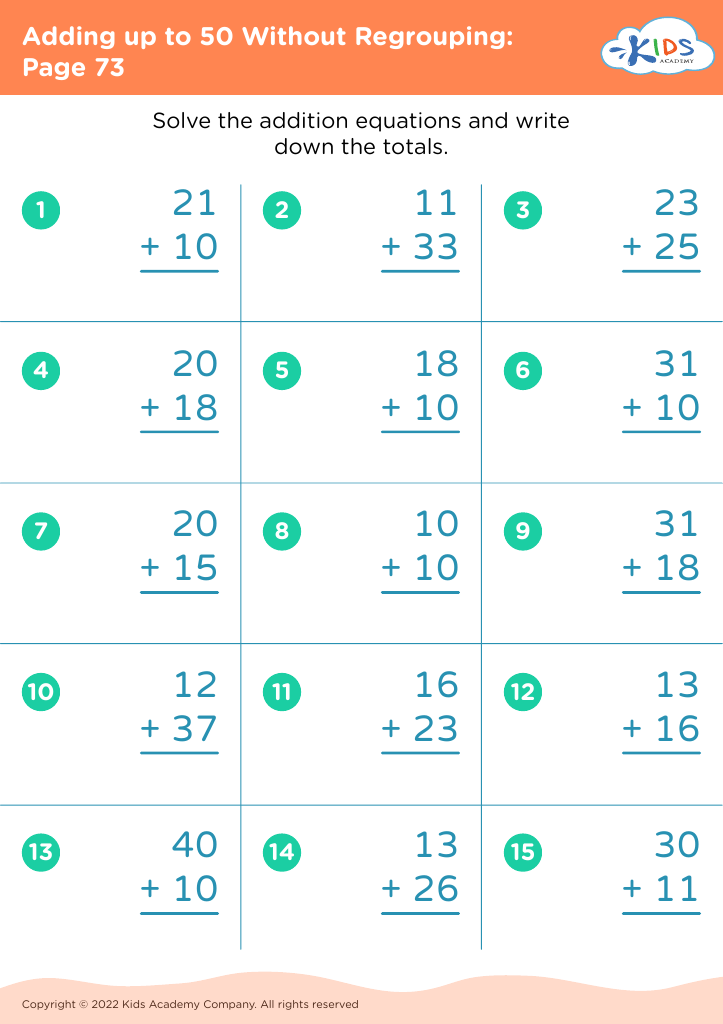
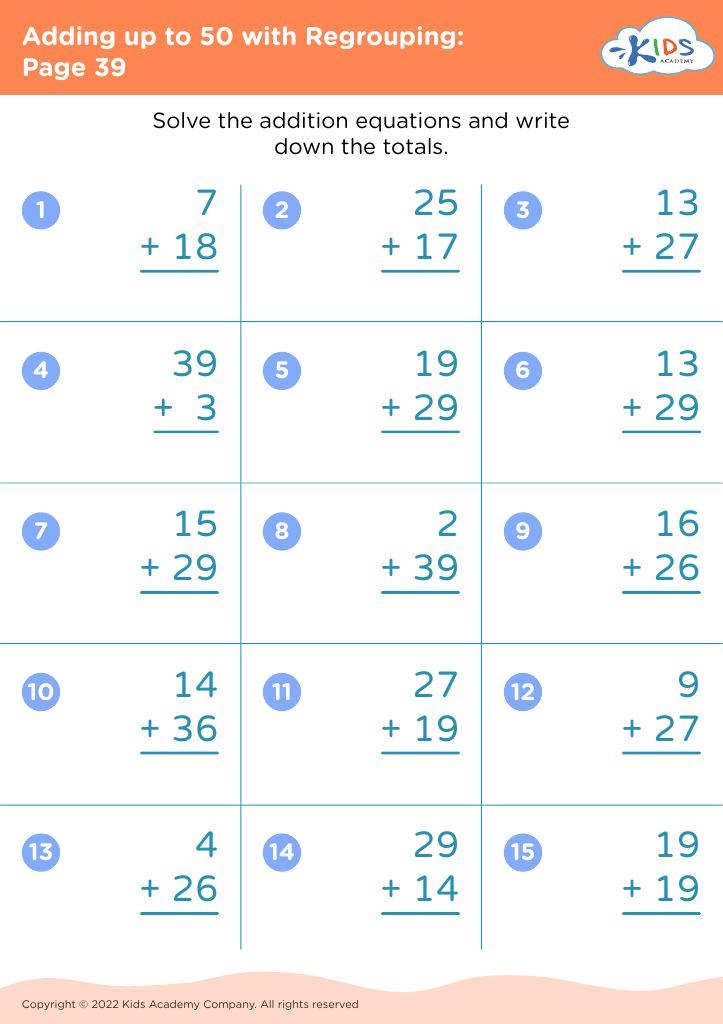
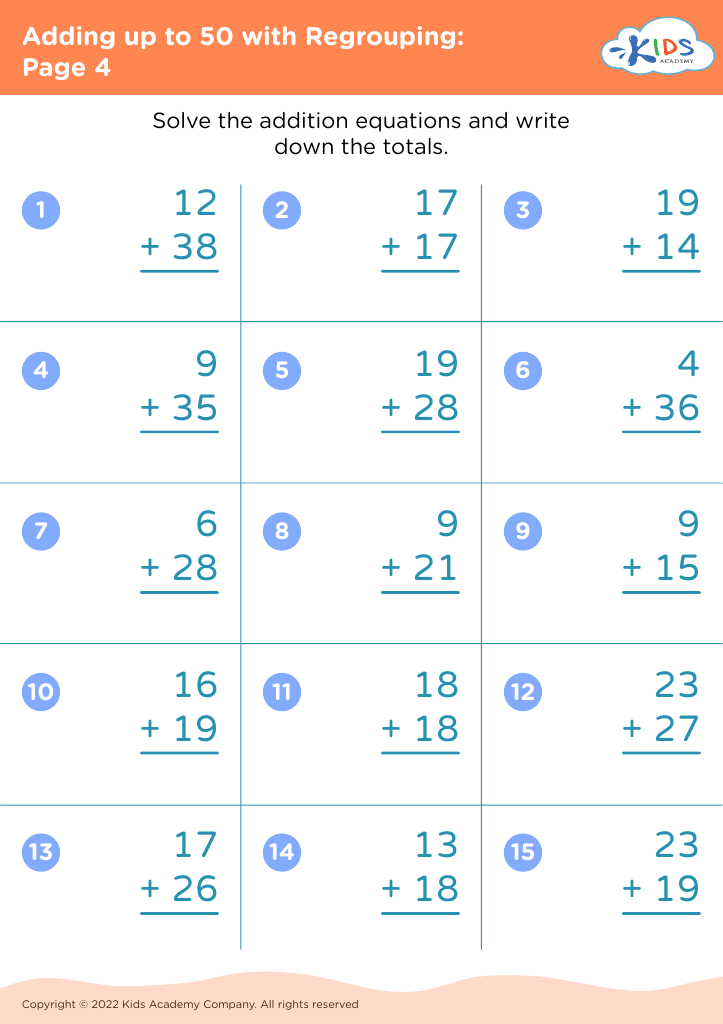
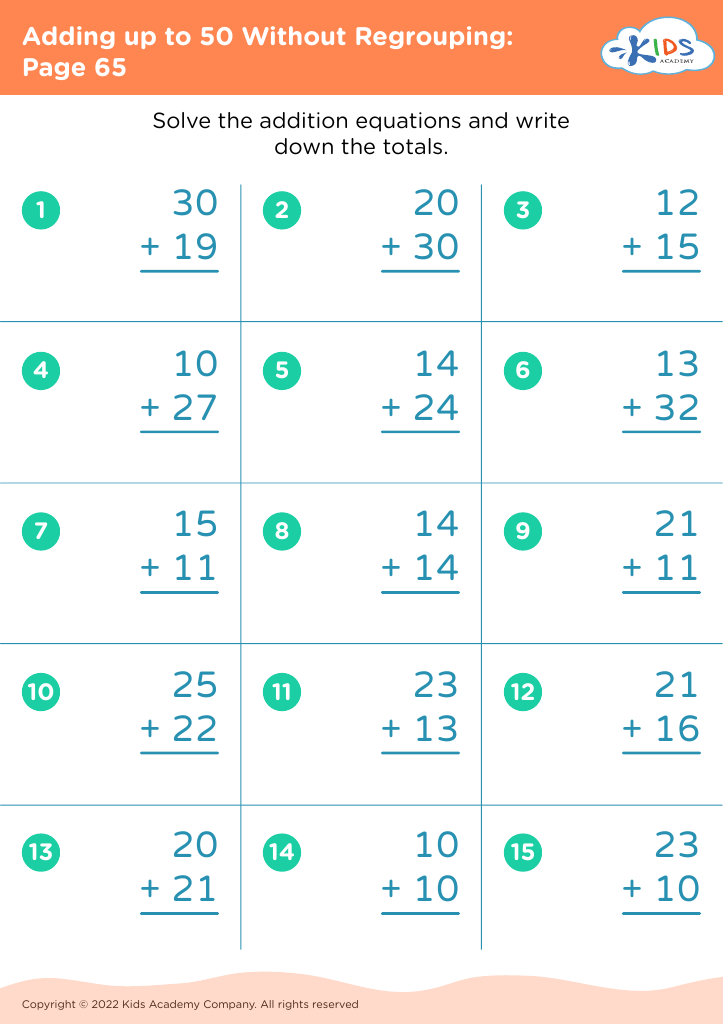
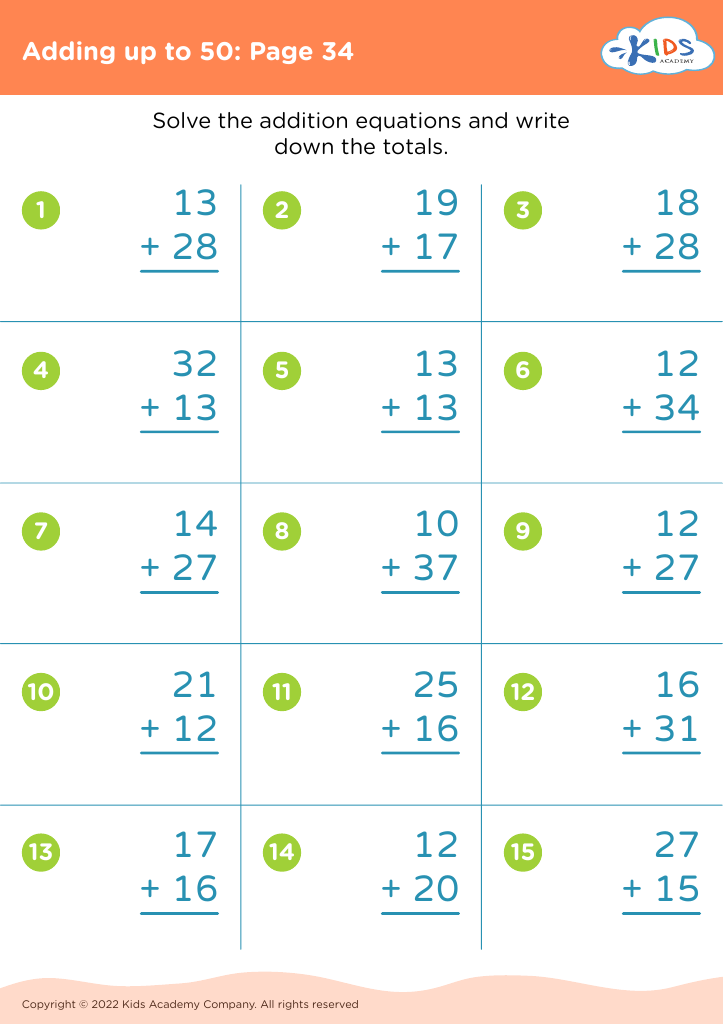
Enhance your students' understanding of fractions with our Fraction Simplification Adding Up to 50 Worksheets! These engaging resources are designed for early learners, helping them master the concept of simplifying fractions while practicing their addition skills up to 50. Each worksheet provides clear instructions and visually appealing exercises to make learning enjoyable. With a variety of formats, including fill-in-the-blank and multiple-choice questions, students will gain confidence in their math abilities. Perfect for classroom or at-home practice, these worksheets make fraction simplification accessible and fun, ensuring your students build a strong foundation in essential math concepts. Printable and ready to use!
Favorites
With answer key
Interactive
Join Kids Academy for Free
Who is primarily going to use this learning content?




Parents and teachers should care about fraction simplification, especially in the context of adding fractions that total fifty, because it fosters essential mathematical skills that children will use throughout their lives. Understanding how to simplify fractions not only helps learners grasp foundational math concepts, but it also reinforces the habit of seeking the simplest form of a problem, which can lead to more efficient problem-solving strategies.
Simplifying fractions involves recognizing common factors and applying division skills, which promote critical thinking and adaptability. When children learn to add fractions, the skill of simplification ensures that they can confidently combine different parts into a whole, enhancing their understanding of quantities and proportions. Mastering this concept illustrates to students the relationship between numbers and reinforces arithmetic fluency.
Furthermore, when parents and teachers prioritize such topics, they set the stage for higher-level mathematical concepts, including ratios, percentages, and algebra. Recognizing that a high-quality education in mathematics includes engaging with these ideas promotes a growth mindset in learners, helping them overcome misconceptions about numbers. By valuing fraction simplification and its relevance to computations that add up to fifty, adults play a crucial part in nurturing mathematical competence in their children.








