Improve math skills Adding up to 50 Worksheets
4 filtered results
-
From - To
Unlock your child's mathematical potential with our "Improve Math Skills: Adding Up to 50 Worksheets." Designed for early learners, these engaging worksheets provide a fun and interactive way for students to build their addition skills while working with numbers up to 50. Each worksheet features a variety of exercises, from visual representations to numerical puzzles, that cater to different learning styles. These thoughtfully crafted activities not only enhance mathematical understanding but also boost confidence in young learners. Perfect for classrooms or at-home practice, our worksheets make math an enjoyable subject for children. Start improving math skills today!
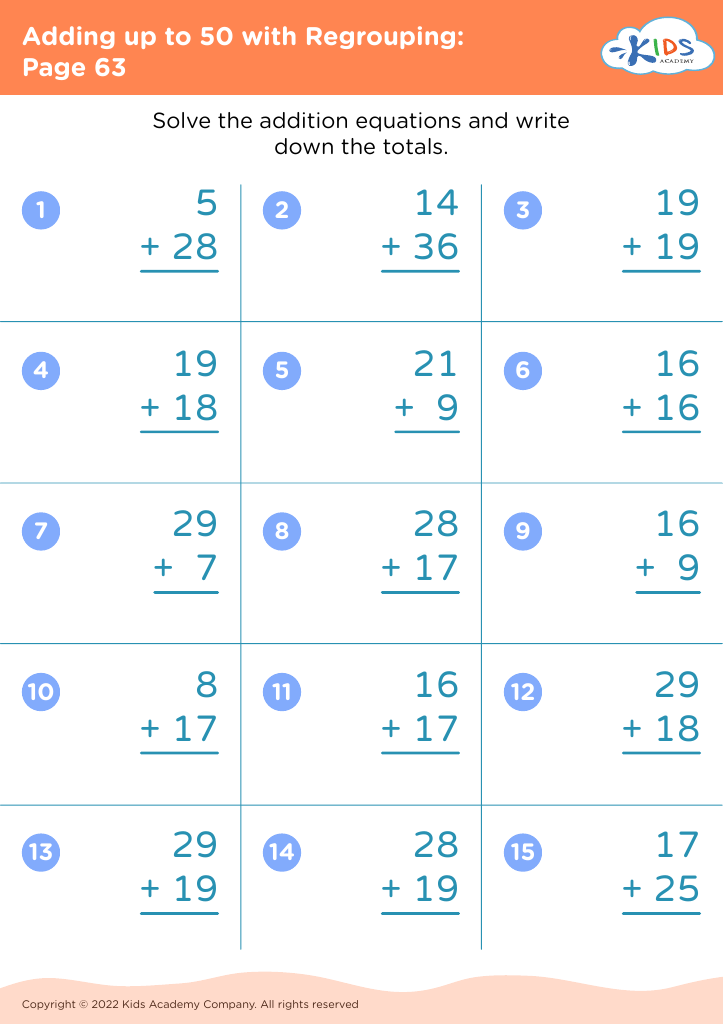
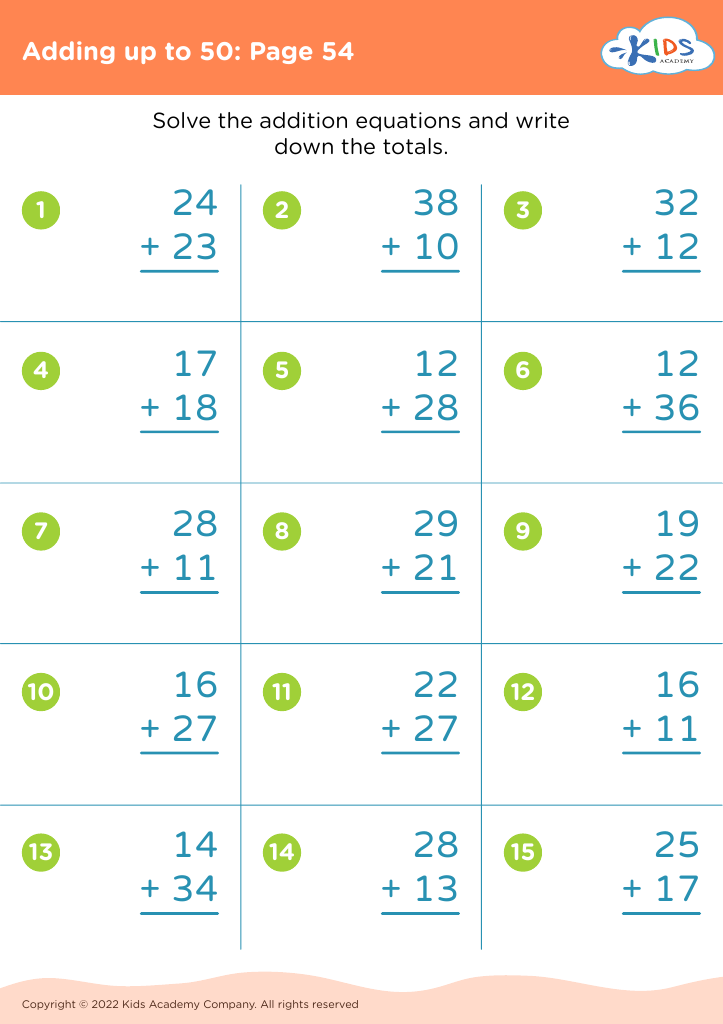
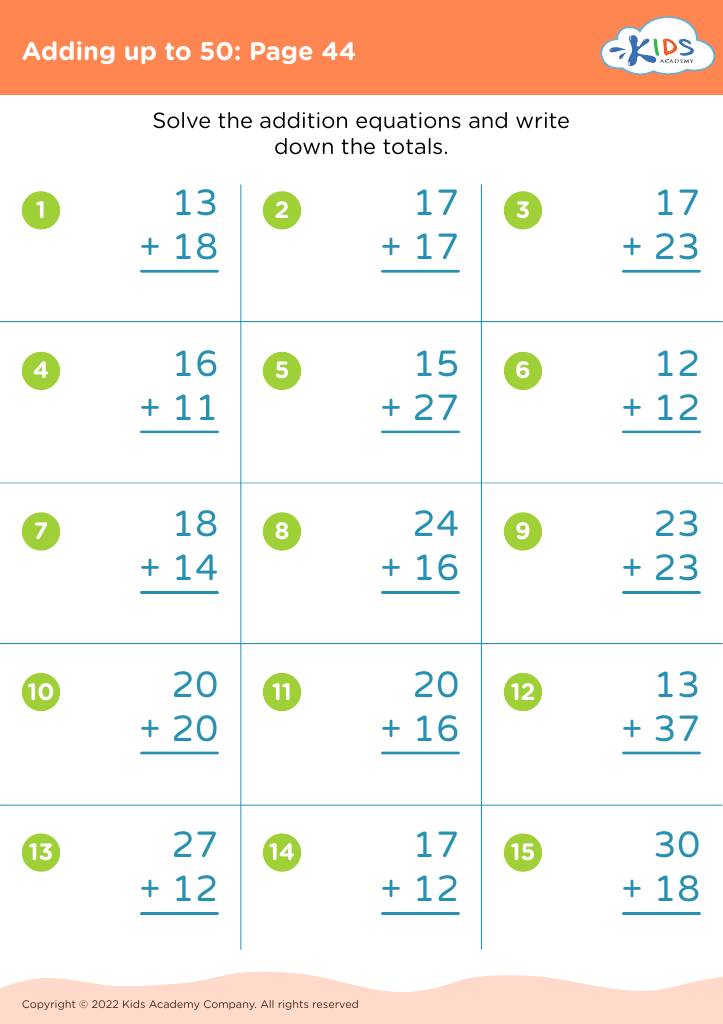
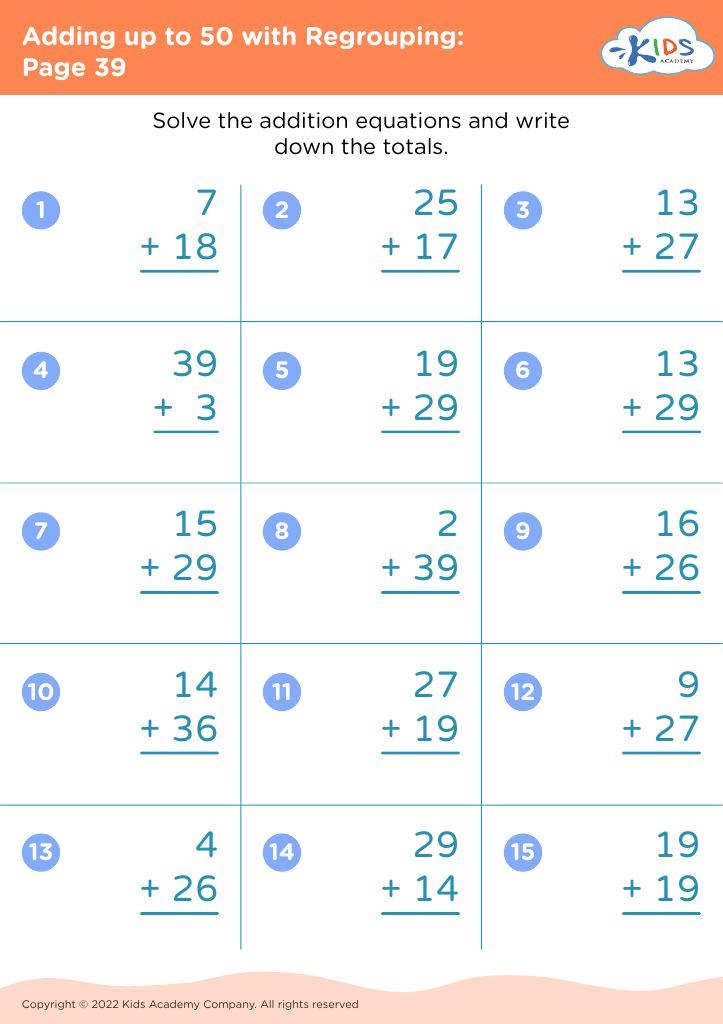




Improving math skills, especially the ability to add up to 50, is foundational for children’s cognitive development and future academic success. First, mastering addition enhances a child’s confidence in their problem-solving abilities. This understanding helps build a strong mathematical foundation, as addition is a building block for more complex skills like subtraction, multiplication, and division. When children can add within 50 accurately, they lay the groundwork for later concepts found in more advanced math, such as fractions and equations.
Furthermore, strong math skills promote critical thinking and logical reasoning. These reasoning skills extend beyond math; they offer children tools for everyday decision-making. Understanding basic math helps with practical activities, such as budgeting, time management, and even problem-solving in real life.
Finally, math proficiency is essential for academic achievement as many subjects, including science and technology, rely heavily on mathematical concepts. As such, when parents and teachers prioritize improving math skills, they contribute not only to a child’s academic growth but also to their personal and social development. Fostering a love for math early on can lead to lifelong positive attitudes towards learning, opening doors to future opportunities.








