Improve number recognition Adding up to 50 Worksheets
5 filtered results
-
From - To
Enhance your child’s number recognition skills with our engaging “Adding Up to 50 Worksheets.” Designed for early learners, these colorful, interactive worksheets make mastering numbers fun and accessible. Each worksheet encourages children to practice identifying numbers while solving addition problems that extend up to 50. With a variety of exercises that include visual aids and fun themes, your child will build confidence in their math abilities. Ideal for classroom settings or home practice, these worksheets are a perfect resource for fostering numeracy skills in young learners. Download now to give your child a strong foundation in number recognition and addition!
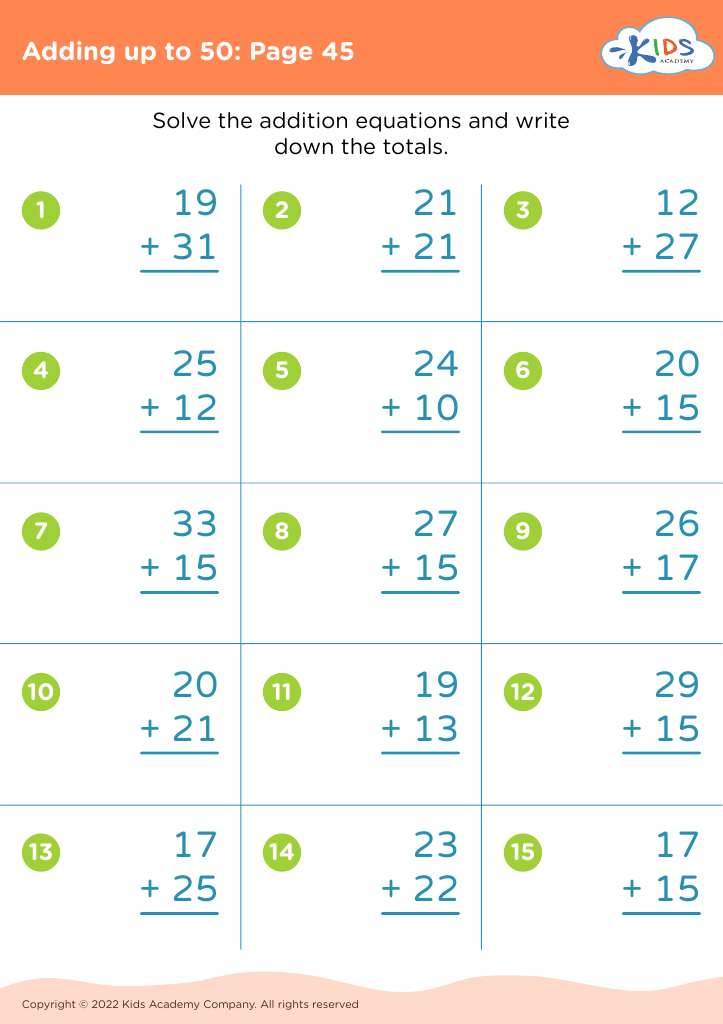
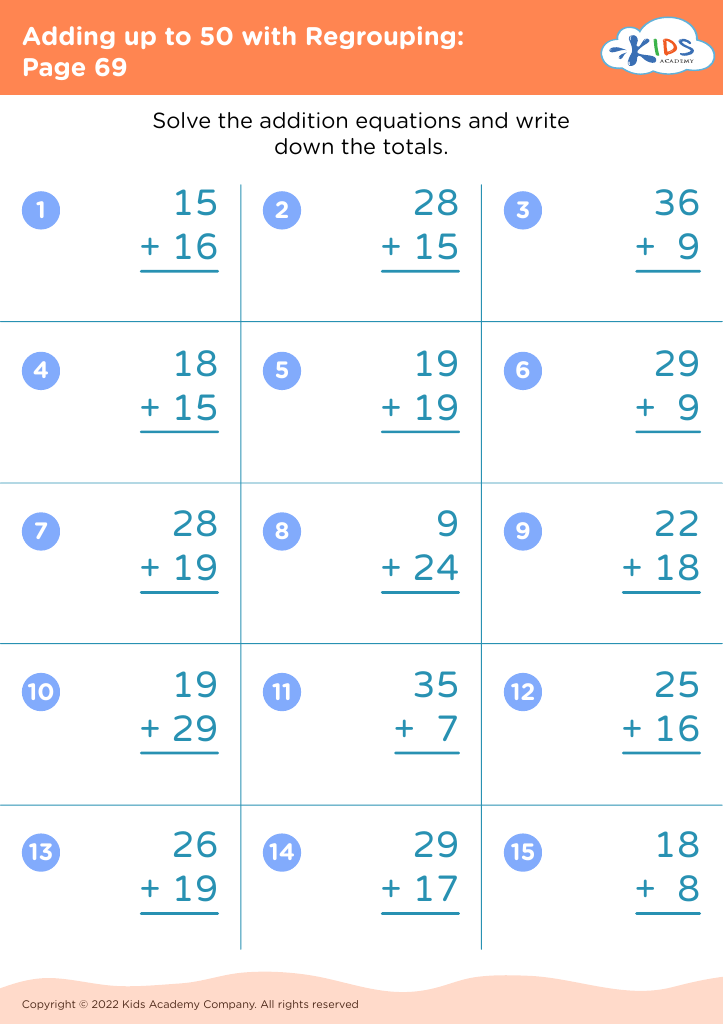
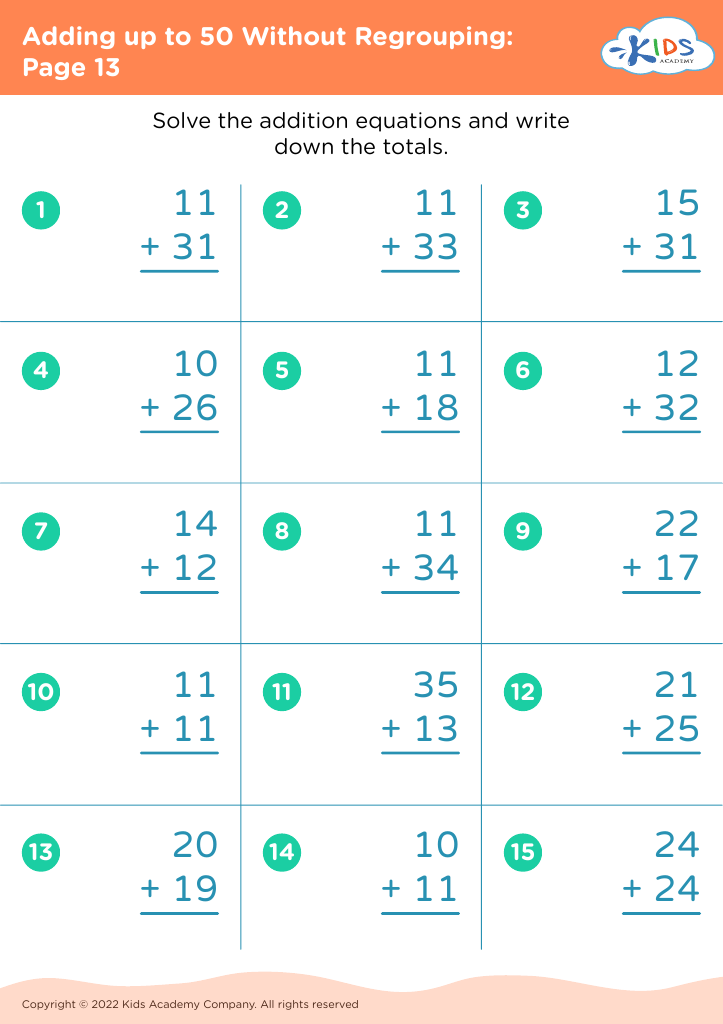
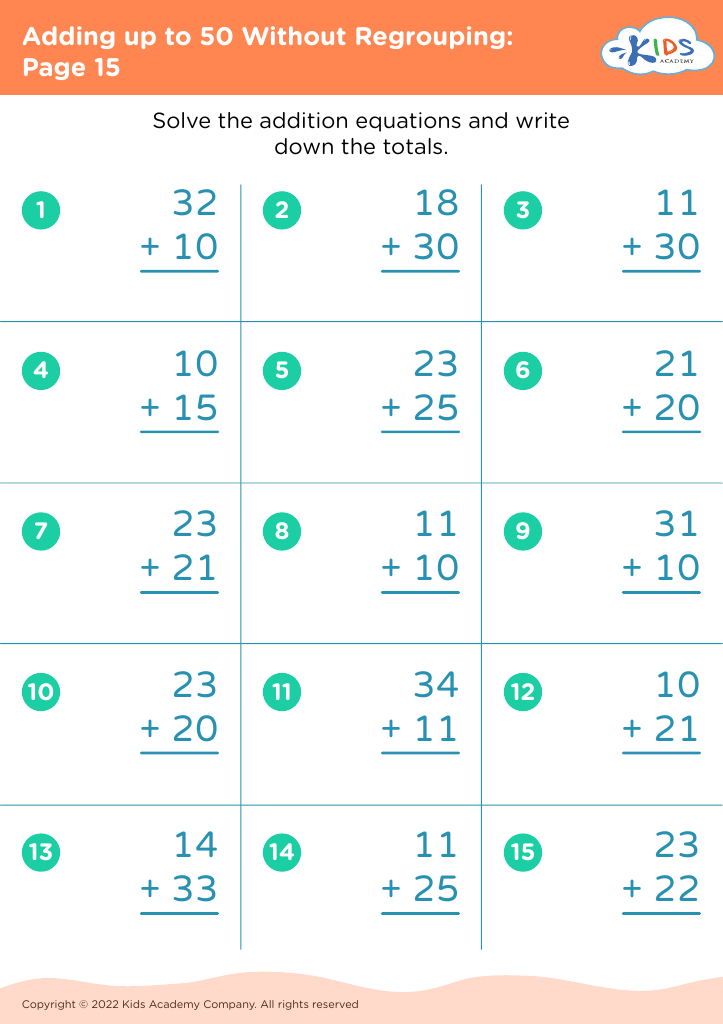
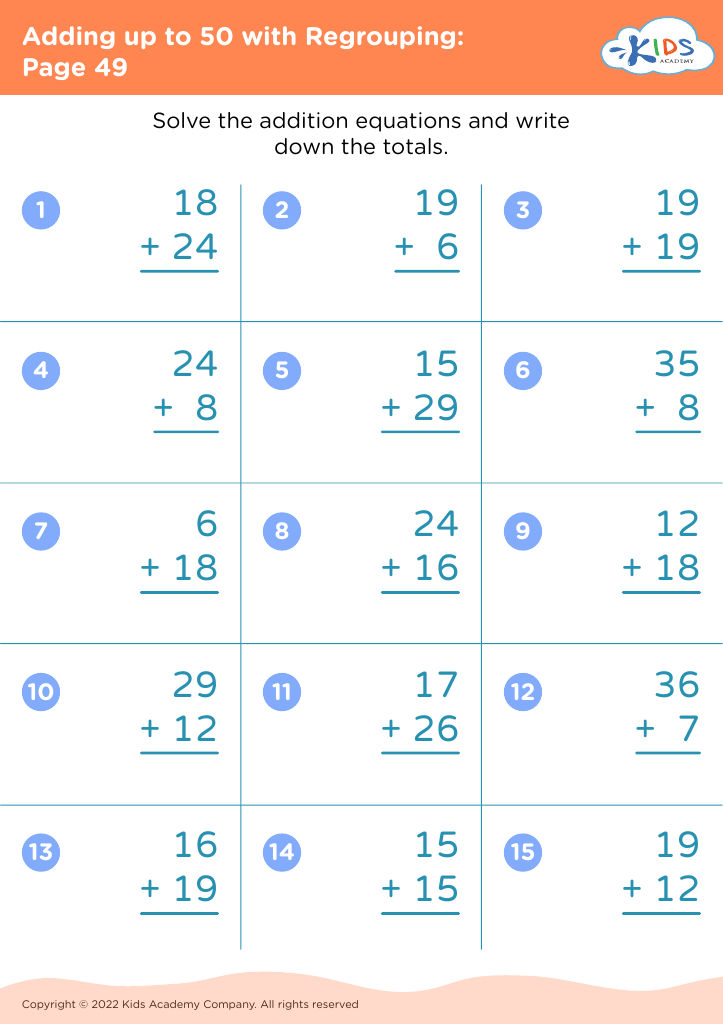




Improving number recognition and the ability to add numbers up to 50 is crucial for early grade students, and it significantly impacts their mathematical foundation and overall academic success. First, strong number recognition helps children understand numerical values, leading to greater confidence in tackling mathematical concepts. This foundational skill is essential, as it facilitates learning more complex math operations later on, including subtraction, multiplication, and division.
Moreover, mastering addition up to 50 helps students develop problem-solving skills and logical reasoning. Parents and teachers play a vital role in promoting these abilities, creating an environment that encourages practice, exploration, and curiosity. Engaging children in games, daily life situations, or educational apps can stimulate their interest in numbers and reinforce their skills while making learning fun.
Understanding and improving these skills can also have lasting effects on students' overall academic performance. Mathematics is often interlinked with subjects like science, economics, and even reading comprehension, as it helps children follow processes and instructions. By prioritizing number recognition and addition skills, parents and teachers empower children to become competent thinkers who can tackle challenges confidently, setting the stage for their future success in education and lifelong learning.








