Mathematical reasoning Adding up to 50 Worksheets
4 filtered results
-
From - To
Enhance your child's math skills with our "Mathematical Reasoning Adding Up to 50 Worksheets." Designed for early learners, these worksheets promote critical thinking and problem-solving by engaging students in the process of adding numbers up to 50. Each worksheet provides a fun and interactive way to practice addition, helping to build a strong foundational understanding of math concepts. Ideal for classroom use or at-home learning, these resources encourage children to explore different strategies for reaching their answers while developing confidence in their math abilities. Download our worksheets today and watch your young mathematicians excel!
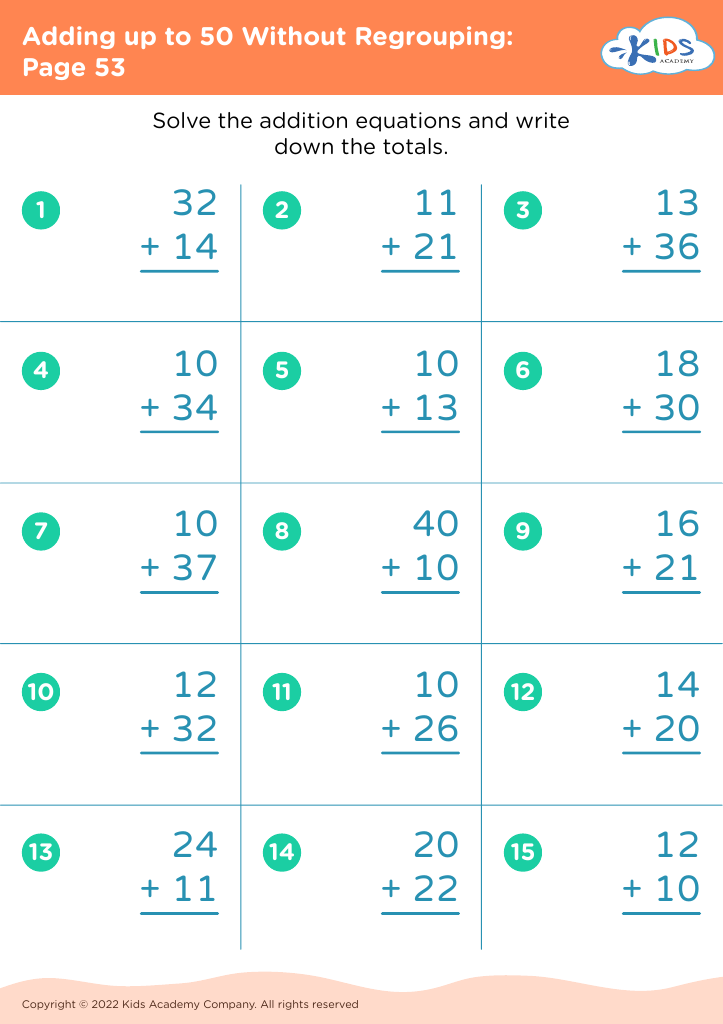
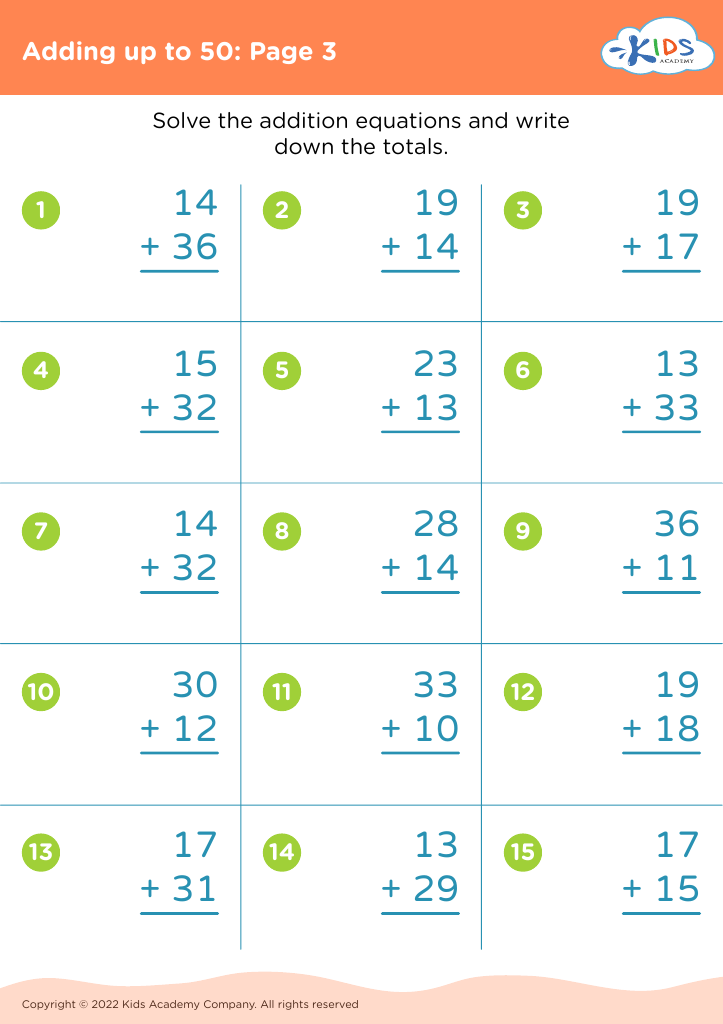
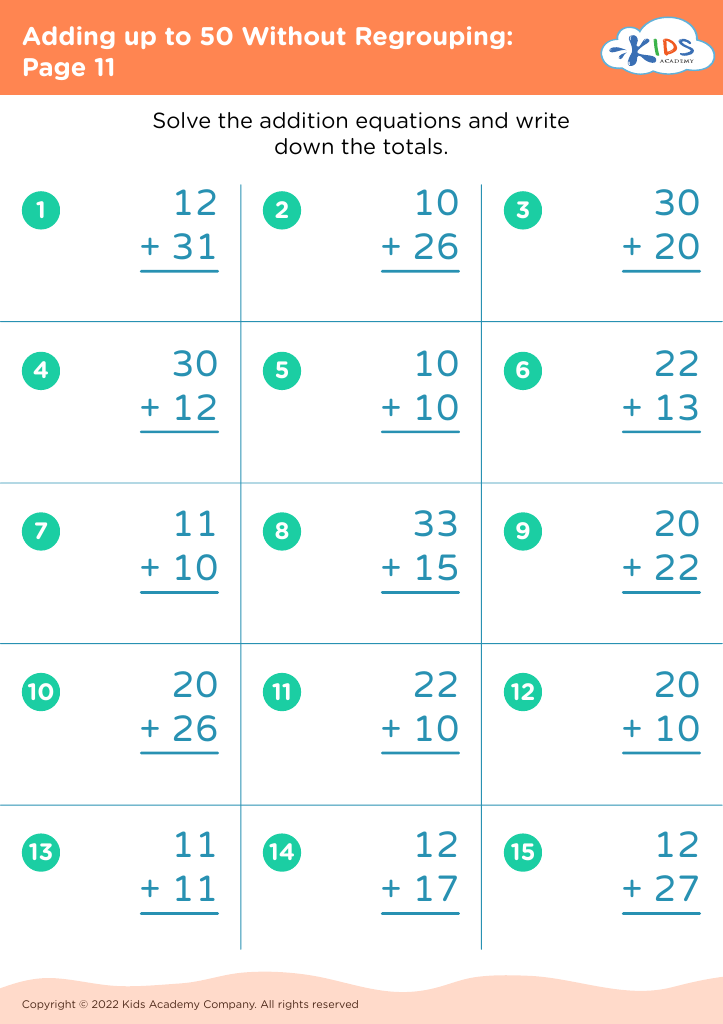
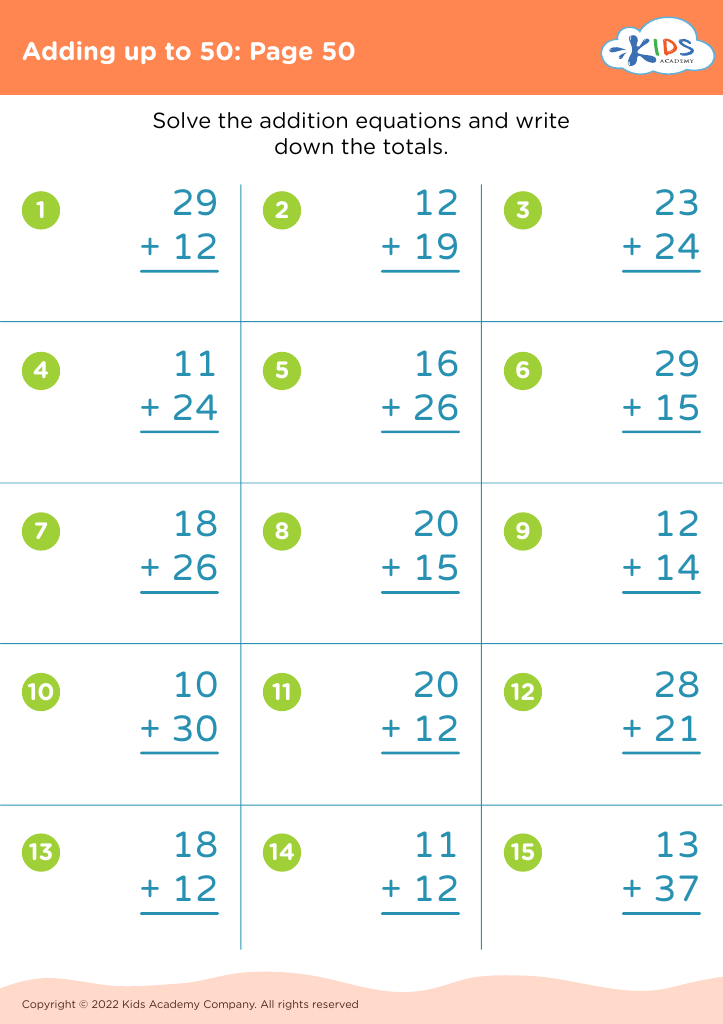




Mathematical reasoning is a fundamental skill that extends beyond basic arithmetic and shapes a child's cognitive development. When children learn to add up to 50, they enhance their ability to think critically and solve problems. This skill promotes numerical literacy, which is essential for success in everyday situations, such as budgeting, planning, or even grocery shopping.
Understanding how to reason mathematically helps children grasp concepts such as patterns, relationships, and number properties. It encourages them to explore different strategies for reaching a solution, fostering flexibility in thinking. Moreover, when students build a strong foundation for addition—particularly with numbers like 50—they become more confident in their mathematical abilities, paving the way for more advanced topics like multiplication, estimation, and algebra.
For parents and teachers, supporting children in this area creates a positive learning environment, reinforcing the importance of mathematics in academic and real-world scenarios. Through engaging activities such as games or visual aids, adults can make learning enjoyable, further embedding mathematical principles. Ultimately, caring about mathematical reasoning not only aids in academic success but also equips children with vital skills needed for critical thinking and problem-solving throughout their lives.








