Problem-solving abilities Adding up to 50 Worksheets
4 filtered results
-
From - To
Boost young learners' math skills with our "Problem-solving Abilities Adding up to 50 Worksheets." Tailored for early grade students, these worksheets provide an engaging way to enhance addition skills while fostering critical thinking and problem-solving abilities. Each printable activity guides children through fun and challenging exercises, helping to build a solid foundation in math. Colorful visuals and practical scenarios make learning enjoyable, ensuring that kids remain motivated and focused. Ideal for classroom settings or extra practice at home, our worksheets are designed to help students confidently master addition up to 50, preparing them for more advanced math concepts.
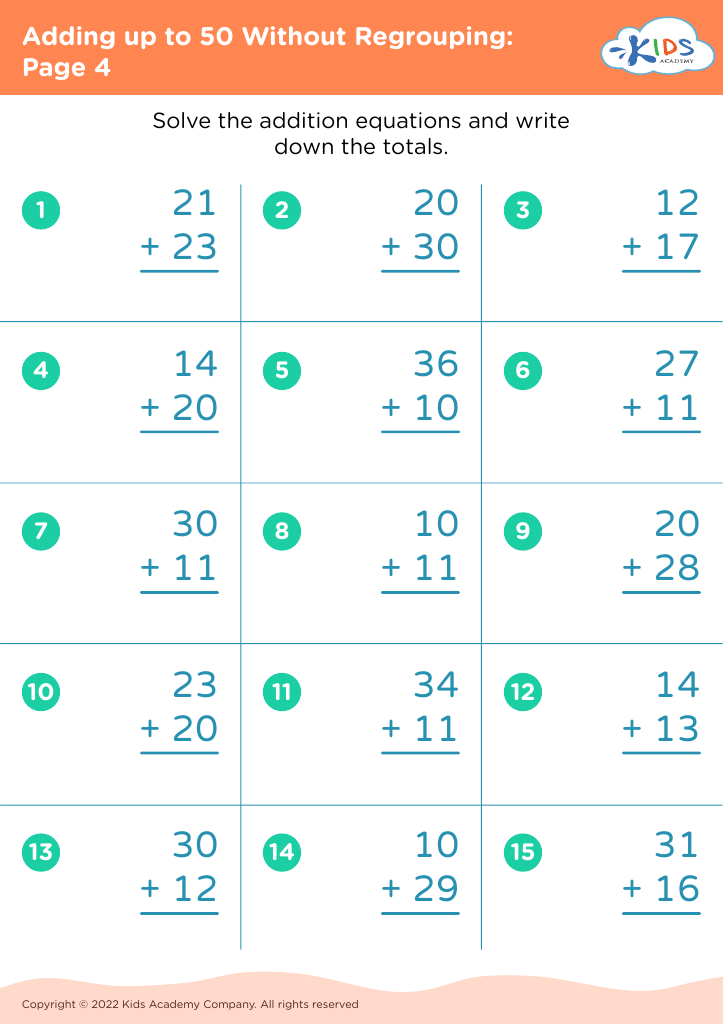
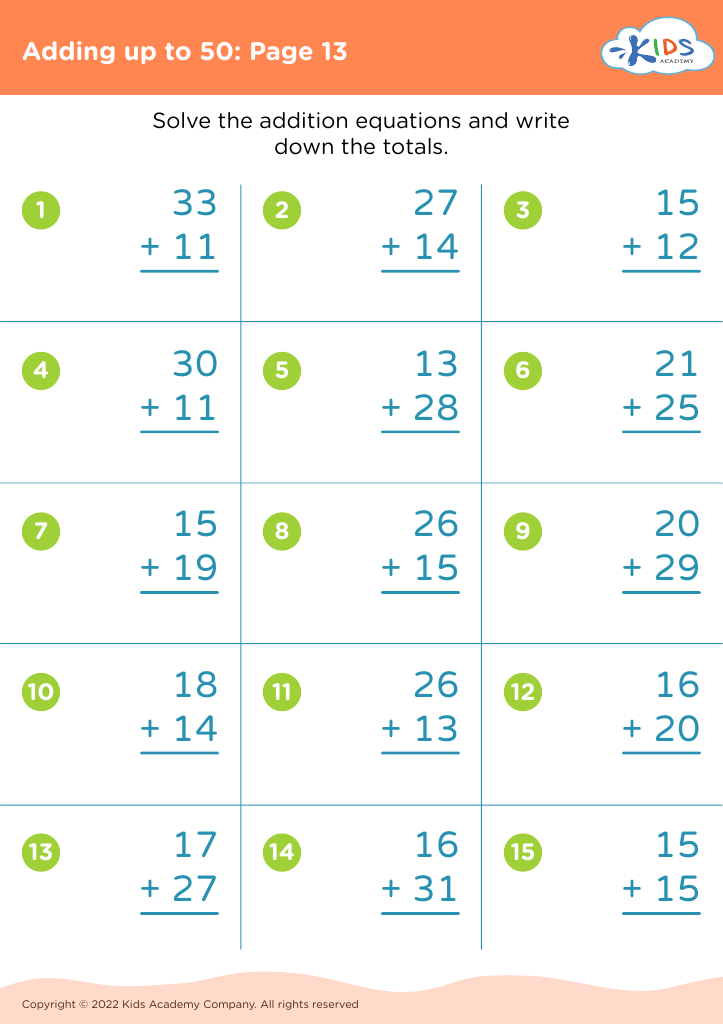
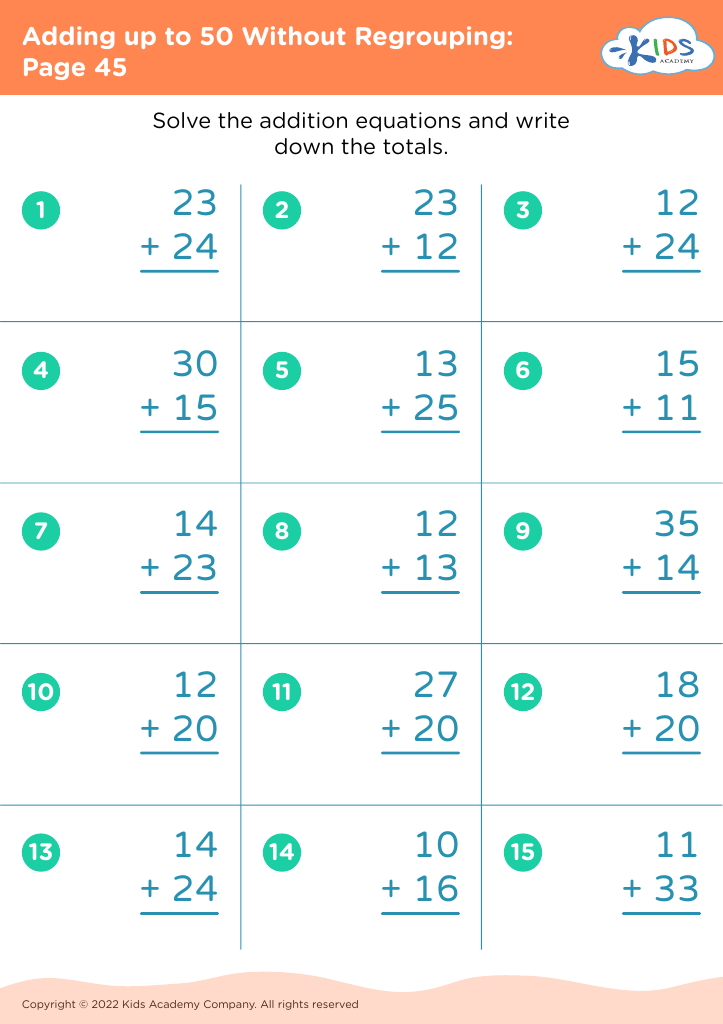
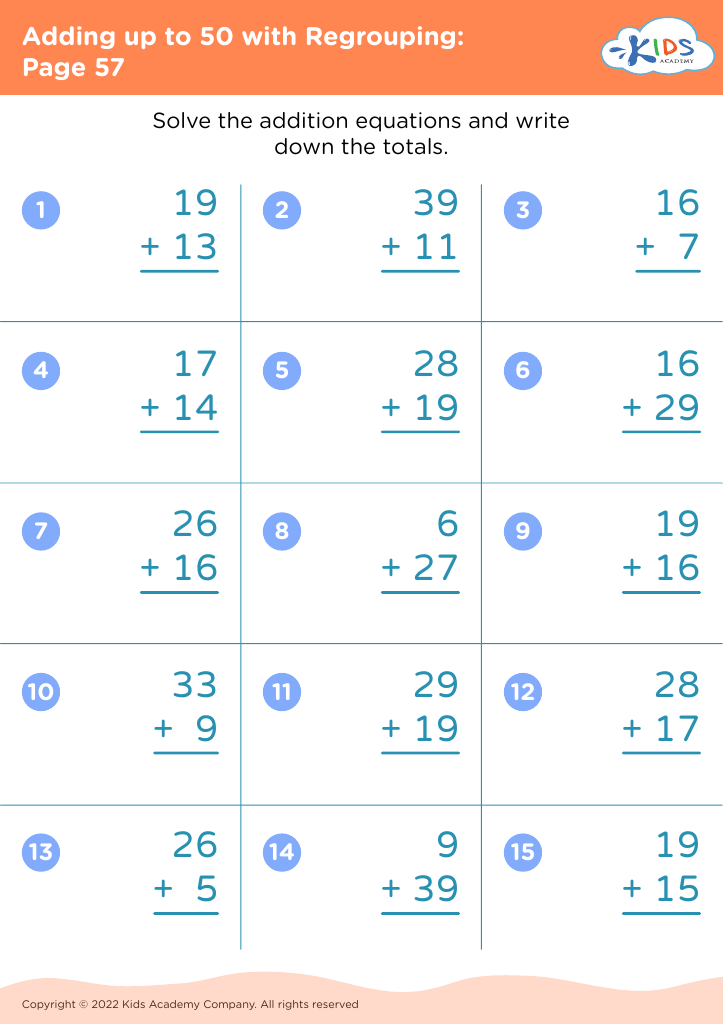




Problem-solving abilities involving adding up to 50 are crucial developmental milestones for early-grade students, and both parents and teachers should prioritize them. Firstly, these skills enhance arithmetic foundations necessary for more advanced math. Mastering additions within 50 builds confidence and serves as a stepping stone toward complex calculations.
Moreover, problem-solving cultivates logical thinking and analytical skills. Young learners who practice these exercises tend to develop better critical thinking and decision-making capabilities, applicable across various subjects and in everyday life. They learn to approach problems methodically, breaking them down into manageable parts.
Additionally, these activities promote engagement and active learning. The challenge of adding numbers within a reasonable range keeps students interested and motivated. Success in these tasks fuels a love for learning and boosts self-esteem, influencing their overall academic journey.
Socially, these skills are important because they often involve collaborative tasks, enhancing communication and teamwork among peers. Children learn to express ideas, listen to others, and work together towards common solutions.
In summary, investing in problem-solving skills that involve adding up to 50 nurtures cognitive development, encourages a love for learning, and equips children with essential life skills that extend beyond the classroom. Hence, parental and educational support in this area is invaluable.








