Problem-Solving Skills Adding up to 50 Worksheets - Page 2
26 filtered results
-
From - To
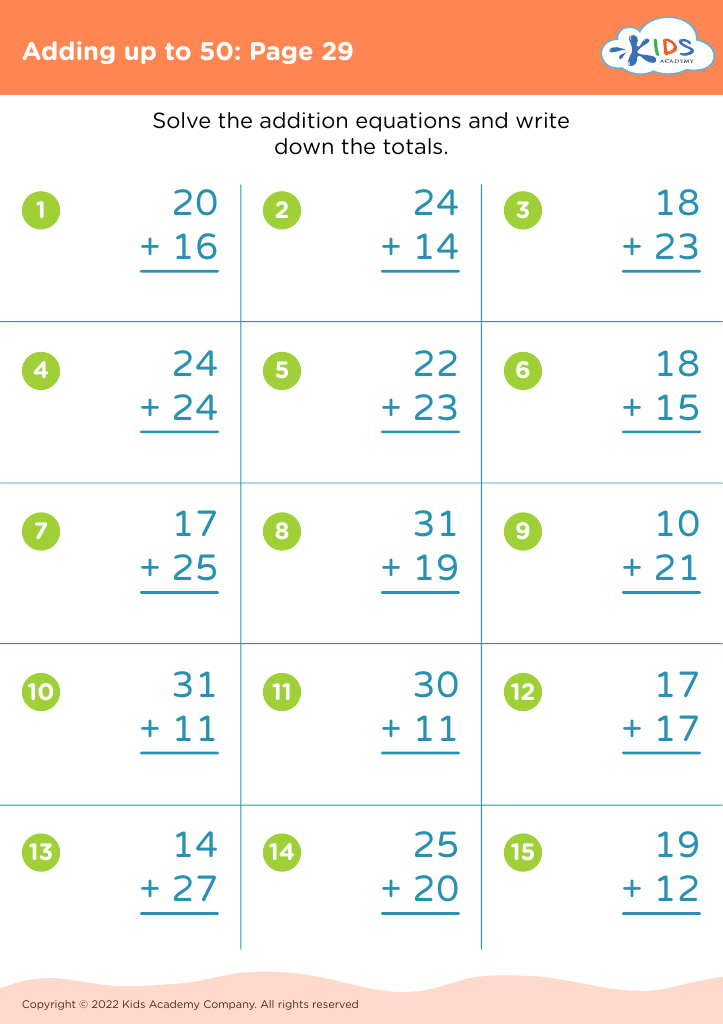
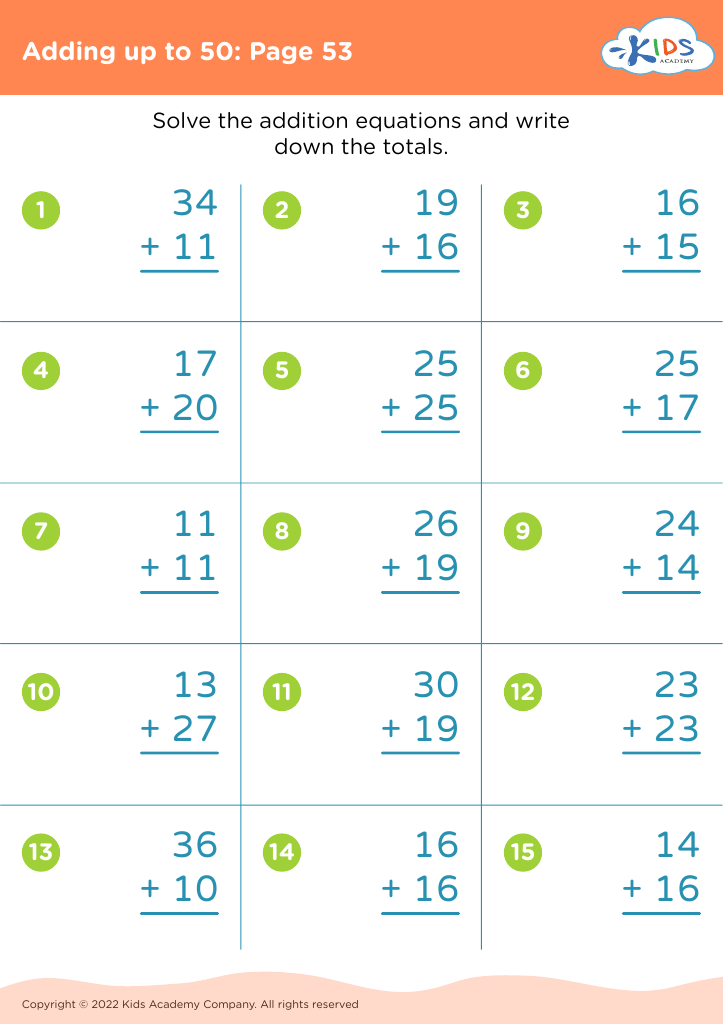




Problem-solving skills are crucial for children’s cognitive and emotional development. For parents and teachers, fostering these skills can significantly impact a child's academic success and lifelong abilities. When children learn to approach problems methodically, they build confidence in their decision-making processes. Specifically, considering a mathematical context like "adding up to 50" engages students in multiple learning areas—critical thinking, collaboration, and mathematics.
This skill set prepares children for real-world challenges. Whether they face everyday dilemmas or academic hurdles, effective problem-solving equips them with the tools they need to assess situations, evaluate options, and arrive at solutions. Moreover, practicing this skill in classrooms encourages a growth mindset, helping students understand that persistence is crucial for overcoming obstacles.
By guiding students through exercises that require them to think creatively or analyze information to reach the target of 50, both parents and teachers foster a stimulating environment. This hands-on practice enhances engagement and interest in learning, essential attributes for developing future competencies. Ultimately, strong problem-solving skills allow children to navigate their environment successfully, making educators and parents essential partners in nurturing this vital aspect of personal and academic development.








