Recognizing equivalent fractions Adding up to 50 Worksheets
3 filtered results
-
From - To
Discover our engaging "Recognizing Equivalent Fractions Adding up to 50 Worksheets," designed to enhance your child's math skills! These interactive worksheets offer an innovative approach to mastering equivalent fractions while working with sums up to 50. Ideal for early learners, the exercises reinforce fraction recognition and comparison through fun, colorful visuals and practical examples. Parents and teachers can easily assess progress and understanding, making math enjoyable and accessible for young students. Encourage critical thinking as children explore fractions in a meaningful context with these thoughtfully crafted resources. Download now and support your child's mathematical journey today!
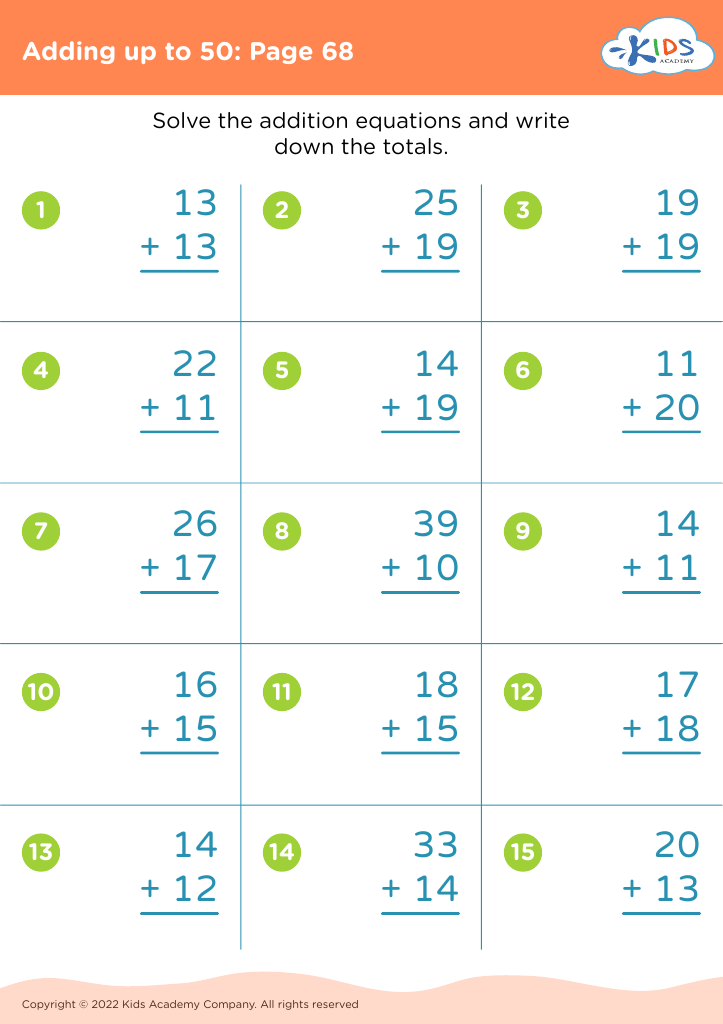
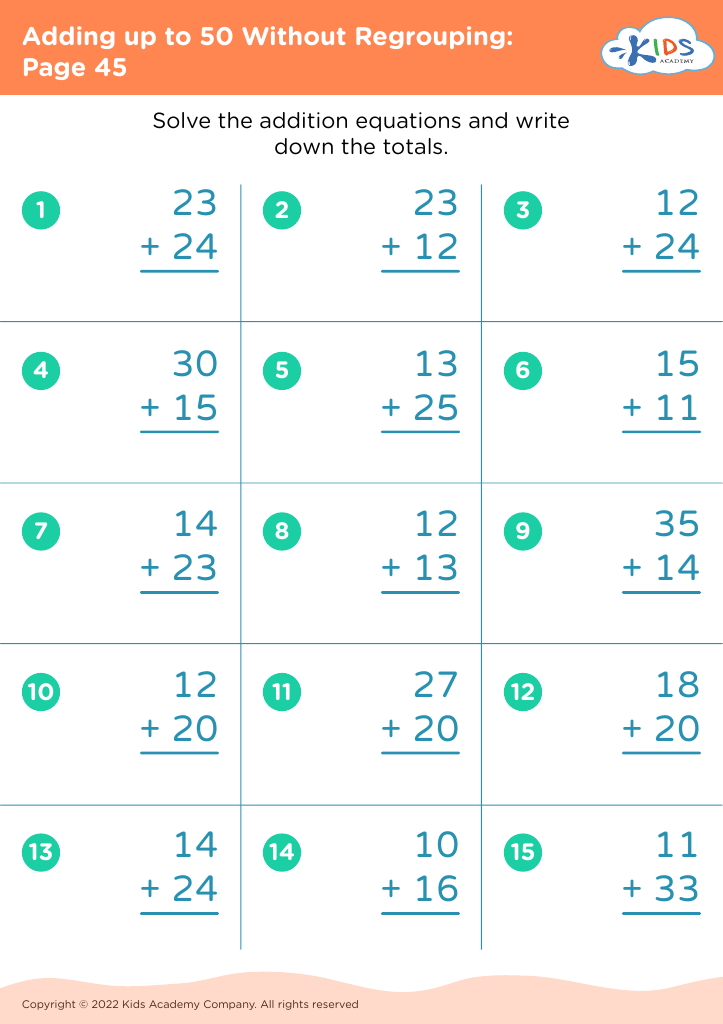
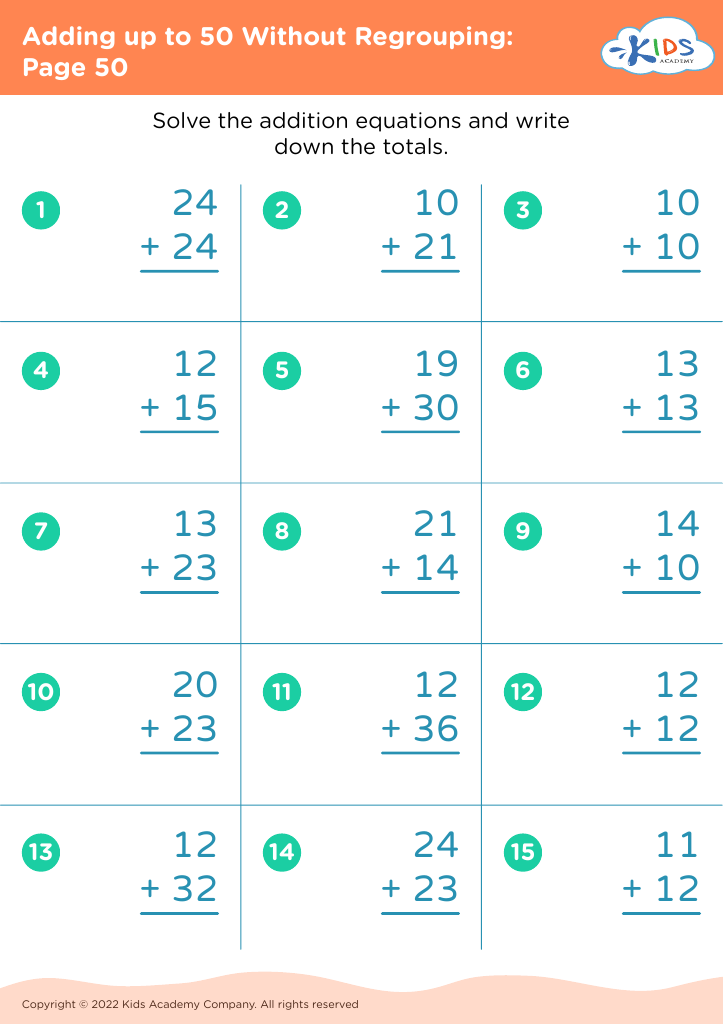




Recognizing equivalent fractions is a fundamental mathematical concept that harbors significant implications for students' overall understanding of numbers and arithmetic operations. Parents and teachers should care about this because mastering equivalent fractions lays the groundwork for more advanced math skills, such as addition, subtraction, and ultimately, algebra. When students are able to identify equivalent fractions, they develop a deeper understanding of the number system, which enhances their problem-solving and analytical skills.
Additionally, incorporating the idea of fractions that add up to 50 provides a practical and relatable application of this concept. Framing math problems within real-world contexts helps engage students and demonstrates the relevance of math in everyday life. Understanding how fractions can sum up to a whole number like 50 empowers students to approach problems with greater confidence and creativity.
Moreover, recognizing equivalent fractions can foster collaboration and communication among students, as they work together to identify and create equivalent fractions during activities. This not only nurtures a sense of community but also reinforces social-emotional learning. By emphasizing the importance of equivalent fractions and their application to numbers like 50, parents and teachers equip children with crucial skills that shape their math proficiency and critical thinking for years to come.








