Simplifying Fractions Adding up to 50 Worksheets
8 filtered results
-
From - To
Discover the perfect learning resource with our "Simplifying Fractions Adding up to 50 Worksheets!" These engaging, kid-friendly worksheets are designed to help young learners master the important skill of simplifying fractions while building their basic math proficiency. Each thoughtfully-crafted worksheet guides children through the process of adding fractions, ensuring a fun and interactive experience. Perfect for early grade students, these exercises enhance understanding and retention, preparing kids for more complex math challenges. Spark your child's interest and confidence in math by incorporating these invaluable worksheets into their study routine today!
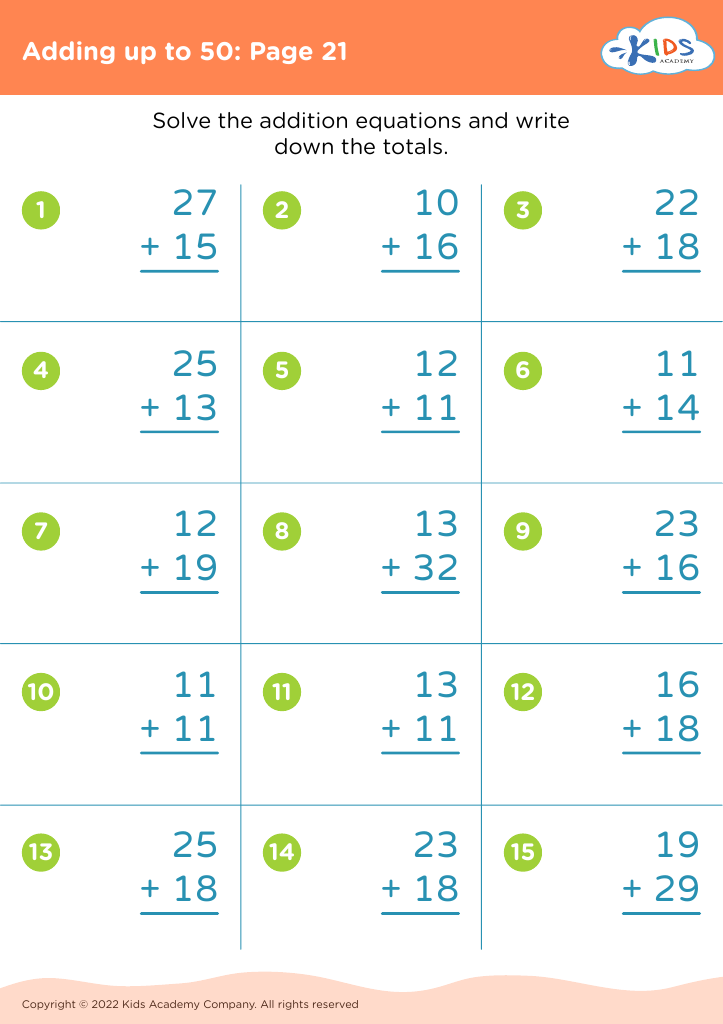
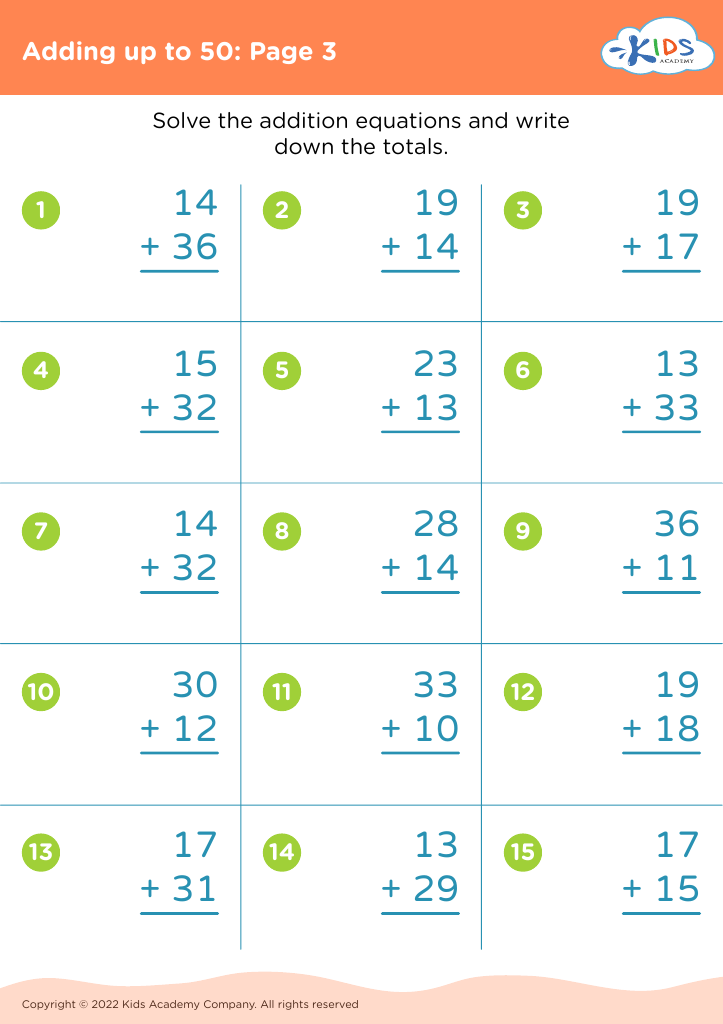
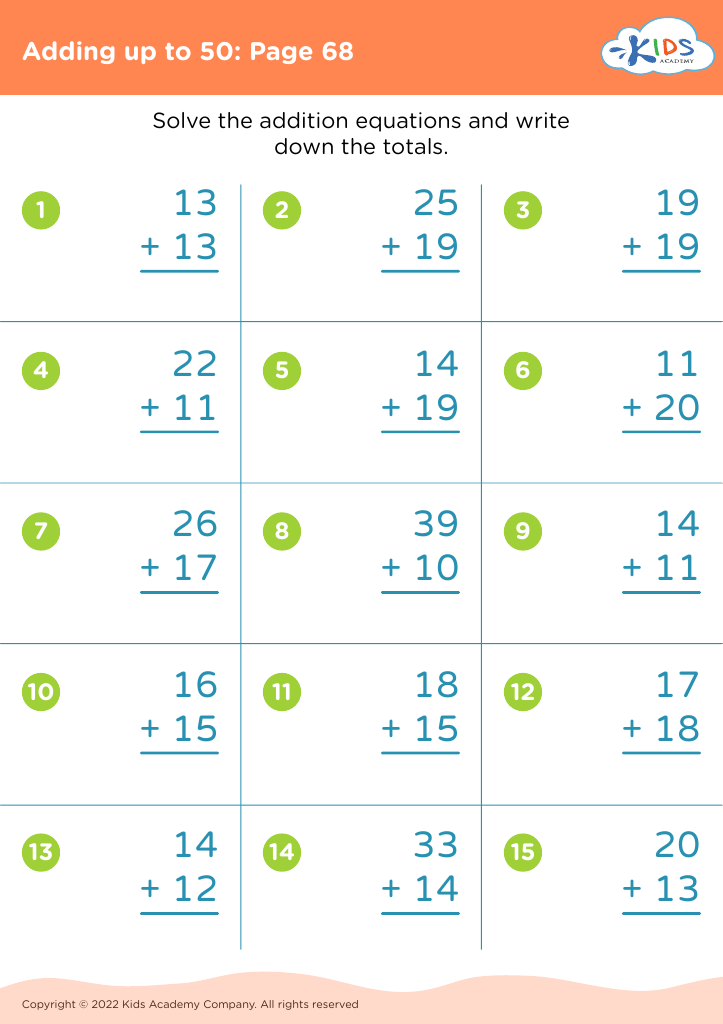
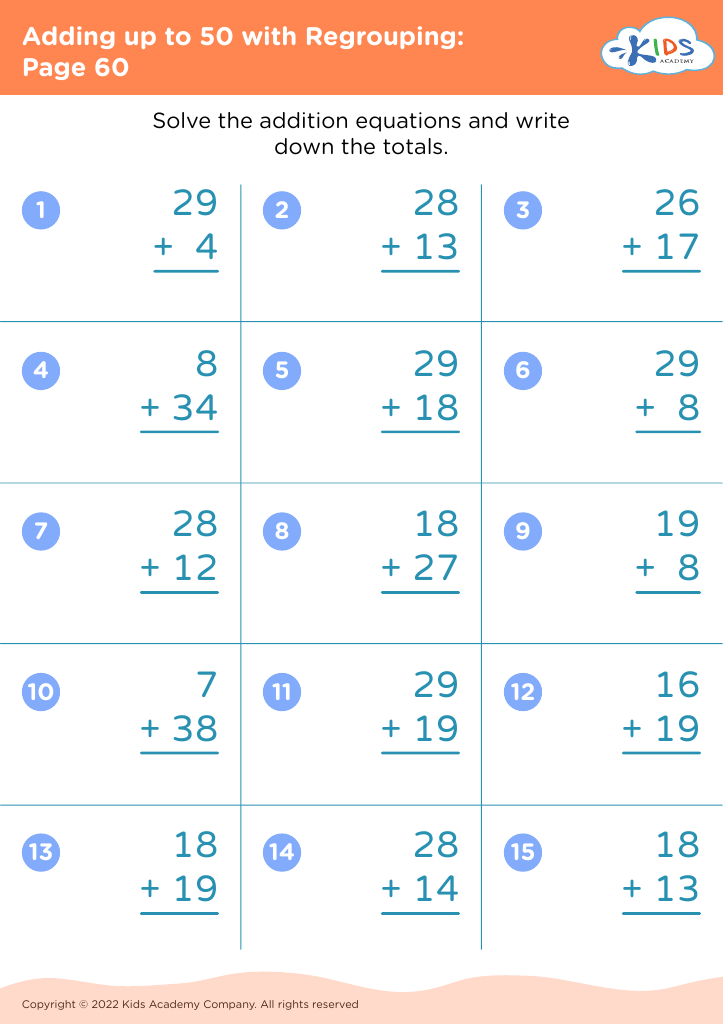
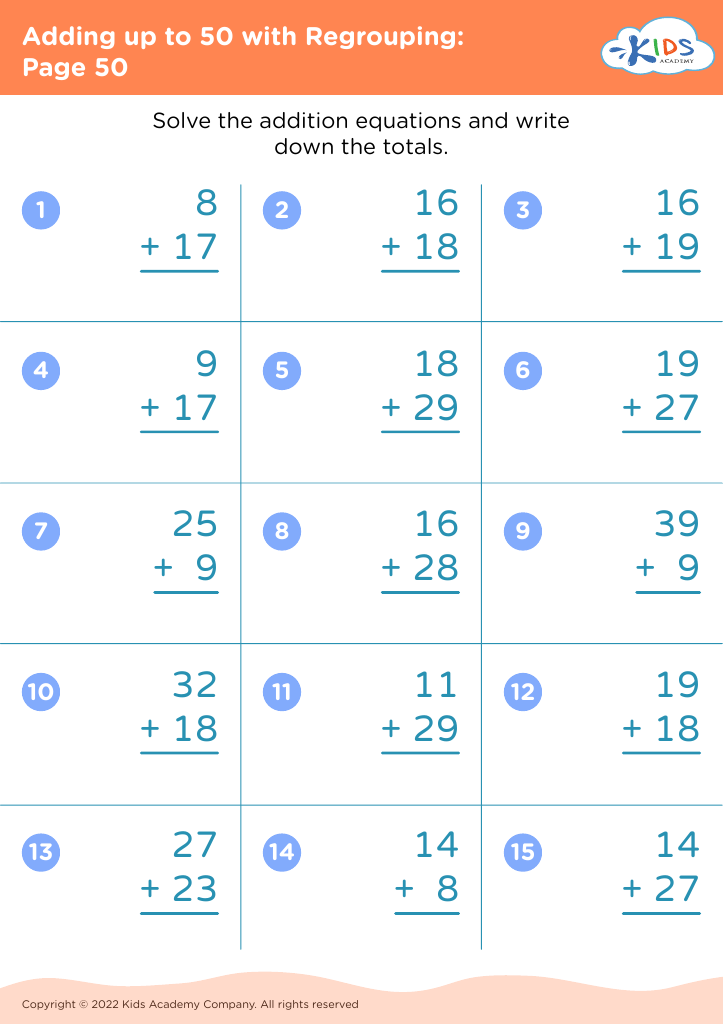
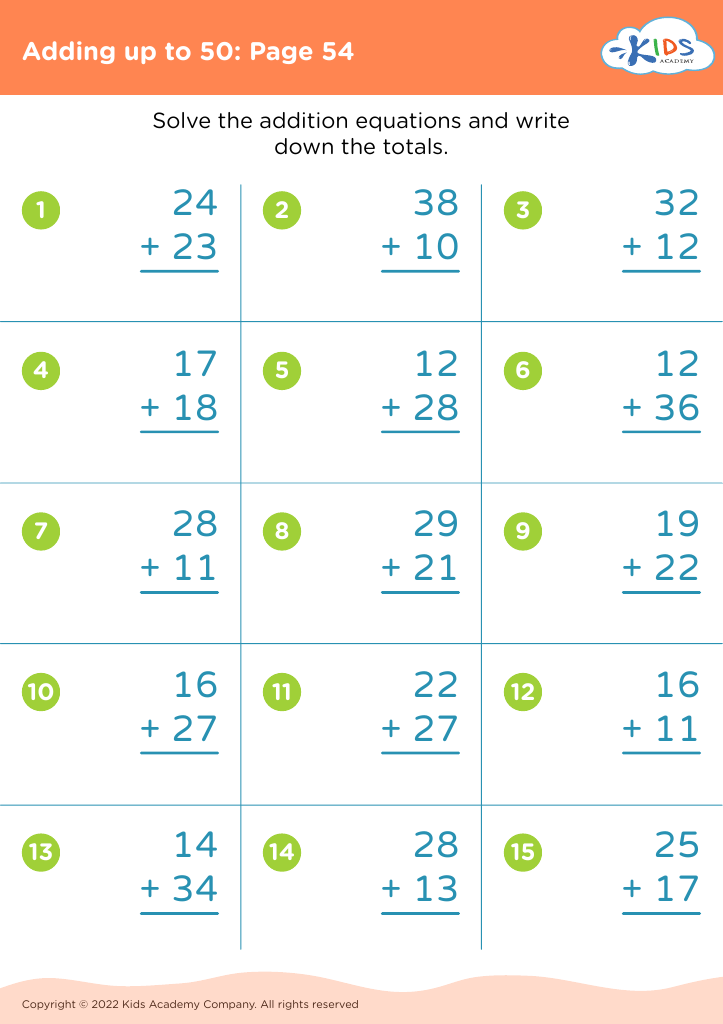
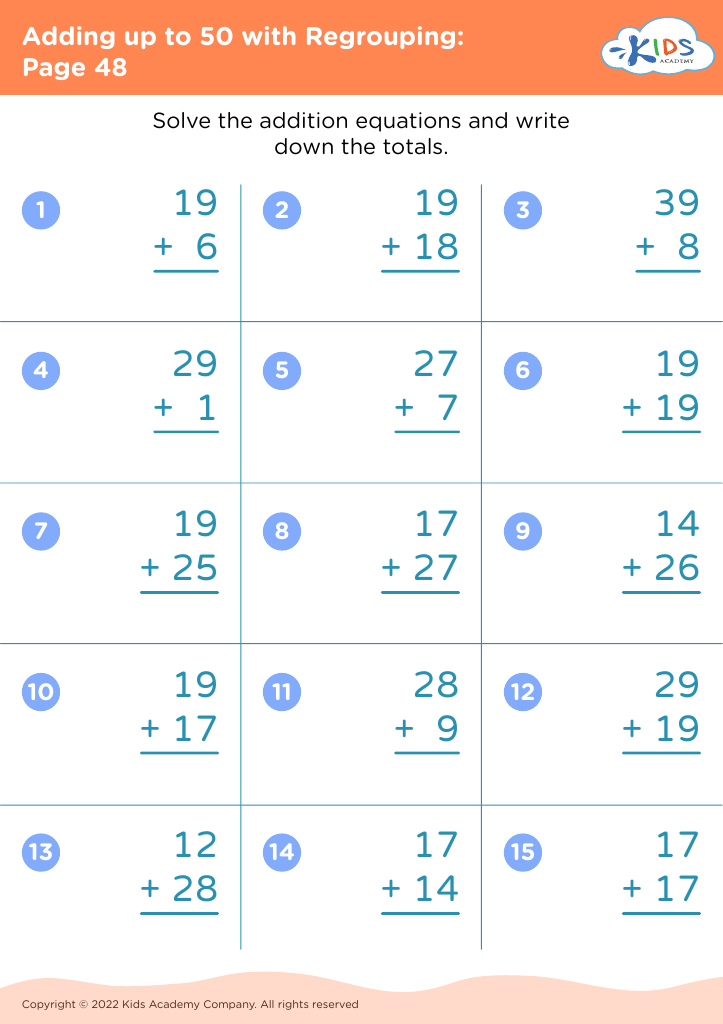
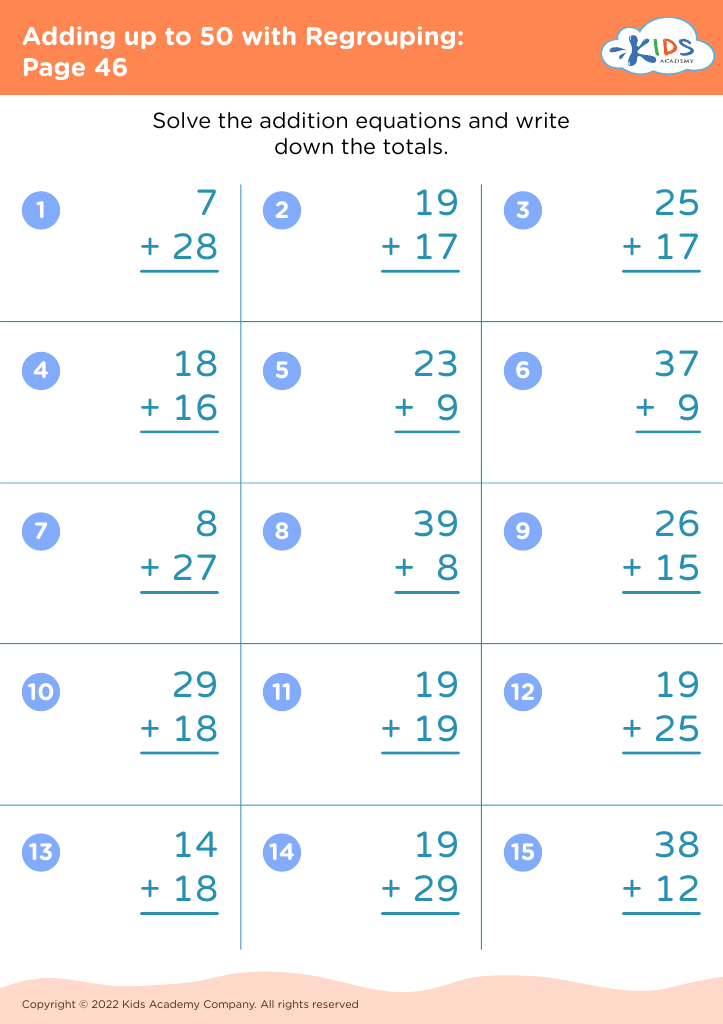




Simplifying fractions plays a crucial role in building foundational math skills, and focusing on sums up to 50 provides a manageable scope for young learners. Fractions are often a stepping stone to more complex math problems, which they will encounter as they progress academically. Simplifying fractions helps children recognize equivalent values, aiding their understanding of fractions in real-world contexts and more advanced math concepts like ratios, proportions, and even algebra.
When sums are kept below 50, students gain confidence without being overwhelmed. This range is ideal for practice, reinforcement, and mastery of the skill. Teachers and parents should care about this aspect of math education because it develops critical thinking and problem-solving skills. Simplifying fractions also enhances children’s number sense, improves their ability to estimate and compare sizes, and promotes a deeper understanding of part-whole relationships.
For parents, supporting their children’s mastery of these concepts means aiding their kids in developing lifelong skills that are applicable in everyday financial decisions, cooking, and sharing. For teachers, it ensures that their students are building a strong mathematical foundation, which is essential for future academic success. Simplifying fractions, especially within manageable sums, helps create a mindset geared towards precision, patience, and logical thinking.








