Subtraction practice Adding up to 50 Worksheets
3 filtered results
-
From - To
Discover fun and engaging Subtraction Practice Adding up to 50 Worksheets designed for young learners! These worksheets help kids master subtraction skills in an enjoyable and interactive way. Perfect for early graders, our printables feature a variety of problems that challenge children to subtract within 50, fostering a deeper understanding of basic math concepts. Through colorful illustrations and step-by-step practice, students will build confidence and fluency in subtraction, making math learning both effective and entertaining. Ideal for classroom use or at-home practice, these worksheets are a valuable resource for parents and educators alike.
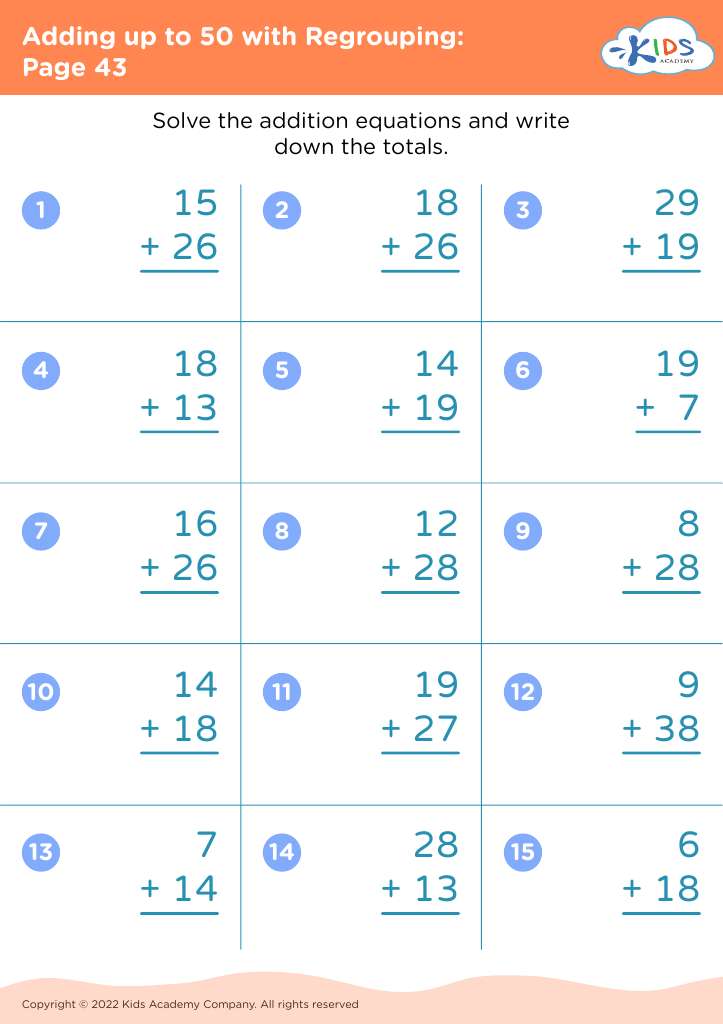
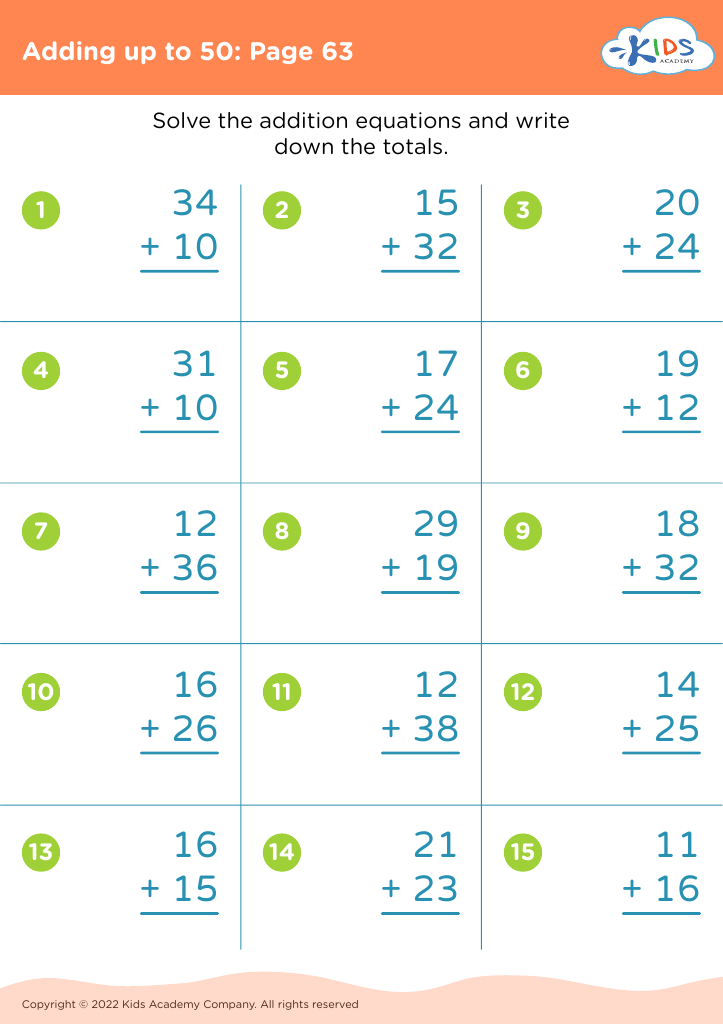
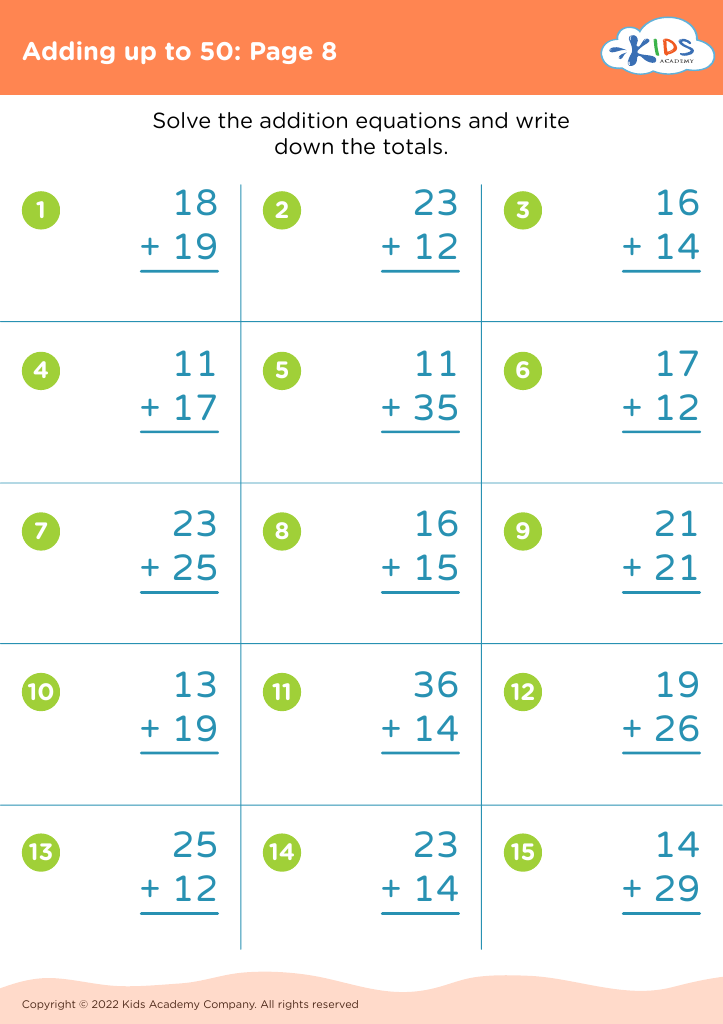




Parents or teachers should care about subtraction practice adding up to 50 because it builds a strong foundation for essential math skills. Mastering subtraction within this range ensures that young learners grasp basic arithmetic, which is crucial for more advanced math concepts.
When students practice subtraction up to 50, they enhance their mental calculation abilities, making them more confident and proficient in everyday tasks that require quick math, such as handling money, measuring ingredients for cooking, or calculating time. This practice also fosters problem-solving and critical thinking skills, as children learn to understand number relationships and recognize patterns.
Moreover, consistent practice with subtraction prepares students for standardized tests and future academic challenges by reinforcing their skills in a manageable scope. It helps to identify and address gaps in understanding early on, preventing future struggles.
For parents, supporting their child's subtraction practice reinforces positive homework habits and spending quality time together, fostering a supportive learning environment at home. For teachers, it provides the opportunity to monitor student progress and offer personalized assistance, ensuring each child reaches their full potential. Overall, focusing on subtraction up to 50 establishes a critical numerical foundation, fueling academic growth and practical life skills.








