Develop inference skills Addition & Subtraction Worksheets
3 filtered results
-
From - To
Enhance your child's mathematical understanding with our "Develop Inference Skills Addition & Subtraction Worksheets." Tailored for early grade learners, these worksheets encourage critical thinking and reasoning by challenging students to interpret and analyze information within addition and subtraction problems. As they engage with varied scenarios, children will not only strengthen their arithmetic skills but also learn to draw logical conclusions based on the given data. Perfect for reinforcing classroom teachings or providing additional practice at home, our interactive and fun worksheets promote a deeper comprehension of math concepts. Start boosting your child's inference skills today with our comprehensive worksheets!
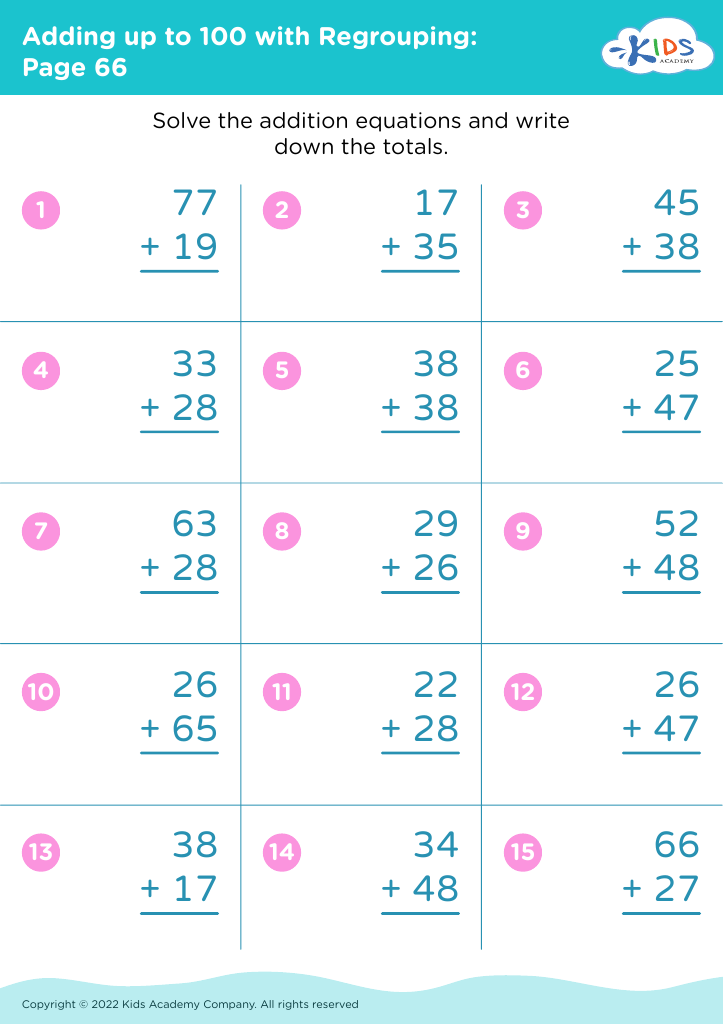
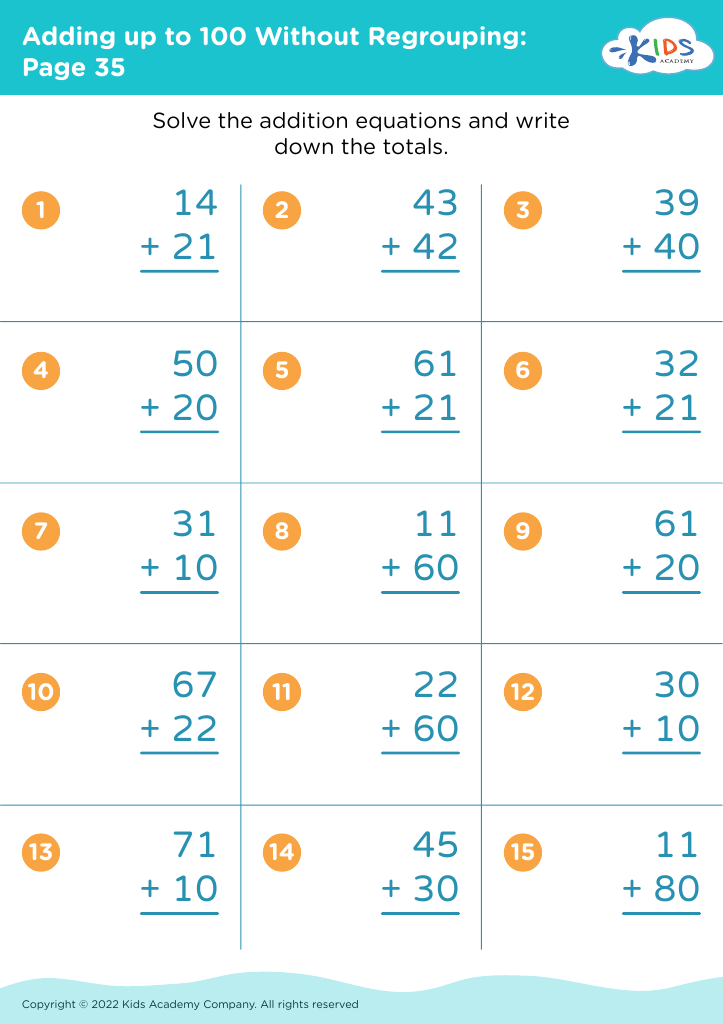
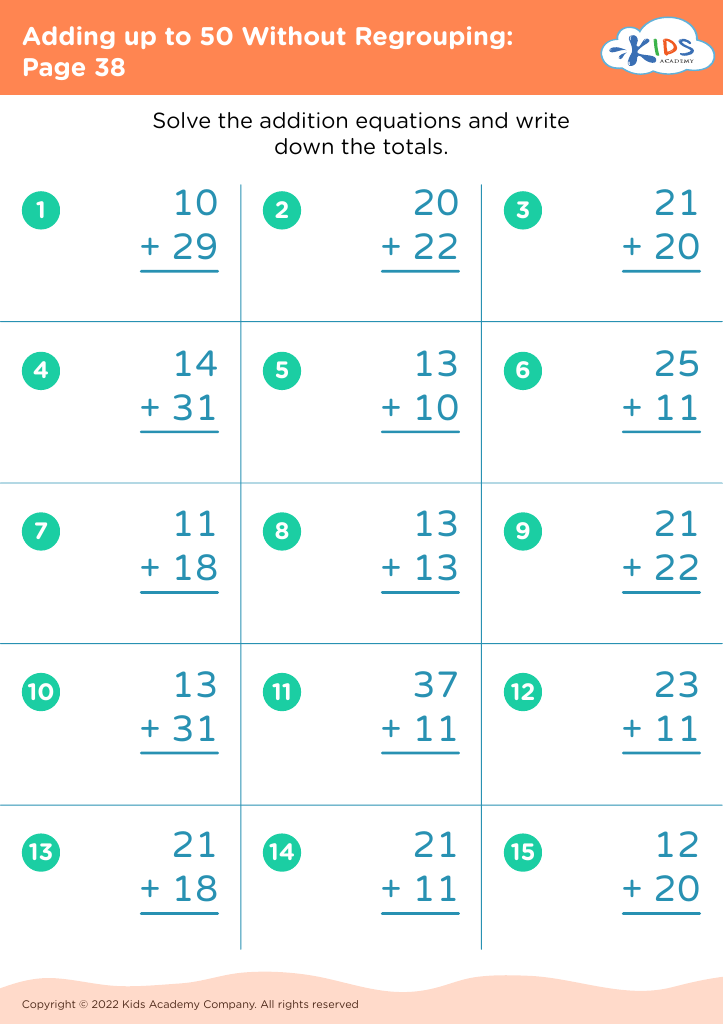








Developing inference skills in addition and subtraction is crucial for young learners as it forms the foundation for their overall mathematical understanding. Inference skills enable children to evaluate information, draw logical conclusions, and make connections between numbers in various contexts. When parents and teachers emphasize these skills, they help students comprehend not just the procedures of addition and subtraction, but also the reasoning behind them.
Understanding the relationships among numbers allows children to tackle more complex mathematical problems with confidence. For example, if a student recognizes that 8 + 2 is the same as 10, they can infer that 10 - 2 must lead back to 8. Such reasoning fosters a deep conceptual understanding and enhances problem-solving abilities.
Moreover, engaging students in discussions about their thought processes cultivates critical thinking and analytical skills that extend beyond math. These skills are essential in daily life and future academic pursuits. When parents and teachers prioritize inference skills, they prepare children to approach math not merely as rote learning, but as a tool for making sense of the world around them. Ultimately, fostering these skills encourages a lifelong love for learning and empowers students to navigate mathematical challenges with confidence.








