Drawing skills Addition & Subtraction Worksheets
6 filtered results
-
From - To
Enhance your child's understanding of addition and subtraction with our engaging Drawing Skills Worksheets! Designed for young learners, these interactive resources combine math practice with creative drawing activities. Each worksheet encourages students to visualize mathematical concepts through artistic expressions, making learning fun and effective. Children will solve addition and subtraction problems and illustrate their answers, reinforcing their comprehension while boosting their creativity. Perfect for classrooms or at-home learning, our worksheets promote critical thinking and fine motor skills development. Explore our collection today and help your child build a strong foundation in math through engaging and hands-on learning experiences!
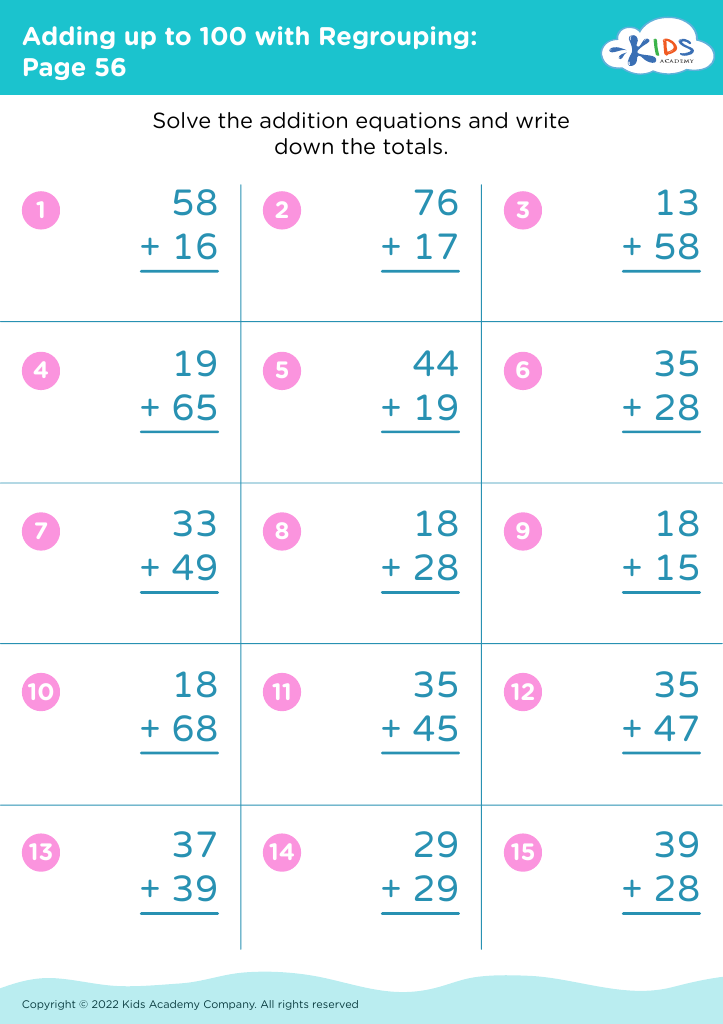
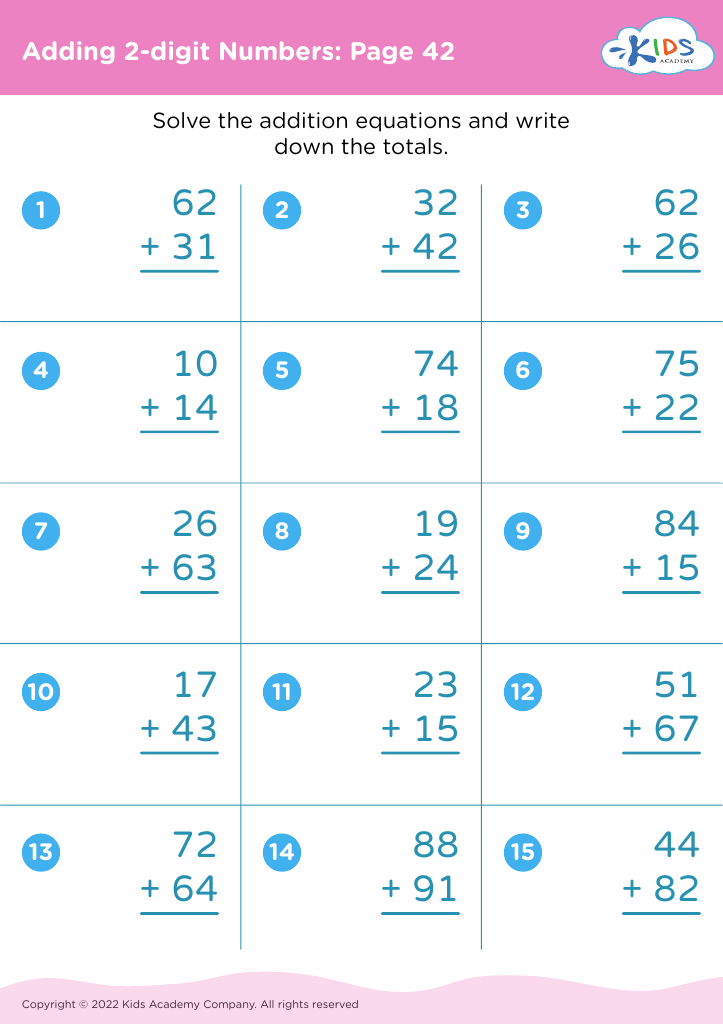








Drawing skills are crucial in developing early mathematical concepts such as addition and subtraction. Parents and teachers should care about fostering these skills because they enhance children’s understanding and retention of math principles. Cognitive development in young learners is significantly influenced by visual representation; when children draw items to represent numbers, they create a physical connection to the abstract concepts of math.
The act of drawing can also make math more engaging and less intimidating, allowing children to express their reasoning visually. As children illustrate addition by drawing objects together or demonstrate subtraction by crossing them out, they gain a hands-on approach to problem-solving that reinforces learning. This multisensory method caters to diverse learning styles, helping those who might struggle with numbers alone.
Moreover, drawing encourages creativity, spatial awareness, and fine motor skills, which are vital for overall cognitive development. By integrating drawing with math, parents and teachers can cultivate a positive attitude toward mathematical exploration and foster critical thinking. Engaging children through drawing ensures they grasp not only the mechanics of addition and subtraction but also develop the confidence and curiosity essential for lifelong learning in any subject.








