Enhance vocabulary skills Addition & Subtraction Worksheets
4 filtered results
-
From - To
Enhance vocabulary skills with our engaging Addition & Subtraction Worksheets! Designed for early learners, these worksheets not only reinforce essential math concepts but also enrich language development through context-specific vocabulary. Each worksheet pairs numerical operations with relatable scenarios, fostering a deeper understanding of language in mathematical contexts. As children practice addition and subtraction problems, they simultaneously learn new words and phrases, enhancing their communication skills. Ideal for classroom use or at-home learning, these printable resources encourage interactive math practice, boosting both confidence and proficiency. Help your child build a strong foundation in math and language with our thoughtfully crafted worksheets!
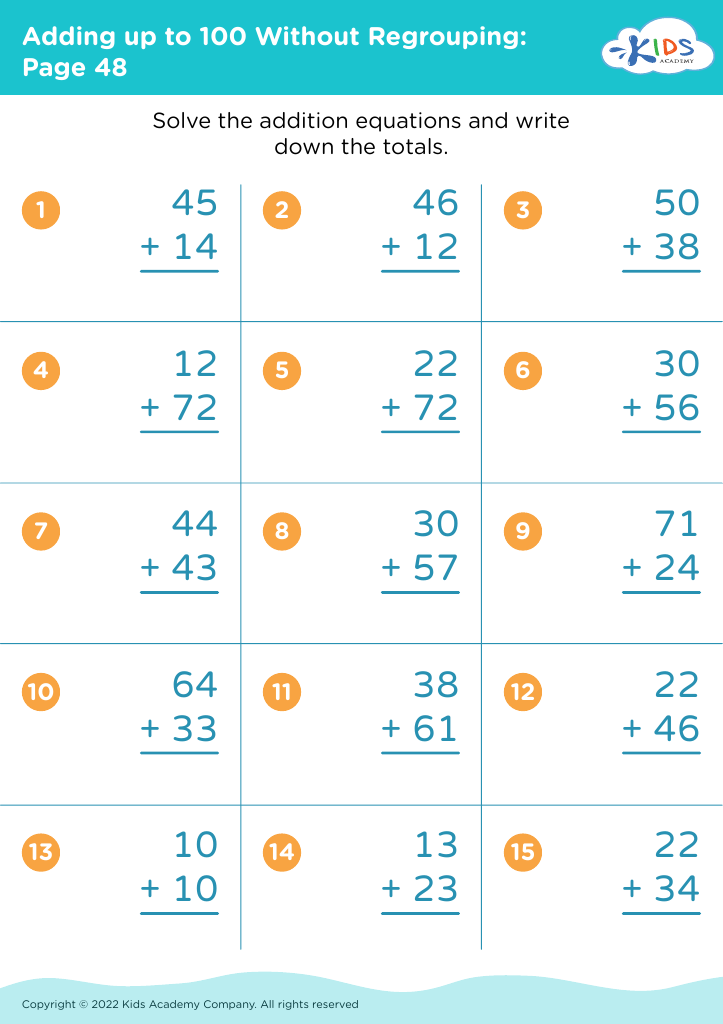
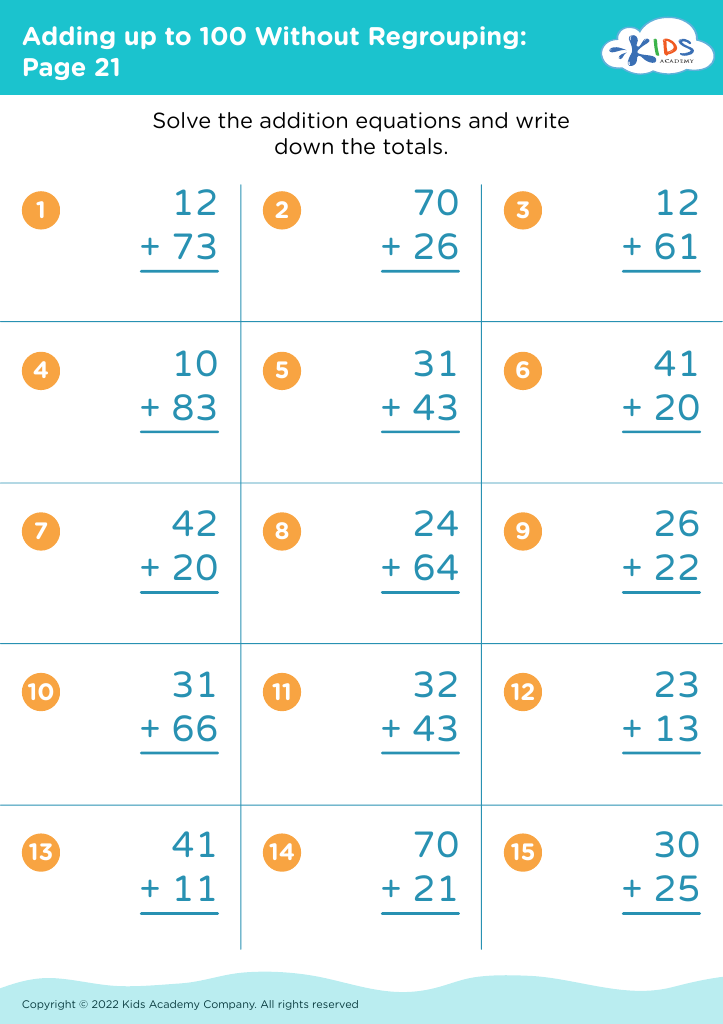
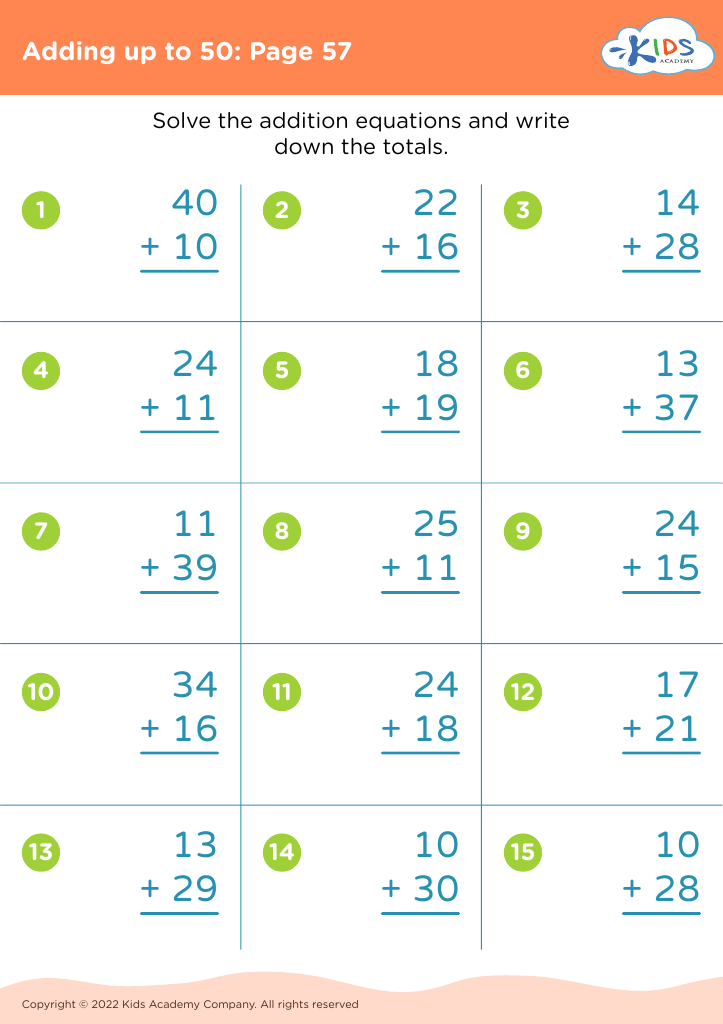
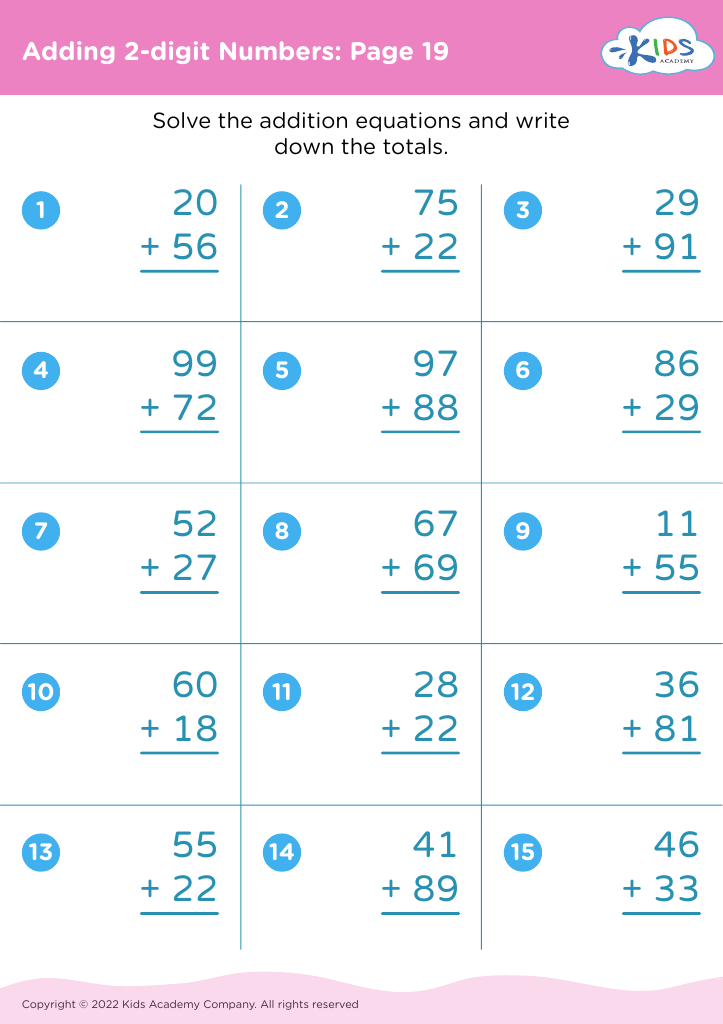








Enhancing vocabulary skills and mastery of addition and subtraction are critical components of a child's early education, profoundly influencing their overall academic success. First, a strong vocabulary enables children to articulate their thoughts more clearly and comprehend instructions or lessons effectively. This clarity is essential for grasping complex concepts in all subjects, including math.
For addition and subtraction, foundational understanding is paramount. These skills are not just about numbers; they are about building logical reasoning and problem-solving abilities. Learning to manipulate numbers helps children develop an understanding of patterns and mathematical relationships, setting the stage for future learning in more advanced mathematics.
Furthermore, vocabulary plays a crucial role in math-related language. Learning specific terms and phrases related to math, such as "sum," "difference," "plus," and "minus," allows students to communicate their thinking and understand the problems better. This integration makes math less intimidating and builds confidence.
Ultimately, supporting vocabulary development and numerical skills fosters critical thinking, encourages engagement, and prepares children for both academic challenges and real-world problem-solving, ensuring they have the tools needed for lifelong learning. Parents and teachers can play a vital role in this vital journey toward literacy and numeracy proficiency.








