
Fine motor development Addition & Subtraction Worksheets
4 filtered results
Difficulty Level
Grade
Age
-
From - To
Subject
Activity
Standards
Enhance your child's fine motor skills while mastering addition and subtraction with our engaging worksheets! Designed specifically for early learners, these printable activities not only introduce essential math concepts but also promote coordination and dexterity. Your child will enjoy tracing numbers, connecting dots, and completing fun puzzles that make learning fun and interactive. Each worksheet combines visual appeal with educational content, making it easy for parents and teachers to support skill development. Perfect for at-home practice or classroom use, our fine motor development worksheets ensure that kids build a strong foundation in math while refining their busy little hands. Get started today!
Favorites
With answer key
Interactive
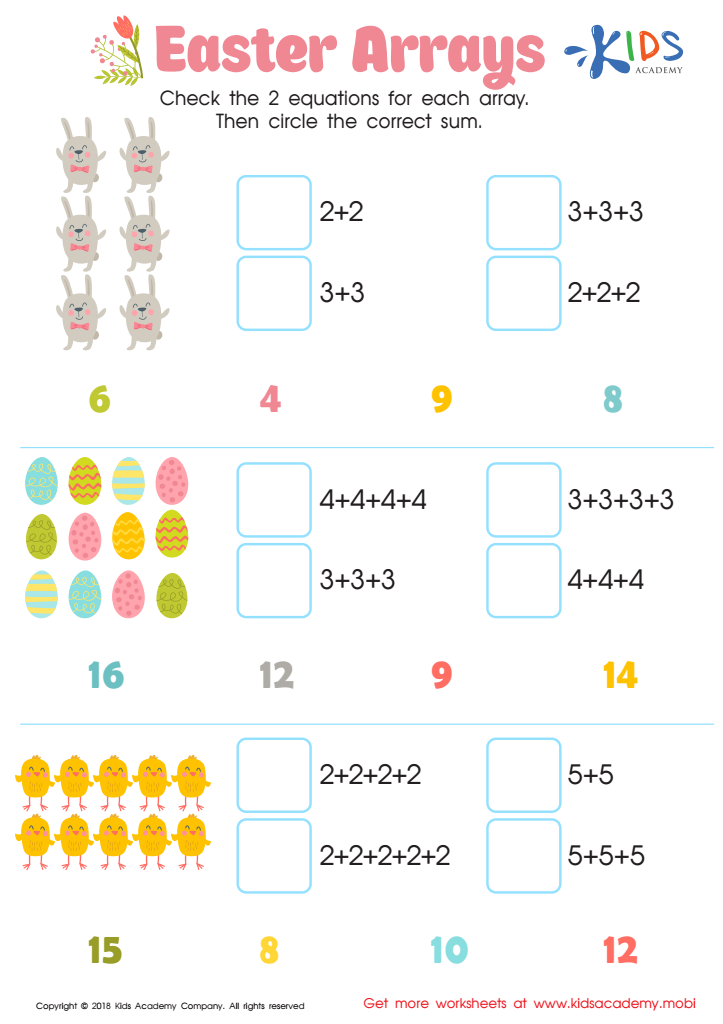
Easter Arrays Worksheet
Does your child love Easter? Do they adore the Easter bunny and egg hunts? Help them have fun with this worksheet! Go through it with them and check the equations for each array. Then, have them circle the correct sum. It's a great way to make the holiday extra exciting!
 Assign to My Students
Easter Arrays Worksheet
Worksheet
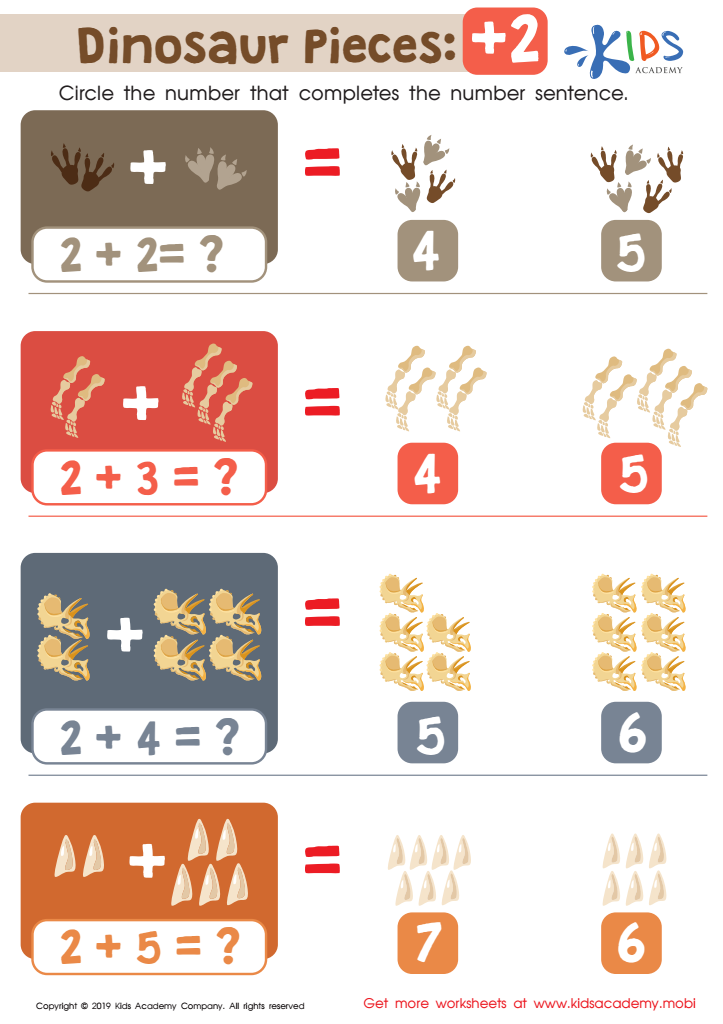
Dinosaur Pieces: +2 Worksheet
Kids love dinosaurs! See if your kids can solve these three equations featuring the mysterious creatures. Download the PDF and have them circle the number that completes each equation. Dinosaurs are extinct, not seen for thousands of years, but they can still help kids work on their math skills!
Dinosaur Pieces: +2 Worksheet
Worksheet
Join Kids Academy for Free
Who is primarily going to use this learning content?








Fine motor development is crucial for children's overall growth and learning, especially in early education. When children master fine motor skills, they gain better control over their hand movements, which is essential for tasks like writing, drawing, and manipulating tools. These skills directly contribute to their ability to perform mathematical operations, such as addition and subtraction.
When children engage in activities that foster fine motor skills—like cutting, coloring, or stringing beads—they simultaneously develop hand-eye coordination and dexterity. These abilities make it easier for them to grasp and understand mathematical concepts, allowing them to manipulate physical objects, such as counters or blocks, to learn addition and subtraction visually and tangibly.
Teachers and parents should prioritize fine motor activities in conjunction with math instruction, recognizing that these skills enhance children's problem-solving capabilities and boost their confidence. Encouraging integration of fine motor tasks with math practice helps reinforce connections between physical actions and cognitive understanding, laying a strong foundation for future learning in mathematics. Consequently, supporting fine motor development benefits not only academic performance but also nurtures a child's engagement, creativity, and enjoyment in learning—all valuable traits for lifelong success.








