Fine motor skills development Addition & Subtraction Worksheets
3 filtered results
-
From - To
Boost your child's learning journey with our engaging Fine Motor Skills Development Addition & Subtraction Worksheets. These worksheets are designed to enhance children's hand-eye coordination and dexterity while they explore foundational math concepts. Through fun, interactive activities, your little ones will practice addition and subtraction, all while strengthening their fine motor skills. Each worksheet includes tracing numbers, coloring, and connecting activities that make math feel playful. Ideal for preschool to early elementary age, these resources seamlessly combine skill-building with essential math practice, ensuring your children develop confidence and competence both in mechanics and comprehension as they progress in their educational journey.
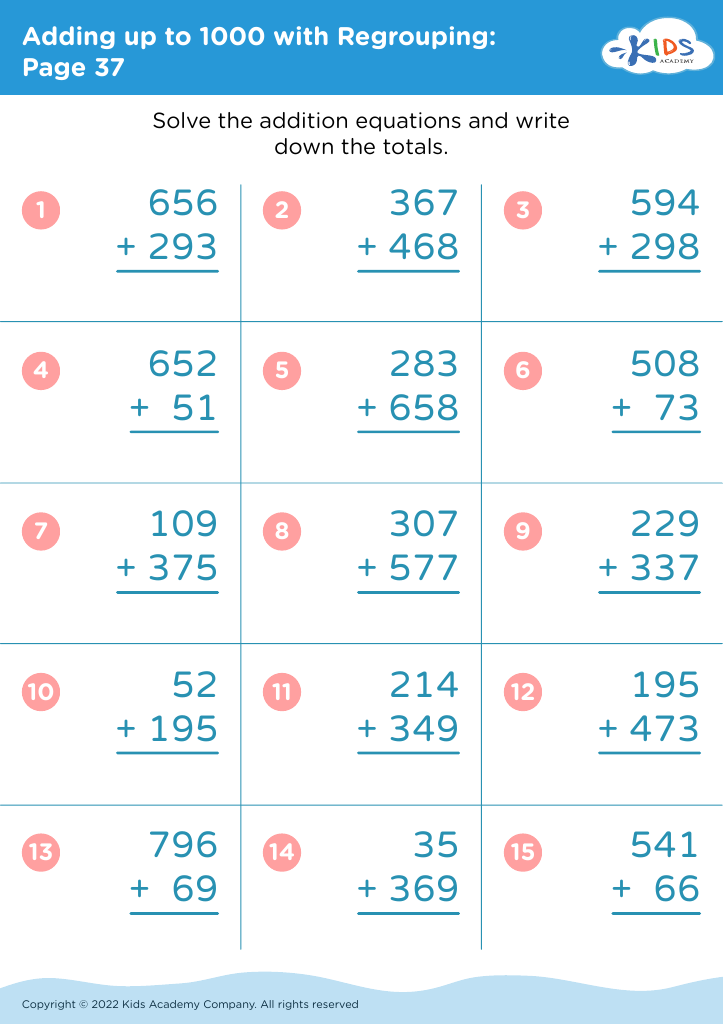
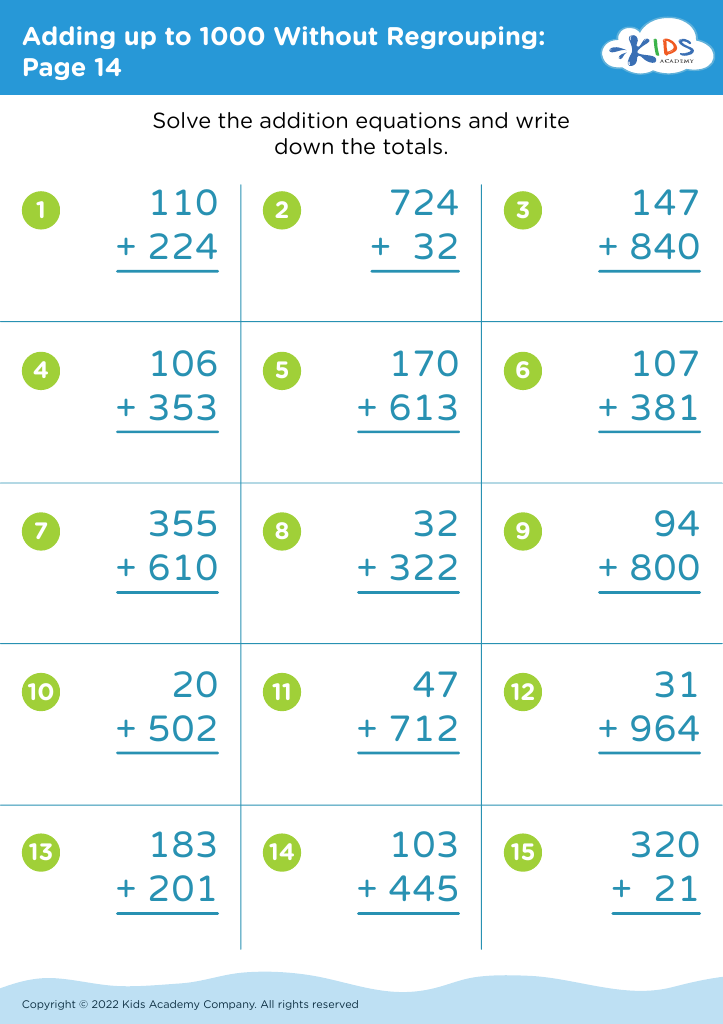
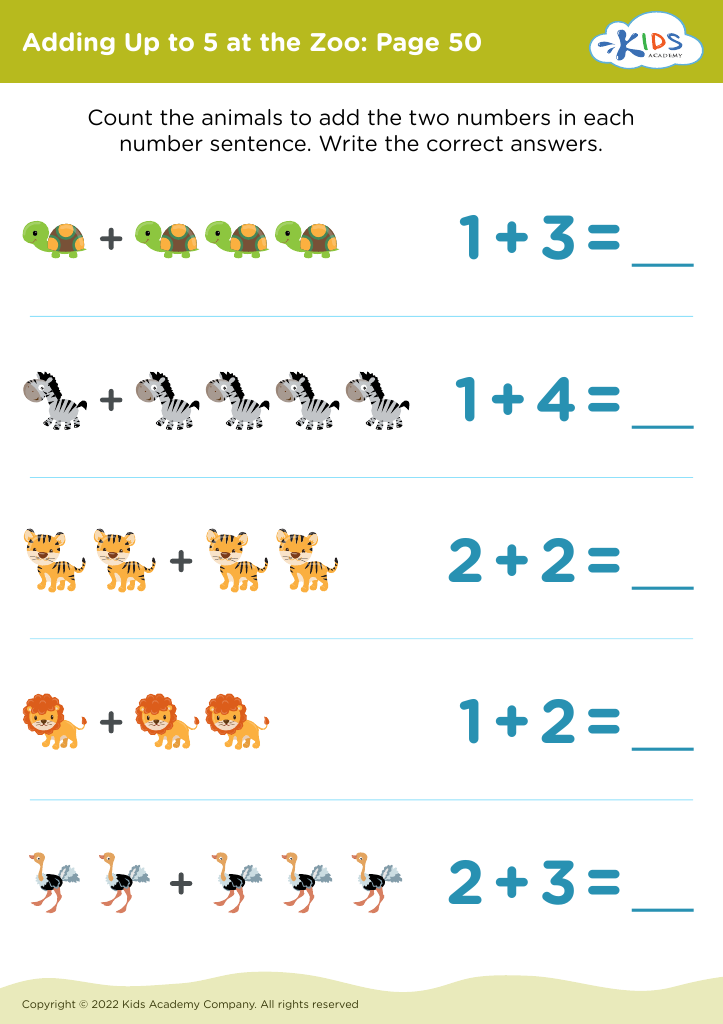








Fine motor skills development is crucial for children as it directly impacts their ability to perform everyday tasks and academic skills, such as writing, drawing, and even mathematics. When it comes to young learners, the development of fine motor skills is closely tied to their ability to work with addition and subtraction.
Children need precise control of their hands and fingers to manipulate tools like pencils, counters, or manipulatives that are commonly used in math activities. Strong fine motor skills enhance their capacity to engage with these materials, making math concepts more accessible and enjoyable. Moreover, foundational fine motor skills foster concentration, coordination, and confidence, allowing children to explore and understand mathematical operations more effectively.
For teachers and parents, supporting fine motor development through fun and engaging tactile activities—like playdough exercises, threading beads, or cutting with scissors—can enhance a child’s performance in addition and subtraction. When fine motor skills are well-developed, children are more likely to excel in mathematics, leading to a stronger foundation for future learning. Understanding this link encourages educators and parents to prioritize fine motor activities as an integral part of children’s math development, ultimately contributing to overall academic success.








