Nature appreciation Addition & Subtraction Worksheets
5 filtered results
-
From - To
Explore our engaging "Nature Appreciation Addition & Subtraction Worksheets," designed to enhance young learners' math skills while fostering a love for the environment. These worksheets seamlessly integrate mathematics with the beauty of nature, as children solve problems featuring vibrant images of plants, animals, and outdoor scenes. Ideal for early grades, these printable resources not only boost addition and subtraction abilities but also encourage an appreciation for the natural world. With various difficulty levels and fun exercises, educators and parents can inspire students to connect with nature while mastering essential math concepts. Discover a fun way to learn through nature today!
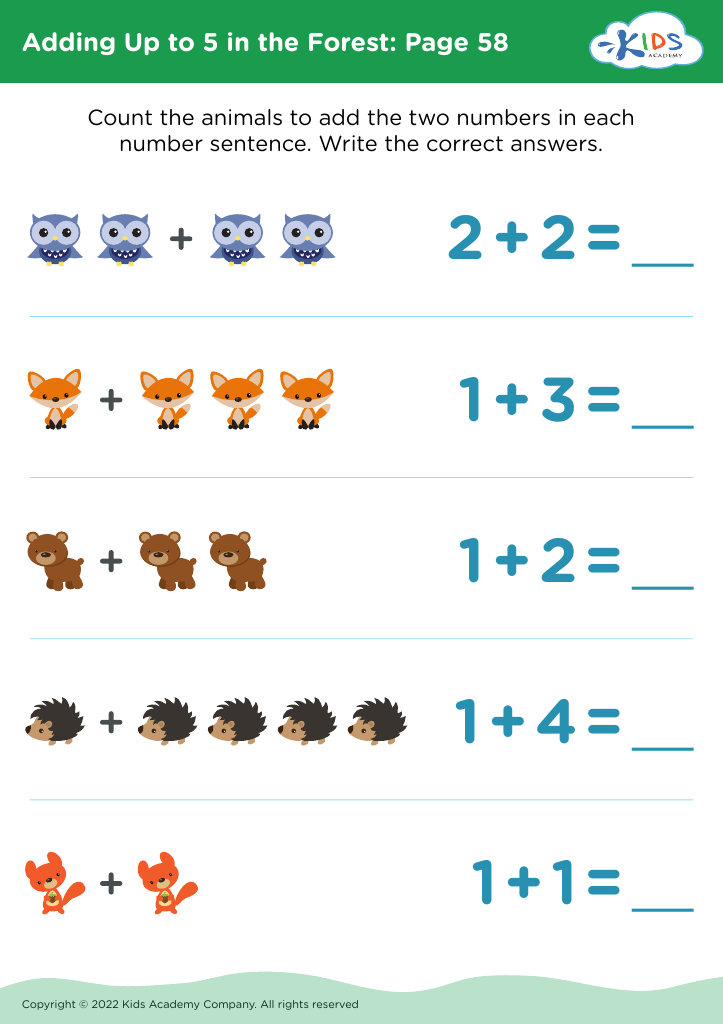
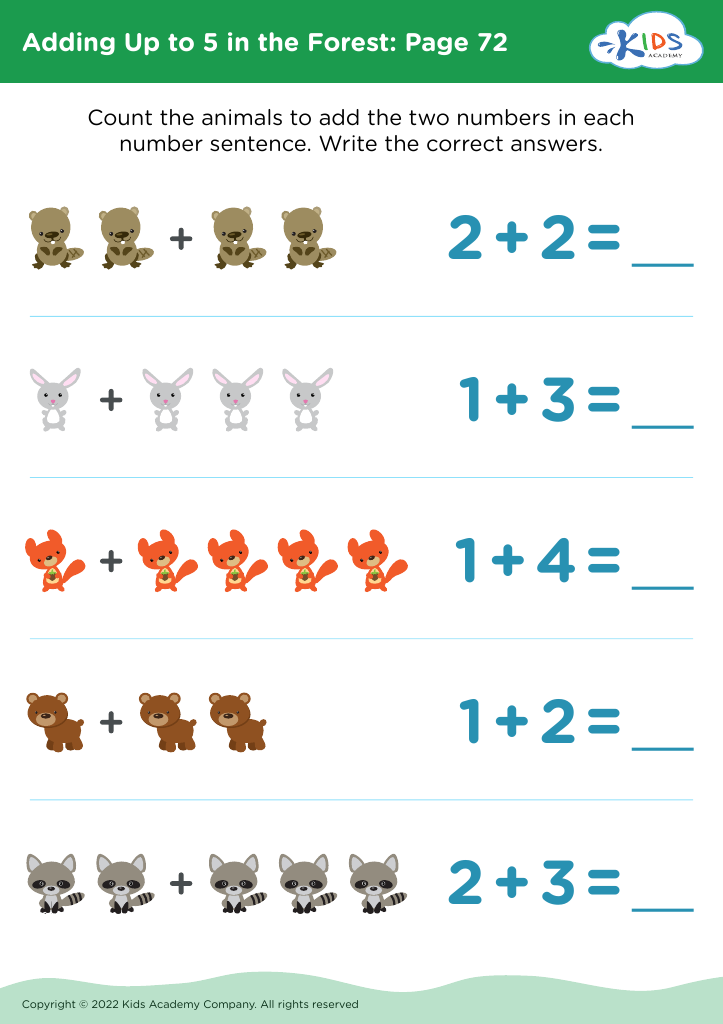
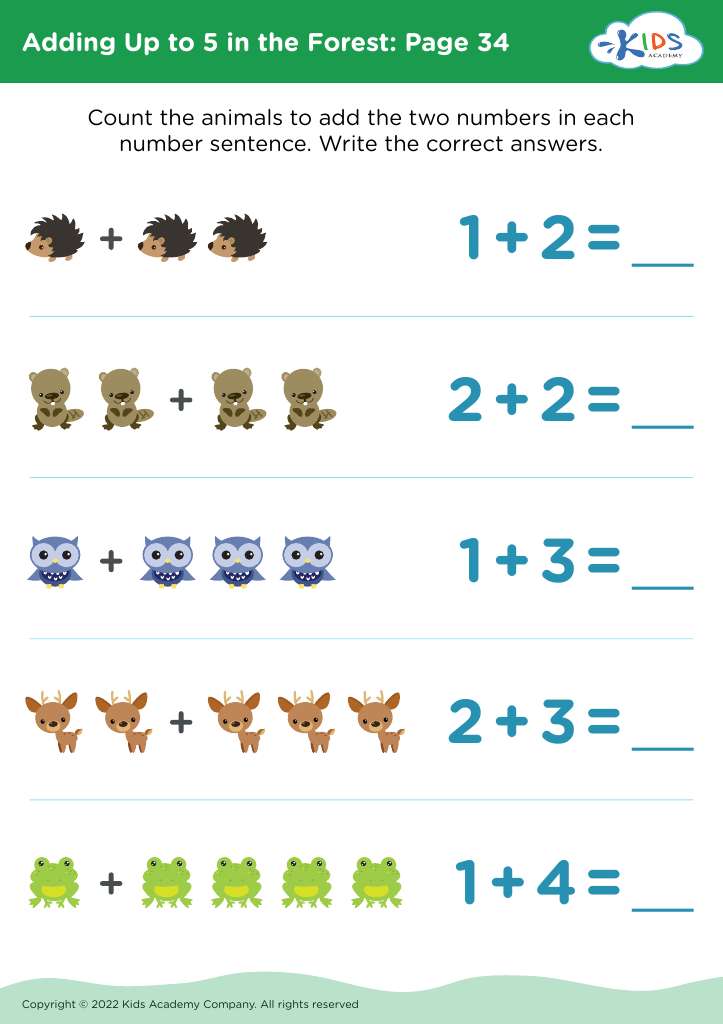
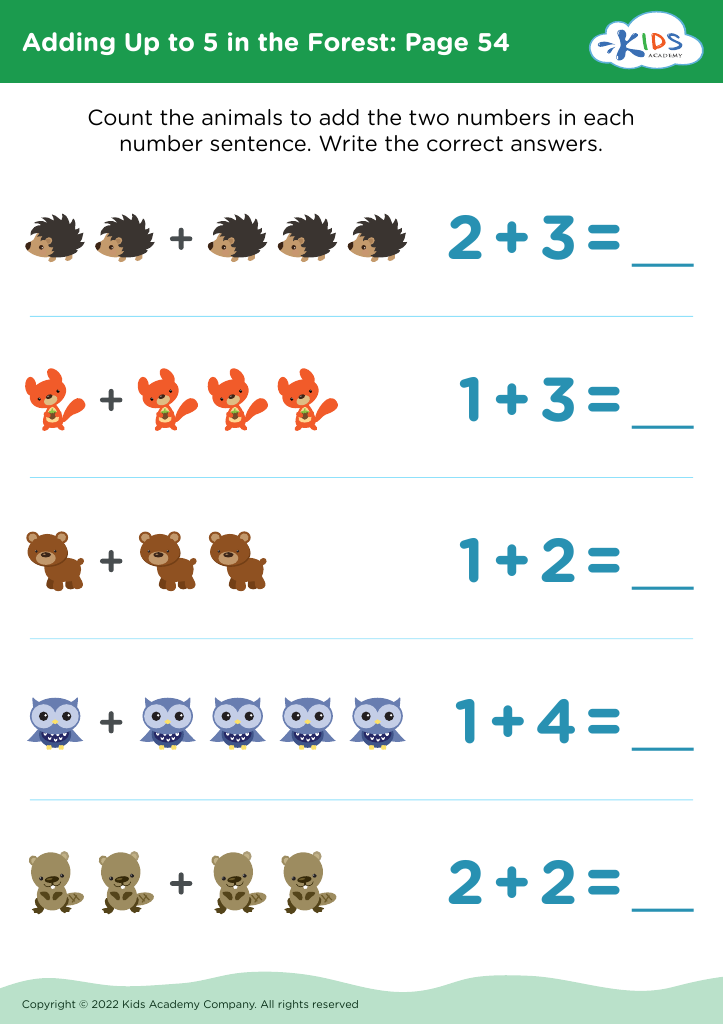
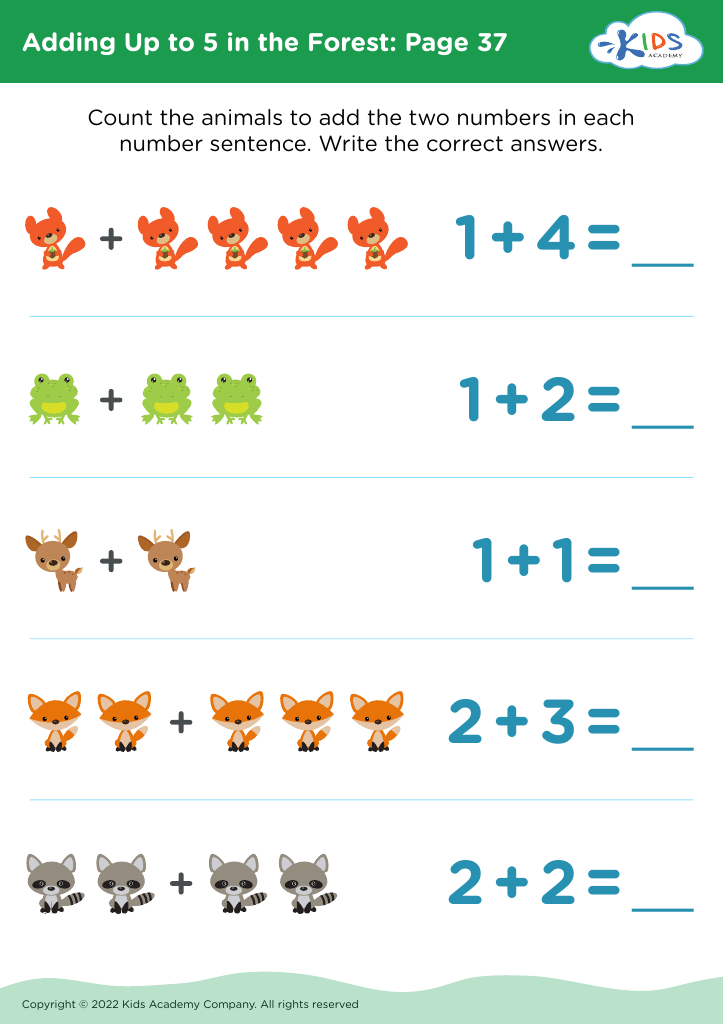








Nature appreciation intertwined with teaching addition and subtraction is essential for holistic child development. Engaging children with nature fosters curiosity, enhances observational skills, and promotes environmental stewardship while incorporating foundational math concepts. For instance, using natural materials like leaves, rocks, or sticks can transform arithmetic lessons into interactive experiences.
When children collect items from nature, they can practice counting, grouping, and performing simple addition or subtraction. For example, if a child collects ten leaves and then gives three to a friend, they practice subtraction while actively learning about the environment around them. This hands-on approach not only makes math relatable and fun but reinforces cognitive skills like problem-solving and critical thinking.
Moreover, nature exposure significantly boosts children’s well-being, reducing stress and improving focus—important factors for effective learning. By blending nature appreciation with foundational math skills, educators and parents are not only helping children comprehend essential math concepts but also instilling a sense of respect and responsibility towards the world they live in. This multifaceted approach enhances their academic journey while cultivating a connection to nature, ensuring that learning transcends traditional boundaries and nurtures responsible, informed future citizens.








