Pattern recognition Addition & Subtraction Worksheets
9 filtered results
-
From - To
Discover our engaging Pattern Recognition Addition & Subtraction Worksheets designed to make learning math fun and effective! These expertly crafted worksheets combine fundamental addition and subtraction exercises with exciting pattern recognition activities, perfect for young learners. By integrating appealing visuals and interactive elements, children can strengthen their arithmetic skills while developing critical thinking and problem-solving abilities. Ideal for classroom use or home practice, our worksheets cater to various learning styles, ensuring every child grasps key concepts at their own pace. Invest in your child's educational journey with our Pattern Recognition Addition & Subtraction Worksheets and watch their confidence and competence in math soar!
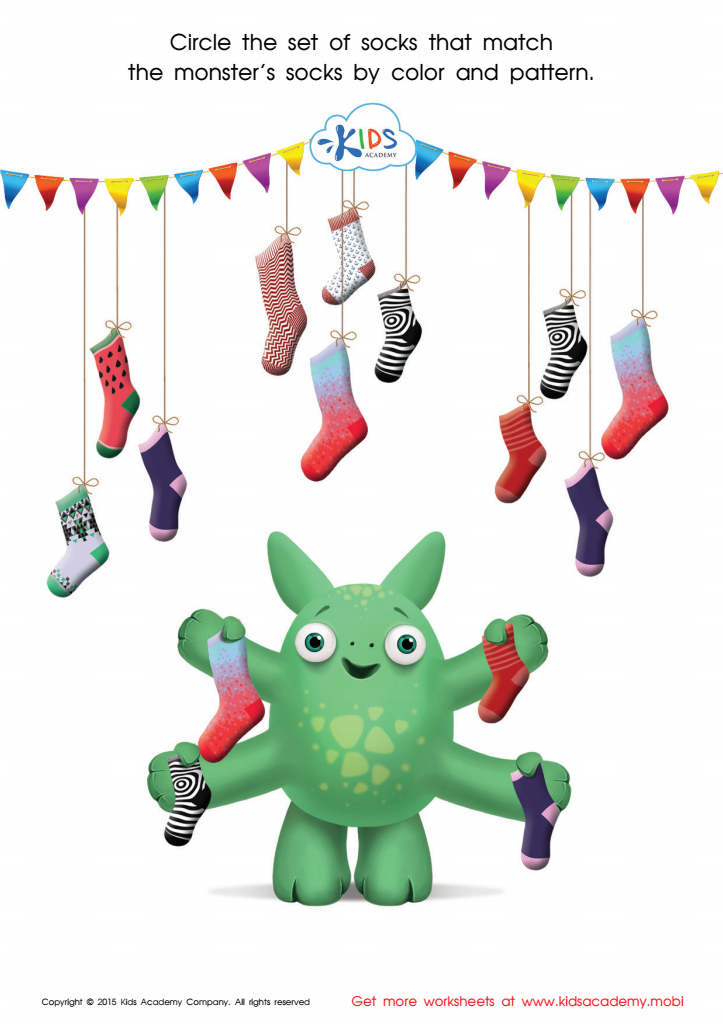
Sort the Monster's Socks Worksheet
 Assign to My Students
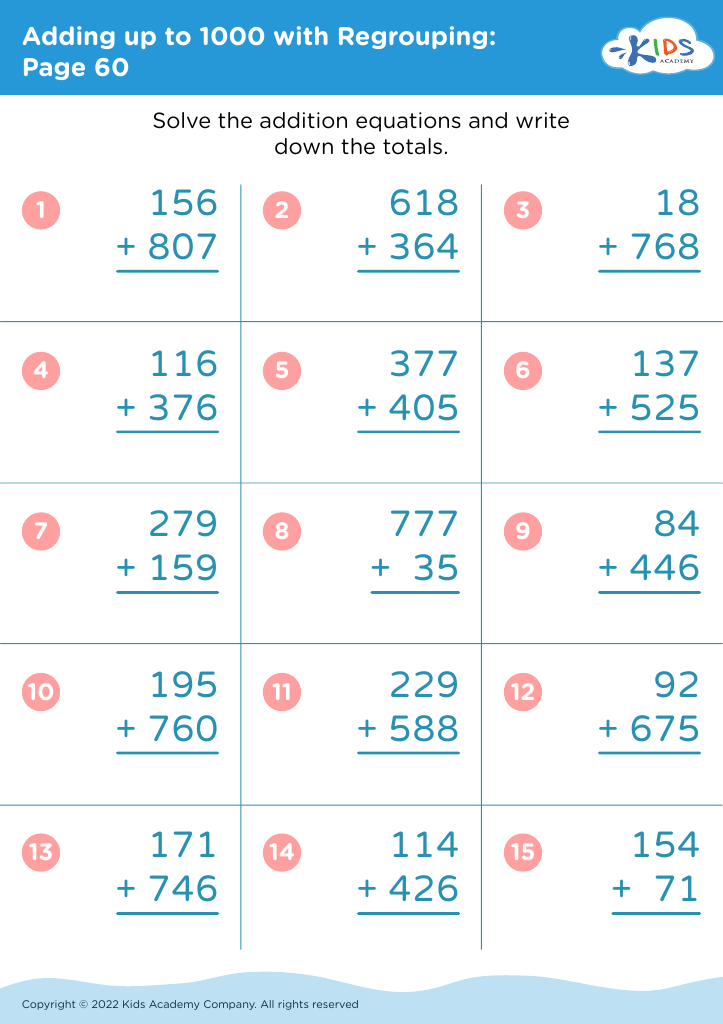
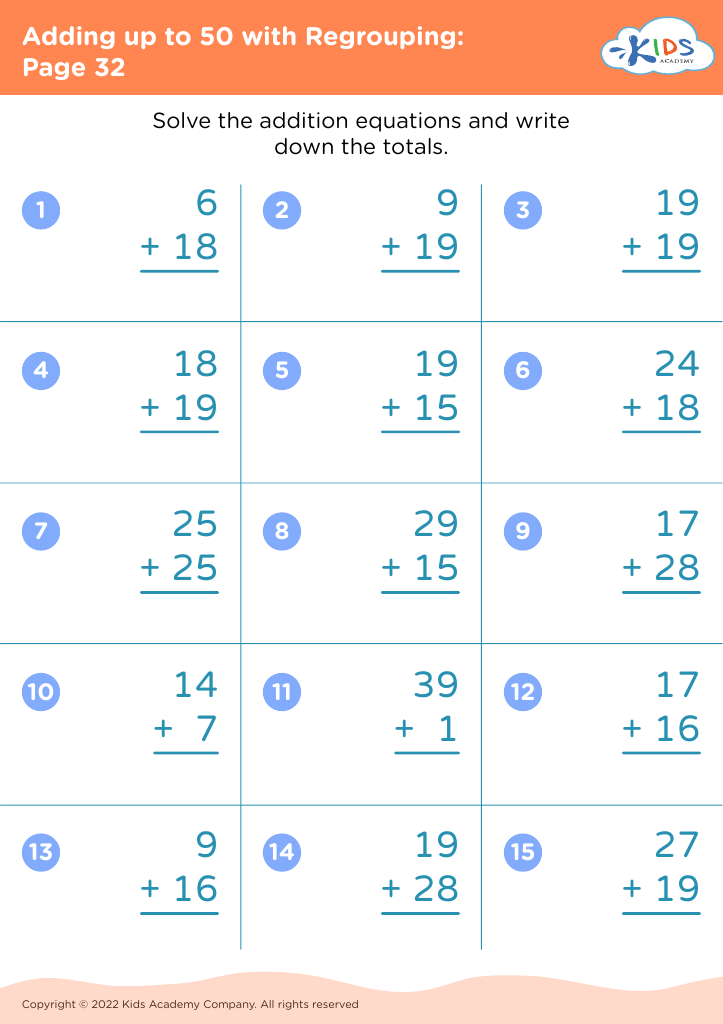
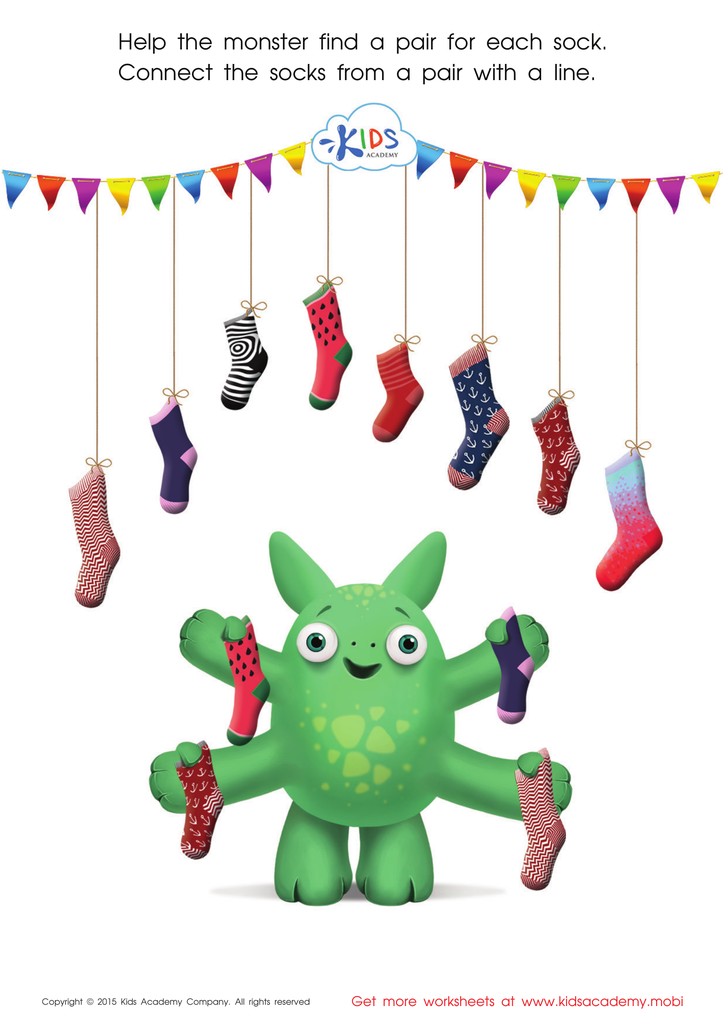
Math Matching Game: Monsterв's Socks Worksheet
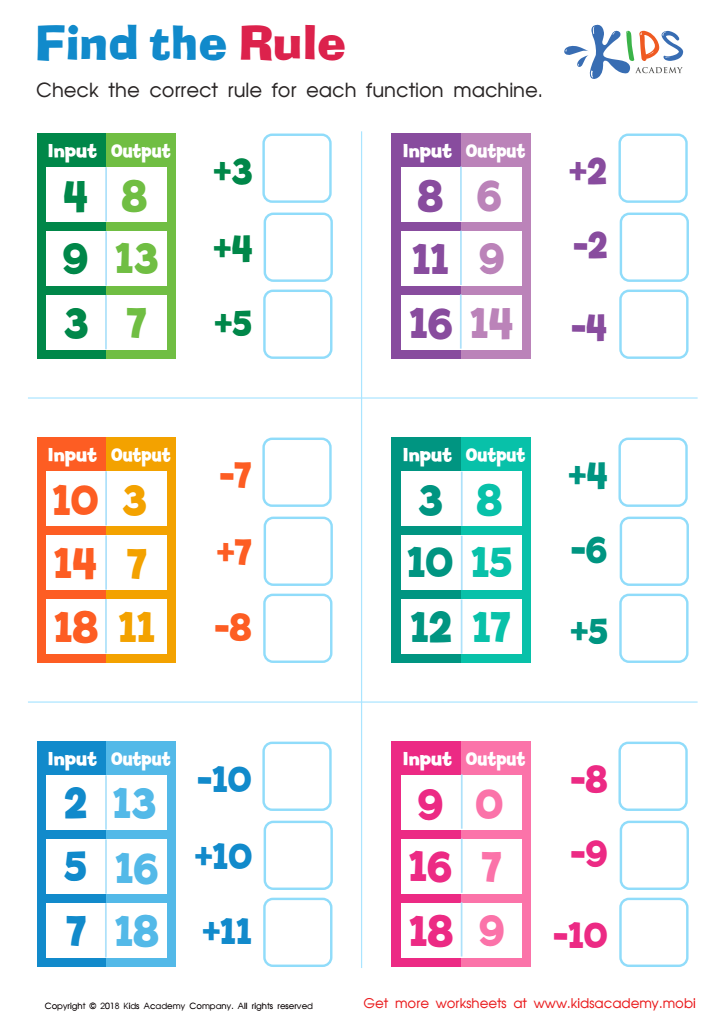
Find the Rule Worksheet
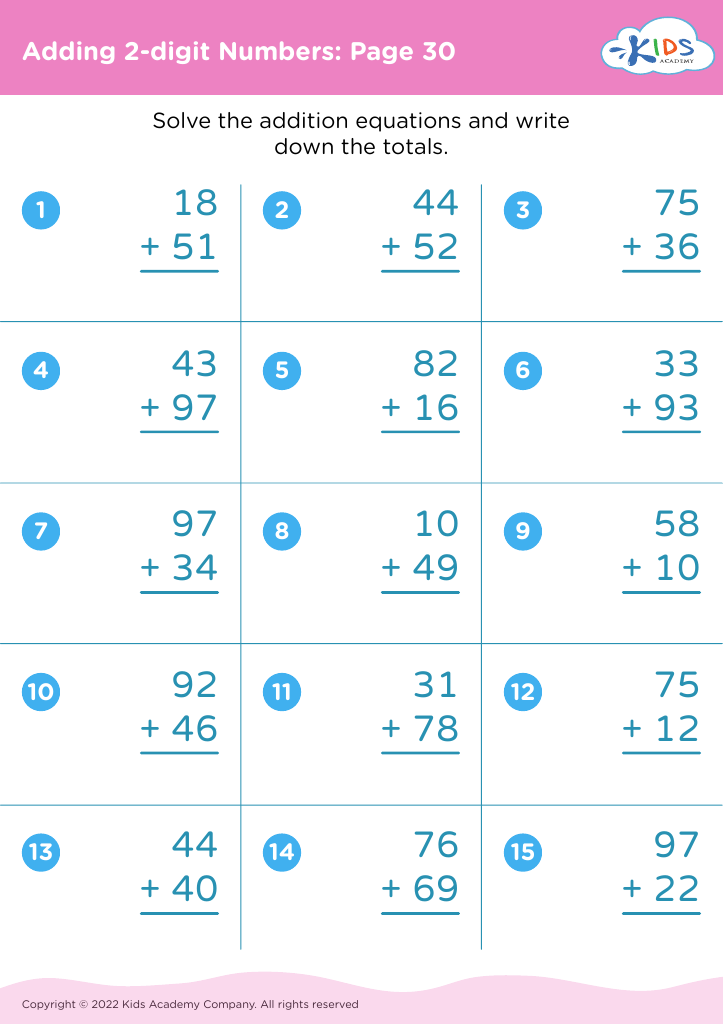
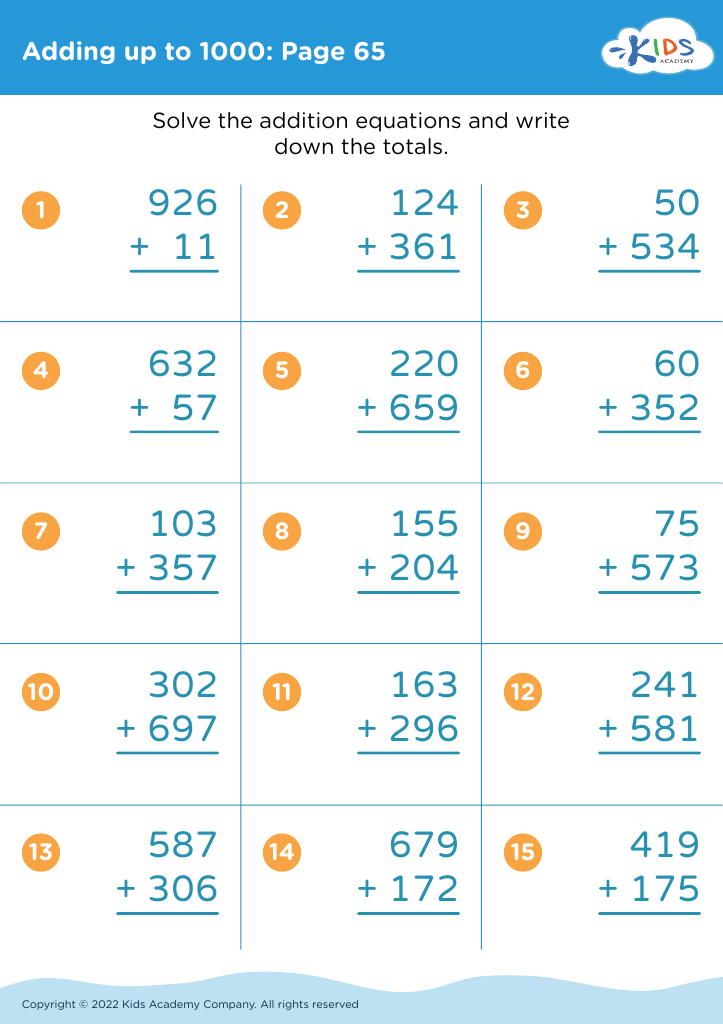
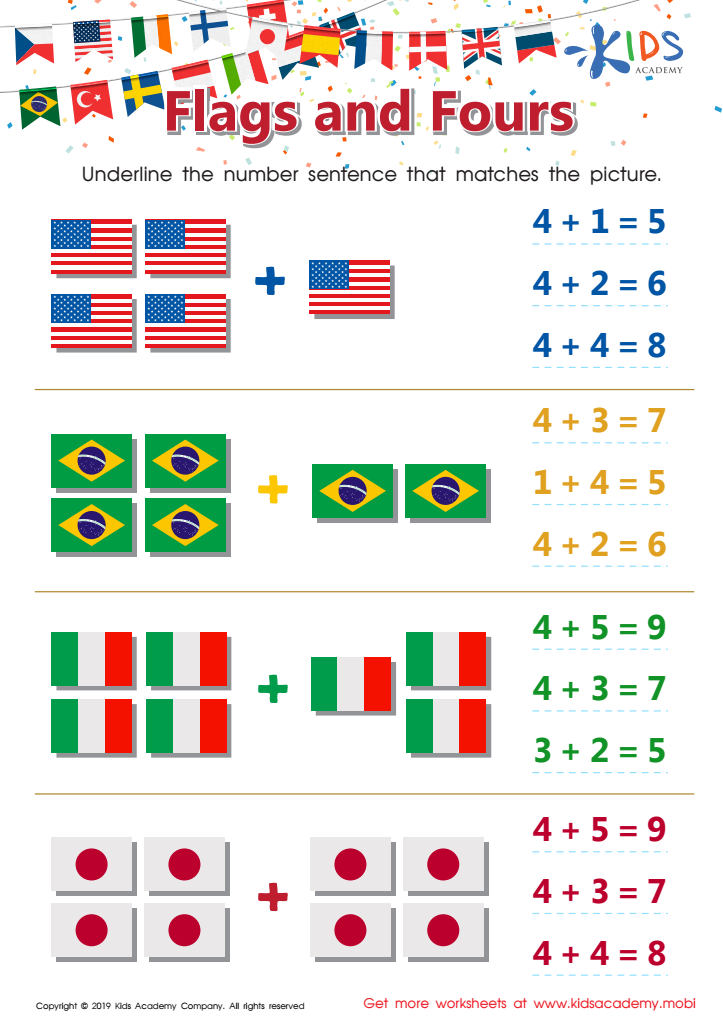
Flags and Fours Worksheet
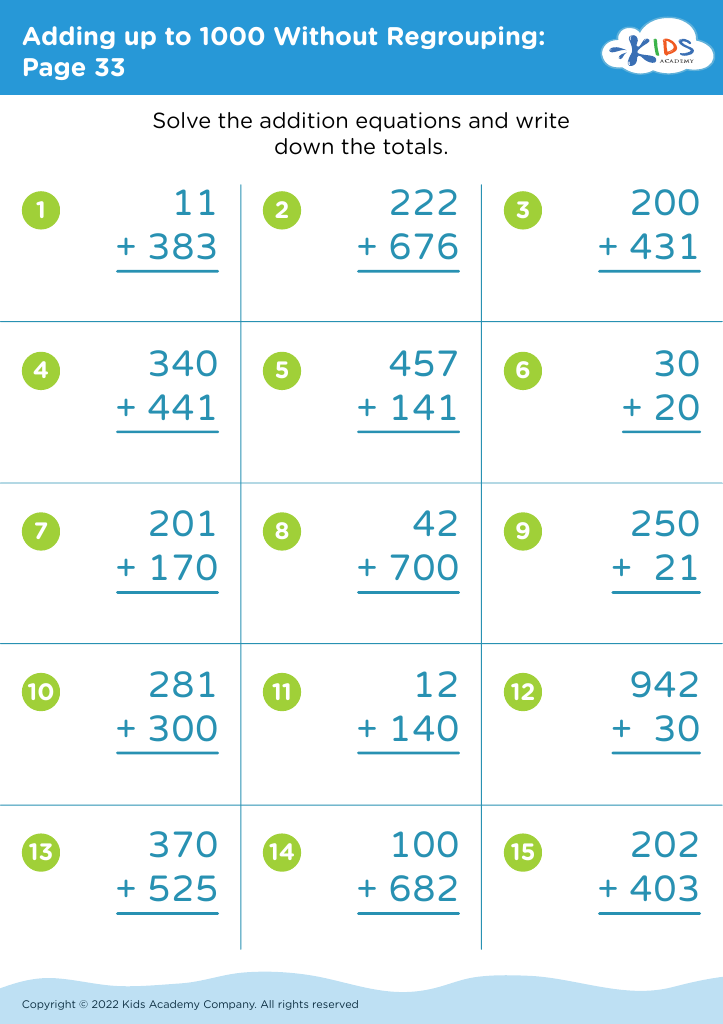








Pattern recognition in addition and subtraction is a foundational skill crucial for a child's mathematical development. For both parents and teachers, fostering this ability can significantly benefit a child's overall understanding and performance in math.
First, recognizing patterns helps children grasp the basic concepts of addition and subtraction more intuitively. By observing and understanding numeric patterns, such as sequences or the relationship between numbers, children can solve problems more efficiently and with greater ease.
Furthermore, pattern recognition supports the development of logical thinking and problem-solving skills. When students identify patterns, they learn logical sequences and predictive abilities, which are essential for more advanced math concepts and everyday problem-solving scenarios.
Additionally, building strong pattern recognition skills in early education sets the stage for success in higher-level math. Concepts like multiplication, division, algebra, and geometry often rely on a firm understanding of patterns identified in basic arithmetic.
Lastly, when children recognize and understand patterns, they gain confidence in their math abilities. This confidence can propel their academic success, leading to a more positive attitude toward learning and education as a whole.
By valuing and encouraging pattern recognition in addition and subtraction, parents and teachers are laying a strong, resilient foundation for a child's lifetime of math learning and cognitive development.








