Practicing mental arithmetic Addition & Subtraction Worksheets
3 filtered results
-
From - To
Enhance your child's math skills with our engaging "Practicing Mental Arithmetic Addition & Subtraction Worksheets." Designed for early learners, these worksheets focus on improving mental math through fun activities that boost confidence and speed in addition and subtraction. By practicing regularly, students will develop essential skills that lay the groundwork for future math success. Each worksheet includes a variety of challenges tailored to different learning levels, ensuring that kids remain motivated and excited about learning. Explore our comprehensive resources and help your child become a whiz at mental arithmetic today! Start building their mathematical foundation effortlessly and joyfully!
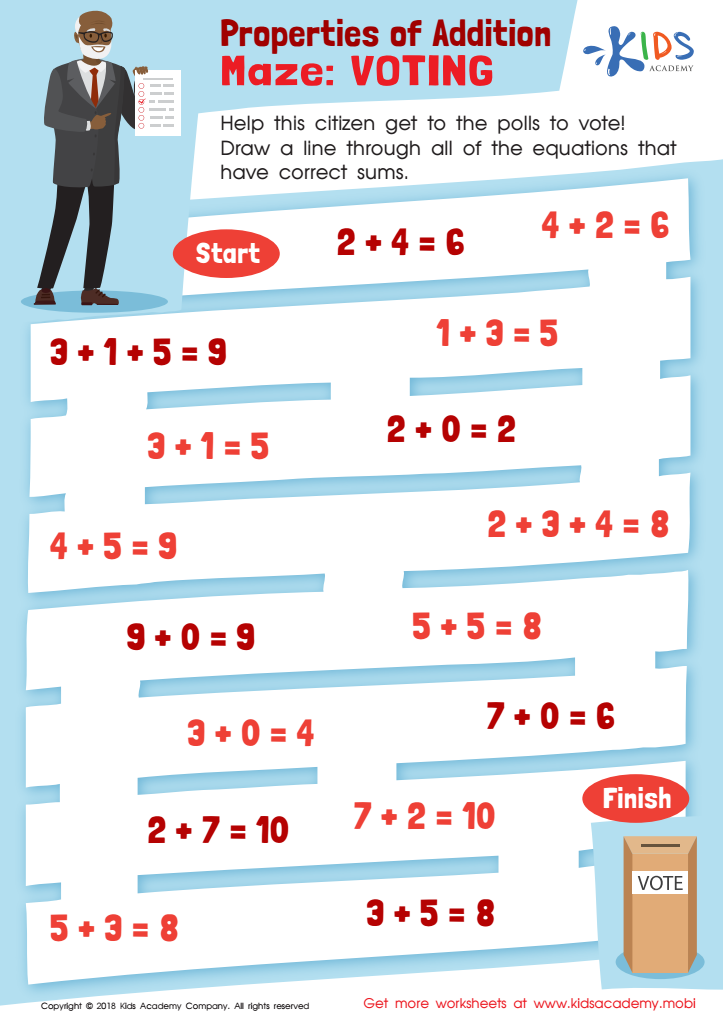
Properties of Addition Maze: Voting Worksheet
 Assign to My Students
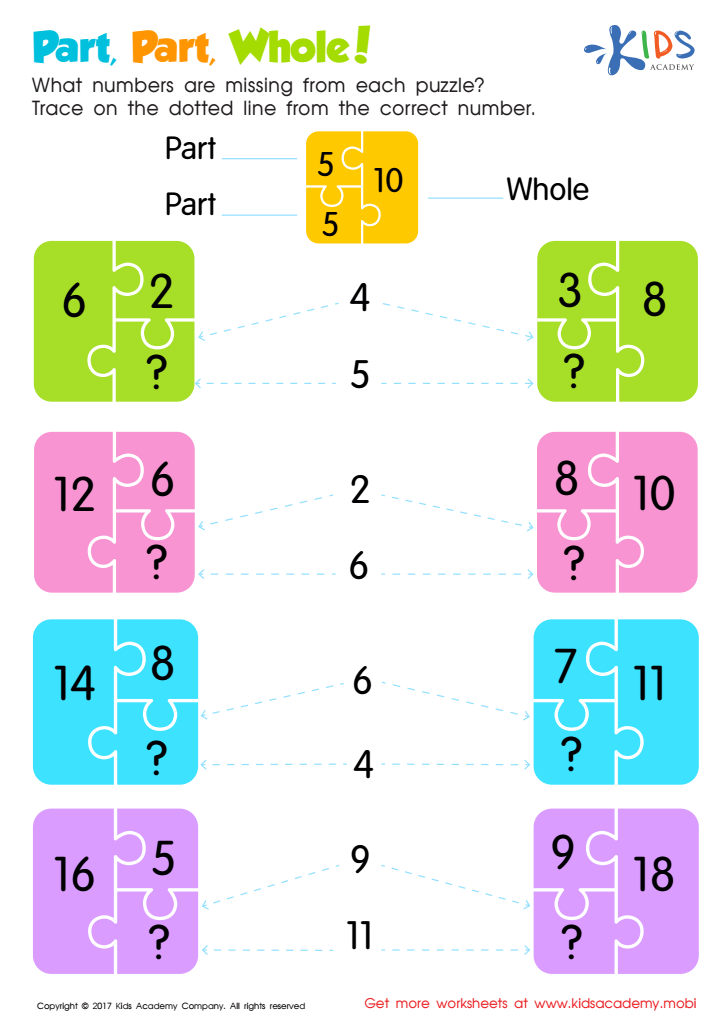
Part, Part, Whole Worksheet








Practicing mental arithmetic, particularly addition and subtraction, is crucial for early learners, and both parents and teachers play a vital role in fostering these skills. Mental arithmetic strengthens foundational math abilities, which are essential for more advanced mathematical concepts later on. It helps children develop numerical fluency, enabling them to quickly and accurately solve problems without reliance on calculators or written methods.
Moreover, mental arithmetic enhances cognitive skills such as memory, reasoning, and problem-solving. Children learn to process information more efficiently and can engage in mathematical thinking fluidly, which builds confidence in their abilities.
For parents, participating in these practices can create enriching bonding experiences. Simple games and everyday scenarios can encompass mental arithmetic, demonstrating its practical application in real life.
For teachers, integrating mental arithmetic into the classroom fosters a vibrant learning environment that encourages participation and excitement for math. Regular practice can contribute to higher self-esteem and motivation among students, as they experience the satisfaction of solving problems.
Overall, nurturing mental arithmetic skills in young learners equips them for academic success, promotes critical thinking, and prepares them for the everyday math challenges of life. This emphasis on foundational skills is integral to their overall educational journey.








