Reading clocks Addition & Subtraction Worksheets
3 filtered results
-
From - To
Enhance your child's math skills with our "Reading Clocks Addition & Subtraction Worksheets" available at Kids Academy! These engaging and educational worksheets teach children to read analog clocks while solving addition and subtraction problems. Perfect for kids in early grades, our carefully designed materials help sharpen time-telling abilities and reinforce essential math concepts. Each worksheet provides fun, interactive exercises that boost confidence and make learning enjoyable. Download, print, and watch as your little learners advance their math skills effortlessly. Start practicing today with Kids Academy and lay a strong foundation for your child's academic success!
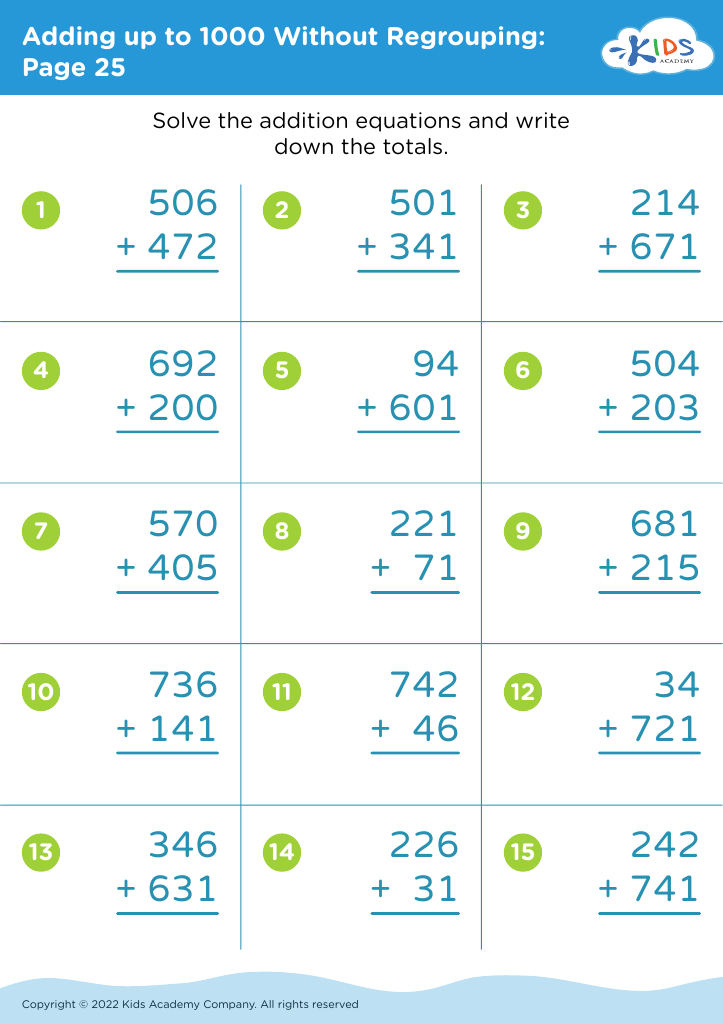
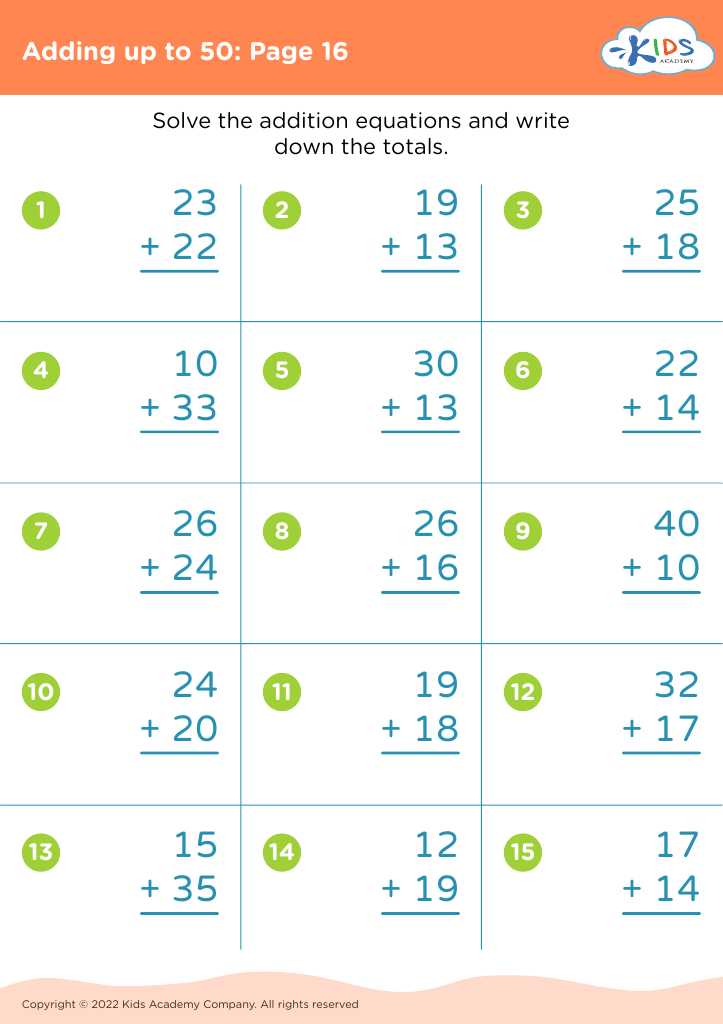
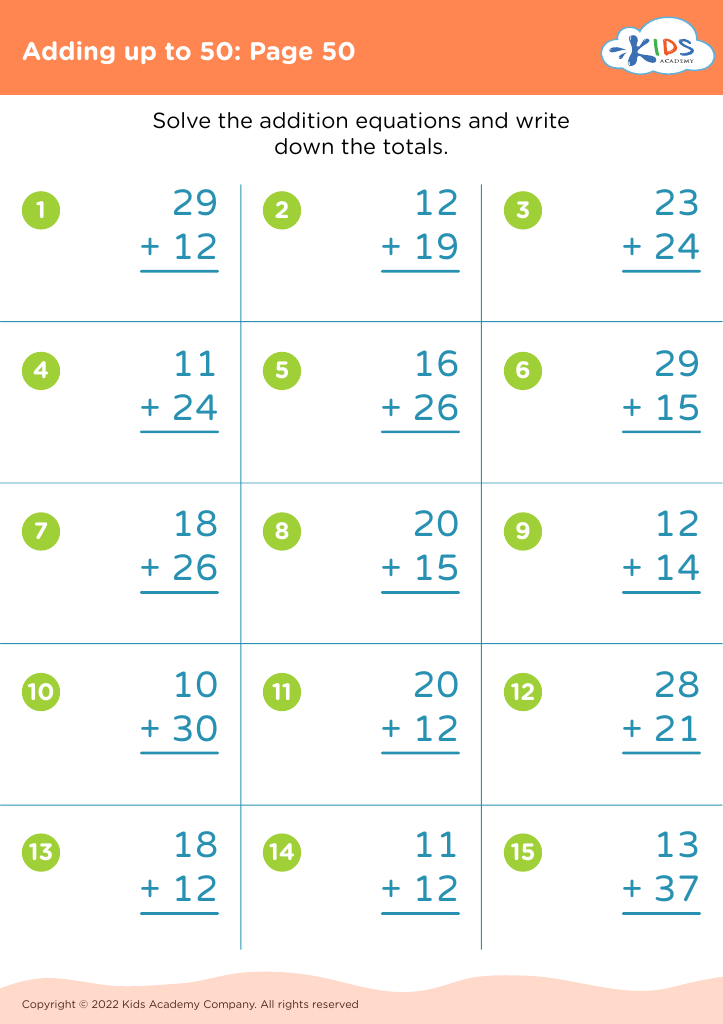








Reading clocks, addition, and subtraction are foundational skills critical for young learners' overall development. Understanding how to read clocks fosters time management and organizational skills. It enables children to comprehend daily schedules, recognize the importance of punctuality, and develop routine activities independently. Being able to tell time also integrates mathematical concepts such as sequencing and interval recognition, enhancing their ability to grasp more complex mathematical principles later on.
Addition and subtraction, on the other hand, are the fundamental arithmetic operations upon which all other math skills are built. These skills promote logical thinking and problem-solving abilities. Mastery of addition and subtraction allows children to tackle everyday tasks like counting money, measuring ingredients for a recipe, or even understanding basic statistics in sports. Additionally, these operations lay the groundwork for future academic pursuits in science, technology, engineering, and math (STEM) fields.
Parents and teachers should nurture these abilities to ensure that children do not just achieve academic proficiency but also develop confidence and autonomy in practical day-to-day activities. Moreover, strengthening these skills early on can foster a positive attitude towards learning, cultivating a lifelong love for inquiry and knowledge.








