Shape Recognition Addition & Subtraction Worksheets
34 filtered results
-
From - To
Our Shape Recognition Addition & Subtraction Worksheets are designed to seamlessly integrate math and geometry for early learners. These engaging printables help children master shape identification while reinforcing their addition and subtraction skills. Perfectly tailored for preschool and kindergarten students, each worksheet combines fun visuals with thought-provoking exercises to make learning math enjoyable and interactive. Young minds will develop essential problem-solving abilities as they recognize different shapes, count their sides, and solve simple equations. Boost your child's confidence and foundational math skills with our expertly crafted worksheets designed to inspire a lifelong love for learning.
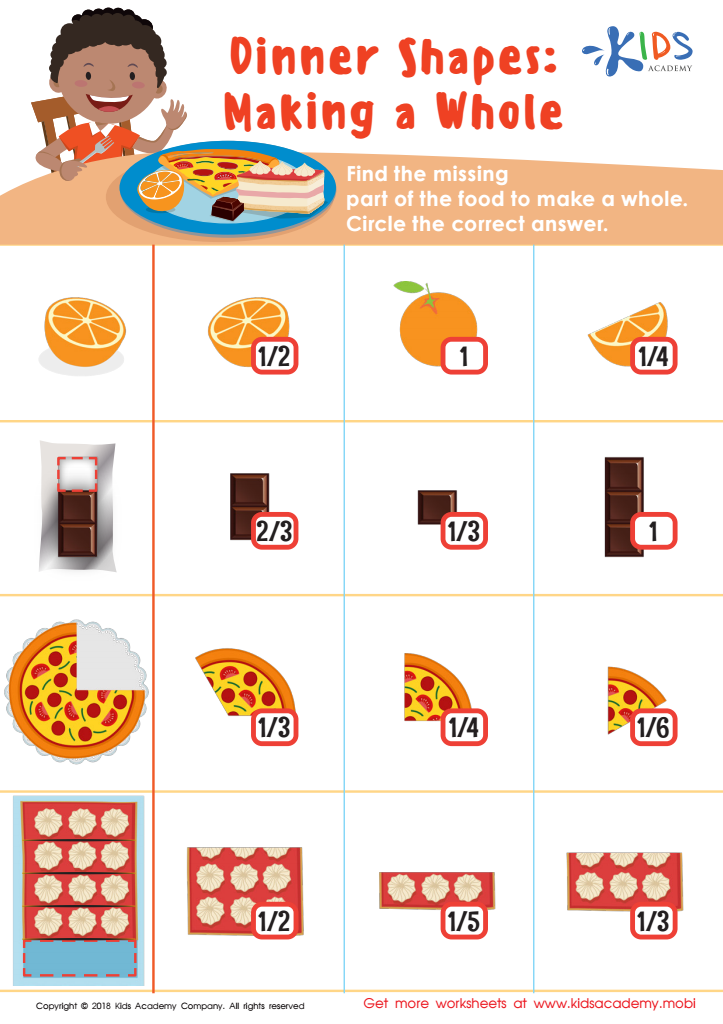
Dinner Shapes: Making a Whole Worksheet
 Assign to My Students
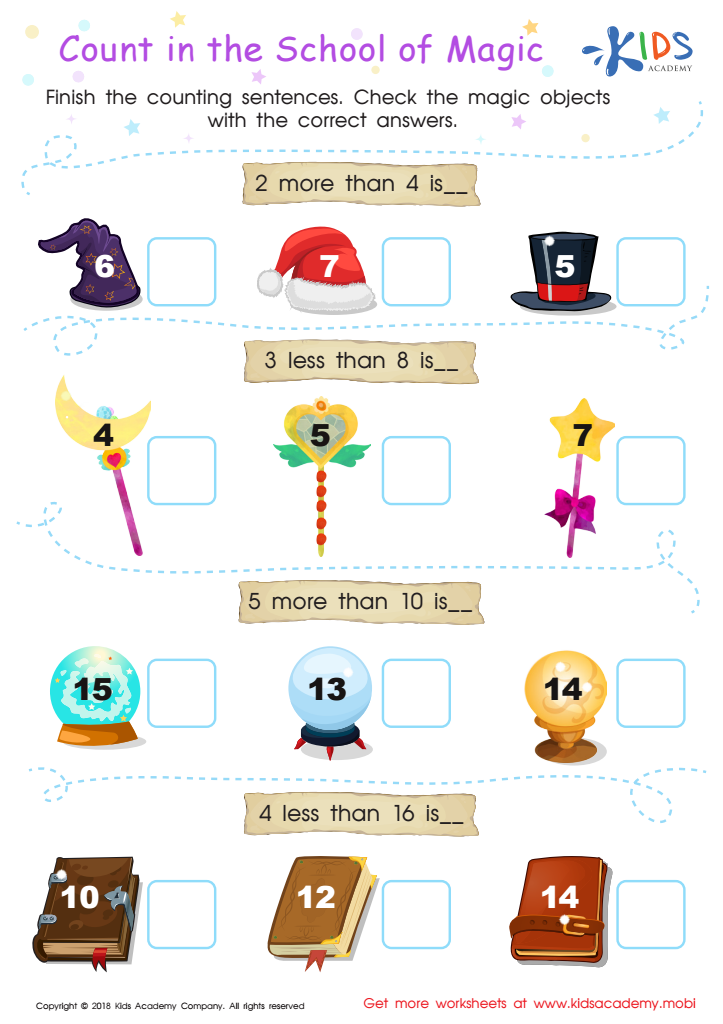
Count in the School of Magic Worksheet
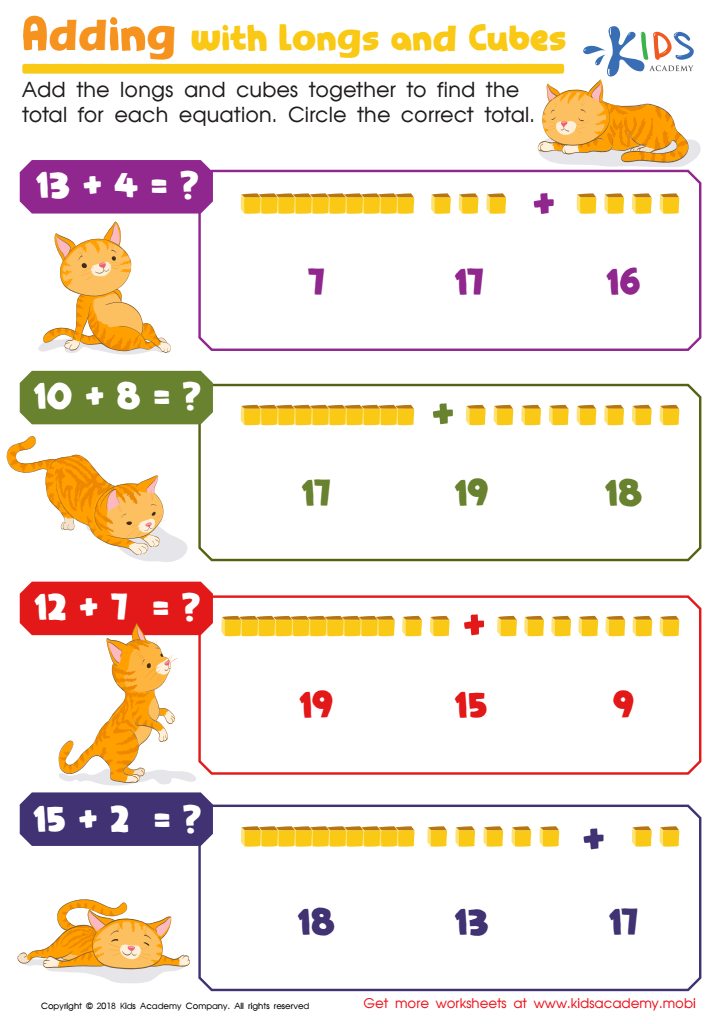
Adding With Longs and Cubes Worksheet








Parents and teachers should deeply care about Shape Recognition and Addition & Subtraction for early learners because these skills form foundational blocks in a child's cognitive and mathematical development. Recognizing shapes goes beyond identifying circles, squares, and triangles—it helps children understand and categorize the world around them. This ability to see patterns and organize information fundamentally aids problem-solving skills, which is crucial for mathematical concepts and beyond.
Addition and subtraction, on the other hand, introduce children to basic arithmetic, establishing a necessary groundwork for more advanced math skills. Early exposure ensures that children grasp the concepts of quantity, balance, and basic operations, which are ubiquitous in both academic contexts and daily life situations.
Integrating these skills promotes holistic learning. Shape recognition can be paired with counting exercises where children count the sides of shapes, leading seamlessly into adding and subtracting exercises involving those figures. This interdisciplinary approach helps children see the relevance and application of what they learn, making them more engaged and retaining the information longer.
Moreover, mastery in these areas boosts confidence and encourages a positive attitude towards more complex mathematical problems later in their academic journey. Therefore, reinforcing these fundamental skills helps set children up for a lifetime of learning and problem-solving success.








