Understanding directions Addition & Subtraction Worksheets
3 filtered results
-
From - To
Welcome to our "Understanding Directions: Addition & Subtraction Worksheets" page, designed to enhance your child's math skills! These engaging worksheets help students grasp essential concepts of addition and subtraction while following clear instructions. By practicing with varied exercises, children learn to decipher written directions, fostering both mathematical understanding and critical thinking skills. Our resources cater to different learning levels, ensuring that every child can build their confidence in arithmetic. Perfect for home or classroom use, these worksheets make learning fun and interactive. Explore our collection today and watch your child's mathematical abilities flourish!
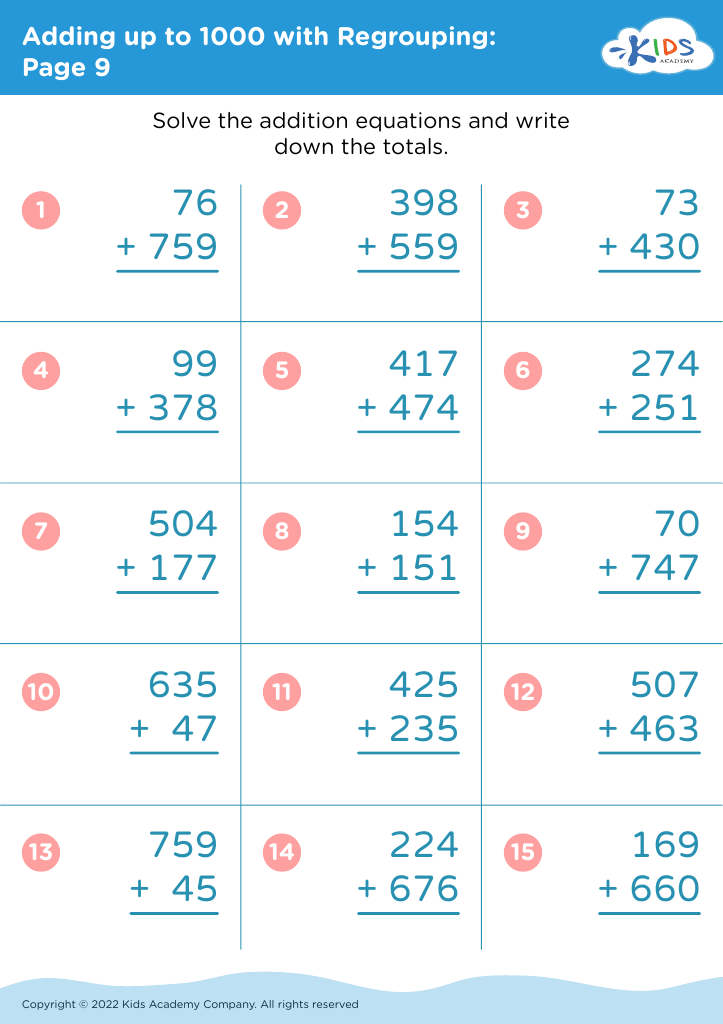
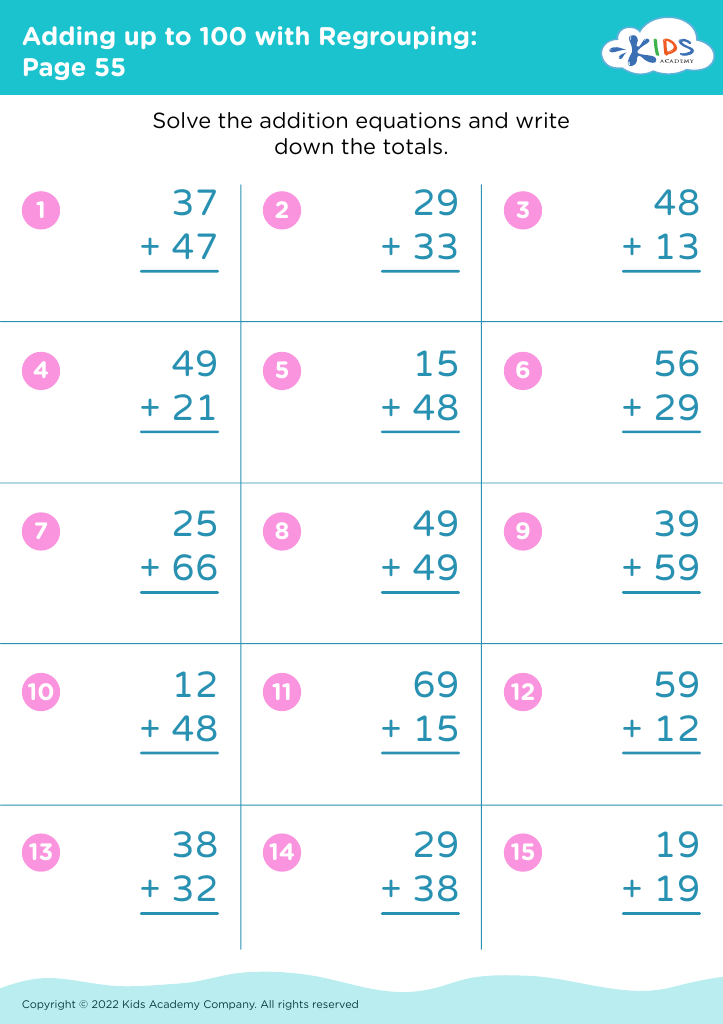
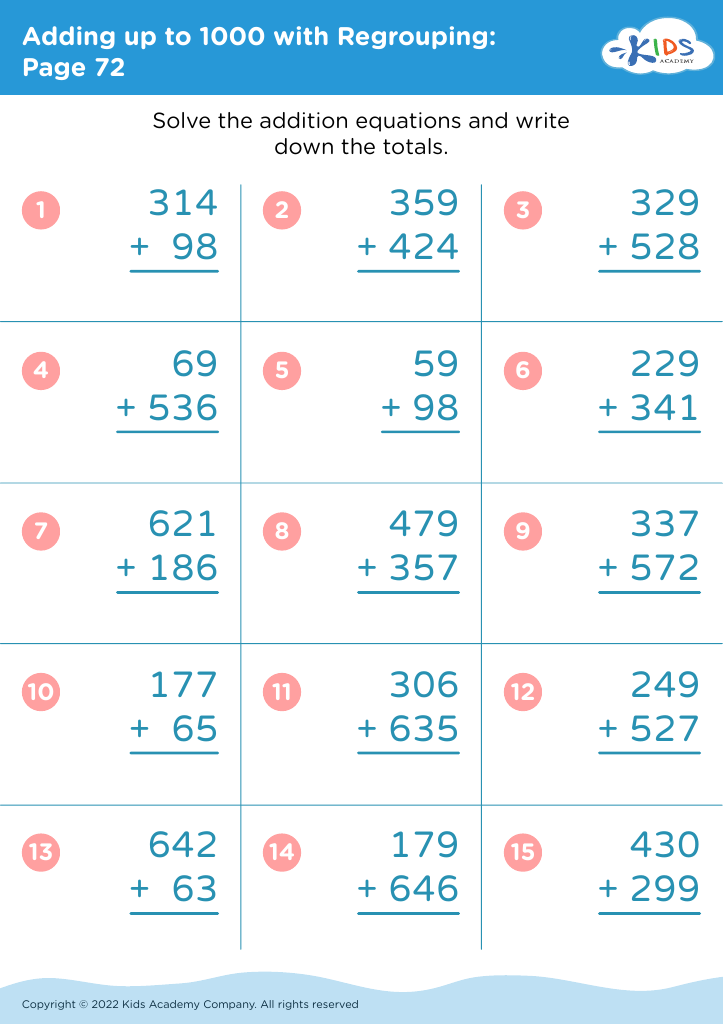








Understanding directions in addition and subtraction is crucial for early learners as it sets the foundation for their overall math competency. For parents and teachers, recognizing the importance of following directions can enhance a child's ability to comprehend and solve mathematical problems effectively. When students are taught to accurately interpret and execute operational directions (e.g., "find the sum" or "subtract the following"), they develop critical thinking and problem-solving skills that extend beyond mathematics.
These skills encourage independent learning and boost self-confidence. Children learn to pay attention to details, which is essential not just in math, but throughout their education and life. Mastery of these concepts also aids in preparing students for more advanced mathematical operations, allowing for smoother transitions as they progress in their studies.
Moreover, understanding directions can foster collaboration and communication skills. When children work in pairs or groups, they learn to articulate their thought processes while seeking clarity on tasks, which lays the groundwork for synergy in teamwork. For parents and teachers, a focus on direction comprehension in addition and subtraction fosters an environment where students can thrive academically and socially, ensuring a well-rounded educational experience.








