Understanding equality Addition & Subtraction Worksheets
4 filtered results
-
From - To
Explore our engaging "Understanding Equality Addition & Subtraction Worksheets" designed for young learners! These worksheets help children grasp the concept of numerical equality, empowering them to solve addition and subtraction problems with confidence. Through interactive activities, students practice balancing equations, enhancing their problem-solving and critical-thinking skills. Perfectly aligned with early-grade math curriculums, our printable resources make learning fun and effective. Whether for classroom integration or home practice, these worksheets provide essential exercises that support a solid math foundation. Help your child understand equality in math today and set them on a path to academic success!
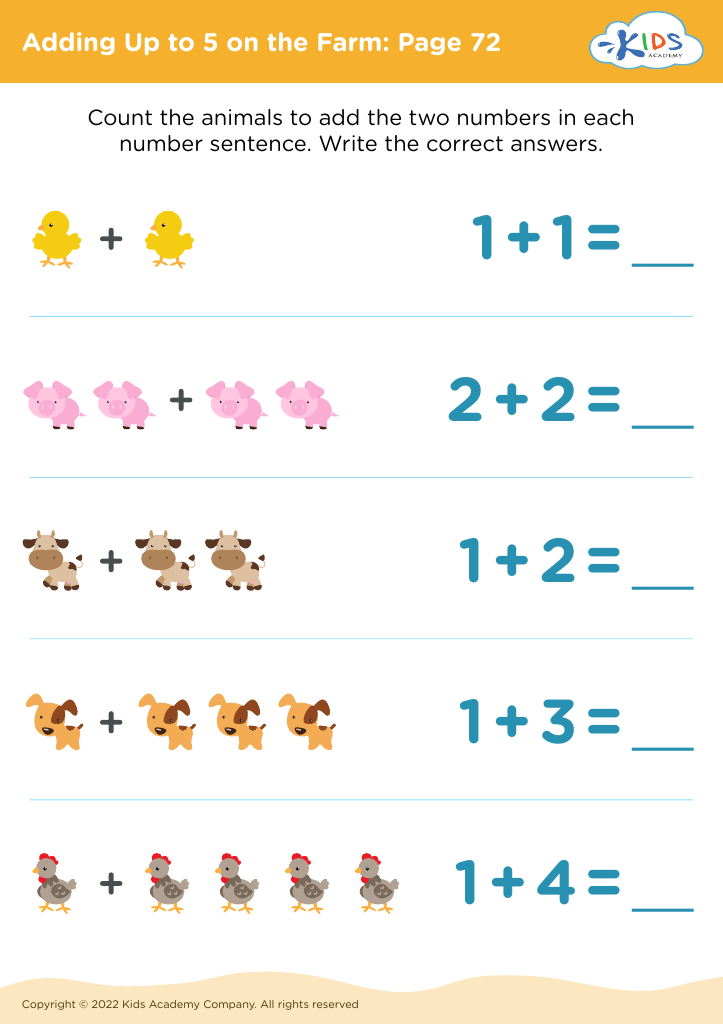
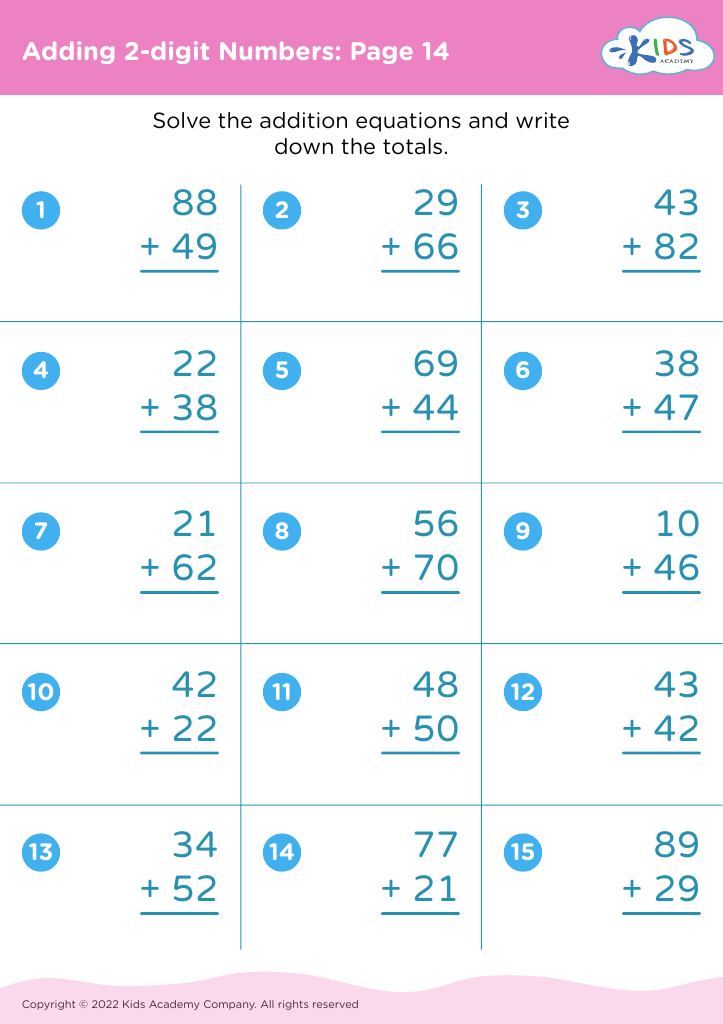
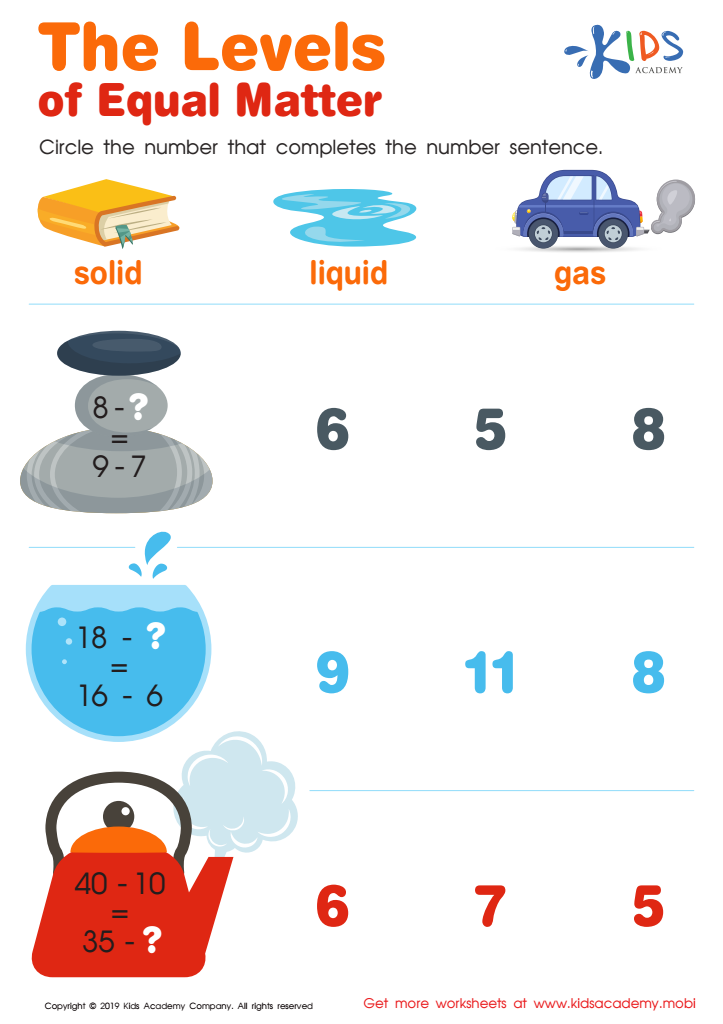
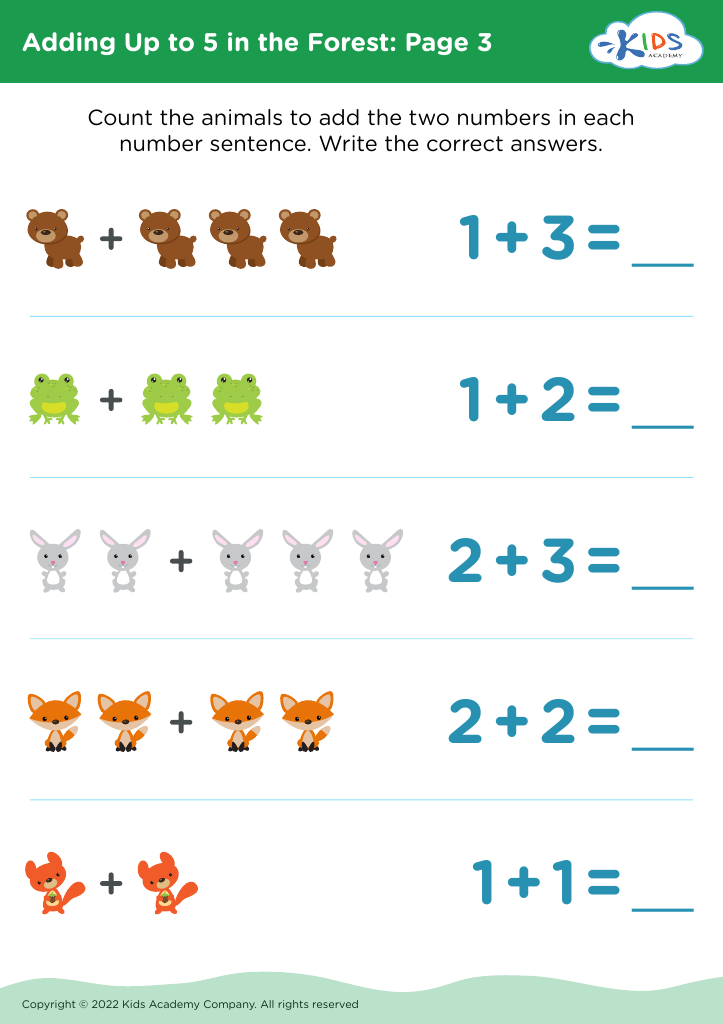
The Levels of Equal Matter Worksheet
 Assign to My Students








Understanding equality in addition and subtraction is fundamental for young learners, parents, and teachers because it lays the foundation for more advanced mathematical concepts and critical thinking skills. Equality in these operations means understanding that two sides of an equation balance each other, such as knowing that 3 + 4 equals 7 just as 5 + 2 does. This concept helps children grasp that numbers and operations can be manipulated while maintaining balance, which is crucial for algebra later on.
For parents, engaging with their children's learning process reinforces the importance of academic development and encourages positive attitudes toward education. When parents understand these principles, they can better support homework and everyday learning experiences. Family involvement also increases the likelihood of educational achievement.
Teachers who prioritize this understanding can create a stronger mathematical foundation and instill confidence in their students. The ability to solve problems and see relationships between numbers promotes logical reasoning and problem-solving skills beyond mathematics.
In essence, fostering an understanding of equality in addition and subtraction during the early years sets the stage for overall academic success and enables children to build on their mathematical knowledge as they progress through their education.








