Understanding number patterns Addition & Subtraction Worksheets
3 filtered results
-
From - To
"Understanding Number Patterns Addition & Subtraction Worksheets" from Kids Academy offer engaging and educational exercises to help young learners master fundamental math skills. Designed for early grade students, these worksheets strengthen their ability to identify and complete number patterns by practicing addition and subtraction in a fun, hands-on way. Each activity encourages logical thinking, pattern recognition, and problem-solving, ensuring kids build a strong mathematical foundation. With colorful illustrations and a variety of tasks, these resources make learning enjoyable and effective. Explore our collection today to enhance your child's math proficiency through interactive number pattern exercises.
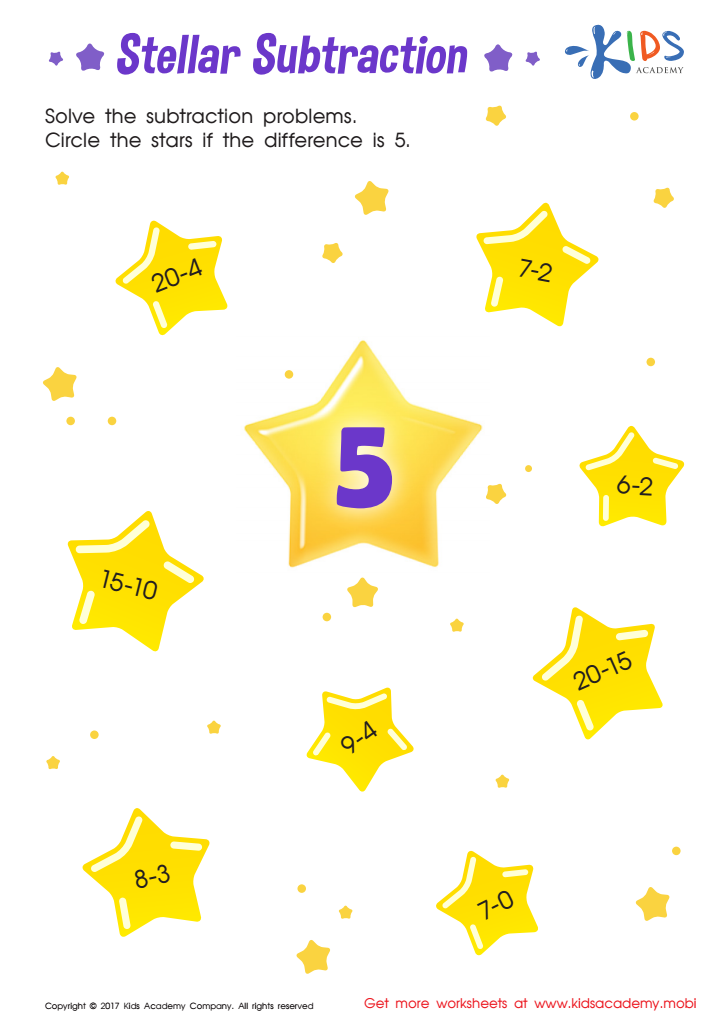
 Assign to My Students
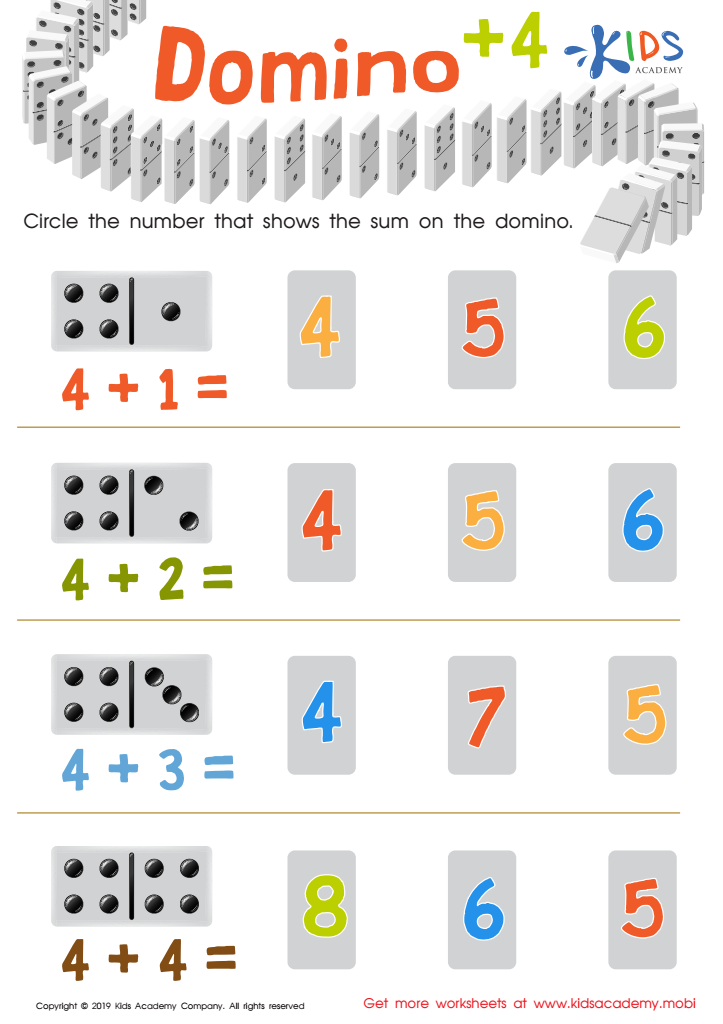
Domino +4 Worksheet
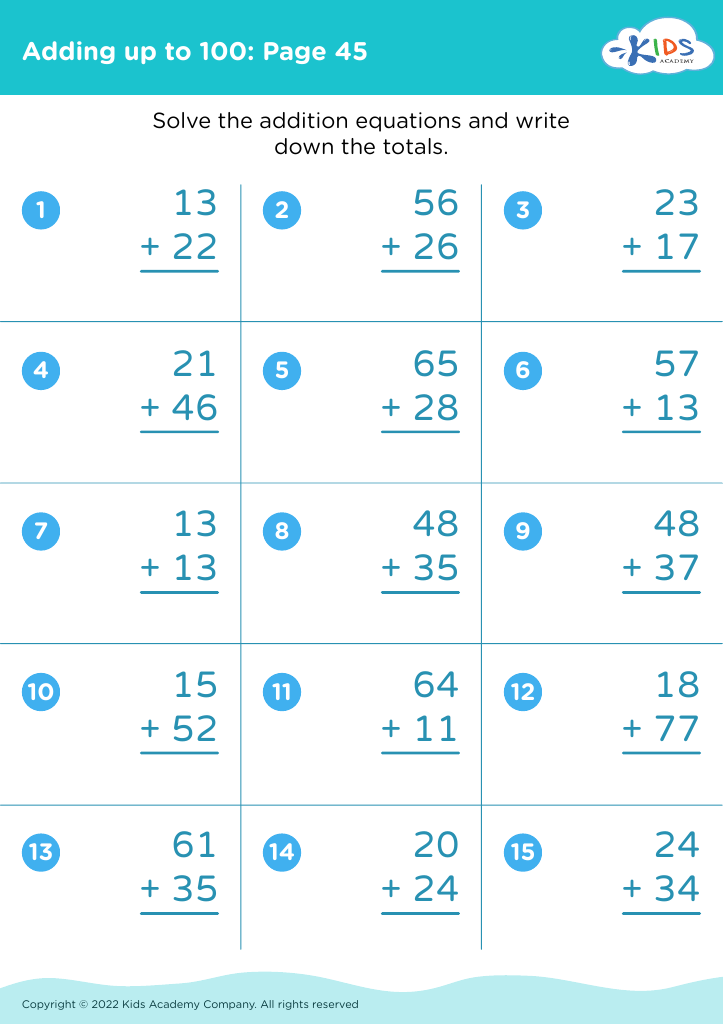








Understanding number patterns and mastering addition and subtraction are foundational skills for early grade learners that carry significant importance throughout their education and daily life. Parents and teachers should prioritize these concepts because they build the basis for more advanced mathematical thinking. Number patterns help children recognize relationships and sequences in numbers, which form the groundwork for algebra and higher-order math. Recognizing patterns also boosts problem-solving skills, as students learn to predict and extend sequences.
Addition and subtraction are the core operations in arithmetic and everyday life. These skills are critical for tasks such as budgeting, shopping, and time management. They underpin more complicated mathematical operations like multiplication and division, fractions, and eventually, algebra and geometry. By ensuring that children understand and are proficient in addition and subtraction, parents and teachers set them up for success in academics and practical situations.
Additionally, early success in understanding number patterns and basic arithmetic can significantly bolster a child's confidence and interest in math. This positive experience can foster a lifelong appreciation for math, encouraging continuous learning and curiosity. Therefore, a strong foundation in these areas is essential not just for passing subjects, but for holistic cognitive development and practical competence in everyday life.








