Understanding shapes Addition & Subtraction Worksheets
3 filtered results
-
From - To
Unlock the world of basic math skills with our "Understanding Shapes Addition & Subtraction Worksheets," crafted to make learning fun and engaging for young minds. These printable worksheets seamlessly blend the concepts of shapes with addition and subtraction exercises, promoting critical thinking and problem-solving. Each activity is designed to build a strong math foundation, enhance fine motor skills, and boost confidence. Suitable for early grade students, our worksheets turn rigorous practice into interactive learning adventures. Cultivate a love for math in your child by exploring shapes and numerical operations in a unique and captivating way. Download now and watch them excel!
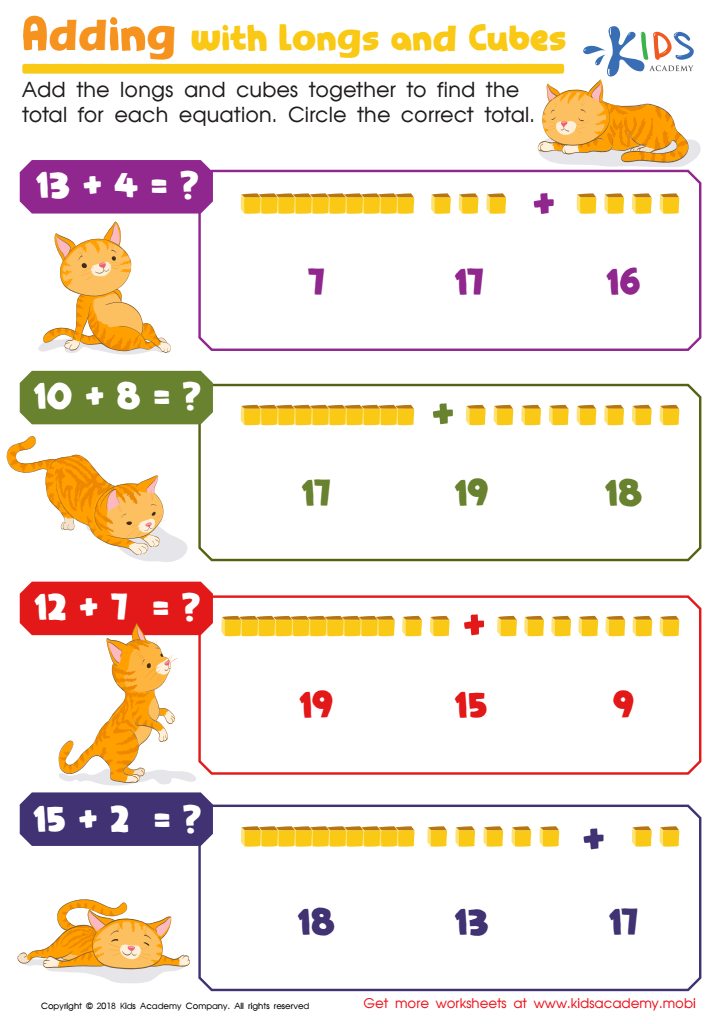
Adding With Longs and Cubes Worksheet
 Assign to My Students
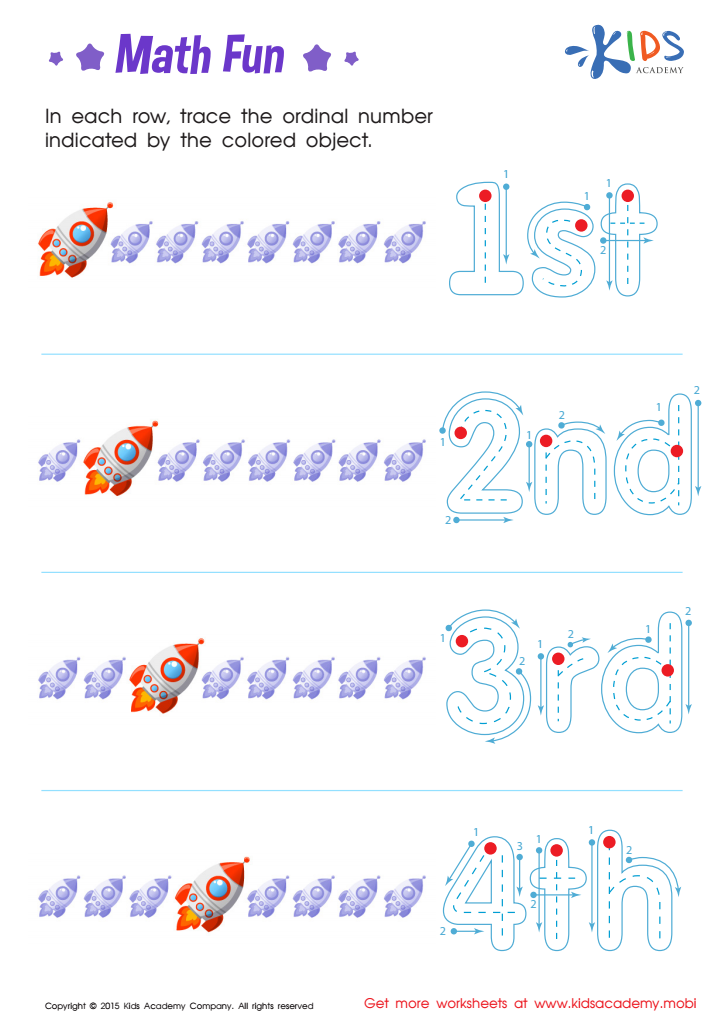
Ordinal Numbers: Math Fun Worksheet








Understanding shapes, addition, and subtraction is essential for young children’s cognitive and academic development. Shapes serve as the building blocks for geometry, helping children recognize patterns, categorize objects, and develop spatial reasoning. This knowledge forms the foundation upon which more complex mathematical concepts are built. When children learn about shapes, they also enhance their language skills as they describe and compare different forms, fostering vocabulary growth.
Addition and subtraction, on the other hand, are crucial components of arithmetic that allow children to understand quantities and relationships between numbers. Mastering these basic operations is important for developing problem-solving skills and logical thinking. These arithmetic foundations are not only used in mathematical settings but also in everyday life, such as when sharing toys, counting items, or understanding time.
Parents and teachers play a pivotal role in nurturing these skills. When they emphasize the importance of shapes, addition, and subtraction, children are more likely to perceive these topics as valuable and relevant. Practical activities, interactive games, and real-life applications can make learning these concepts engaging and effective. By fostering an early understanding of these basics, parents and teachers ensure children are well-prepared for more advanced math challenges and everyday tasks.








