Filters

271 filtered results

Clear all filters
Favorites
With answer key
Interactive

271 filtered results

Difficulty Level

Grade


Check out this FREE Trial Lesson on Addition!

Sorting Objects into 3 Categories

Favorites
With answer key
Interactive
  • Basic Addition Skills
  • Addition
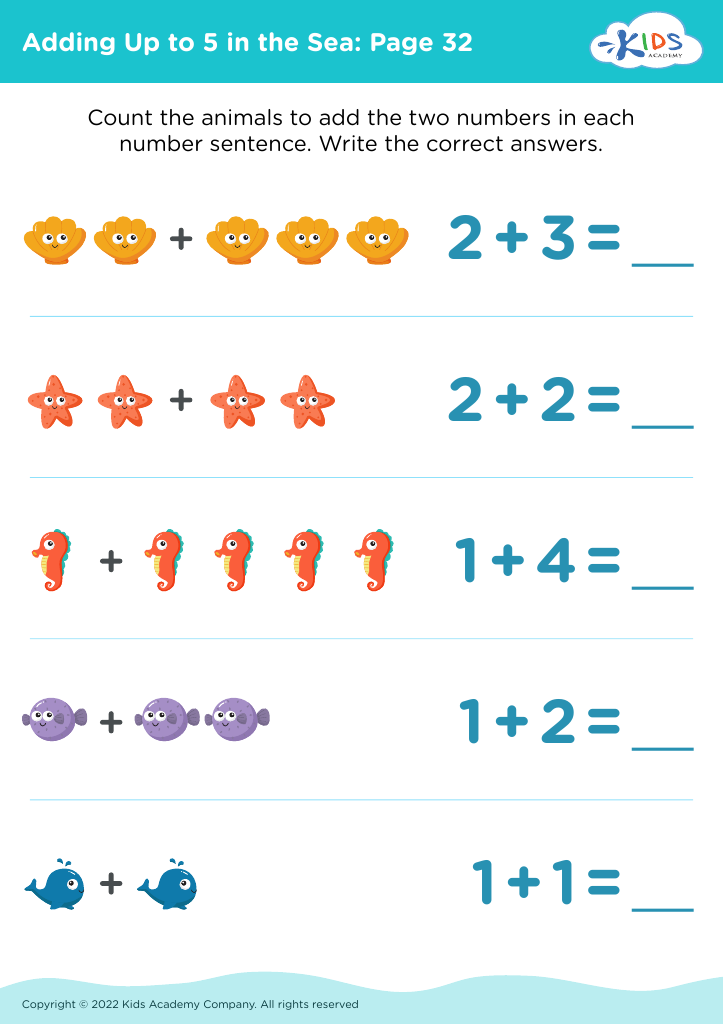
Adding Up to 5 in the Sea: Page 32
Worksheet
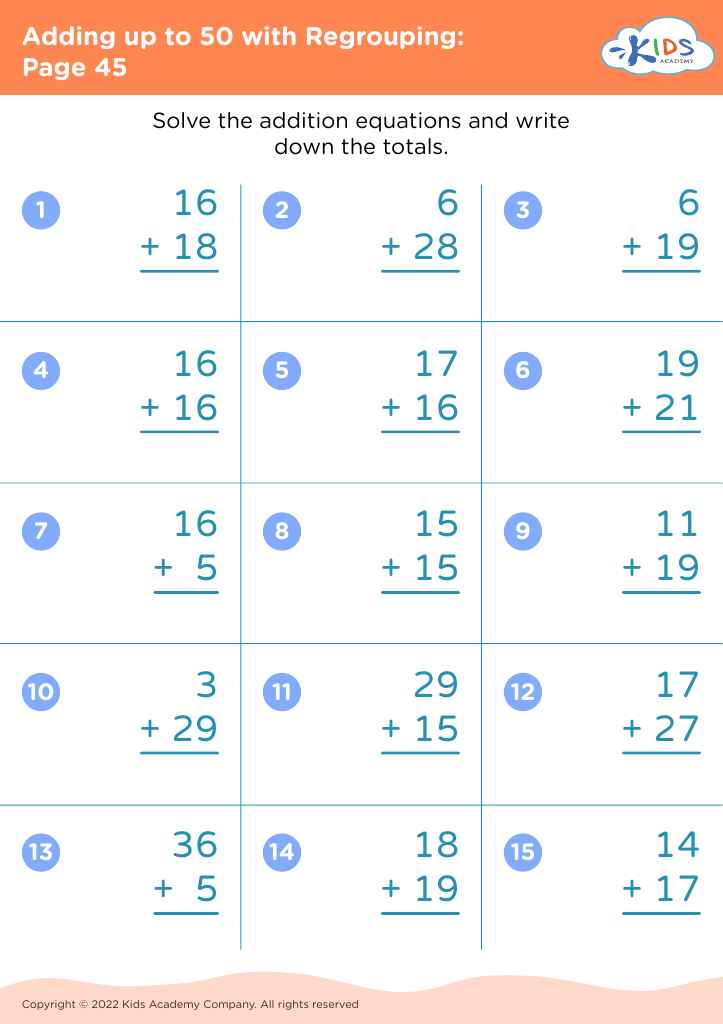
Adding up to 50 with Regrouping: Page 45
Worksheet
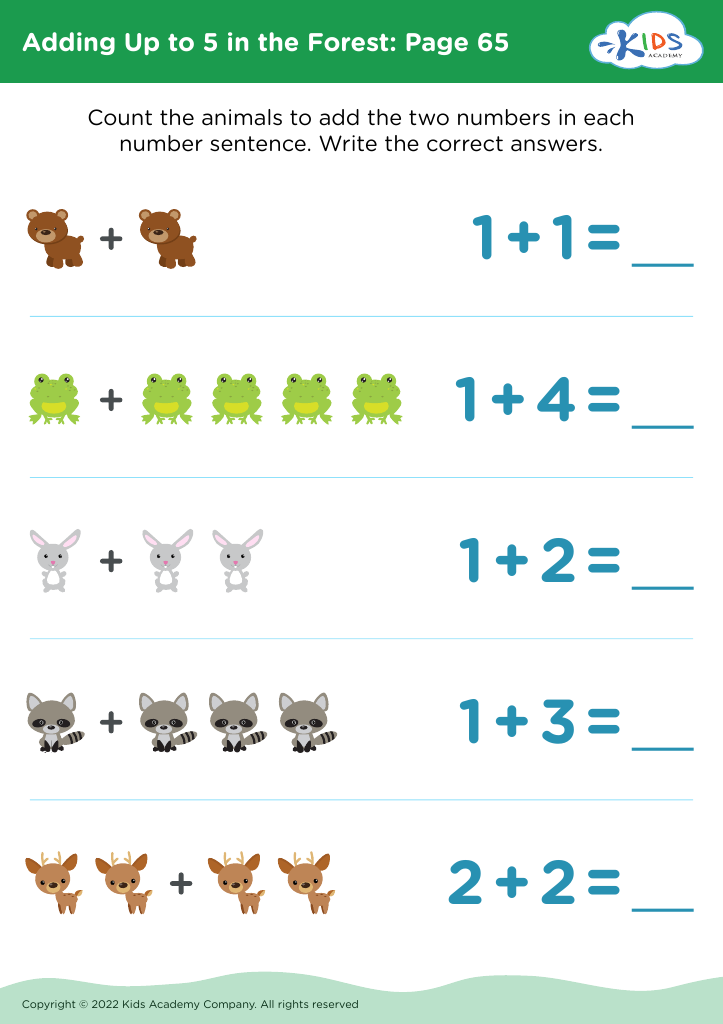
Adding Up to 5 in the Forest: Page 65
Worksheet
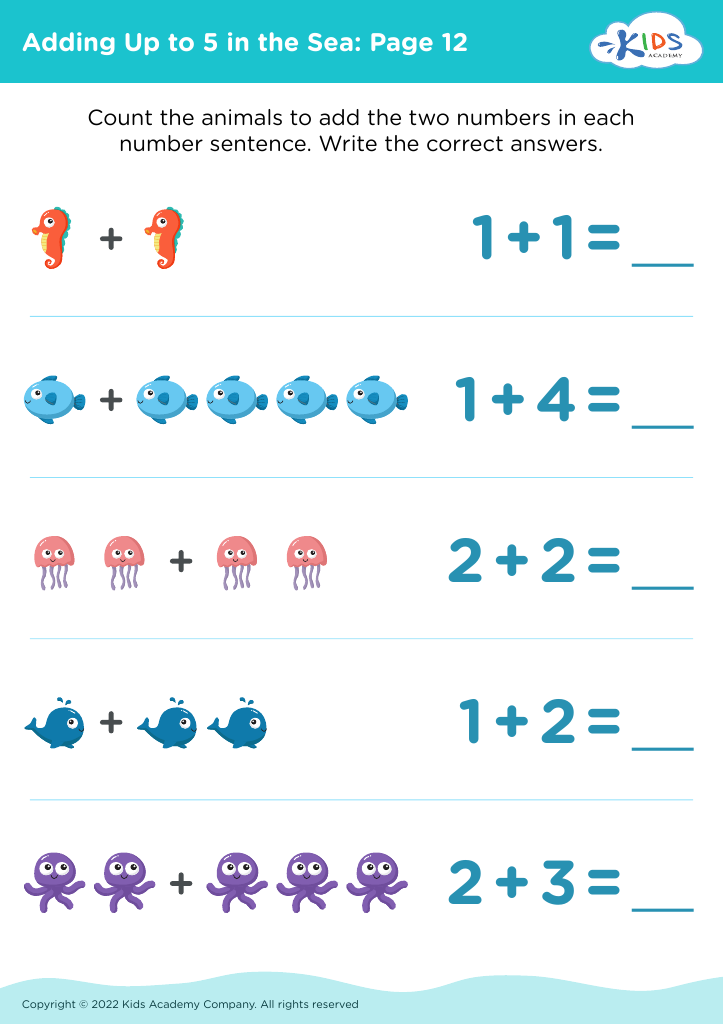
Adding Up to 5 in the Sea: Page 12
Worksheet
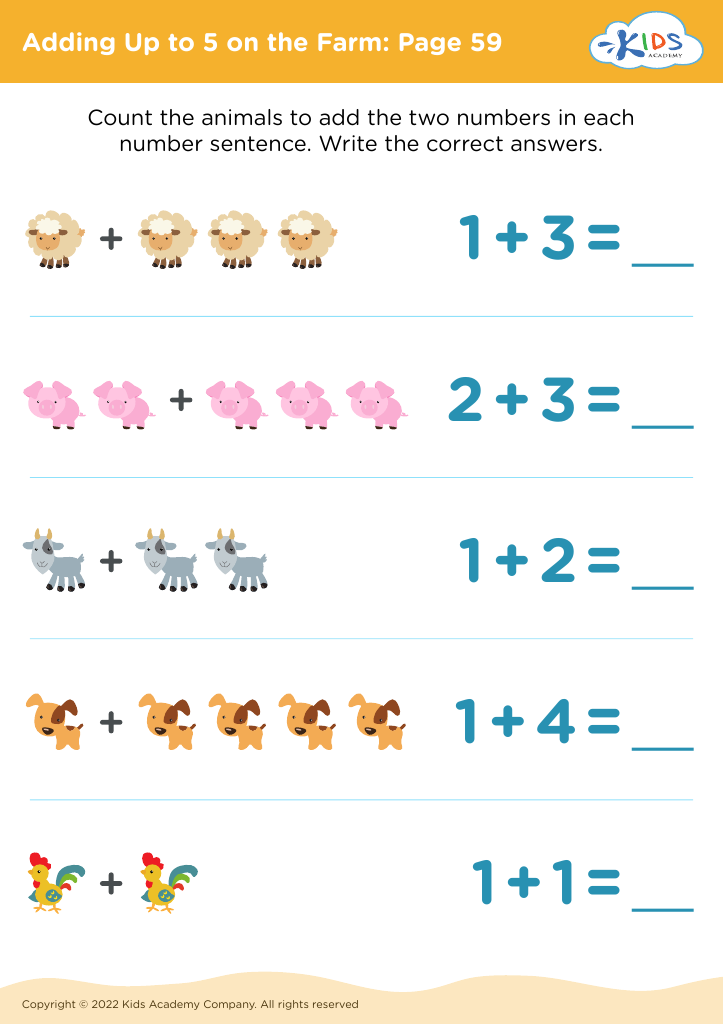
Adding Up to 5 on the Farm: Page 59
Worksheet
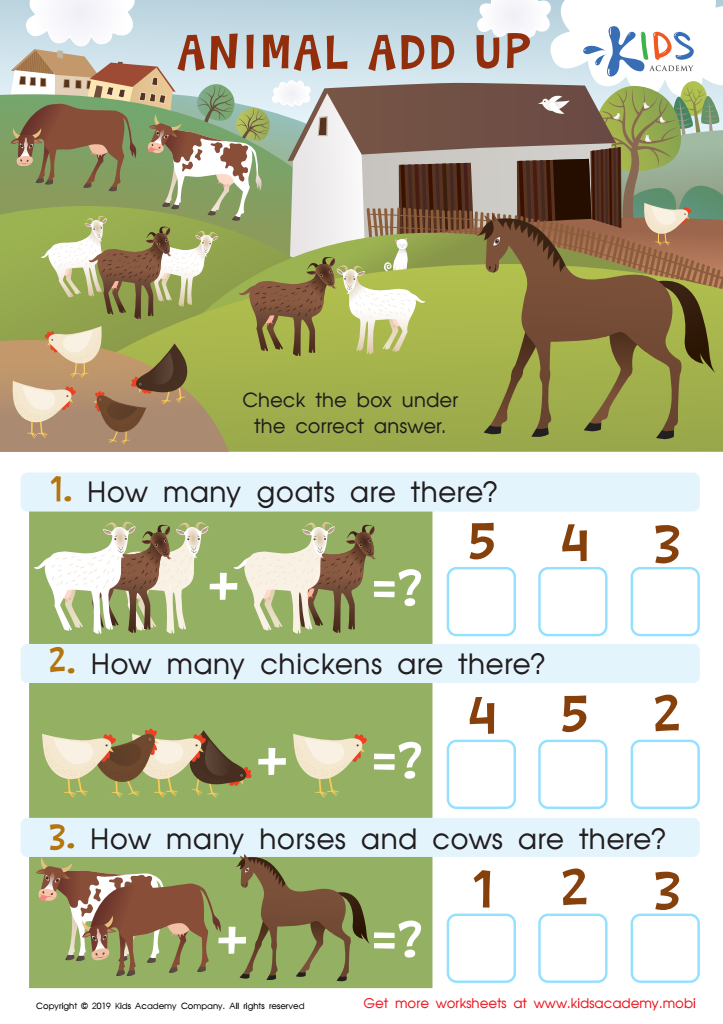
Animal Add Up Worksheet

Animal Add Up Worksheet

Animals are fun to observe and interact with. They can be seen at the zoo, parks, farms and in homes with pets. This worksheet helps kids identify animals, and build addition skills. Look at the picture with them and help name each animal. After that, add the animals up and check the box for the correct answer. 80 words.
Animal Add Up Worksheet
Worksheet
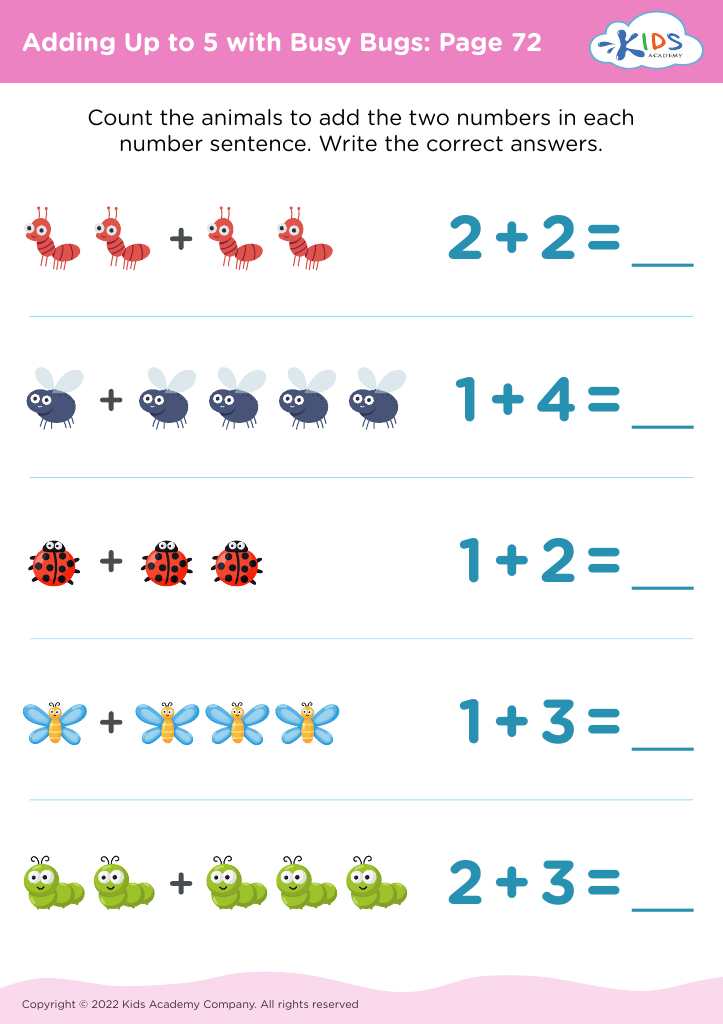
Adding Up to 5 with Busy Bugs: Page 72
Worksheet
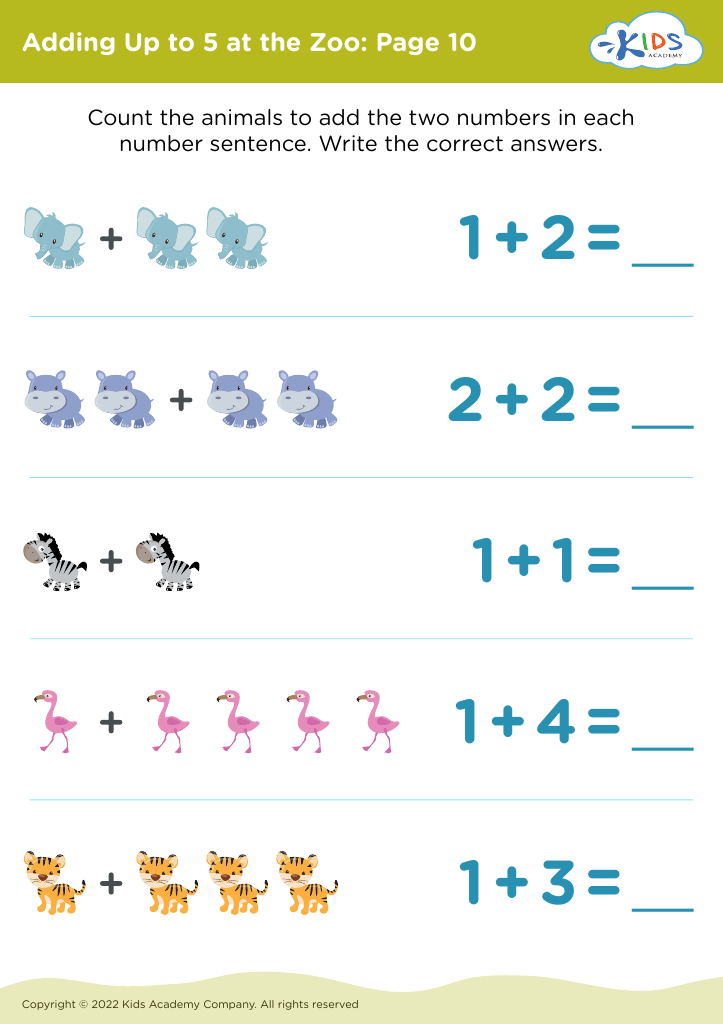
Adding Up to 5 at the Zoo: Page 10
Worksheet
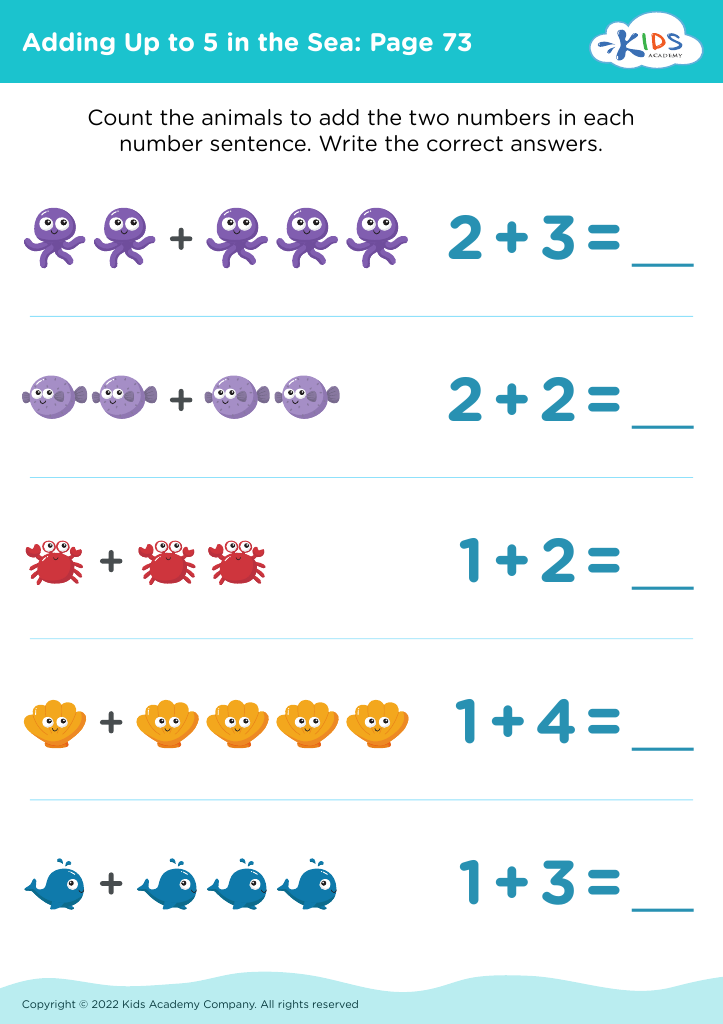
Adding Up to 5 in the Sea: Page 73
Worksheet
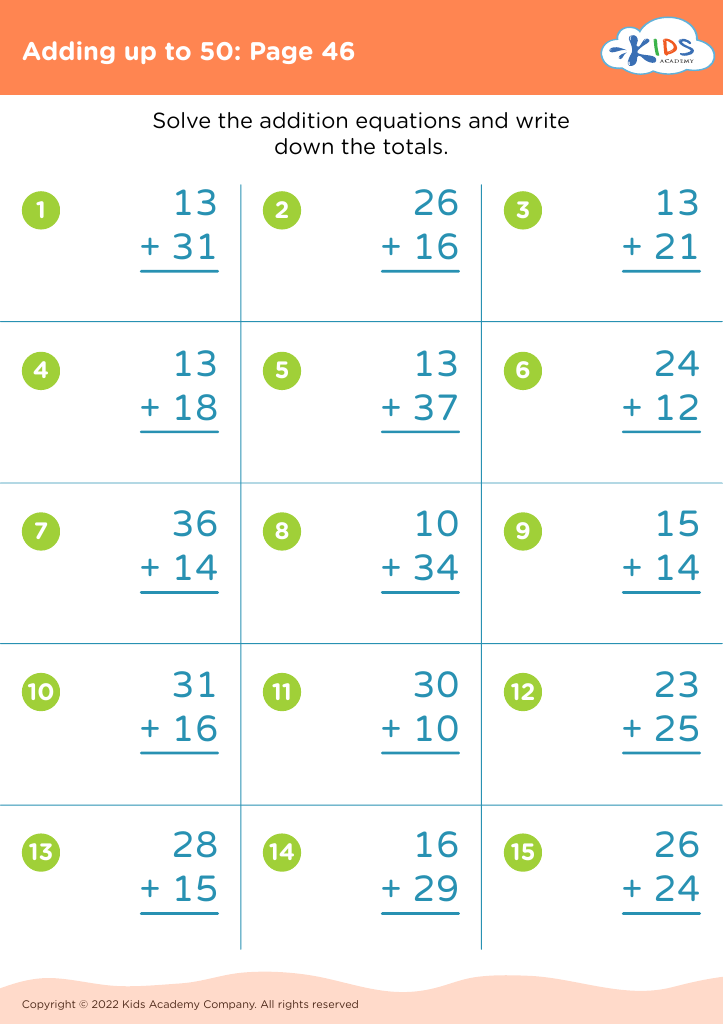
Adding up to 50: Page 46

Adding up to 50: Page 46

Adding up to 50: Page 46
Worksheet
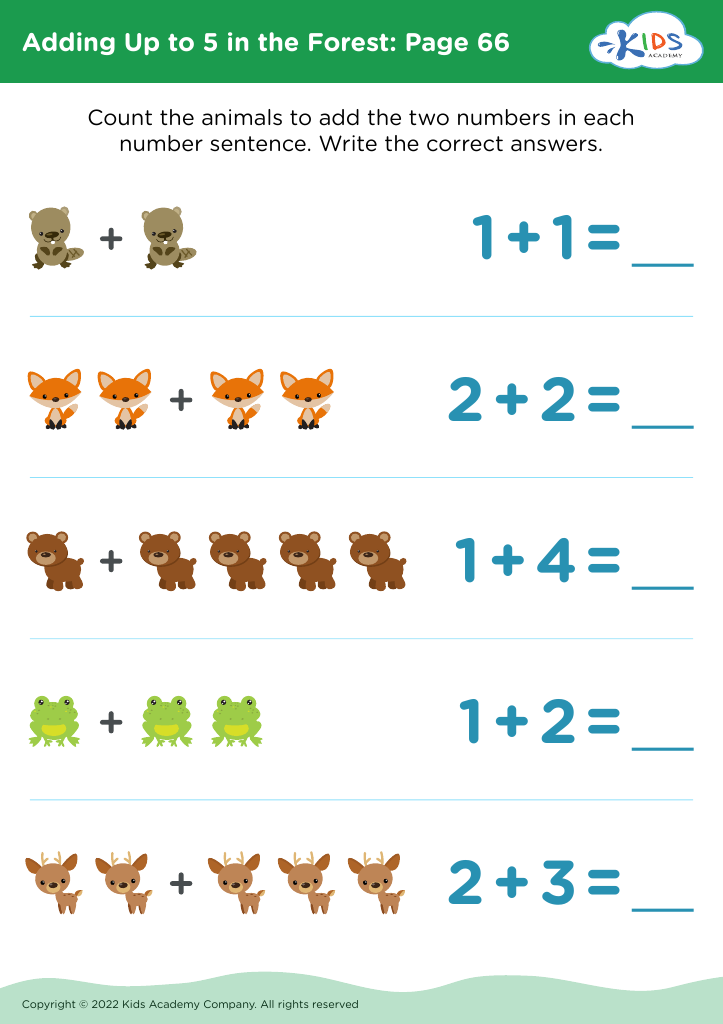
Adding Up to 5 in the Forest: Page 66
Worksheet
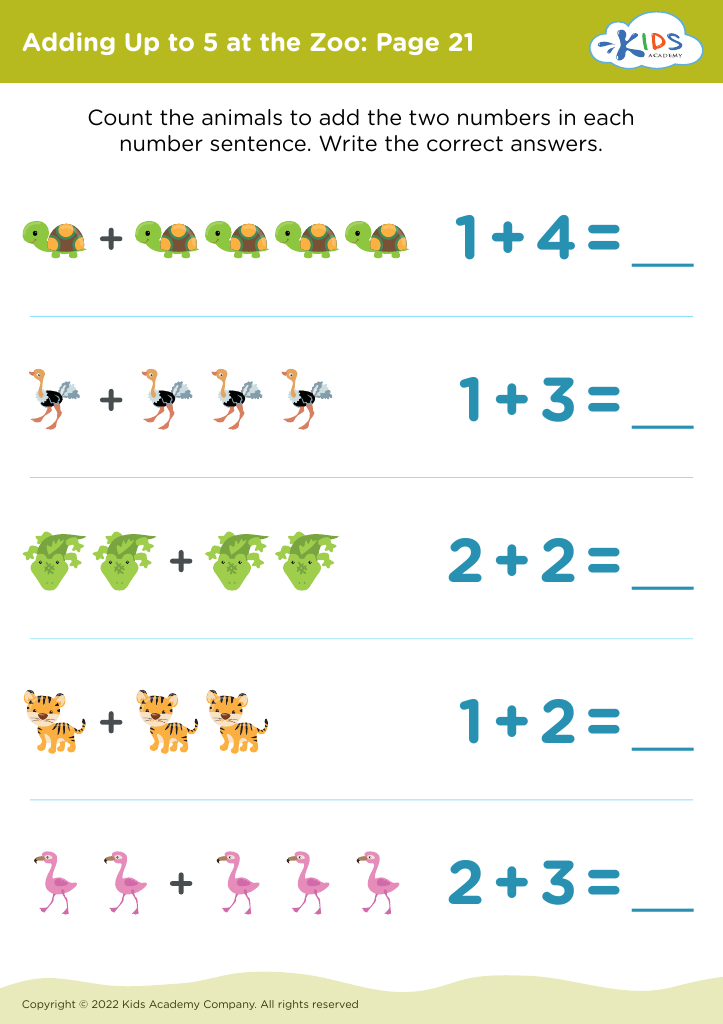
Adding Up to 5 at the Zoo: Page 21
Worksheet
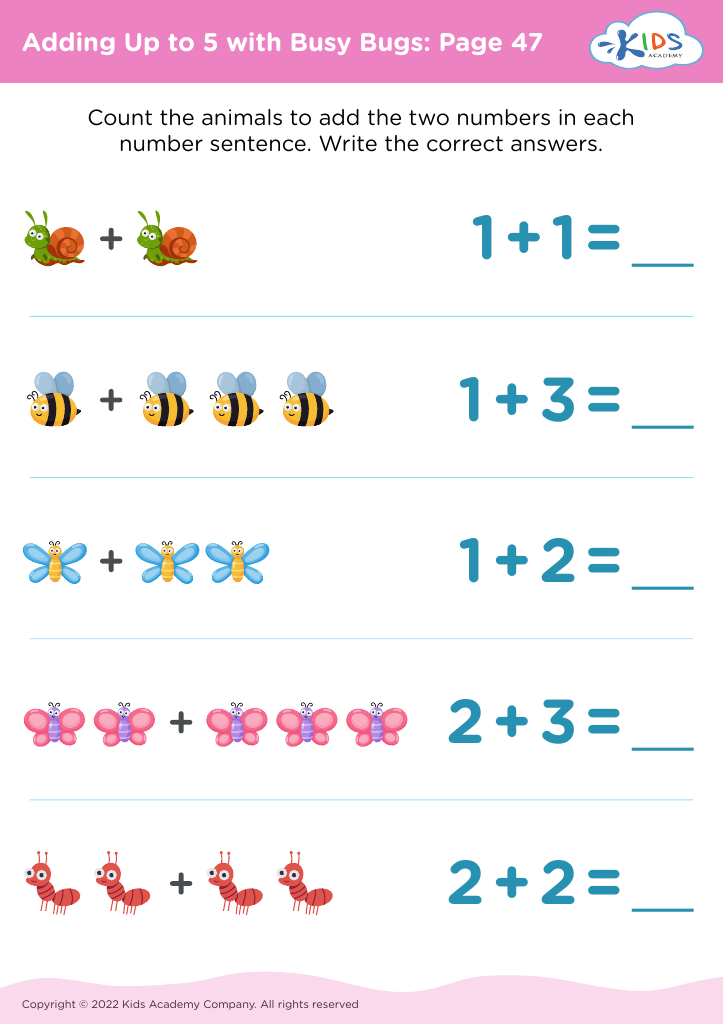
Adding Up to 5 with Busy Bugs: Page 47
Worksheet
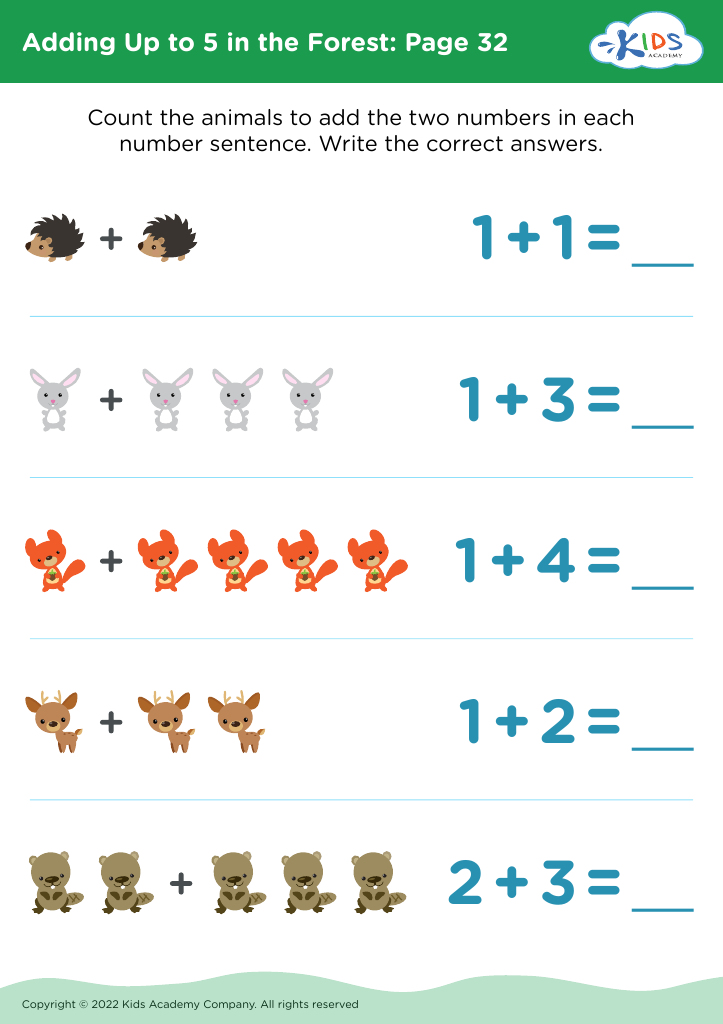
Adding Up to 5 in the Forest: Page 32
Worksheet
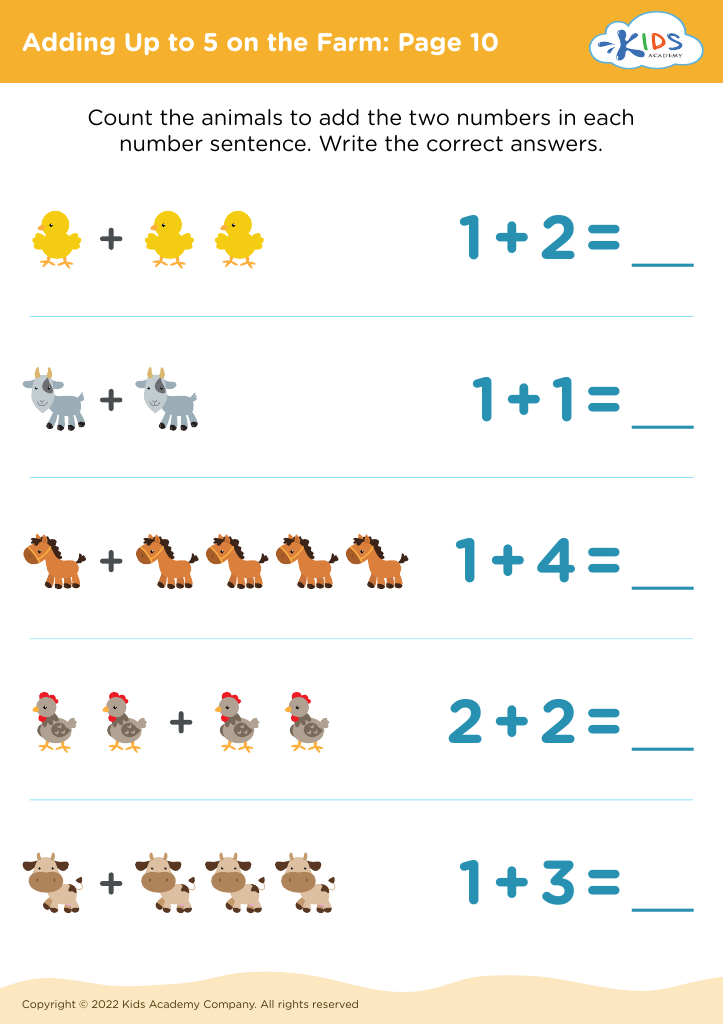
Adding Up to 5 on the Farm: Page 10
Worksheet
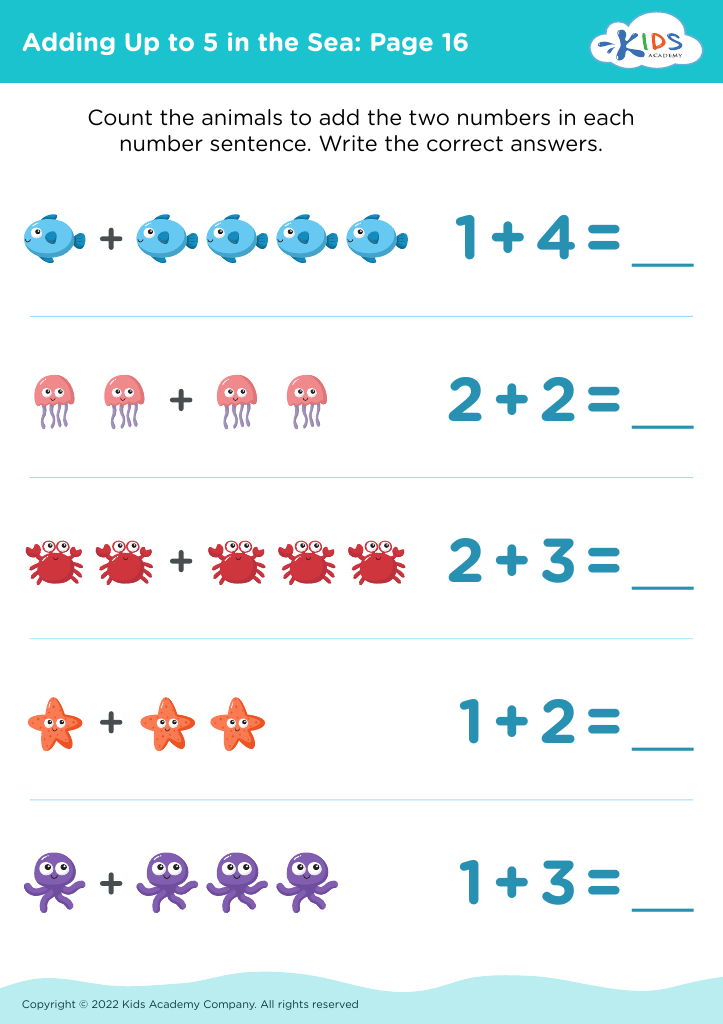
Adding Up to 5 in the Sea: Page 16
Worksheet
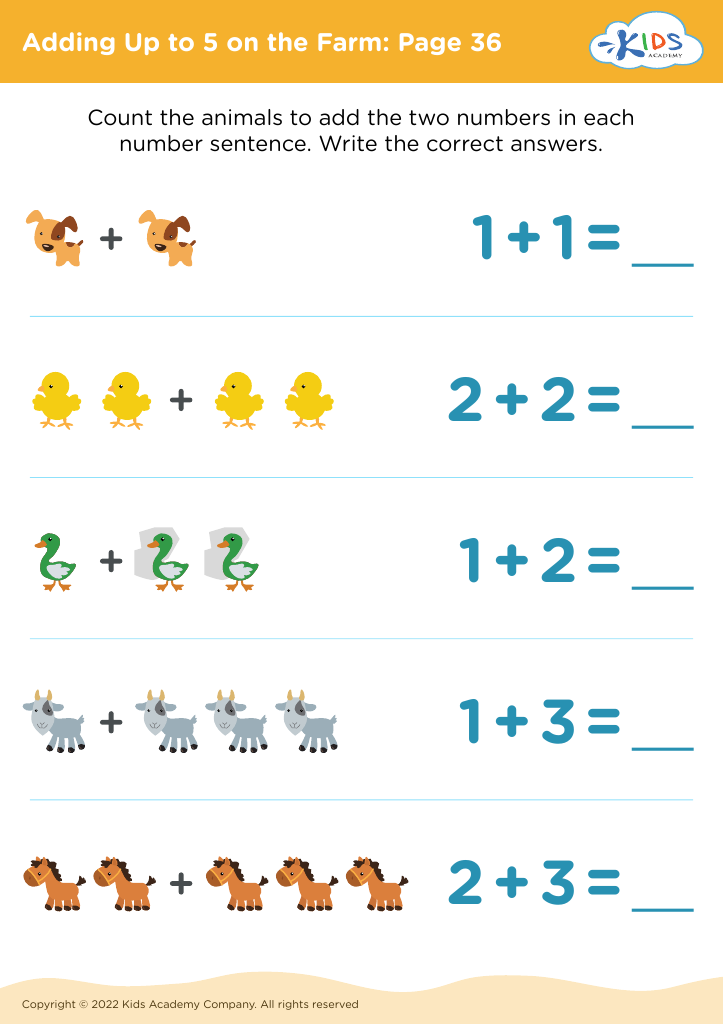
Adding Up to 5 on the Farm: Page 36
Worksheet
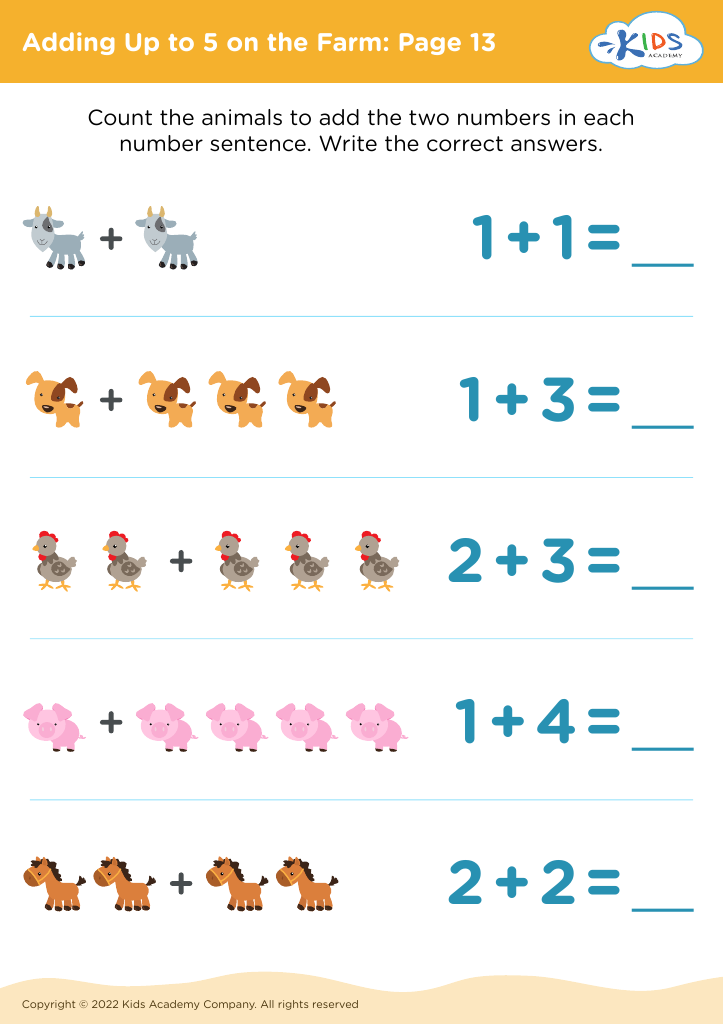
Adding Up to 5 on the Farm: Page 13
Worksheet
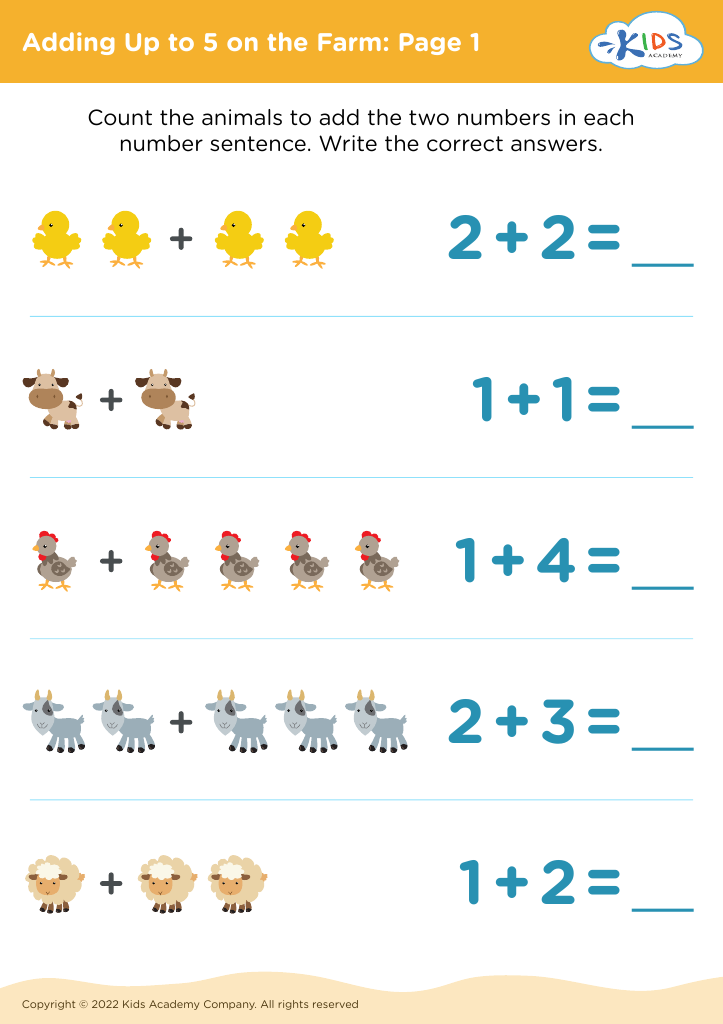
Adding Up to 5 on the Farm: Page 1
Worksheet
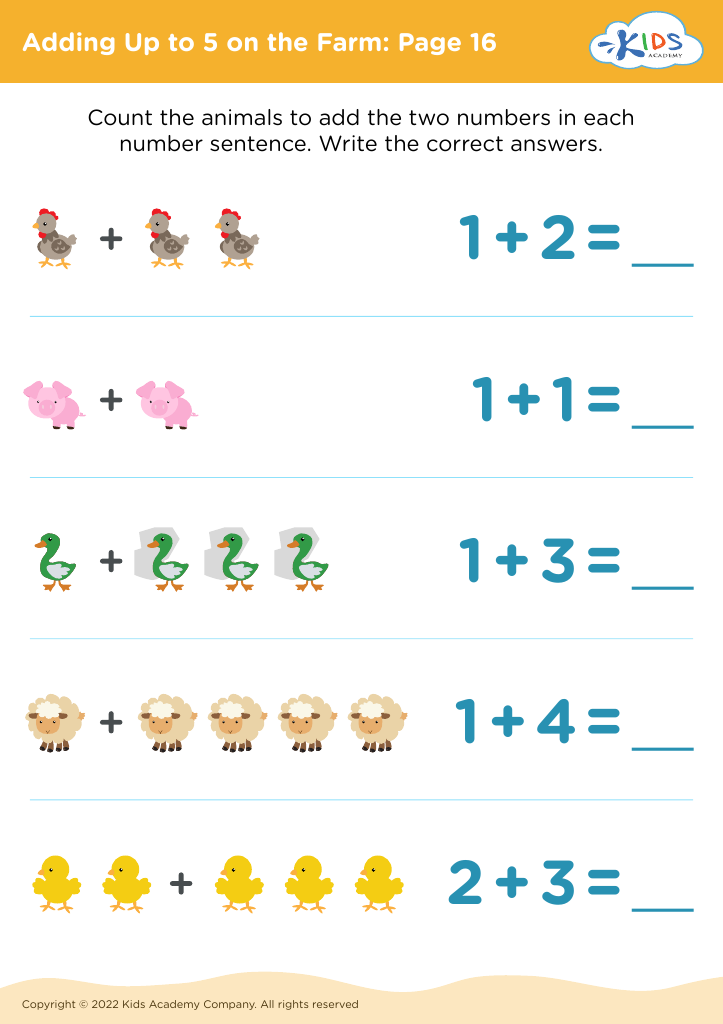
Adding Up to 5 on the Farm: Page 16
Worksheet
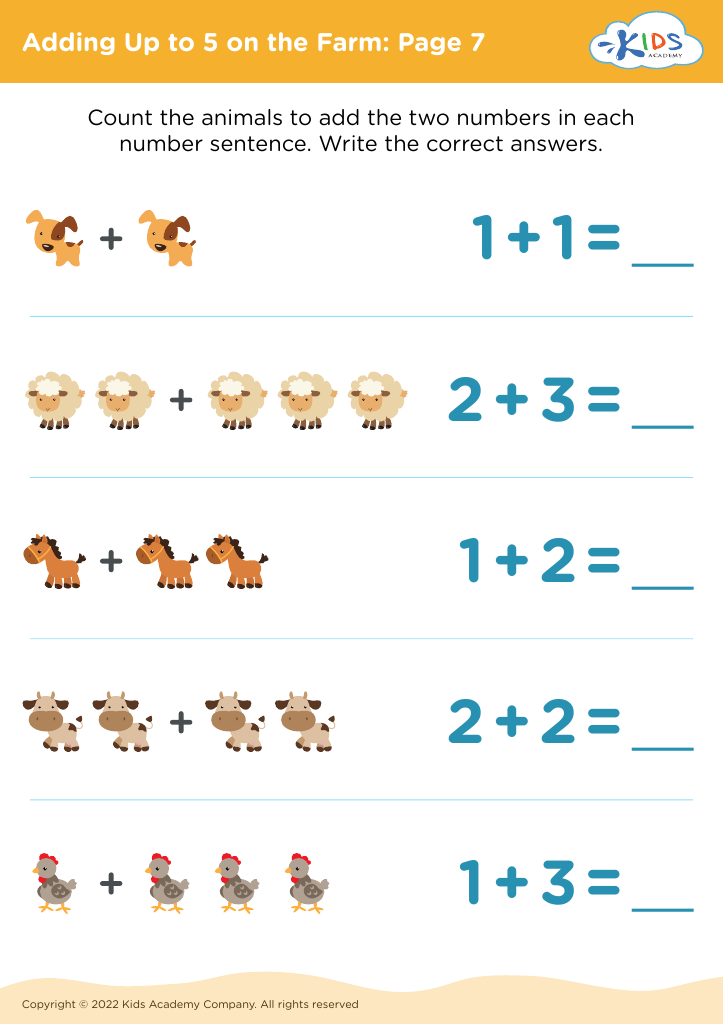
Adding Up to 5 on the Farm: Page 7
Worksheet
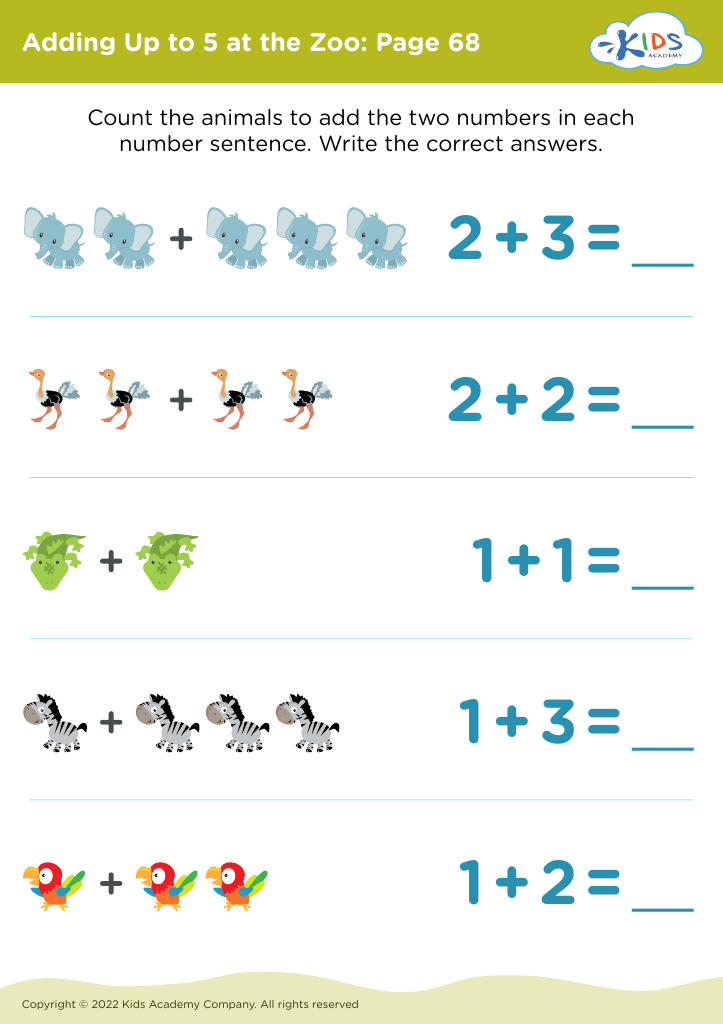
Adding Up to 5 at the Zoo: Page 68
Worksheet
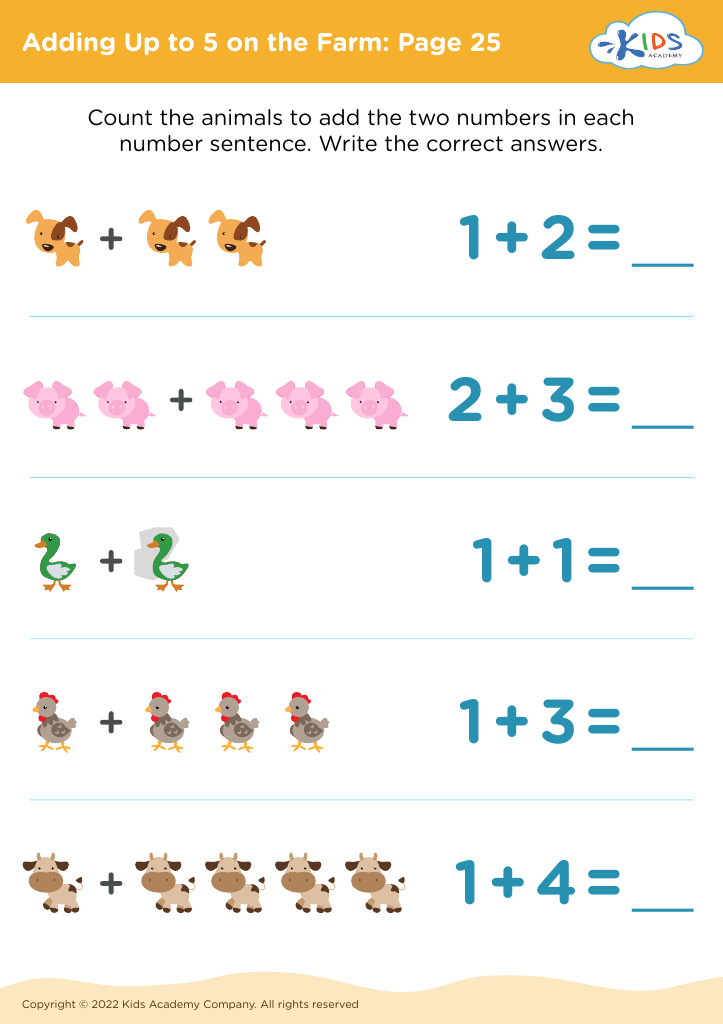
Adding Up to 5 on the Farm: Page 25
Worksheet
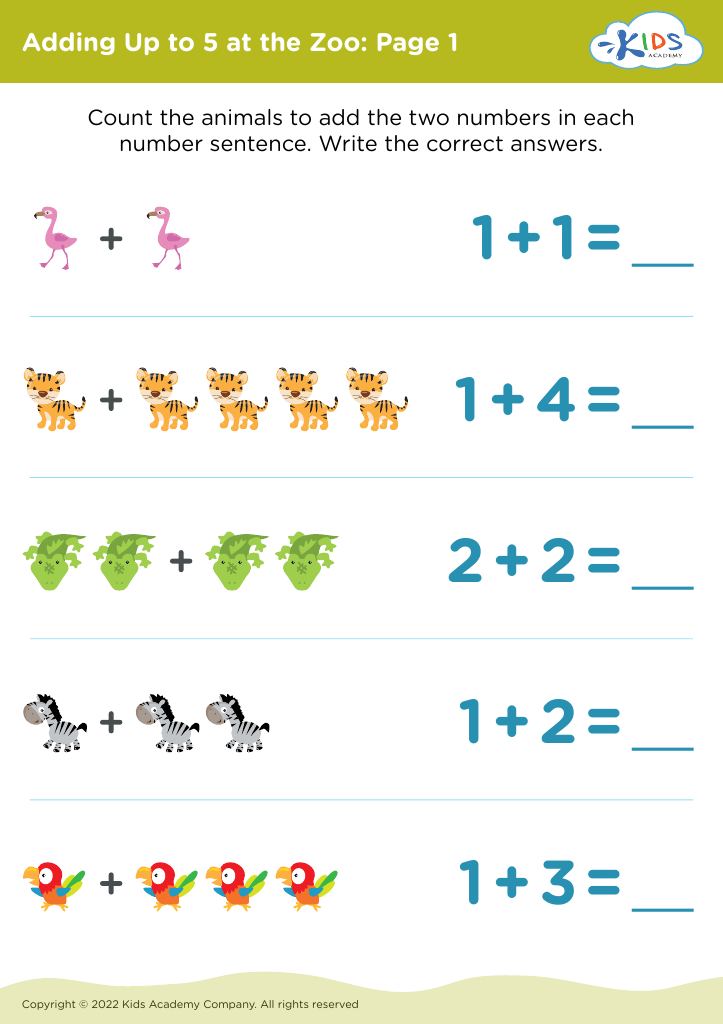
Adding Up to 5 at the Zoo: Page 1

Adding Up to 5 at the Zoo: Page 1

Adding Up to 5 at the Zoo: Page 1
Worksheet


Parents and teachers should care about basic addition skills because they form the foundation of a child's mathematical understanding and overall academic success. Mastery of addition not only enhances a child's ability to solve more complex math problems as they progress through school, but it also fosters critical thinking and problem-solving skills.

In the early grades, children are introduced to basic concepts like counting, grouping, and combining numbers. Developing proficiency in addition helps them with everyday tasks, such as managing money, measuring quantities in cooking, or planning activities with friends. These skills also support cognitive development, as children learn to recognize patterns and relationships between numbers.

Moreover, a solid grasp of addition helps boost a child's confidence in mathematics, reducing anxiety and fear around the subject. When parents and teachers emphasize the importance of these skills, they create a supportive environment that encourages curiosity and a love for learning mathematics.

Ultimately, investing time and effort into developing basic addition skills sets children up for future success, enhancing their ability to tackle increasingly difficult concepts in math and beyond. By prioritizing these foundational skills, parents and teachers play a crucial role in nurturing lifelong learners.