
Critical thinking skills Addition Worksheets
7 filtered results
Difficulty Level
Grade
Age
-
From - To
Subject
Activity
Standards
Enhance your child's mathematical journey with our "Critical Thinking Skills Addition Worksheets." These engaging resources are designed to promote a deeper understanding of addition through fun and interactive challenges. Suitable for early grade learners, our worksheets encourage kids to think critically as they solve problems, make connections, and explore various addition strategies. By fostering analytical skills, children not only improve their math proficiency but also develop essential reasoning abilities. Dive into our collection to discover stimulating activities that will captivate young minds and elevate their addition skills, making math a rewarding experience. Perfect for home or classroom use!
Favorites
With answer key
Interactive
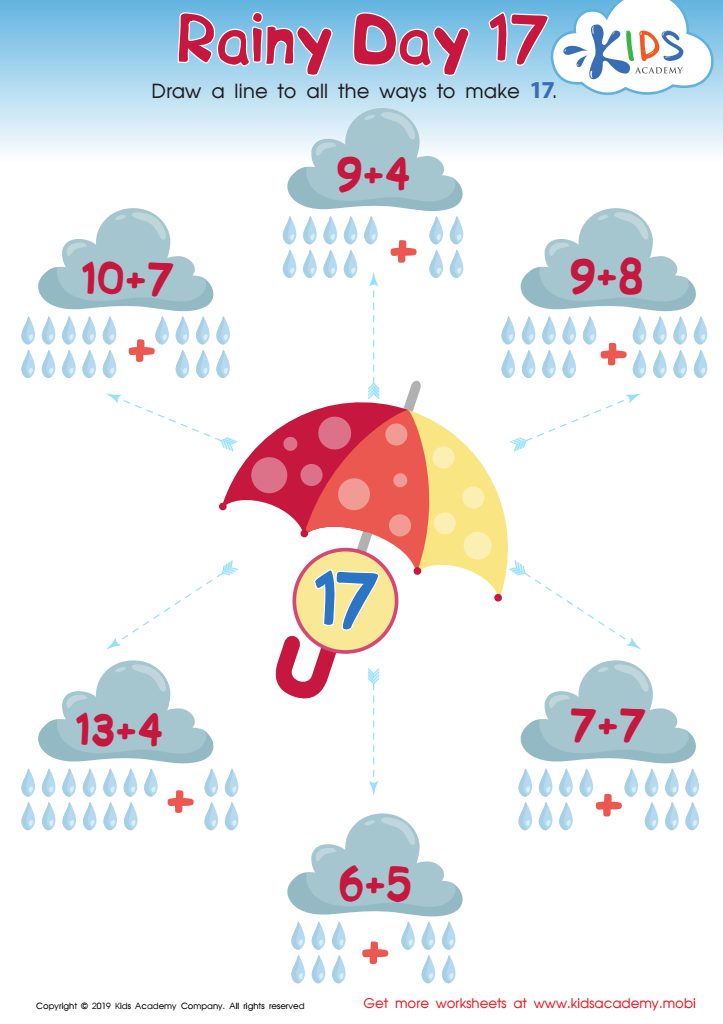
Rainy Day 17 Worksheet
Assist your kids with the 6 equations given. Each cloud displays the sum of two numbers, some of which make 17. Guide them to figure out the total of both numbers when added and draw a line to the umbrella in the center to illustrate the different ways to make 17. This activity will sharpen their addition skills.
 Assign to My Students
Rainy Day 17 Worksheet
Worksheet
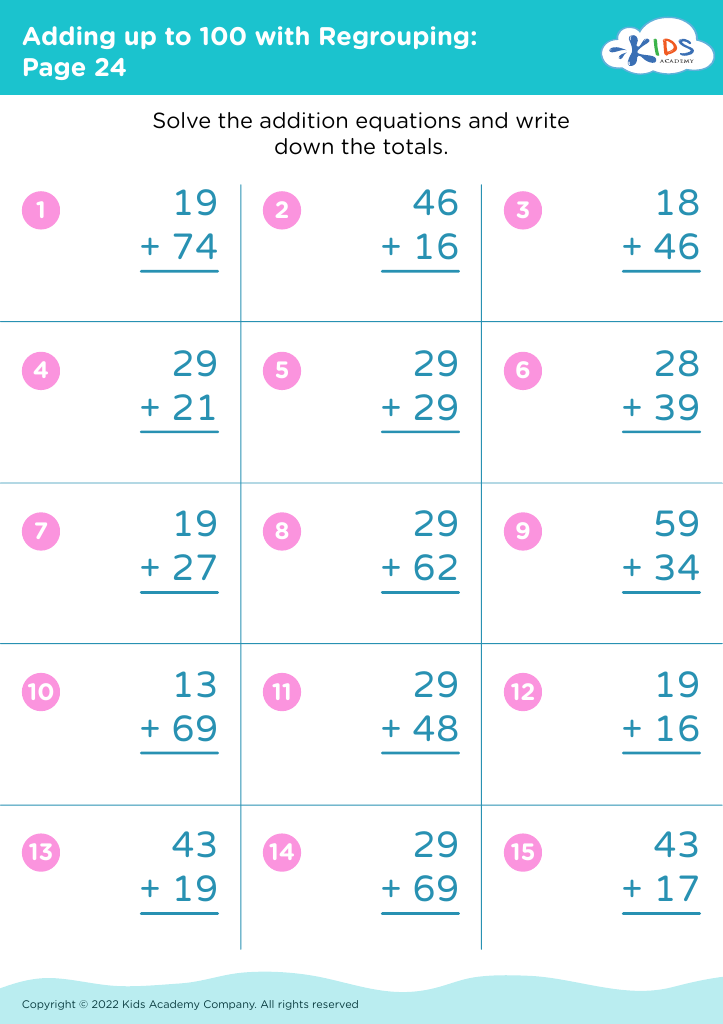
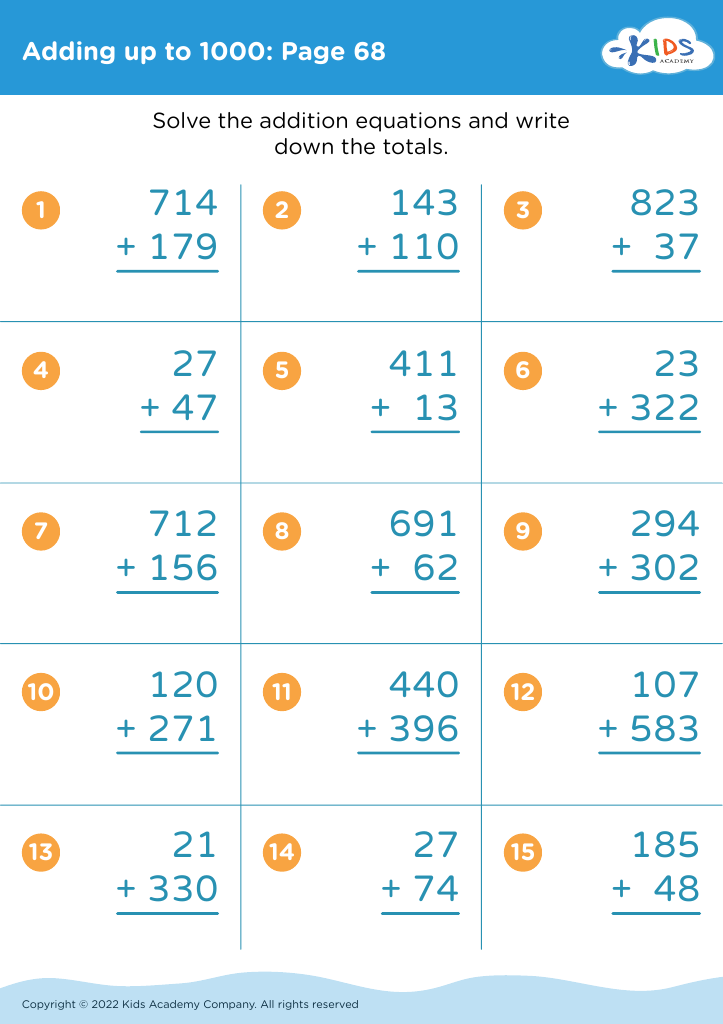
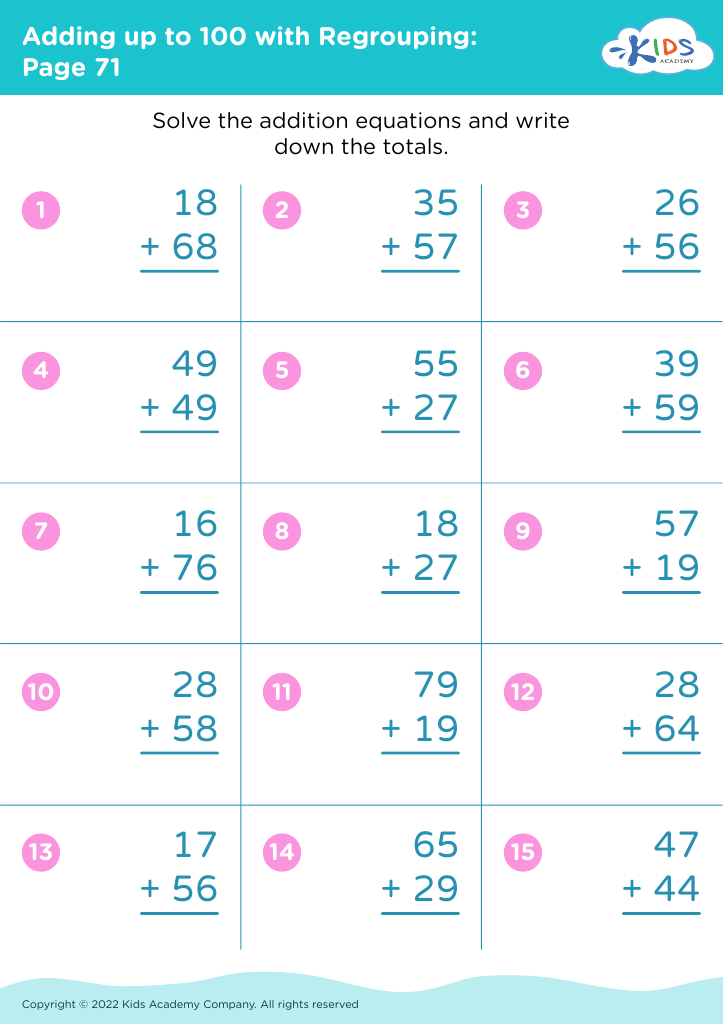
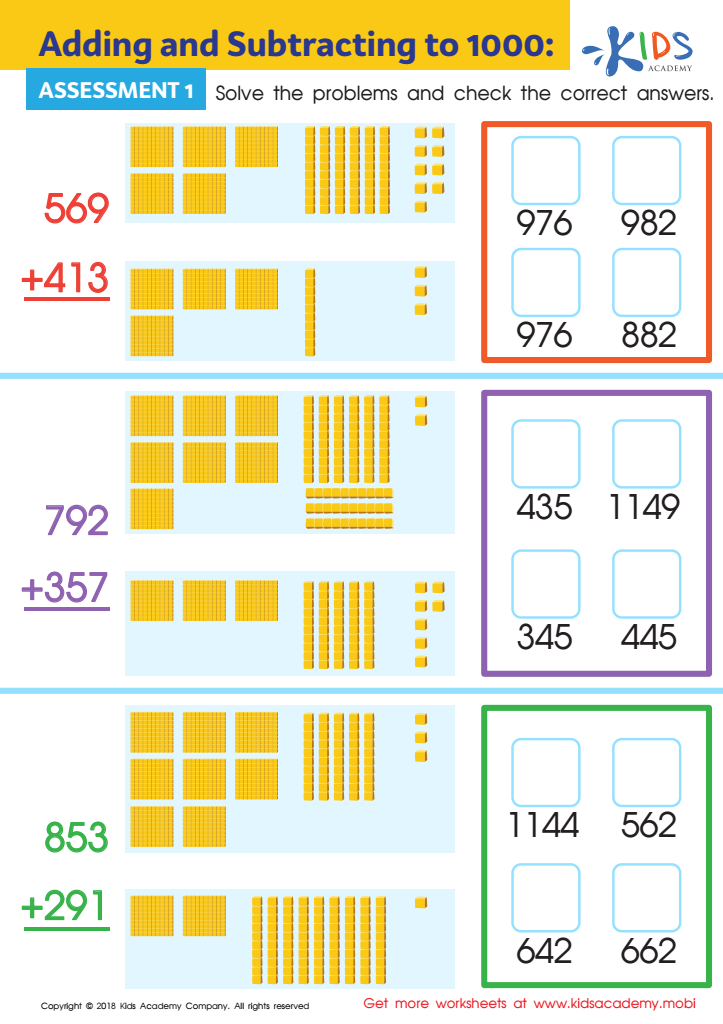
Adding and Subtracting to 1 Worksheet: Assessment 1
This assessment worksheet tests your child's addition skills. It has 3 3-digit problems with base ten blocks for visual aid. Encourage learners to use these visuals for better understanding. When they have solved the problems, they can check the box with the right answer. It's a quick and easy way to gauge numeracy development.
Adding and Subtracting to 1 Worksheet: Assessment 1
Worksheet
Join Kids Academy for Free
Who is primarily going to use this learning content?


.jpg)


.jpg)


Parents and teachers should prioritize critical thinking skills addition because these skills are essential for children's overall cognitive development and future success. Critical thinking encourages students to analyze information, evaluate evidence, and synthesize different viewpoints. This empowers them to approach problems systematically and make informed decisions, rather than simply accepting information at face value.
In today’s fast-paced, information-rich environment, the ability to discern credible sources from unreliable ones is more important than ever. By cultivating critical thinking skills, children learn to question assumptions, draw logical conclusions, and solve complex problems creatively. These skills not only enhance academic performance across disciplines but also prepare students for real-world challenges.
Moreover, critical thinking fosters independence and self-confidence. Children who think critically are more likely to engage in discussions, articulate their thoughts, and advocate for themselves. This skills addition to their educational toolkit helps them navigate social situations, address interpersonal conflicts, and understand diverse perspectives—traits vital for a collaborative society.
Ultimately, strong critical thinking skills help shape lifelong learners who are equipped to adapt to change, making it essential for parents and teachers to advocate for an educational environment that supports the development of this crucial competency.








