Develop problem-solving skills Addition Worksheets
7 filtered results
-
From - To
Boost your child's problem-solving abilities with our Addition Worksheets at Kids Academy! Designed for young learners, these worksheets provide a fun and interactive way to practice addition while enhancing critical thinking skills. Each activity encourages students to think analytically and develop strategies for solving problems efficiently. Perfect for classroom or at-home learning, our curated sheets help children build confidence and capability in math, ensuring a solid foundation for future success. Dive into our selection today and watch as your child masters the art of addition through engaging and educational exercises tailor-made for their needs.
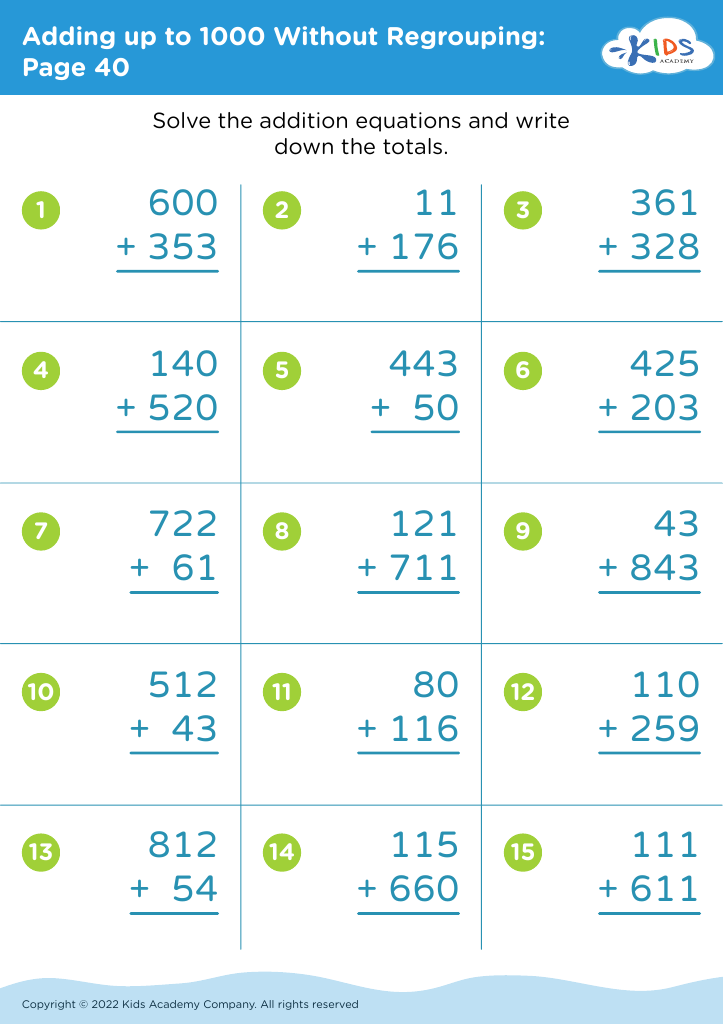
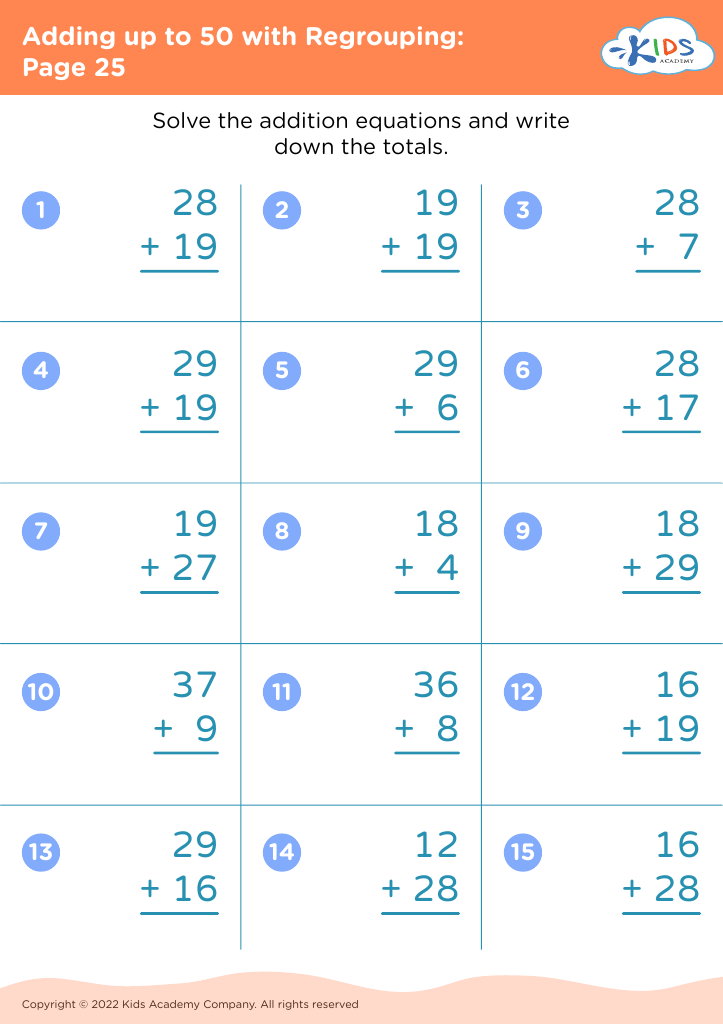
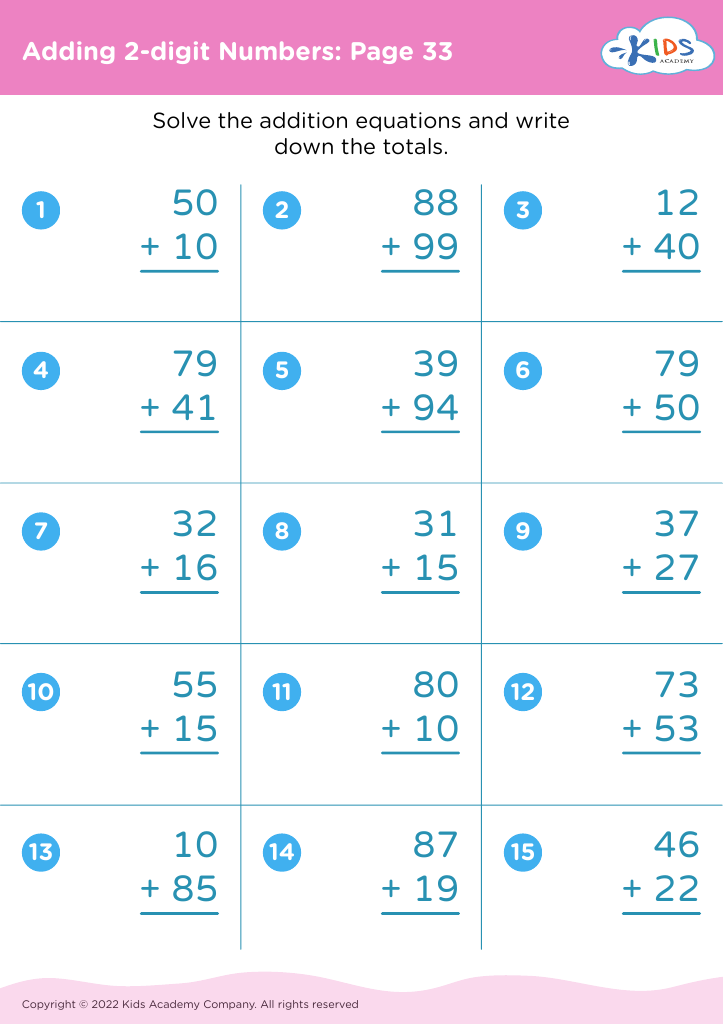
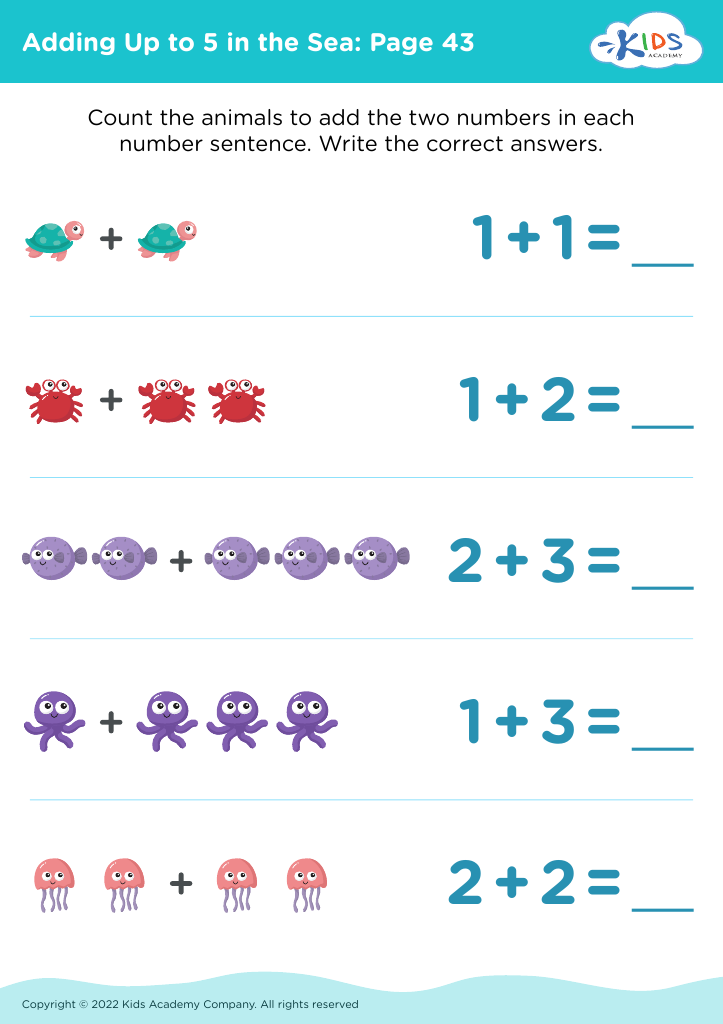
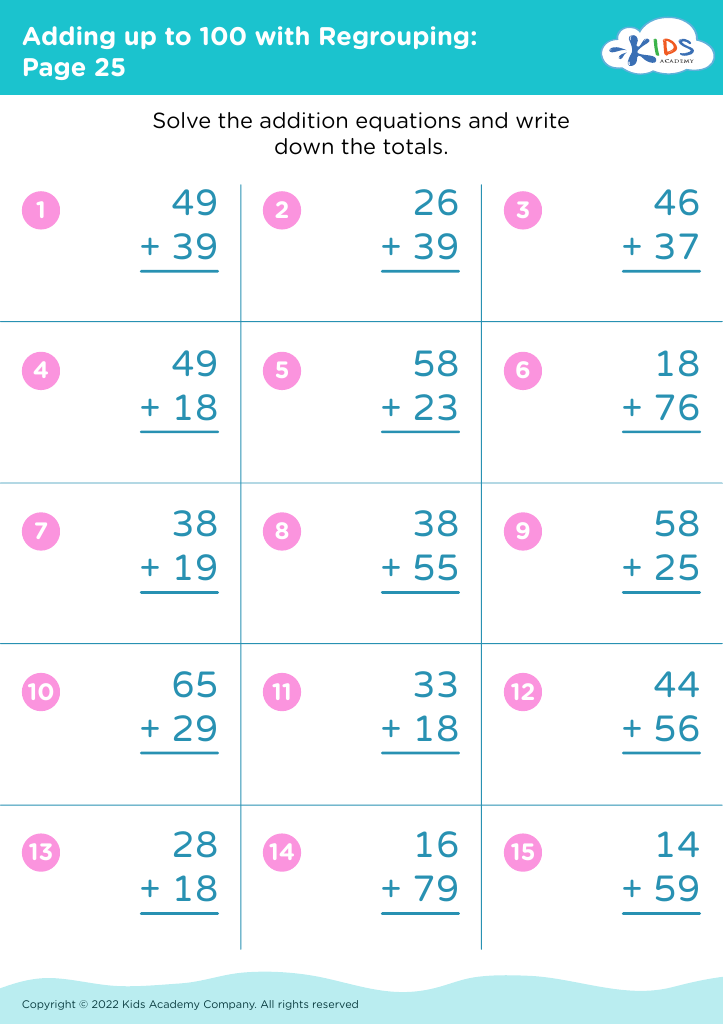
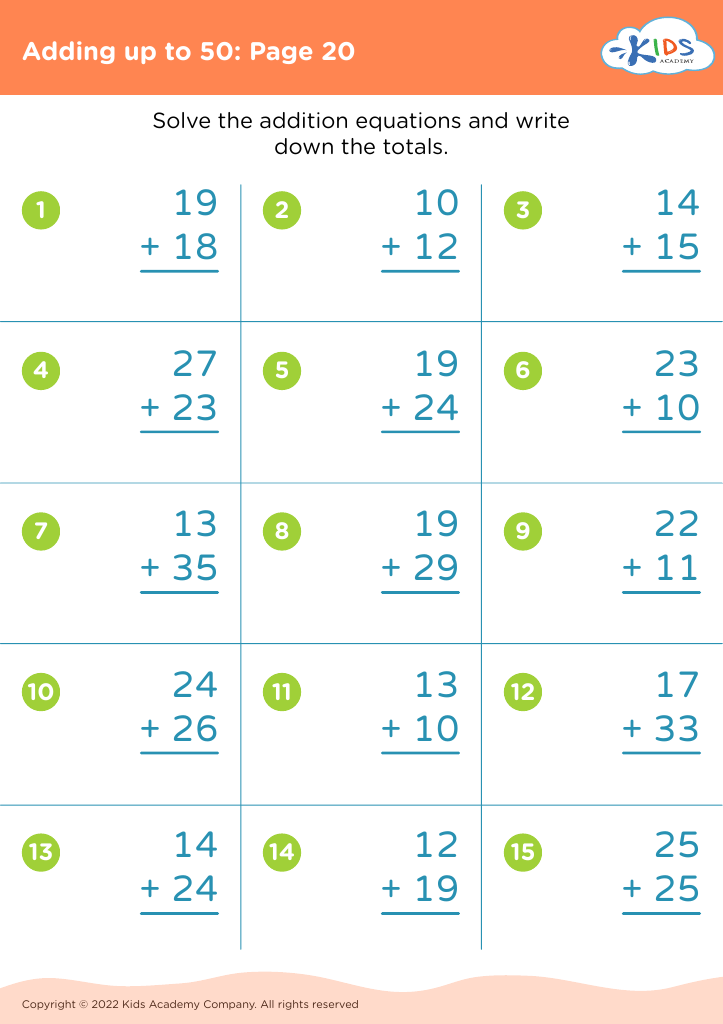
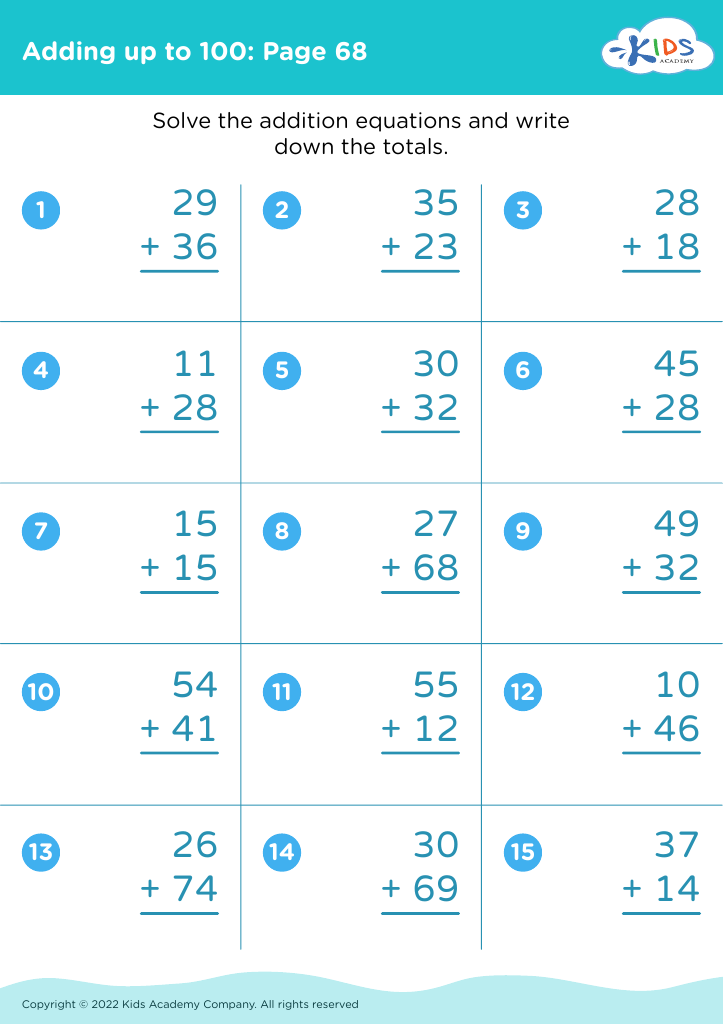








Parents and teachers should place a strong emphasis on developing problem-solving skills in addition to fostering an understanding of addition for several compelling reasons. Firstly, problem-solving skills are integral to mathematical comprehension; they help children not only understand the 'how' but also the 'why' behind mathematical operations. When children learn addition as merely a mechanical process, their understanding remains superficial. However, embedding problem-solving aspects makes the learning process more engaging and concrete, enhancing their ability to apply addition in real-world contexts.
Secondly, problem-solving bolsters cognitive development. It teaches children to approach challenges methodically, breaking them down into manageable parts. This analytical thinking translates well beyond mathematics into other academic subjects and everyday life, promoting a growth mindset where students can persevere through difficulties.
Furthermore, early development of problem-solving skills cultivates critical traits such as resilience, creativity, and collaboration. When students work on problems either independently or in groups, they practice communicating their thought processes and solutions clearly. This interpersonal skill is foundational for future social and academic success.
By integrating problem-solving with basic arithmetic like addition, parents and teachers can create a dynamic learning environment that prepares children not just for advanced math, but for future challenges where these critical skills will be invaluable.








