
Enhance critical thinking Addition Worksheets
4 filtered results
Difficulty Level
Grade
Age
-
From - To
Subject
Activity
Standards
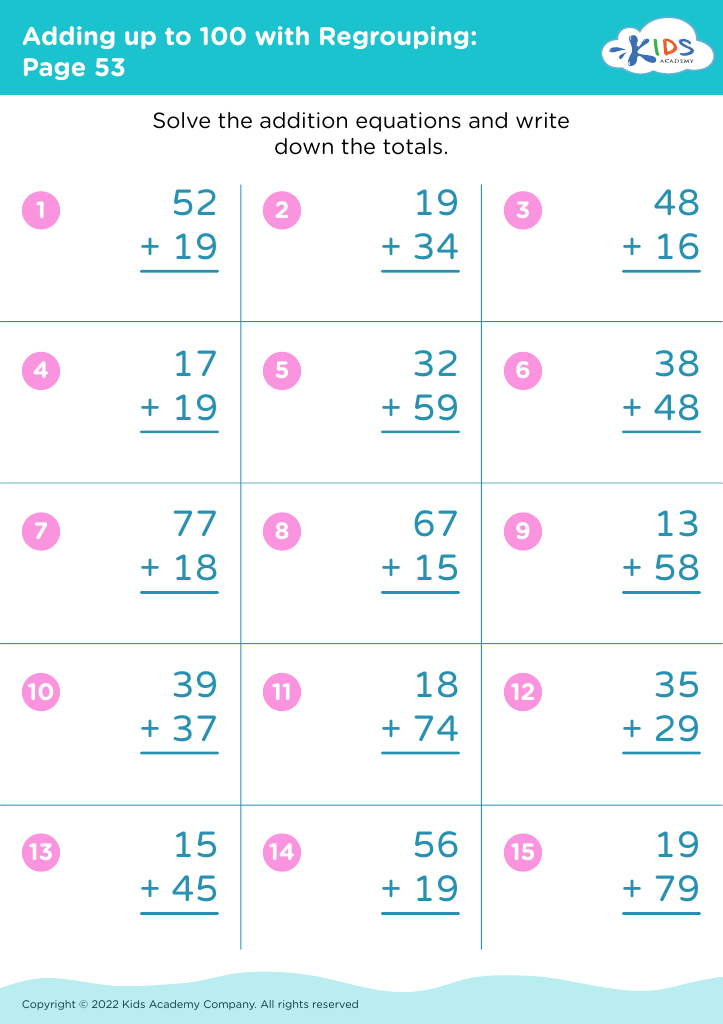
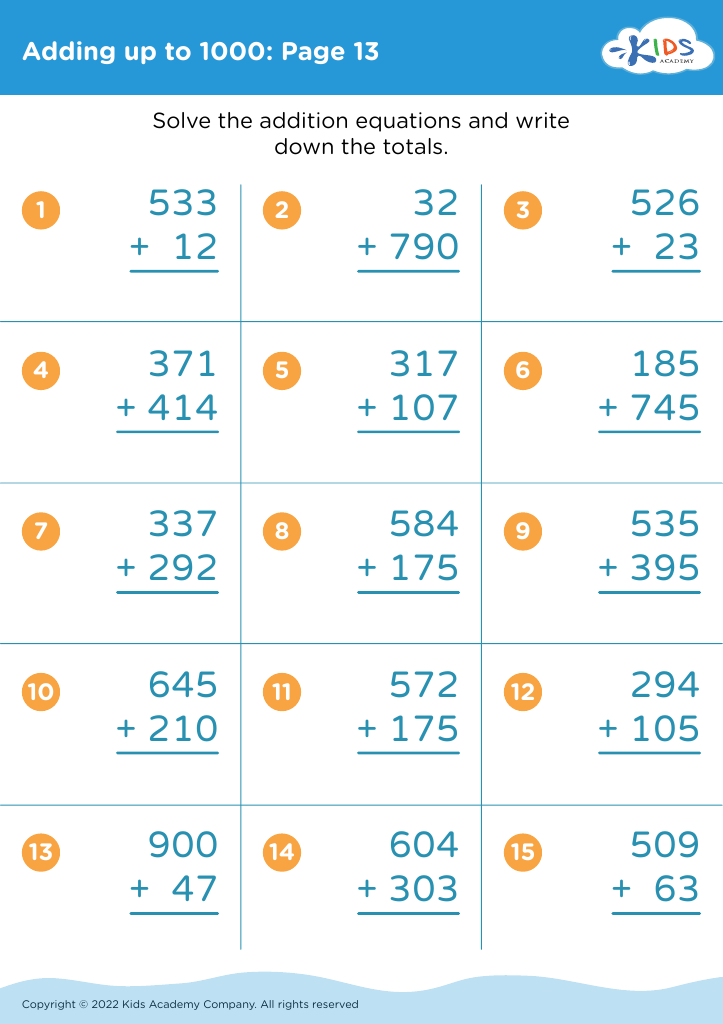
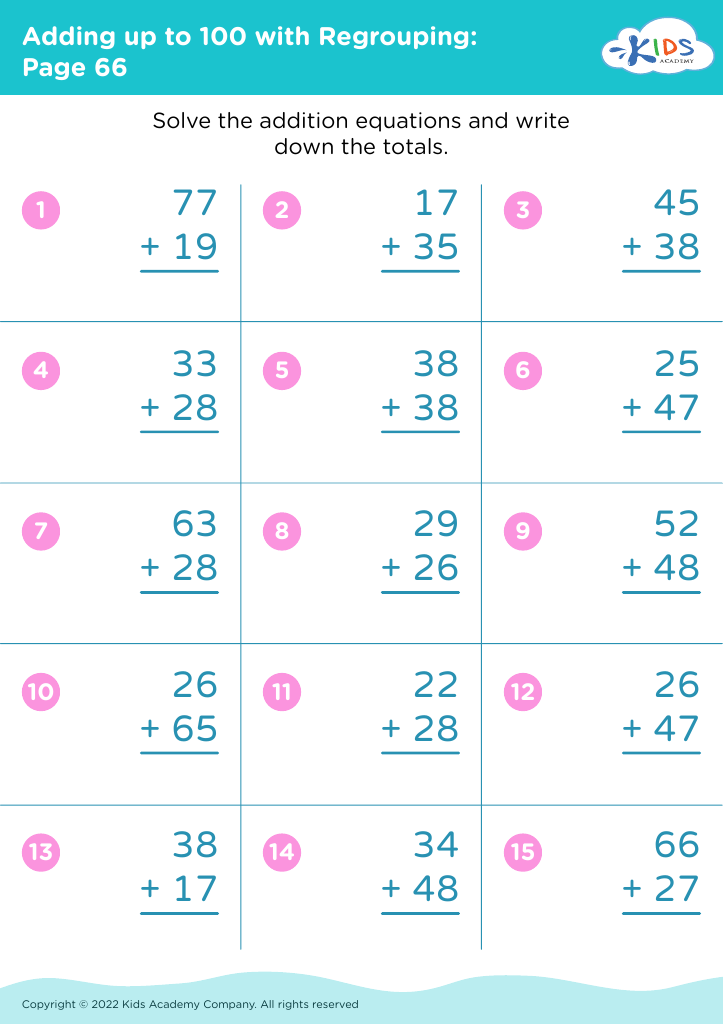
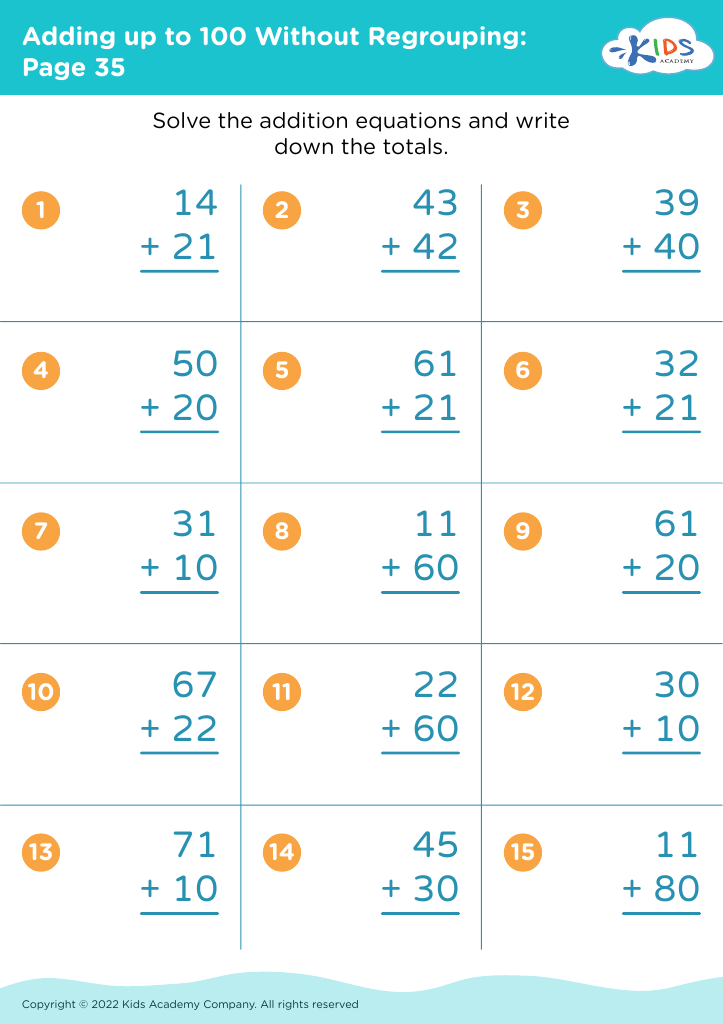
Welcome to our "Enhance Critical Thinking Addition Worksheets" page, designed to help young learners sharpen their arithmetic skills while fostering essential critical thinking abilities. Our engaging worksheets challenge students to think critically as they explore addition problems through various formats, including word problems, puzzles, and more. These activities encourage children to analyze situations, make connections, and strategize their approaches to solving math problems. Perfect for classrooms or home learning, our resources aim to boost not just math fluency but also essential cognitive skills. Start stimulating your child's analytical thinking and mathematical understanding today with our interactive addition worksheets!
Favorites
With answer key
Interactive
Join Kids Academy for Free
Who is primarily going to use this learning content?








Enhancing critical thinking in children is vital for their overall development and success in an increasingly complex world. Parents and teachers play essential roles in fostering this skill, as it empowers young learners to analyze information, evaluate evidence, and solve problems independently. Critical thinking encourages curiosity and open-mindedness, enabling children to explore different perspectives and question the status quo.
Moreover, by nurturing critical thinking through activities such as discussions, games, and problem-solving exercises, educators and parents help students develop resilience and creativity. These skills are foundational not only for academic achievement but also for real-life applications, as children learn to make informed decisions and navigate challenges effectively.
Additionally, enhancing critical thinking lays the groundwork for lifelong learning. Children equipped with these skills are better prepared to adapt to rapid changes in society and technology, ensuring they remain competitive in future workforce demands. Encouraging critical thinking also fosters a sense of accountability and ethical reasoning, allowing children not only to assess their own views but also to consider the impact of their decisions on others.
In conclusion, when parents and teachers prioritize critical thinking, they set children on a path of empowerment, enabling them to become informed, thoughtful, and engaged members of society.








