Enhance problem-solving Addition Worksheets
3 filtered results
-
From - To
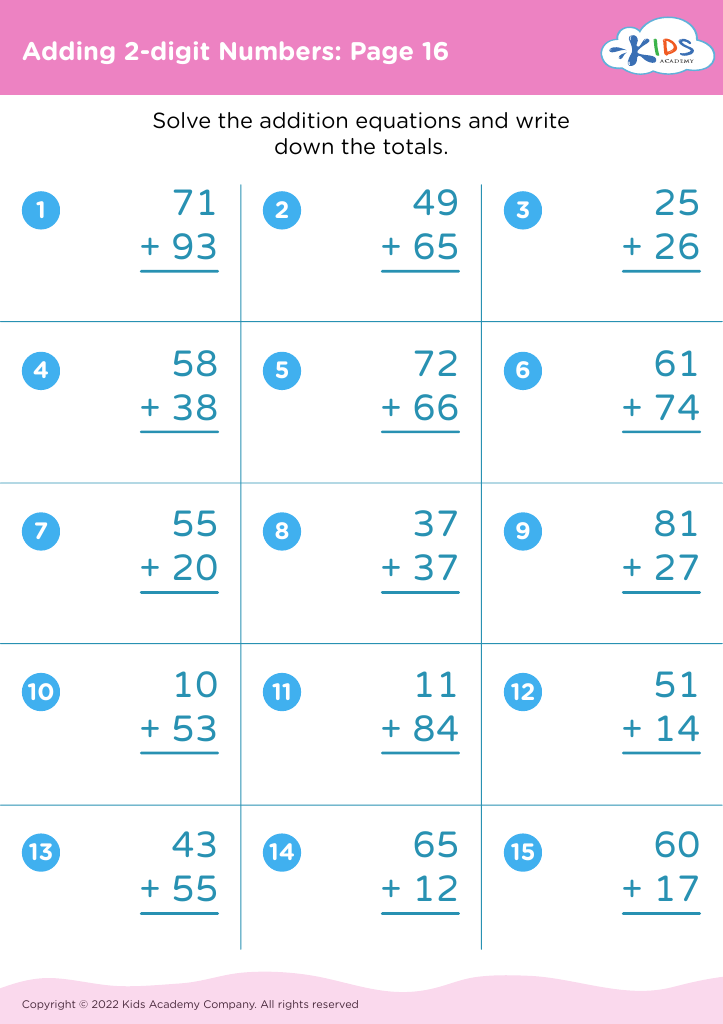
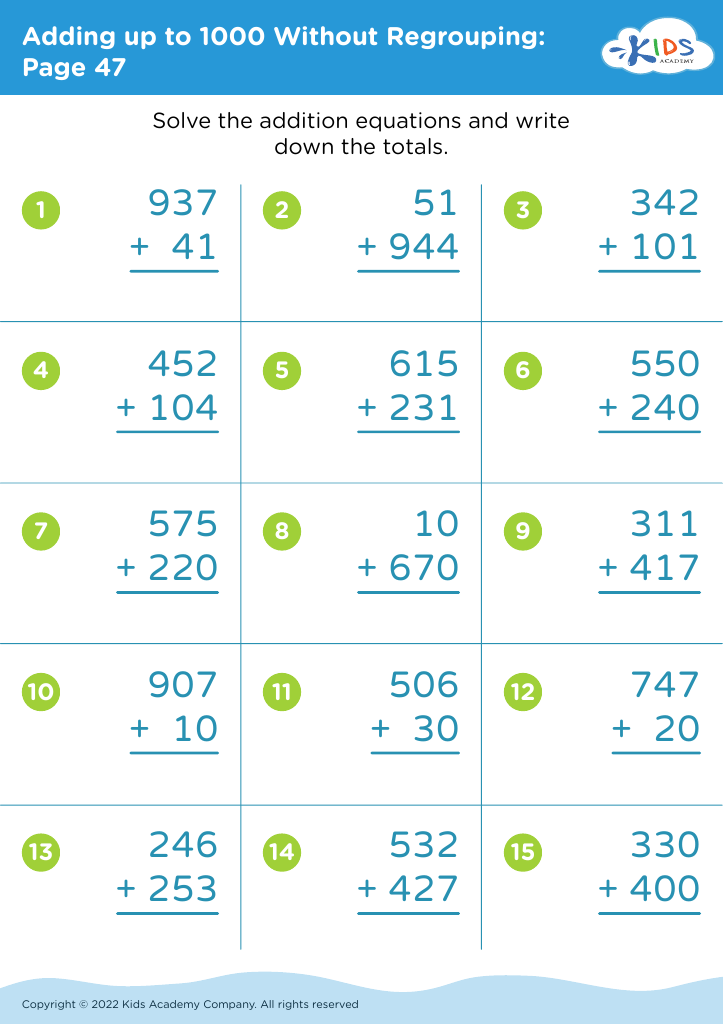
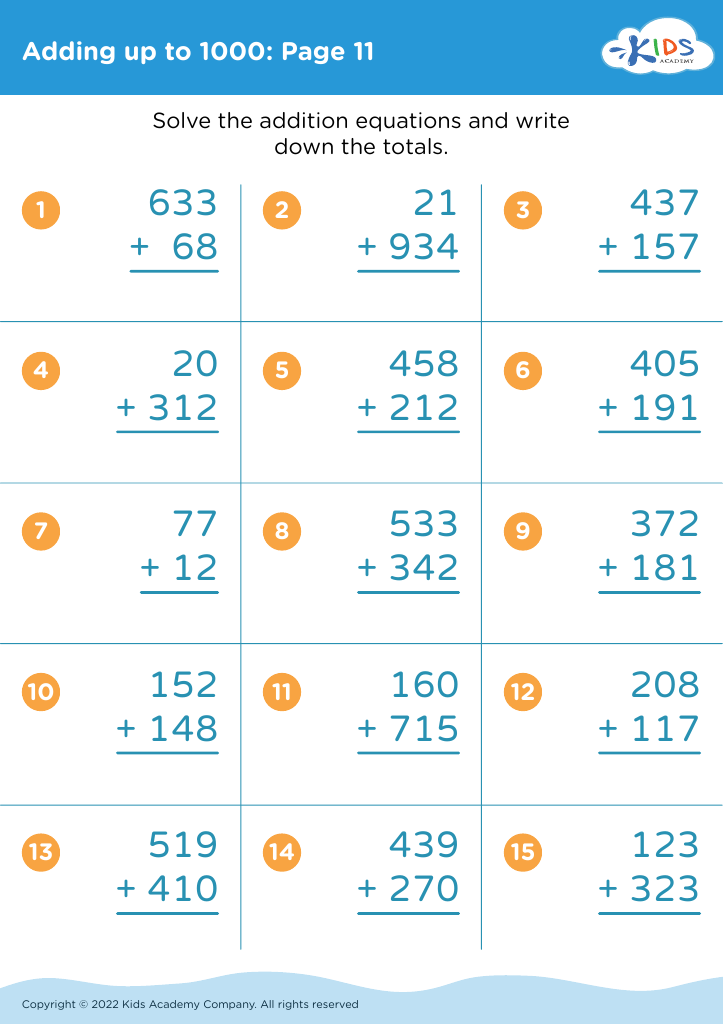
Welcome to our "Enhance Problem-Solving Addition Worksheets" page! Here, we provide engaging and interactive worksheets designed to boost your child's addition skills while enhancing their problem-solving abilities. Our carefully crafted exercises encourage critical thinking and creativity, making math fun and accessible. Each worksheet presents unique challenges tailored to different skill levels, ensuring all children can build fundamental math concepts confidently. Perfect for both classroom and home use, these resources help children develop essential strategies for tackling addition problems effectively. Explore our collection today to empower your little learners with the tools they need to succeed in their mathematical journey!






.jpg)

Enhancing problem-solving skills in addition is crucial for early grade students, as it lays the foundation for their mathematical understanding and overall cognitive development. Parents and teachers should care about this because strong problem-solving skills foster not only mathematical proficiency but also critical thinking and reasoning abilities. When children learn to approach addition problems methodically and creatively, they become more adept at tackling complex challenges in and beyond the classroom.
Moreover, enhancing problem-solving in addition helps children develop perseverance and resilience. When faced with challenging problems, learning to explore different strategies, engage in discussions about their thought processes, and approach errors as learning opportunities encourages a growth mindset. This mindset reinforces the idea that effort and practice can lead to improvement, both in mathematics and in other areas of life.
Additionally, incorporating engaging activities and real-world contexts into problem-solving can foster a love for learning. When parents and teachers emphasize the importance of these skills, they help children see mathematics as not only relevant but also exciting. Ultimately, caring about enhancing problem-solving skills in addition equips students with the tools they need for future academic success and helps them navigate everyday situations that require logical thinking and quantitative reasoning.








