Fine motor development Addition Worksheets
4 filtered results
-
From - To
Boost your child's early math and motor skills with our Fine Motor Development Addition Worksheets. Designed for young learners, these engaging activities combine fundamental addition problems with tasks that enhance fine motor control, such as tracing numbers and shapes. Each worksheet is crafted to make learning both fun and educational, supporting preschool and kindergarten students in building strong arithmetic foundations while simultaneously refining their hand-eye coordination and dexterity. Our addition worksheets serve as a delightful resource for parents and educators aiming to foster math confidence and precise motor skills in their children. Unlock your child's potential today!
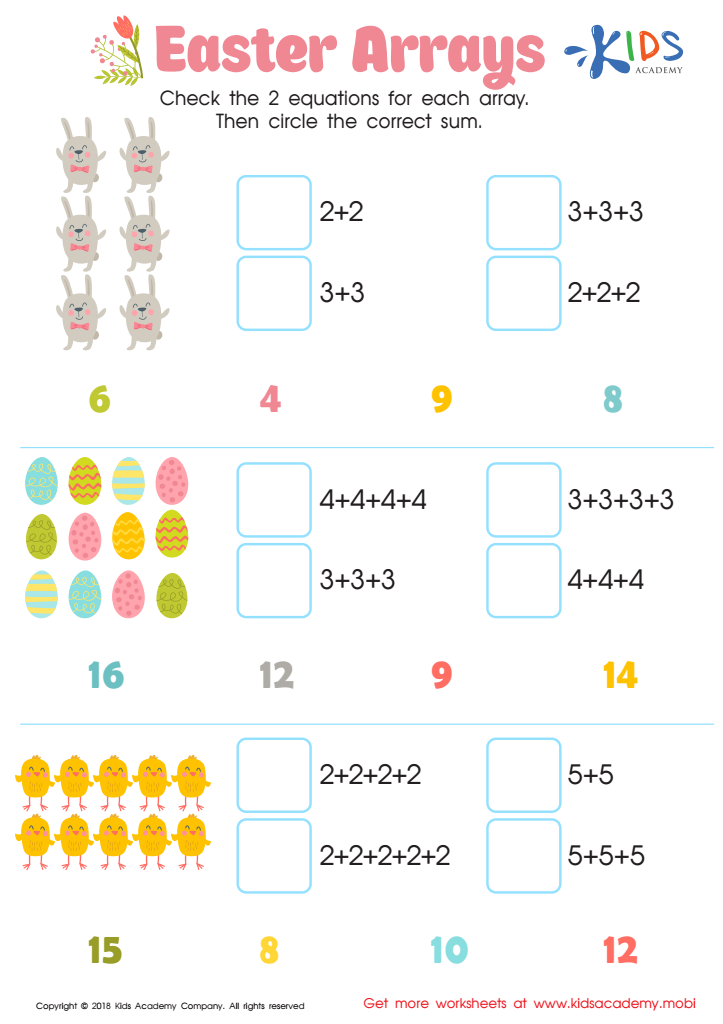
Easter Arrays Worksheet
 Assign to My Students
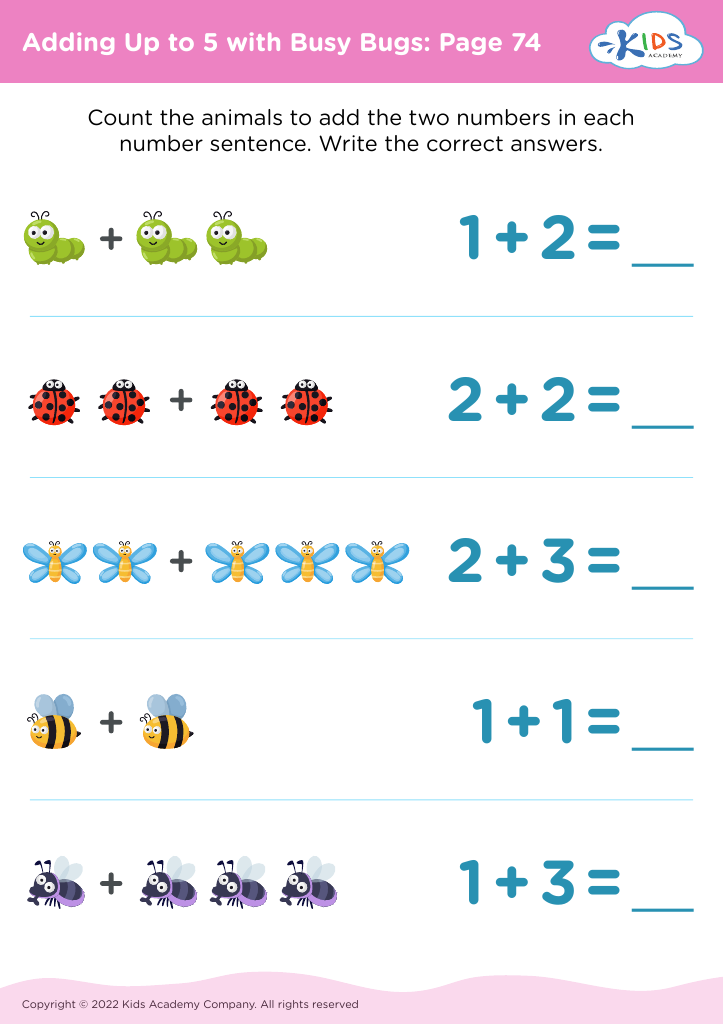
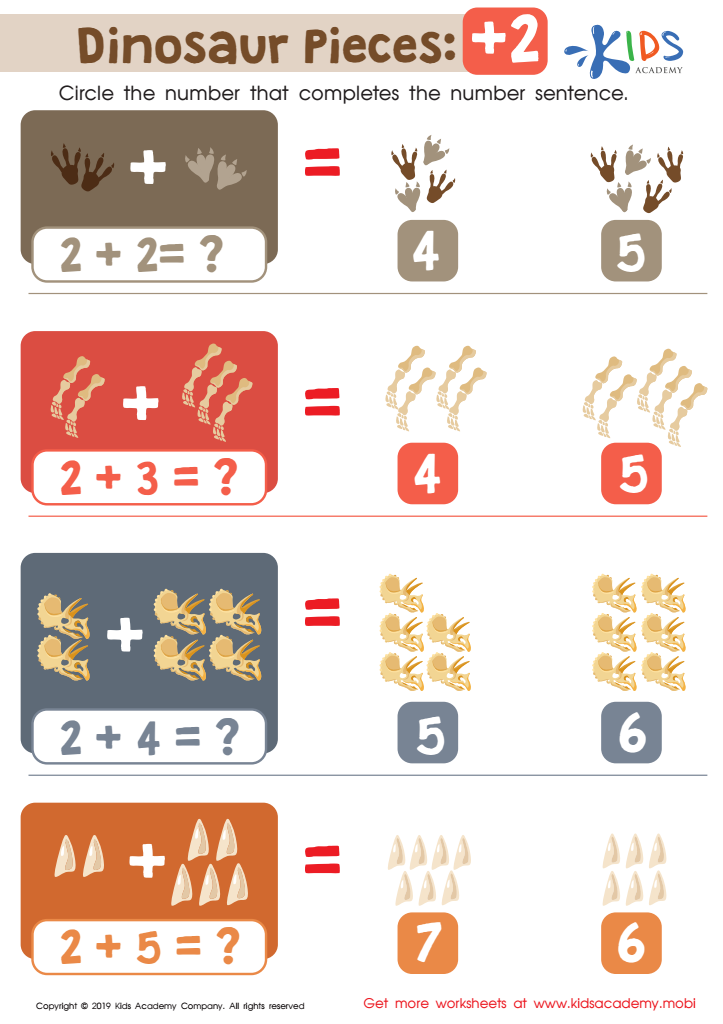
Dinosaur Pieces: +2 Worksheet








Fine motor development is crucial for young children as it directly influences their ability to perform essential daily tasks and succeed in academic settings. Fine motor skills involve the coordination of small muscles, particularly in the hands and fingers, and are necessary for activities such as writing, cutting, buttoning, and tying shoelaces. When parents and teachers pay attention to fine motor development, they help children build a foundation for independence and self-confidence.
In the classroom, fine motor skills are pivotal for holding and controlling pencils, forming letters, and creating drawings. Teachers who prioritize fine motor activities can aid children in developing strong writing skills, essential for effective communication and academic achievement. Similarly, engaging children in activities that strengthen fine motor skills at home, such as playing with building blocks, puzzles, and art projects, prepares them for more complex tasks and reduces frustration.
Furthermore, fine motor skills play an integral role in cognitive development, enhancing hand-eye coordination, problem-solving, and spatial awareness. Children with well-developed fine motor skills often exhibit better concentration and persistence in tasks. By supporting fine motor development, parents and teachers collaborate in fostering children's overall growth, providing them with the tools necessary for both immediate and future success in various areas of life.








