Fine Motor Skills (coloring) Addition Worksheets
6 filtered results
-
From - To
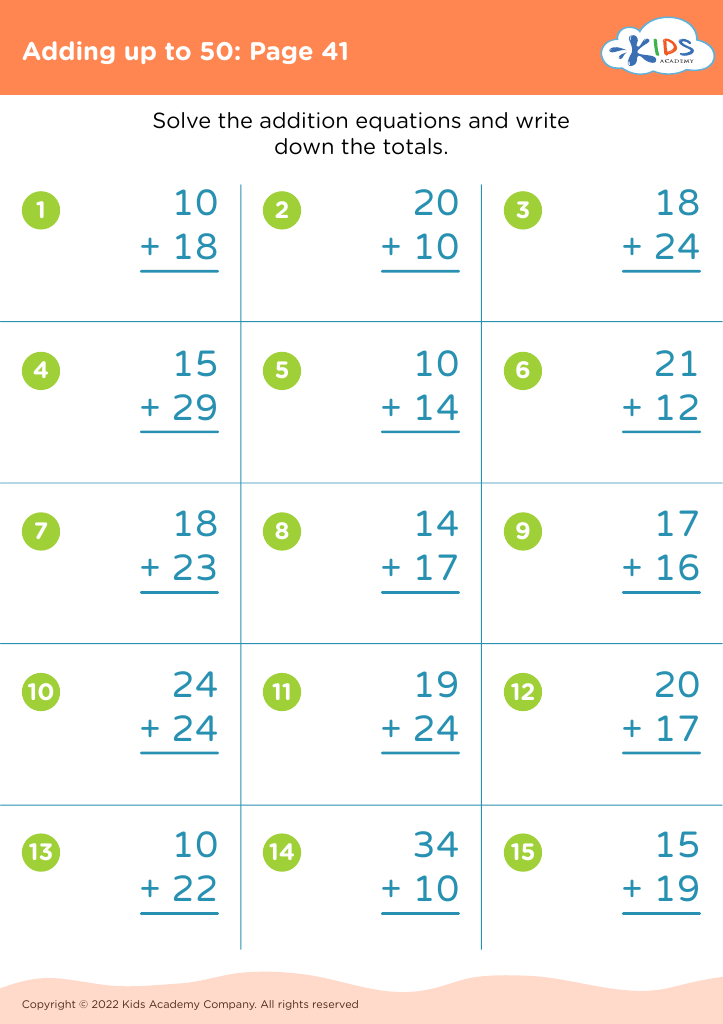
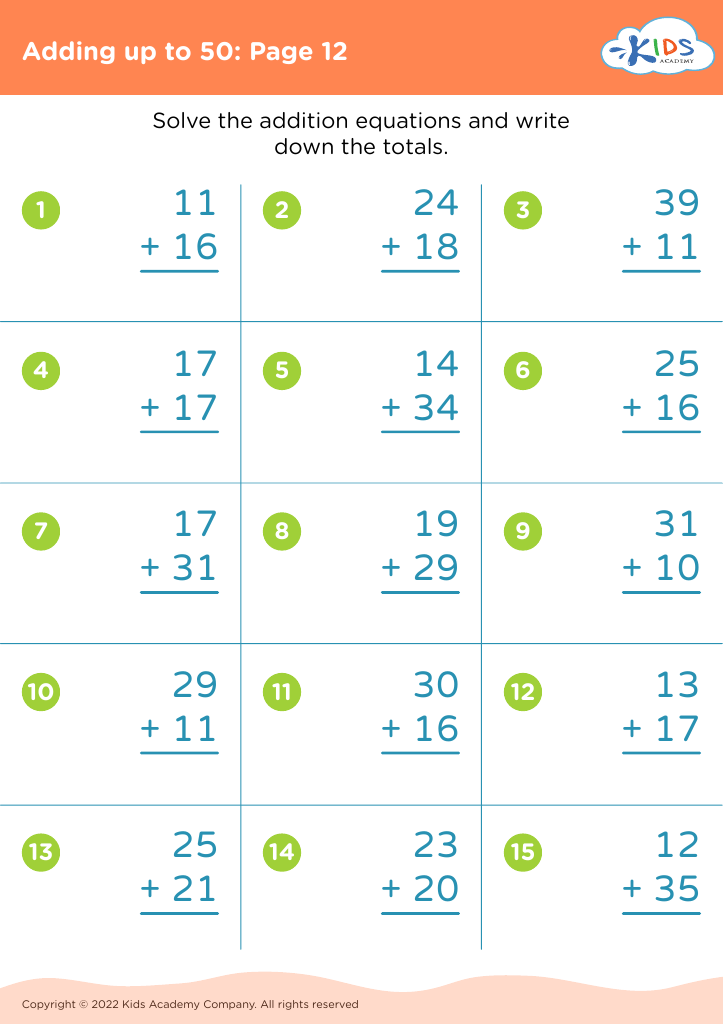
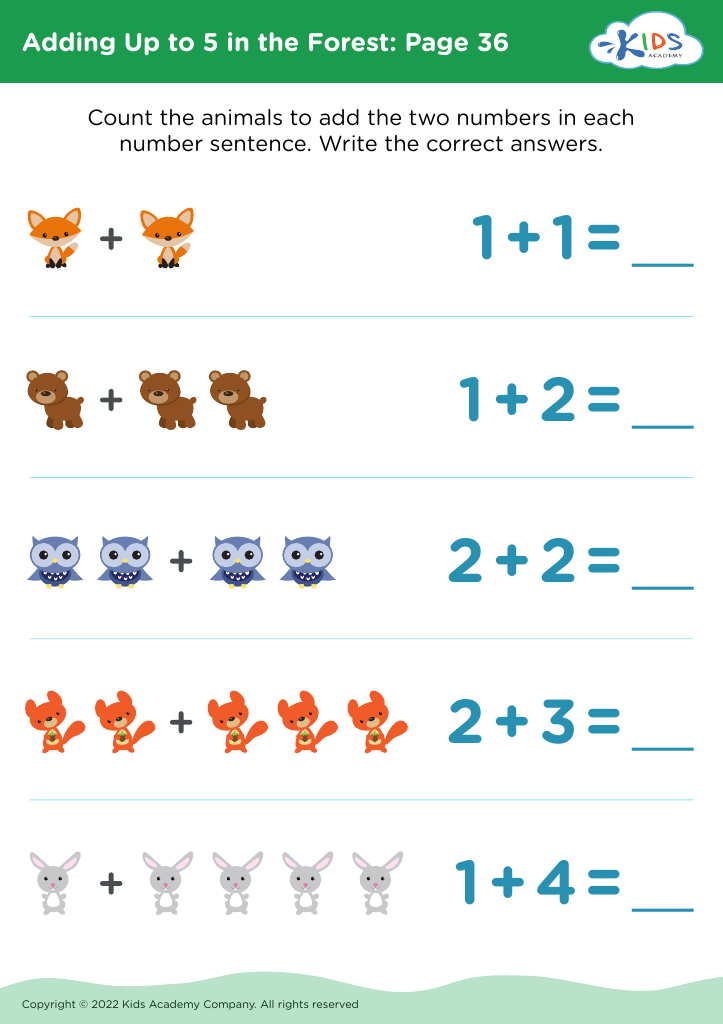
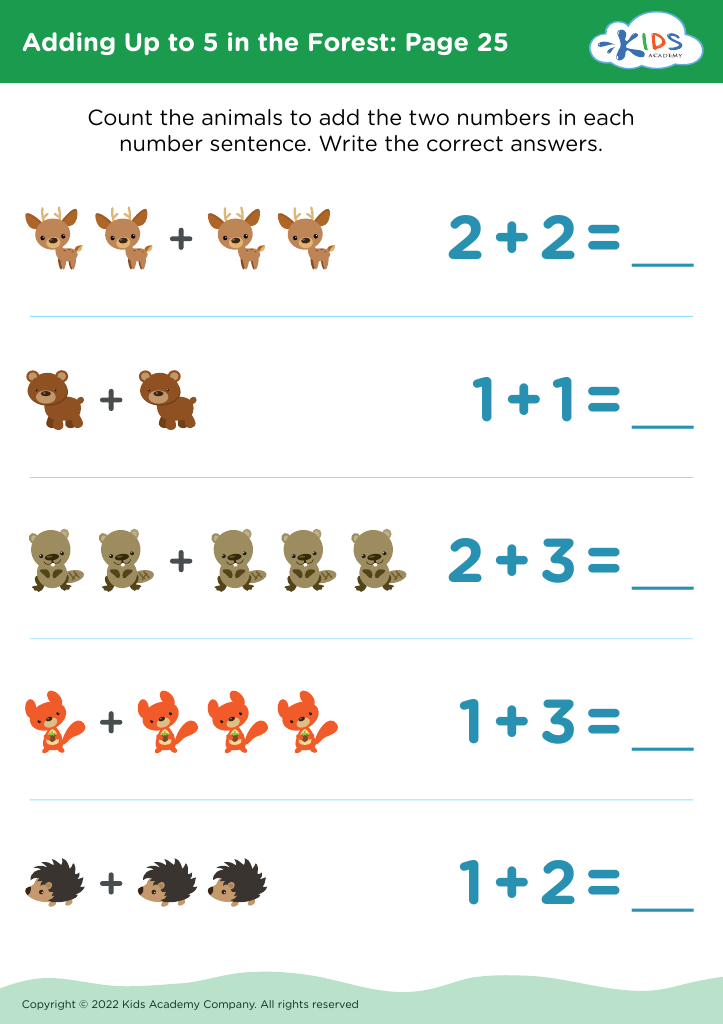
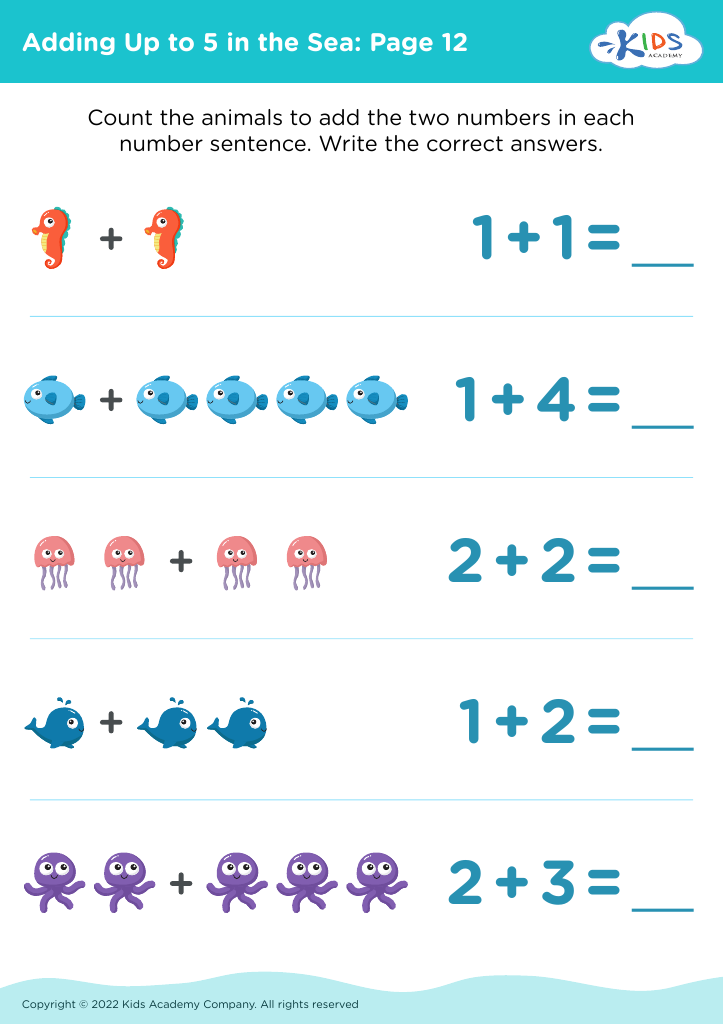
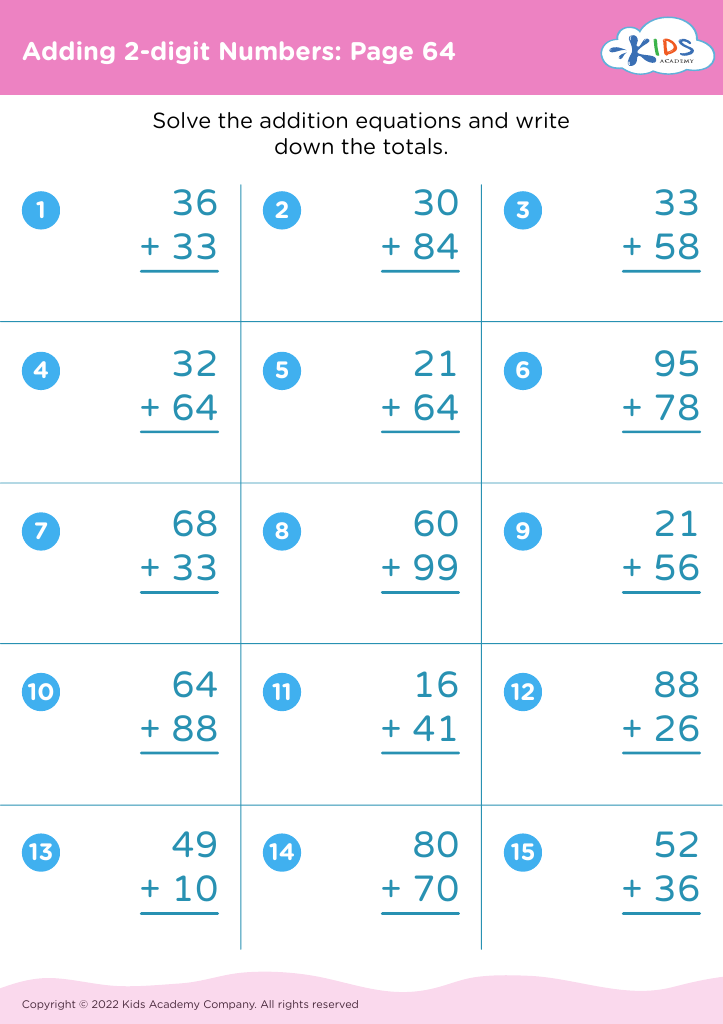
Boost your child's fine motor skills and math abilities with our engaging Fine Motor Skills (Coloring) Addition Worksheets! Perfectly designed for early learners, these fun activities combine the art of coloring with the basics of addition, making learning both enjoyable and effective. As children solve simple addition problems, they bring vibrant pictures to life, enhancing their pencil control and hand-eye coordination. Our worksheets not only aid in mastering addition but also in developing essential motor skills crucial for handwriting. Ideal for parents and teachers, these printable resources are a fantastic way to support your child's educational journey. Download today for a colorful path to learning!








Parents and teachers should care about fine motor skills, like coloring, because these skills are foundational for children's overall development. Fine motor skills involve the coordination of small muscles in the hands and fingers, which are essential for tasks such as writing, buttoning clothes, and using utensils. When children practice coloring, they not only engage creatively but also enhance their hand-eye coordination, grip strength, and control over their finger movements.
Developing these skills early on is crucial for academic success. Writing, an integral part of learning, requires well-developed fine motor skills. Children who have practiced through activities like coloring are better prepared to hold pencils properly and form letters more precisely. This can lead to improved handwriting and greater ease in school-related tasks.
Moreover, coloring encourages children to focus and pay attention to detail, which can boost their concentration and patience. It also allows them to express themselves creatively, fostering emotional and intellectual growth. In a classroom setting, it can serve as a calming activity that helps manage stress and improve mood.
Lastly, engaging in coloring activities with peers or parents provides valuable opportunities for social interaction and bonding. Thus, nurturing fine motor skills through coloring combines physical, cognitive, and social benefits, laying a holistic foundation for a child's developmental journey.








