Fine motor skills (drawing lines) Addition Worksheets
3 filtered results
-
From - To
Enhance your child’s fine motor skills and addition knowledge with our "Fine Motor Skills: Drawing Lines Addition Worksheets." Tailored for early learners, these engaging activities focus on improving pencil control while reinforcing fundamental math concepts. Children will draw lines to connect numbers and solve simple addition problems, combining fun with learning. These worksheets not only develop critical fine motor skills but also build a strong foundation in math, making addition practice enjoyable and effective. Perfect for home or classroom use, our printable worksheets support your child's educational journey in a playful, interactive way. Get started and watch confidence grow!
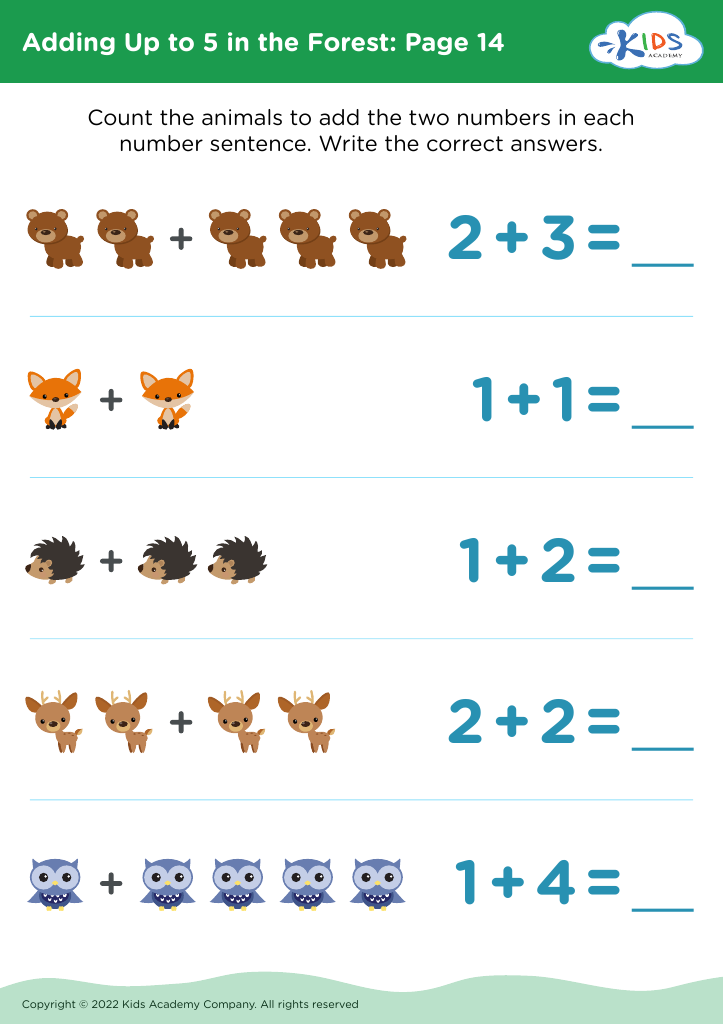
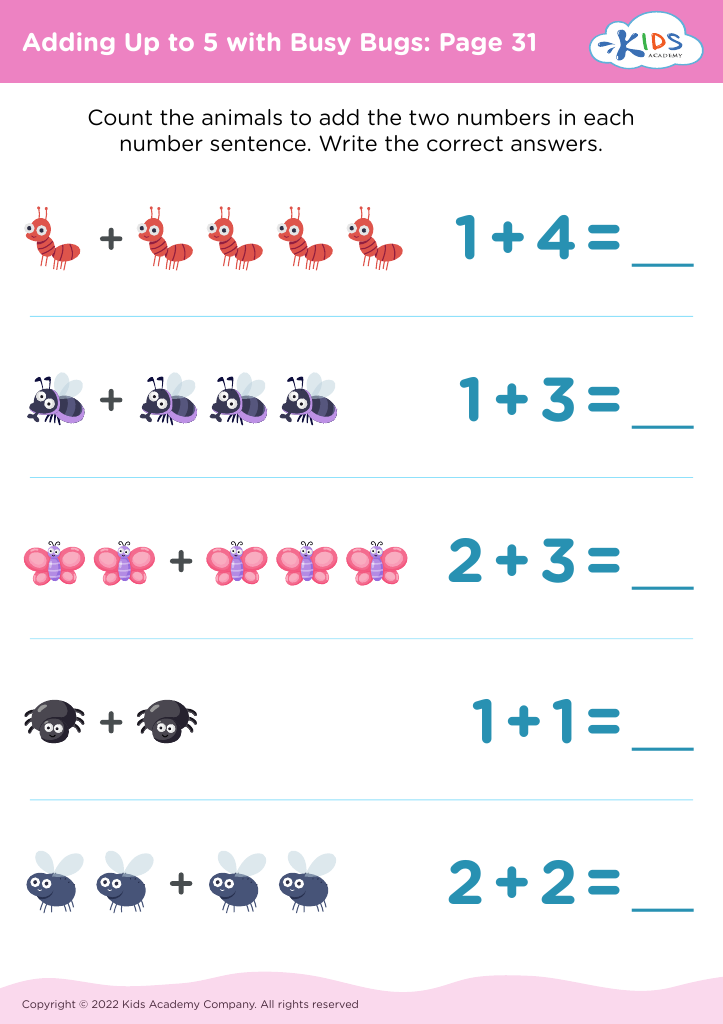
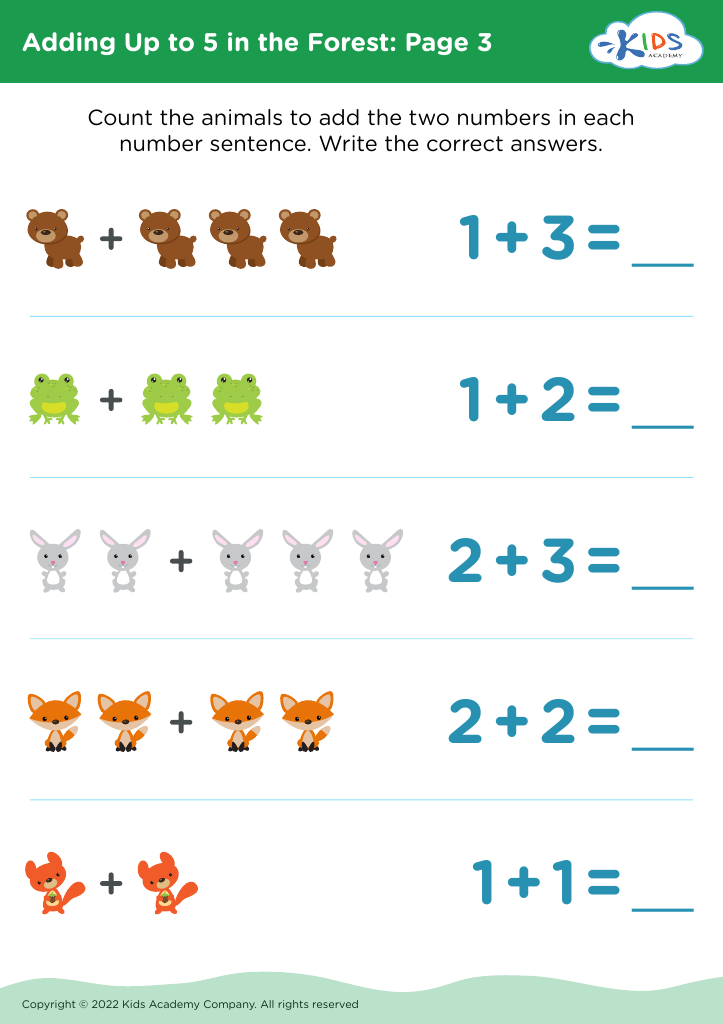








Fine motor skills are essential for young children's overall development, and parents and teachers play a crucial role in nurturing these skills. One key aspect of fine motor development is the ability to draw lines, which may seem simple but is foundational for more complex tasks. Encouraging children to draw lines helps them enhance control over their hand and finger movements, leading to improved hand-eye coordination. This foundational ability is vital for daily tasks such as writing, buttoning clothes, and using utensils.
Moreover, drawing lines builds the muscle strength and dexterity required for holding and maneuvering pencils, preparing children for writing letters and numbers. As children engage in line-drawing activities, they also practice focus and patience, fostering cognitive skills like concentration and problem-solving.
When teachers and parents support the development of these skills, they pave the way for academic success. Children who struggle with fine motor tasks may find schoolwork challenging, affecting their self-esteem and academic performance. Thus, integrating fine motor activities, like line drawing, into daily routines provides children with essential practice, making the transition to more complex skills smoother and more enjoyable. Overall, fine motor skills are a stepping stone for a child's independence and success both in school and in daily life.








