
Handwriting practice Addition Worksheets
5 filtered results
Difficulty Level
Grade
Age
-
From - To
Subject
Activity
Standards
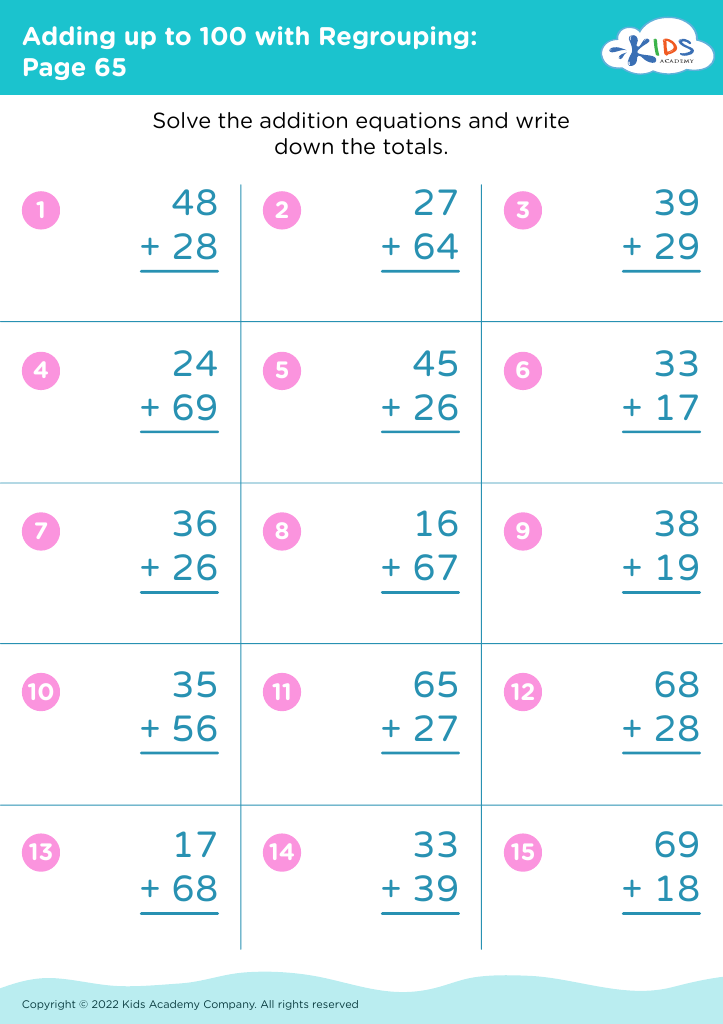
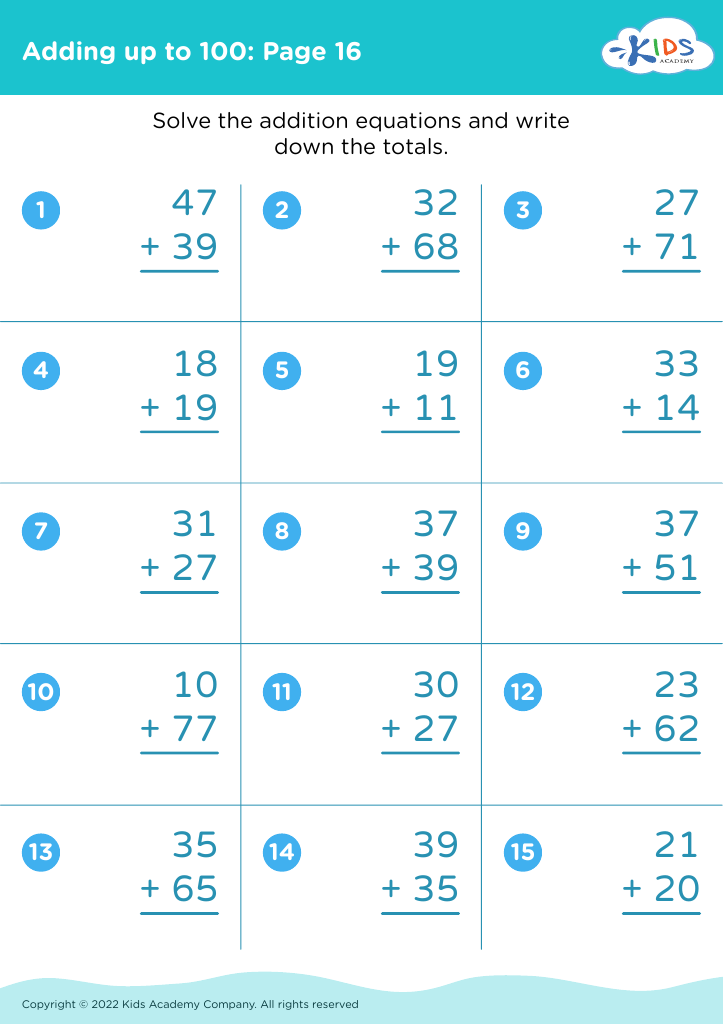
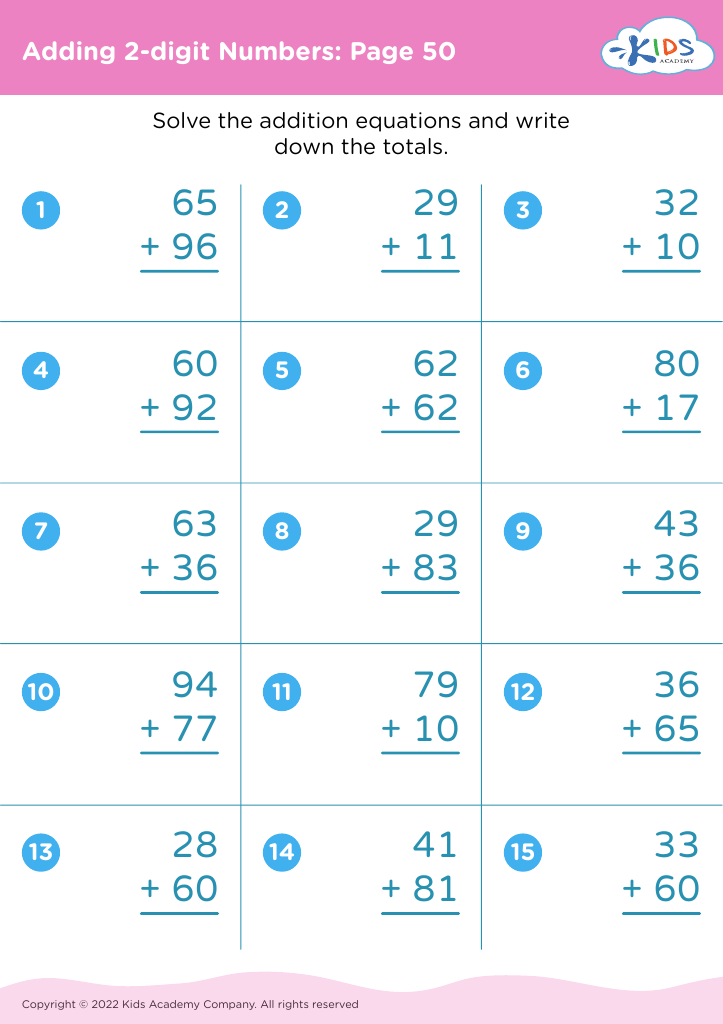
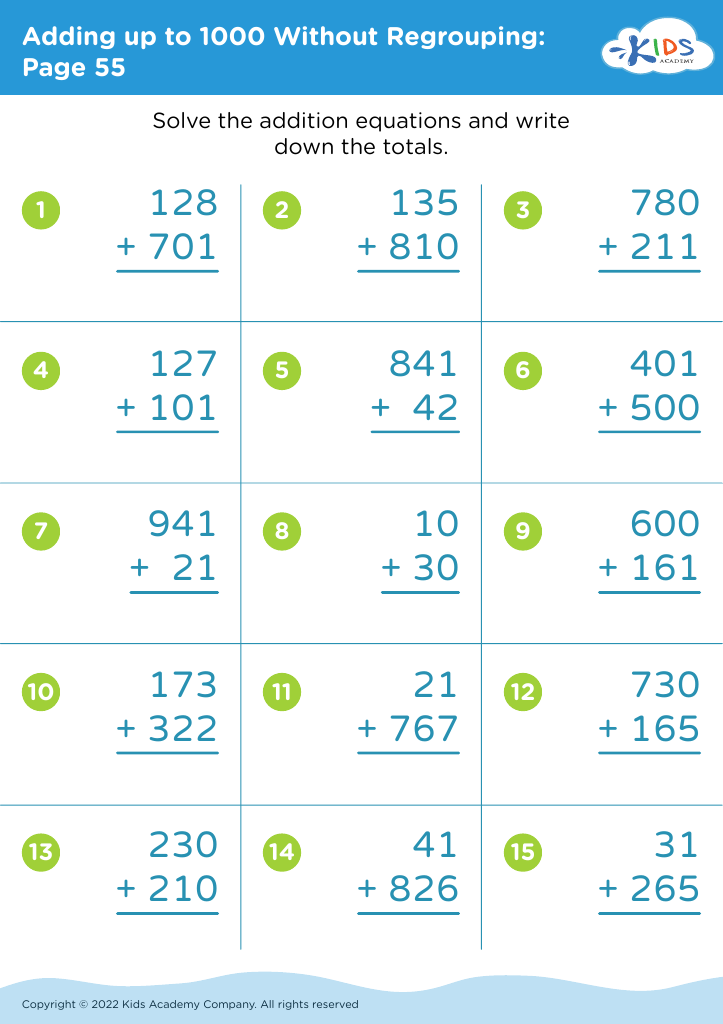
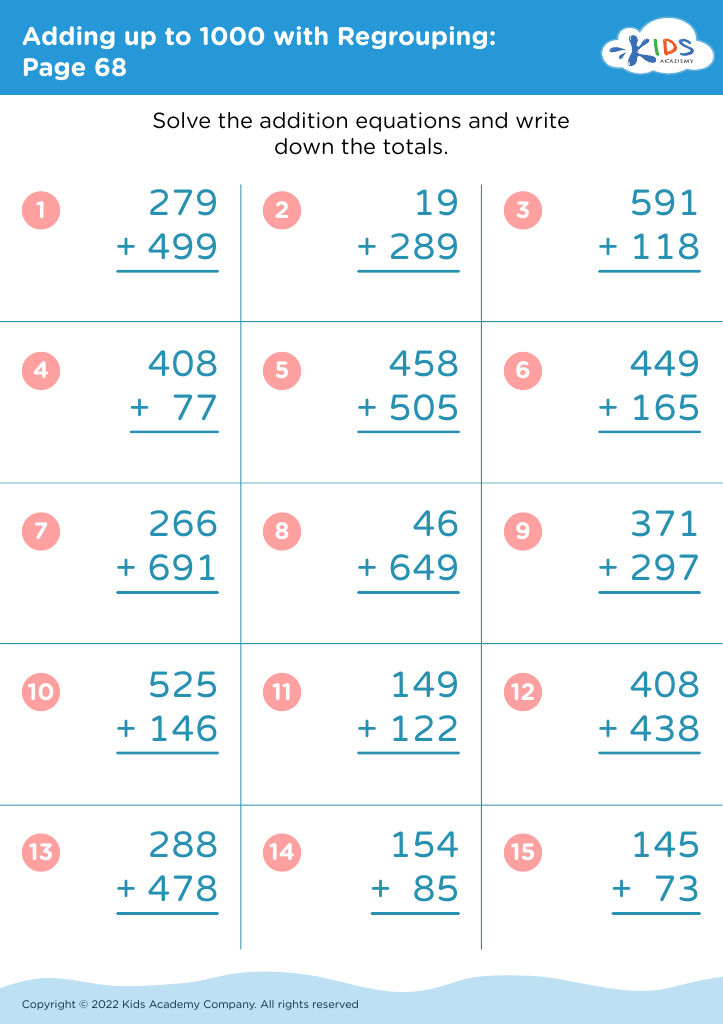
Welcome to our Handwriting Practice Addition Worksheets! These engaging printable resources combine the essentials of handwriting and math, designed specifically for young learners. Our worksheets help children develop their fine motor skills while mastering addition concepts through practice. Each worksheet offers a variety of exercises, allowing children to trace and write numbers clearly, reinforcing number recognition and addition skills simultaneously. Ideal for classrooms or at-home learning, these worksheets make math both fun and educational. Whether you're a teacher or parent, our worksheets provide the perfect tool to enhance your child’s handwriting and math proficiency. Start boosting their confidence in math today!
Favorites
With answer key
Interactive
Join Kids Academy for Free
Who is primarily going to use this learning content?








Handwriting practice is crucial for young learners, as it forms the foundation for effective communication in both written and digital formats. It helps develop fine motor skills, which are essential for overall physical development. When children focus on mastering handwriting, they cultivate a sense of discipline and patience, leading to better concentration and cognitive skills.
Adding handwriting practice to a curriculum also supports literacy development. Children learn to form letters accurately, which enhances their ability to read and write effectively. A strong grasp of handwriting aids in spelling and vocabulary retention, contributing to overall literacy competence.
For parents and teachers, promoting handwriting practice encourages creativity and self-expression. As children create stories or express ideas through writing, they build confidence in their abilities. Additionally, practicing handwriting improves retention; studies show that writing notes by hand enhances memory compared to typing.
Incorporating handwriting practice into daily learning routines fosters a deeper appreciation for the written word, making it easier for children to convey their thoughts and emotions. Ultimately, caring about handwriting practice is about equipping children with lifelong skills that enhance their academic success and personal growth.








