Improving mathematical skills Addition Worksheets
4 filtered results
-
From - To
Enhance your child’s mathematical abilities with our meticulously designed Addition Worksheets. Ideal for young learners, these printable resources focus on building a strong addition foundation through engaging and varied exercises. By offering a blend of visual aids and interactive tasks, Kids Academy’s worksheets make learning addition both fun and effective. Perfectly suited for both classroom and home use, our worksheets cater to different learning styles and paces, ensuring that each child can master addition in an enjoyable way. Give your child the tools they need to succeed in math with our innovative and educational Addition Worksheets.
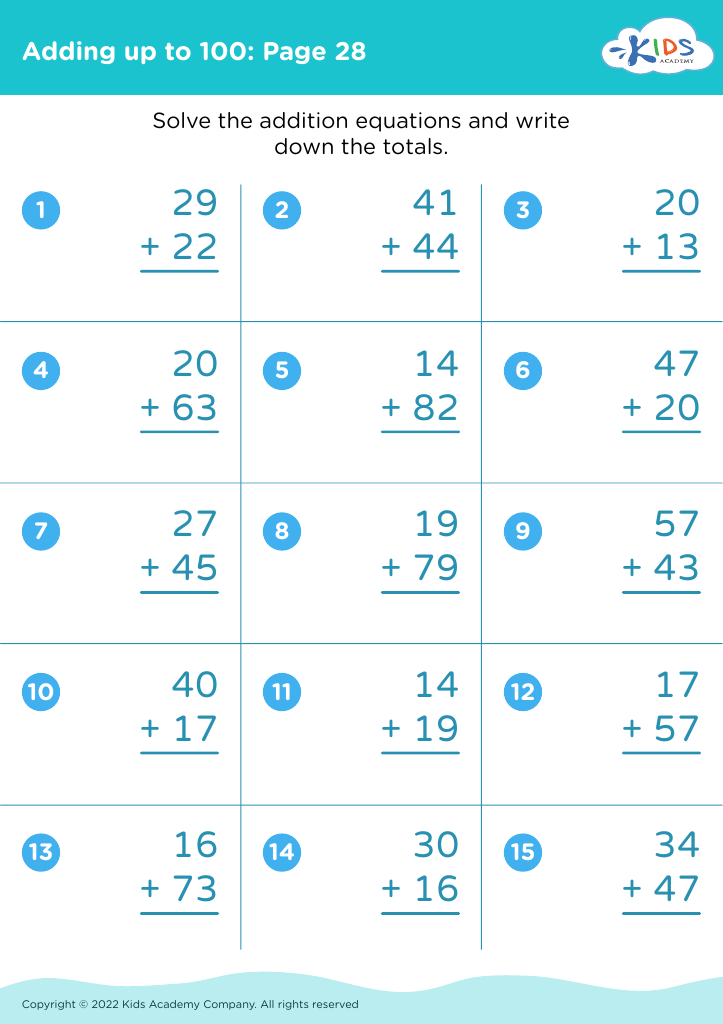
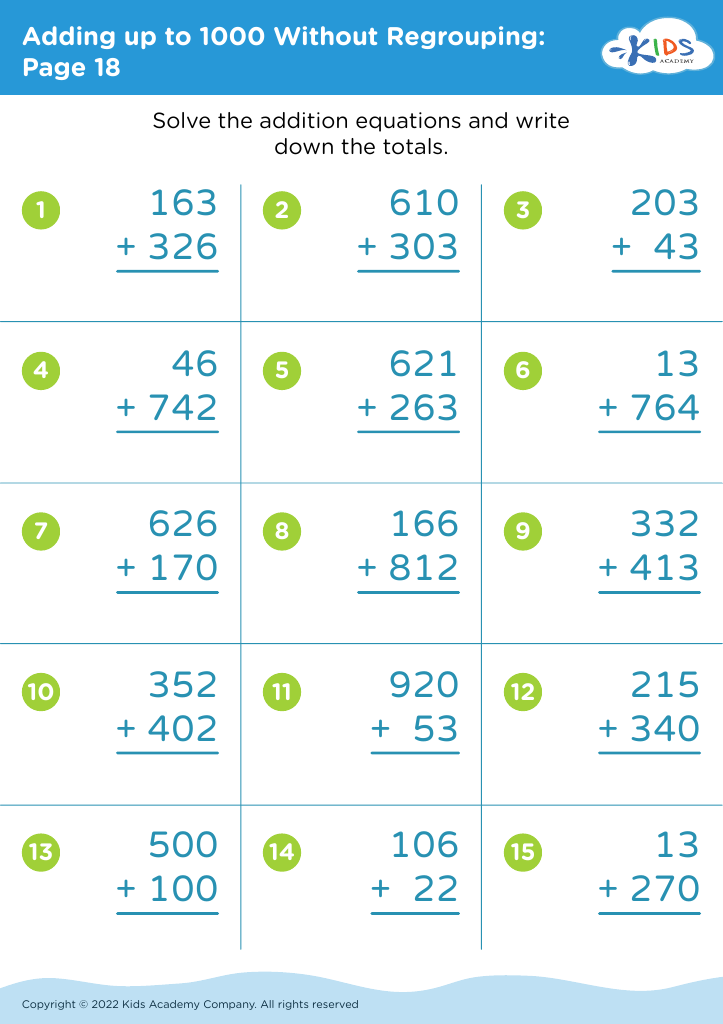
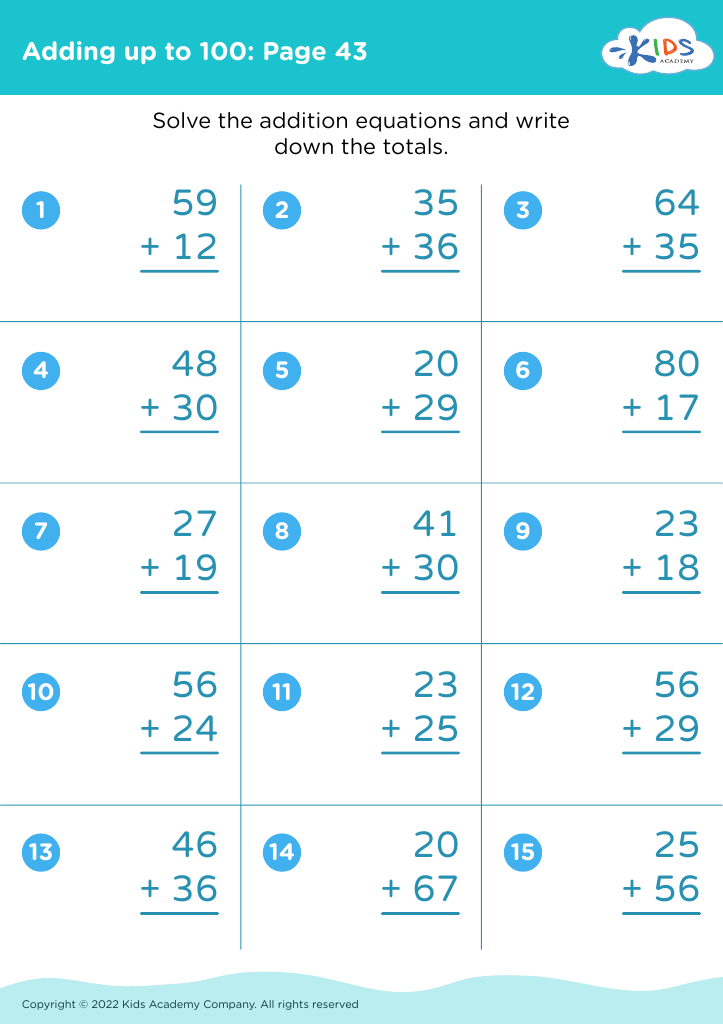
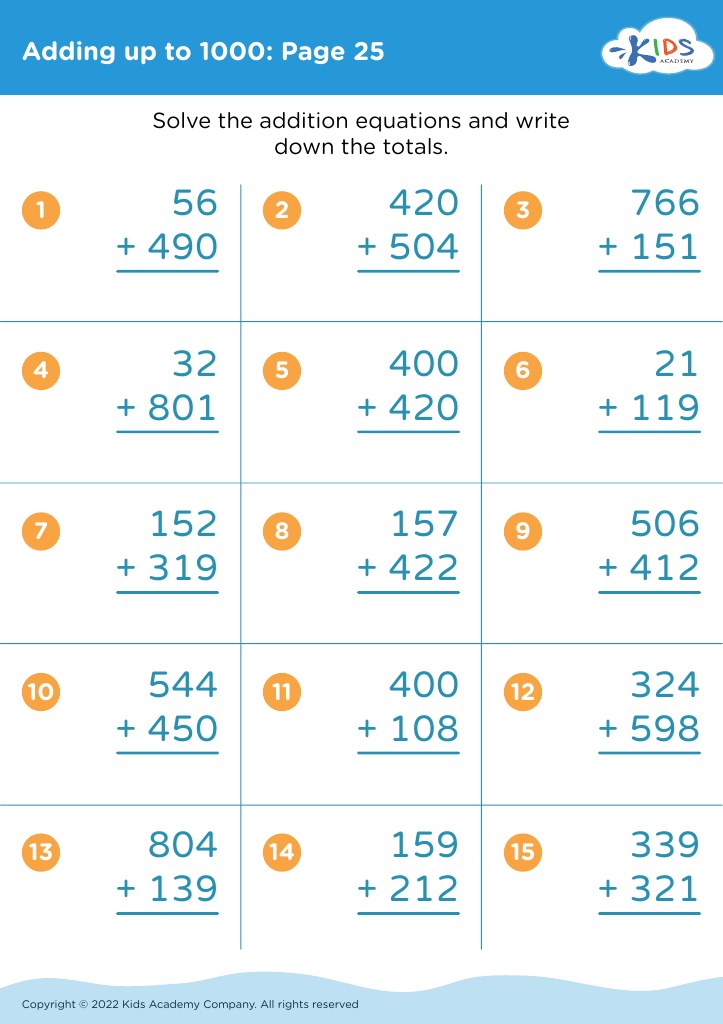








Parents and teachers play a pivotal role in nurturing foundational skills in children, and improving mathematical skills, specifically addition, is crucial for young learners. Addition forms the basis of all future mathematical concepts; it's more than just combining numbers. Mastery of addition fosters number sense, the fundamental understanding of how numbers work and relate to one another. Strong addition skills are linked to better performance in more complex areas like subtraction, multiplication, and division, essential for problem-solving and critical thinking.
In the classroom, confident addition skills enable children to participate more fully in lessons and reduce math anxiety. This bolstered confidence translates into a positive attitude towards learning and a willingness to tackle challenging problems. Beyond academics, math is an integral part of everyday life. From budgeting pocket money to telling time, basic arithmetic is ubiquitous. Teaching children to master addition opens doors to real-world applications and fosters independence.
Moreover, improving these skills early on contributes to fostering a growth mindset. When children see tangible progress in their abilities, it builds resilience and encourages a lifelong love of learning. Thus, prioritizing addition is not merely about numbers but about equipping children with a versatile toolset for future academic and real-life success.








