Improving mental math Addition Worksheets
3 filtered results
-
From - To
Enhance your child's math skills with our "Improving Mental Math Addition Worksheets"! Designed for early learners, these engaging worksheets focus on developing quick addition skills through fun and interactive exercises. By practicing mental math, children build confidence, speed, and accuracy, laying a strong foundation for their future math success. Our resources incorporate a range of exercises, including visual aids and real-world scenarios, making math enjoyable and relatable. Perfect for classroom activities or at-home practice, these worksheets offer essential practice for young learners to boost their arithmetic abilities. Access them today and watch your child's math skills flourish!
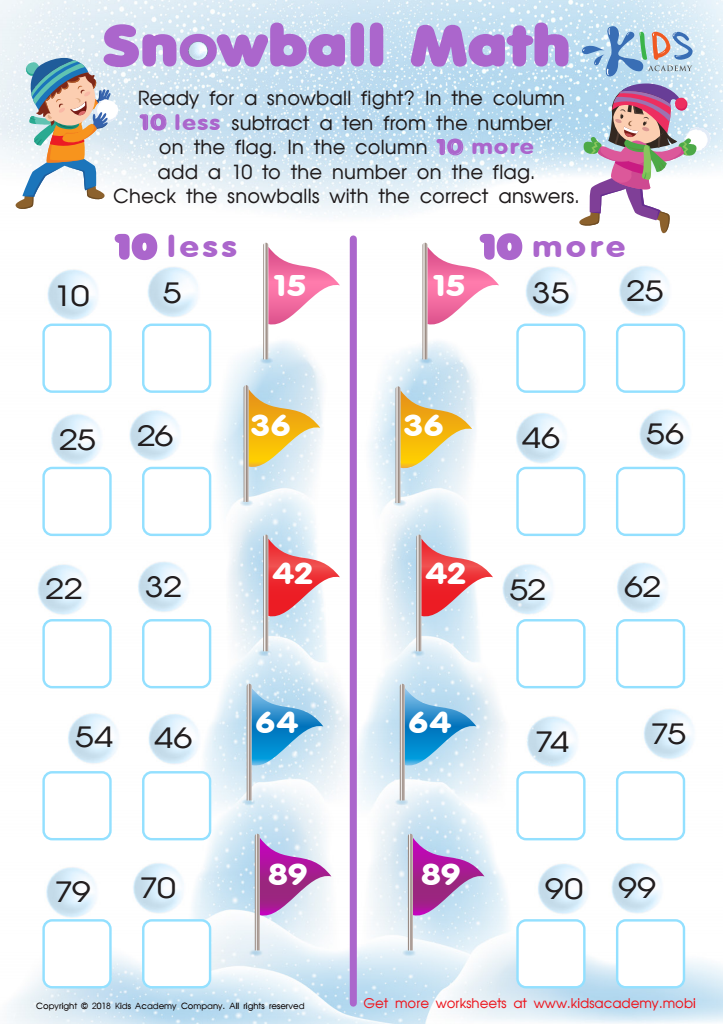
Snowball Math Worksheet
 Assign to My Students
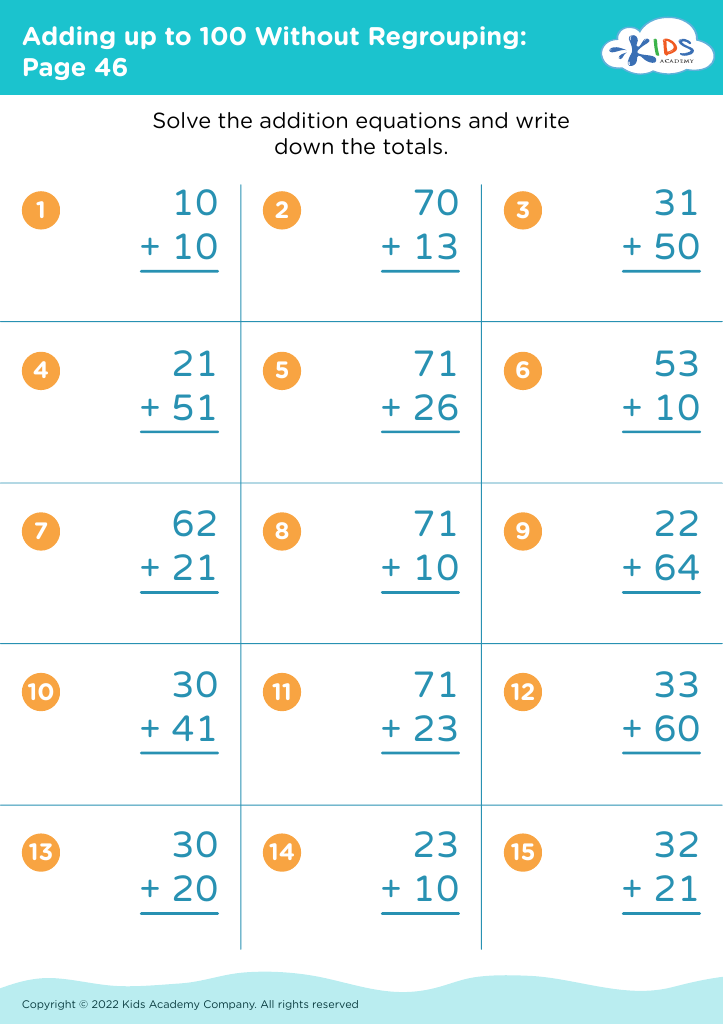
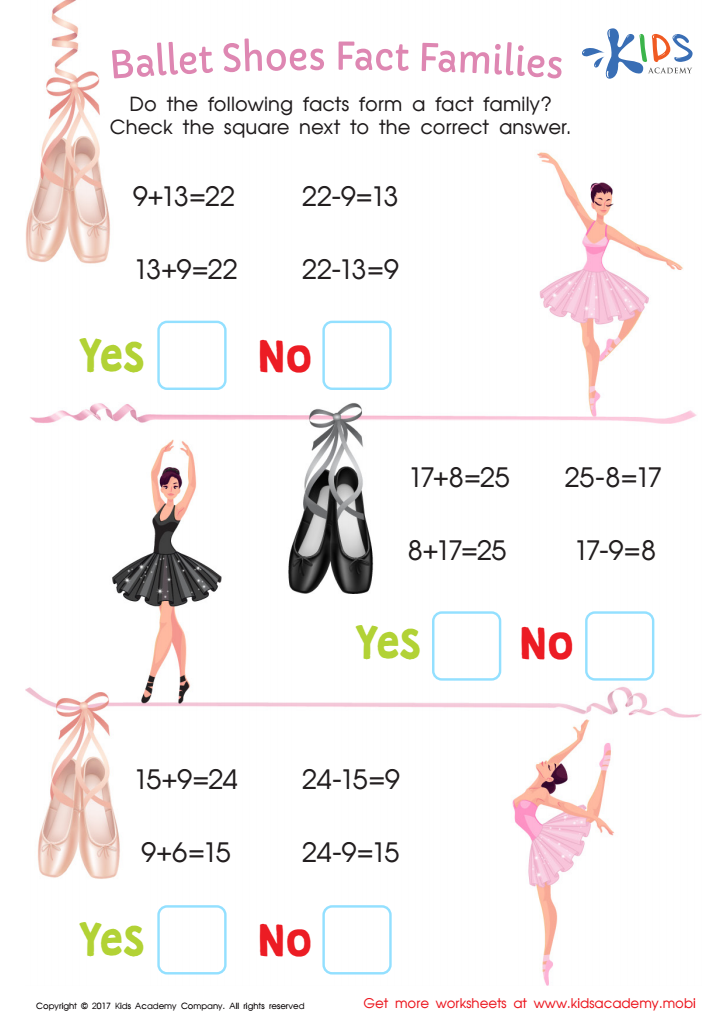
Ballet Shoes Fact Family Printable








Improving mental math skills, particularly in addition, is crucial for both parents and teachers for several reasons. First, mental math enables children to perform calculations quickly and efficiently, which is essential not only in school but also in everyday situations. This foundational skill fosters a sense of confidence and independence in young learners, helping them develop problem-solving abilities.
Furthermore, mental math supports the understanding of numerical relationships and enhances overall mathematical literacy. When children practice mental addition, they begin to recognize patterns, make estimations, and develop a deeper comprehension of numbers. By strengthening these skills early on, parents and teachers enable students to tackle more complex mathematical concepts with ease.
Moreover, mental math can enhance cognitive development, as it requires memory, critical thinking, and concentration. Engaging students in fun, encouraging activities around mental math can reduce math anxiety and promote a positive attitude toward mathematics.
Investing time in improving mental math skills fosters a love for learning and lays the groundwork for future academic success. Consequently, parents and teachers play a pivotal role in cultivating these skills, which ultimately prepares children for the challenges of higher education and real-world scenarios.








