Improving reading skills Addition Worksheets
4 filtered results
-
From - To
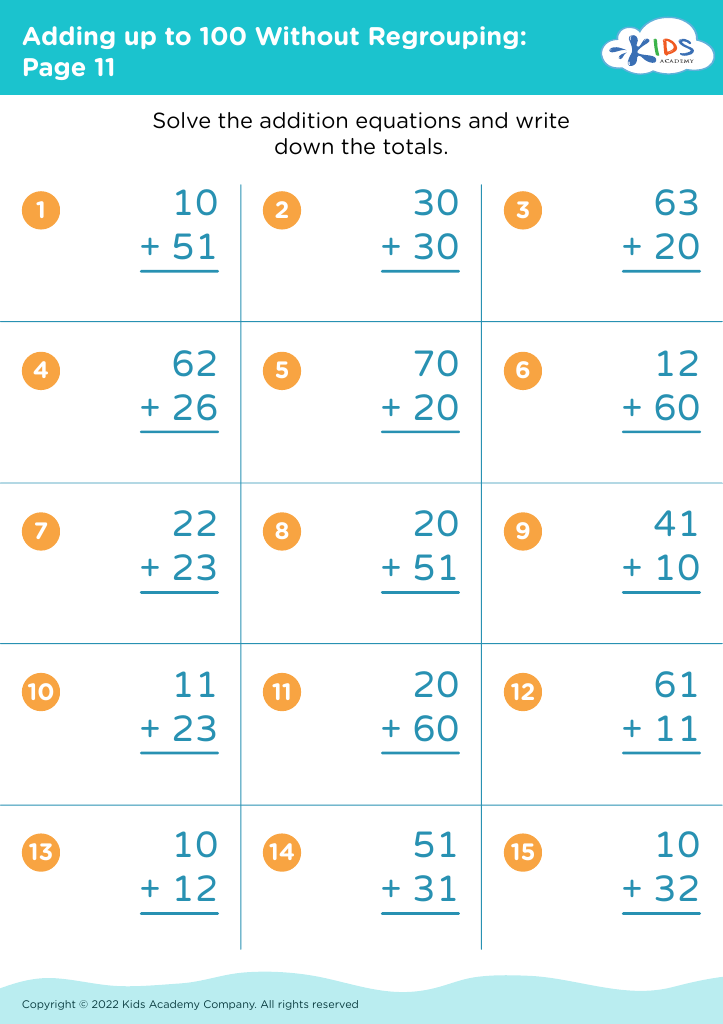
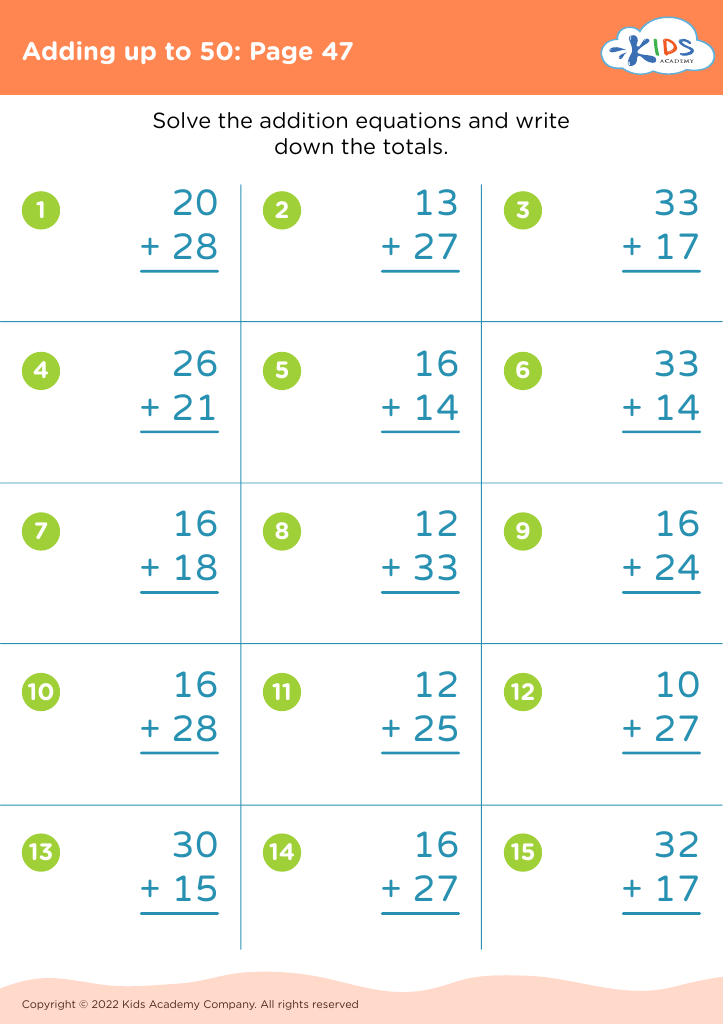
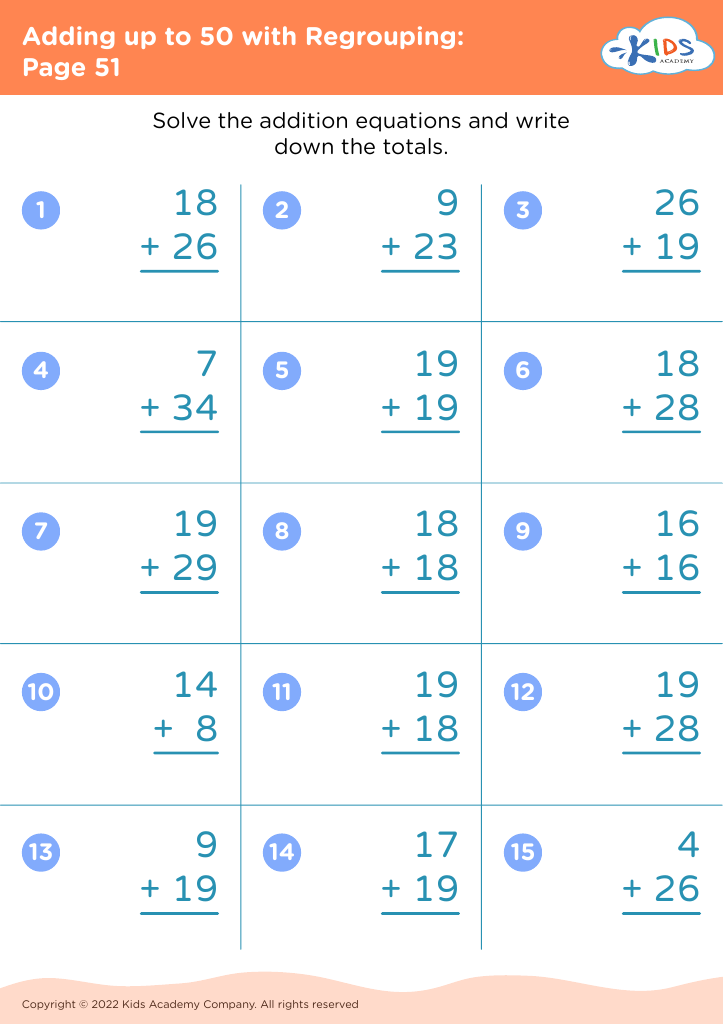
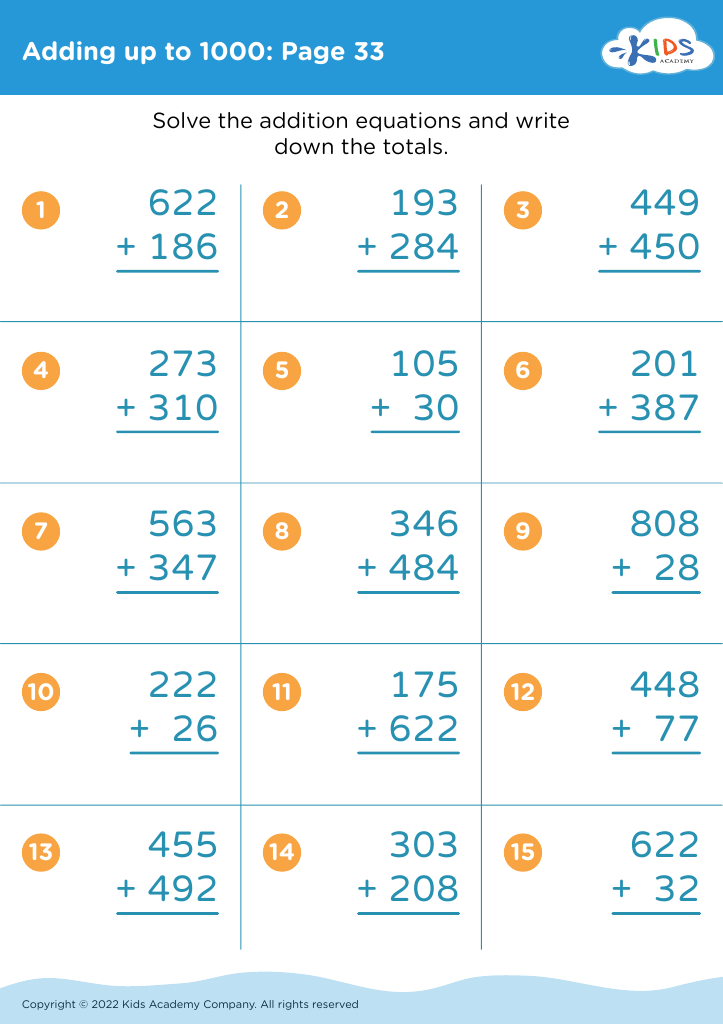
Enhance your child's reading and math abilities with our "Improving Reading Skills Addition Worksheets." These engaging worksheets bridge the gap between literacy and numeracy, helping young learners develop essential reading comprehension while practicing addition. Each worksheet features age-appropriate exercises that encourage mindful reading of math problems, boosting vocabulary and critical thinking skills. Tailored for early grade students, our resources support differentiated learning, catering to diverse learning styles. Teachers and parents alike will find these worksheets invaluable in fostering a love for learning, ensuring kids grasp mathematical concepts through clear, informative text. Start empowering your child today and watch their confidence soar!





.jpg)


Improving reading skills is crucial for young learners, as it forms the foundation for their overall academic success and personal development. For parents and teachers, fostering strong reading abilities has numerous benefits that extend beyond the classroom. First, proficient reading skills enhance comprehension, allowing children to engage with various texts—be it literature, science, or history—enabling them to absorb knowledge effectively and stimulate critical thinking.
Moreover, strong reading skills positively influence a child's self-esteem and motivation. When children can read confidently, they are more likely to participate in classroom discussions and enjoy independent reading, which can foster a lifelong love for books and learning. Additionally, reading helps develop vocabulary and communication skills, both of which are essential for effective social interaction and expression.
Parents have an essential role in creating a home environment that values reading, encouraging discussions about stories and promoting diverse reading materials. Teachers can implement targeted strategies that cater to various learning styles, ensuring that every child receives the support they need to succeed. Ultimately, investing in improving children’s reading skills equips them with vital tools for academic achievement and personal growth, preparing them for future challenges in an increasingly complex world.








