Introduction to mathematics Addition Worksheets
3 filtered results
-
From - To
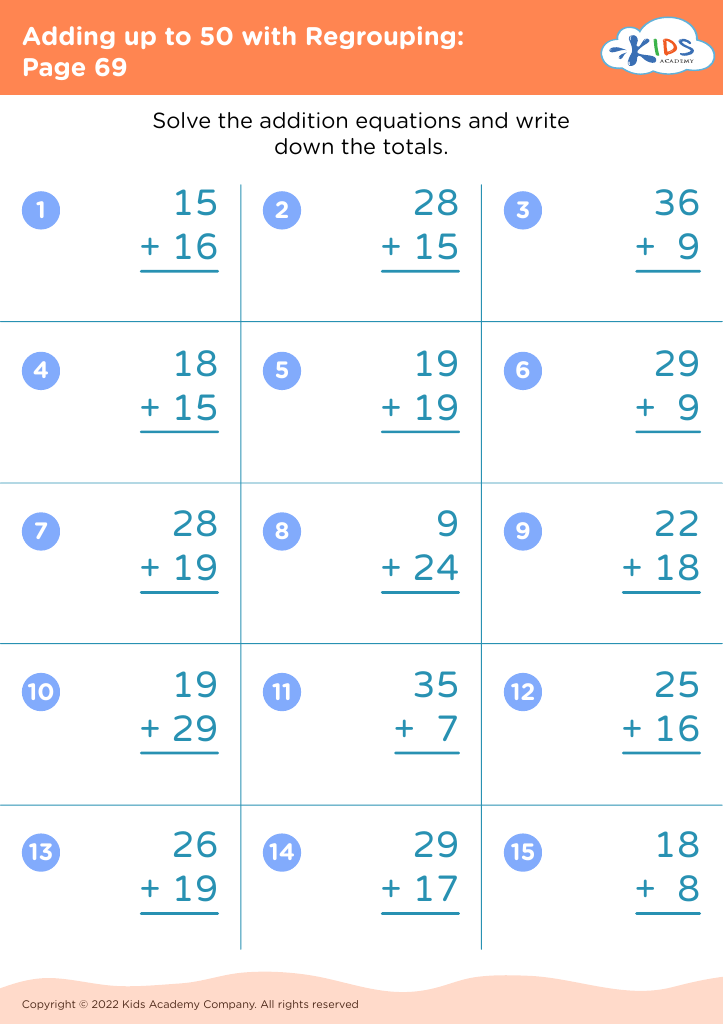
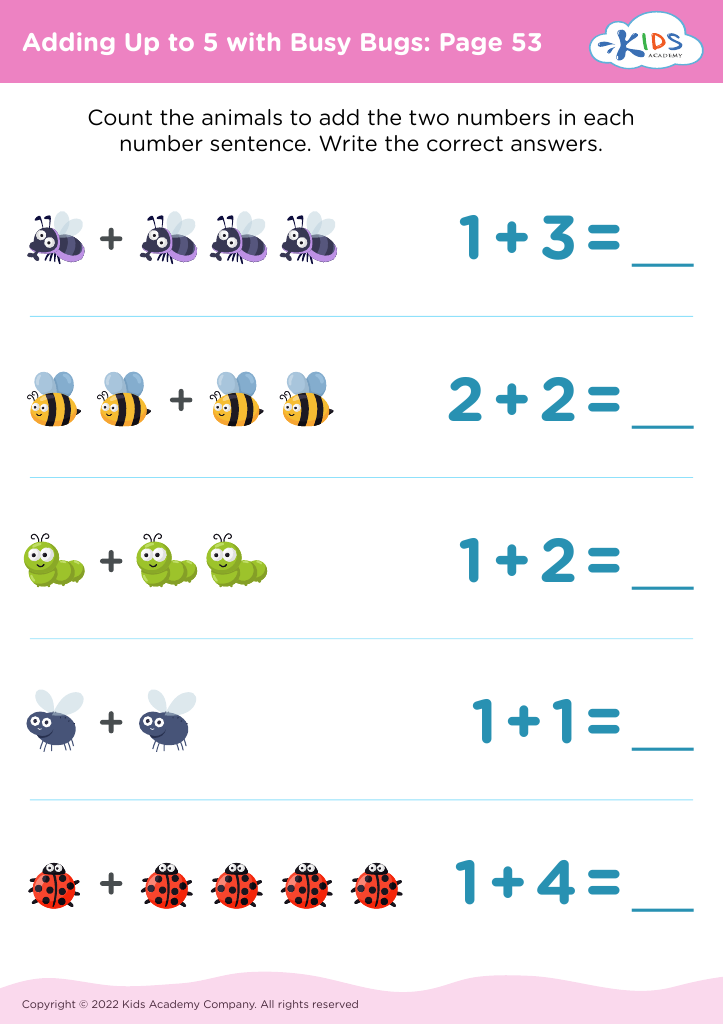
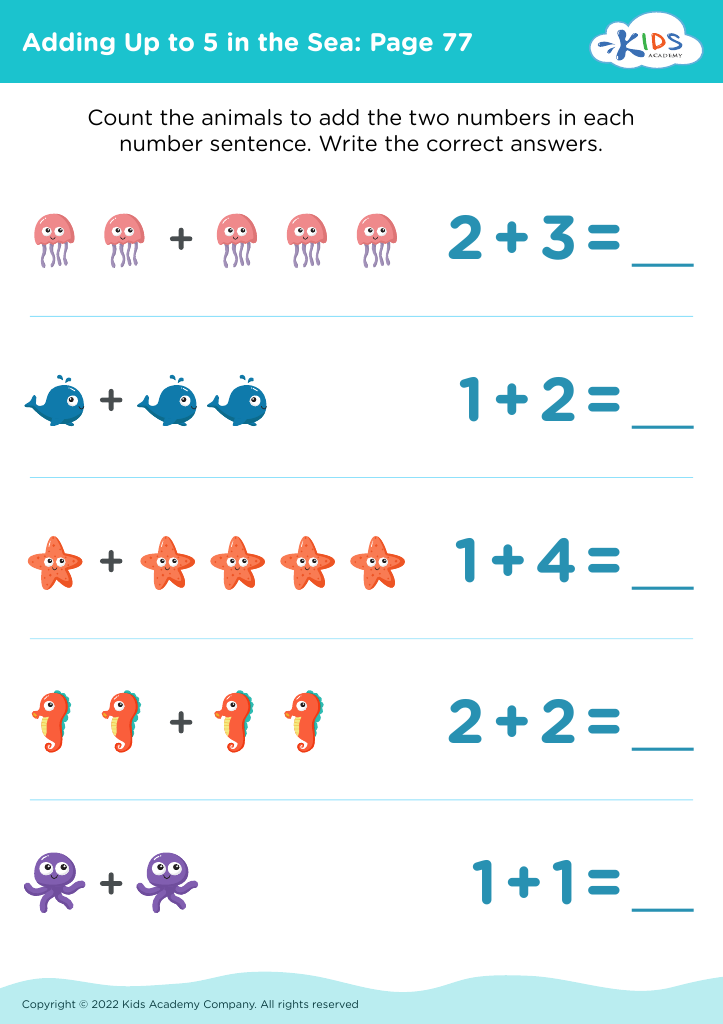
Welcome to the "Introduction to Mathematics Addition Worksheets" page! Here, we provide engaging and educational worksheets designed to help young learners grasp the foundational concept of addition. Our resources feature colorful illustrations and interactive exercises that make learning fun and enjoyable. These worksheets are ideal for kindergarten and early elementary students, helping them master essential math skills through practice. From simple problems to more complex addition tasks, children can progress at their own pace, building confidence along the way. Download our structured worksheets today and empower your child's mathematical journey with effective learning tools tailored just for them!








Understanding addition is a fundamental aspect of early mathematics education, which lays the groundwork for children’s future mathematical abilities. Parents and teachers should care about introducing addition to young learners because it nurtures critical cognitive skills essential for problem-solving and logical reasoning.
Firstly, addition is one of the primary operations that children encounter throughout their education and everyday life. By mastering addition early, children build confidence and competence in tackling more complex mathematical concepts such as subtraction, multiplication, and division.
Moreover, developing a strong foundation in addition enhances children's number sense, enabling them to understand quantities, relationships, and numerical patterns. This understanding is crucial for calculations in real-life situations, from shopping to cooking, where basic addition skills are applied.
Additionally, introducing addition through engaging activities fosters a positive attitude towards mathematics, making it enjoyable rather than intimidating. Encouraging playful interactions with numbers, like using toys or games, helps children perceive math as a fun subject.
Ultimately, a firm grasp of addition invites greater academic success and promotes lifelong enthusiastic learners. Parents and teachers play a vital role in facilitating this learning process, accurately preparing children for their future mathematical journeys.








