Logical Reasoning Addition Worksheets
7 filtered results
-
From - To
Enhance your child's mathematical skills with our engaging Logical Reasoning Addition Worksheets. Designed for early learners, these worksheets not only focus on addition but also promote critical thinking and problem-solving abilities. Each worksheet presents fun scenarios and challenging questions that require students to use logic and deduction to find the correct answers. Ideal for classroom use or at-home practice, our worksheets cater to various learning styles and help reinforce essential math concepts in an enjoyable way. Perfect for young minds eager to explore the world of numbers while developing their reasoning skills. Dive into our collection today and watch your child thrive!
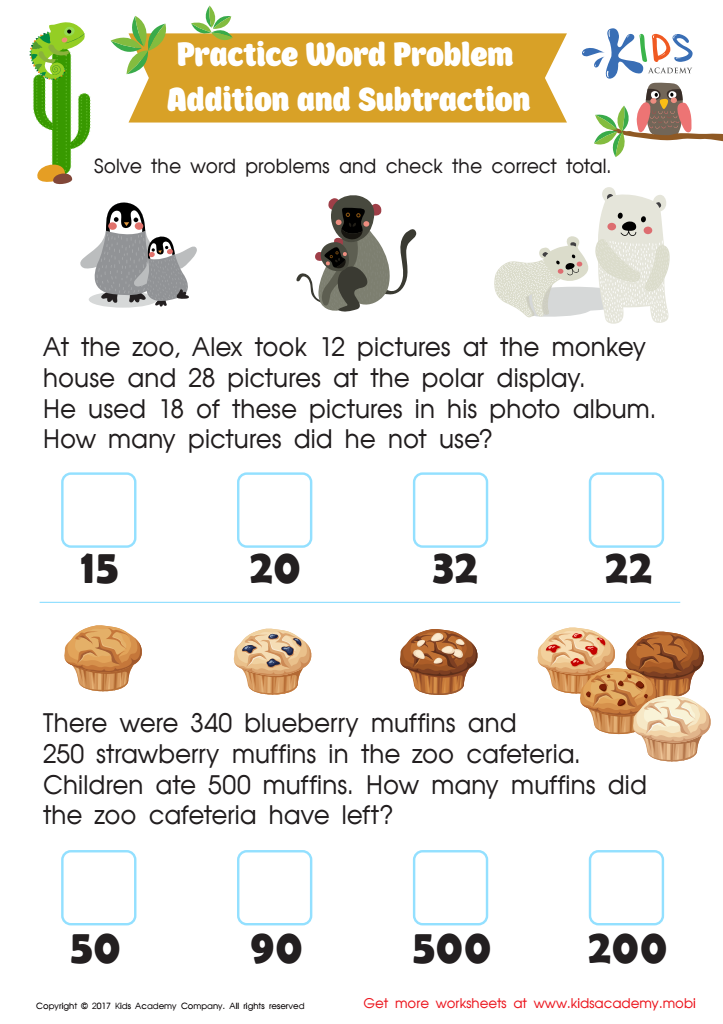
Addition and Subtraction: Word Problems Worksheet
 Assign to My Students
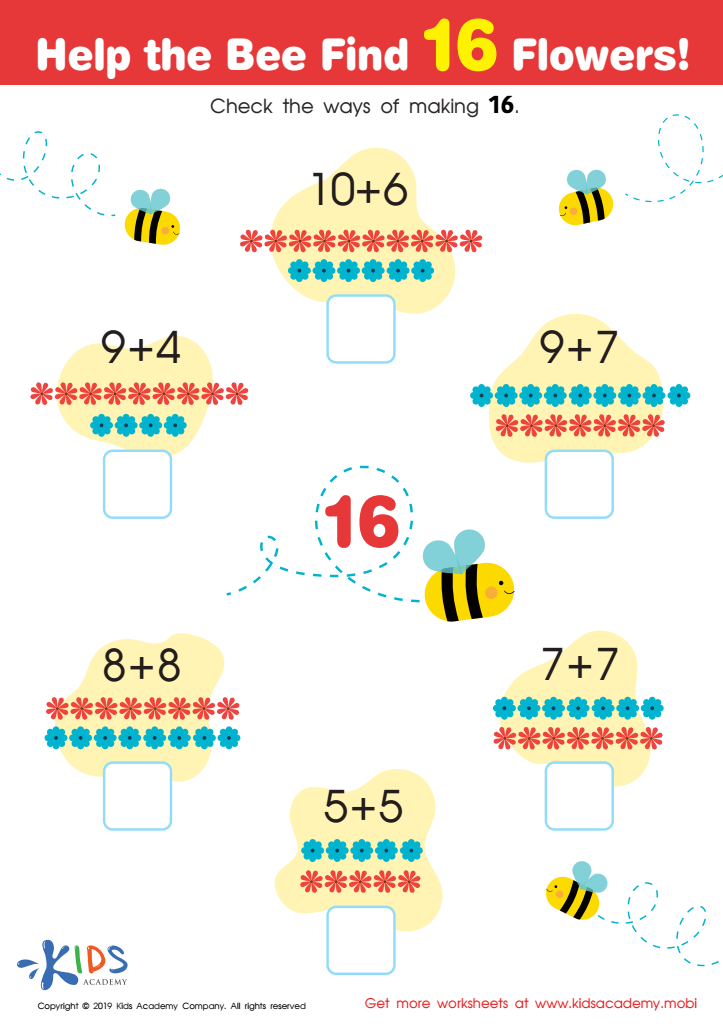
Help the Bee Find 16 Flowers Worksheet
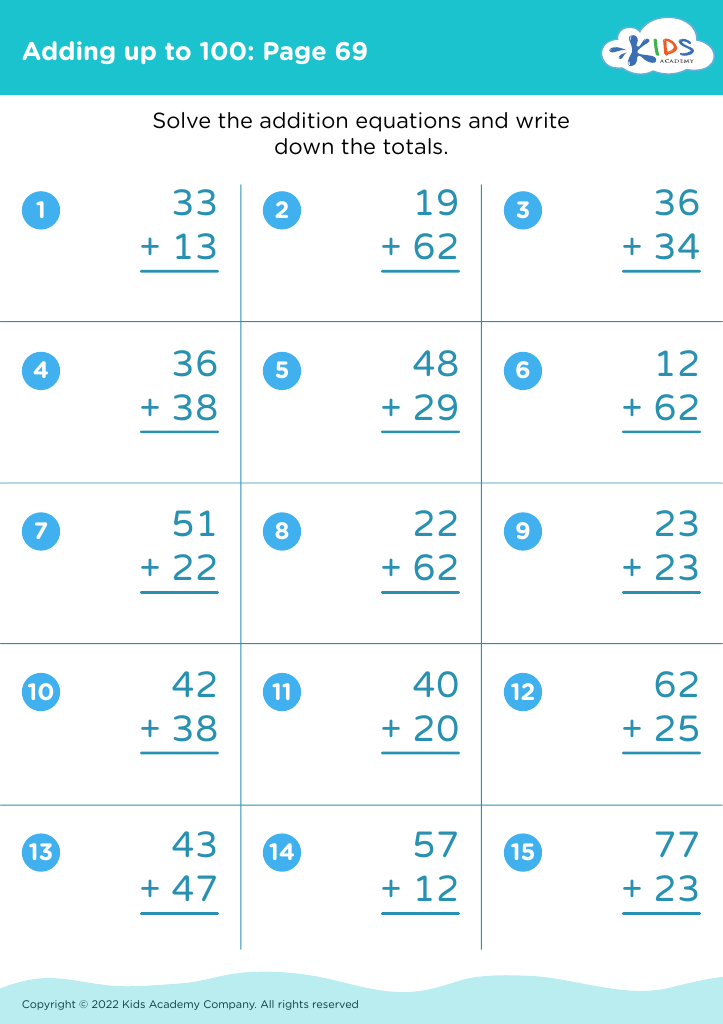








Logical reasoning in addition is a crucial skill for early learners that extends beyond simple arithmetic. For teachers and parents, fostering this skill has significant implications for a child's overall cognitive development. First, logical reasoning encourages critical thinking, helping children learn to analyze problems and consider multiple approaches before arriving at a solution. This deeper understanding of mathematical concepts promotes confidence when tackling more complex problems later on.
Additionally, integrating logical reasoning into addition helps children develop a foundational understanding of number relationships, patterns, and the properties of operations. This lays the groundwork for more advanced mathematical concepts such as algebra and geometry, which they will encounter in their educational journey.
Moreover, logical reasoning enhances problem-solving abilities in everyday situations. Children learn to evaluate choices, plan strategically, and make informed decisions, skills that are applicable both in academic settings and real life.
Encouraging logical reasoning through addition not only strengthens mathematics proficiency but also nurtures a growth mindset. It establishes an environment where students are not afraid to make mistakes, explore different methods, and learn persistently. Overall, investing time in logical reasoning addition equips children with skills that extend far beyond the classroom, benefiting their lifelong learning.








