Logical thinking development Addition Worksheets
8 filtered results
-
From - To
Enhance your child's logical thinking skills with our engaging Addition Worksheets! Designed for early learners, these worksheets blend math practice with fun exercises that promote critical reasoning and problem-solving abilities. Perfect for preschool and elementary students, our printable worksheets challenge kids to approach addition differently, encouraging them to think outside the box. From simple equations to trickier problem-solving scenarios, these resources are designed to build confidence in addition while developing essential logical thinking skills. Foster a love for math and support cognitive growth as children practice problem-solving and reasoning in an enjoyable way. Explore our collection today and watch your child's skills flourish!
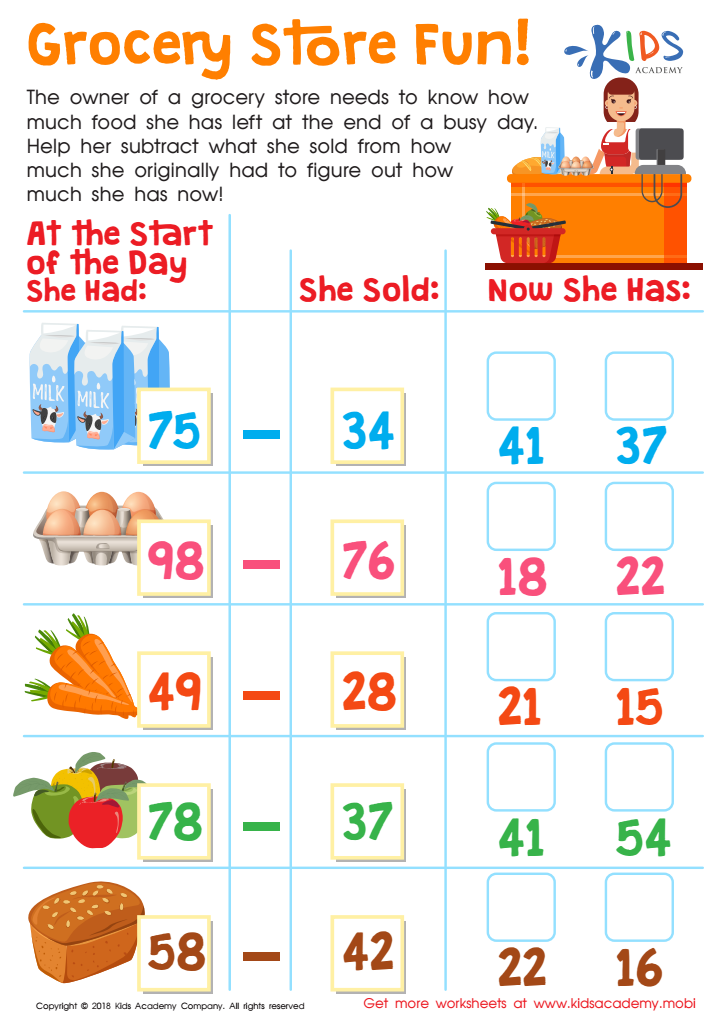
Grocery Store Fun! Worksheet
 Assign to My Students
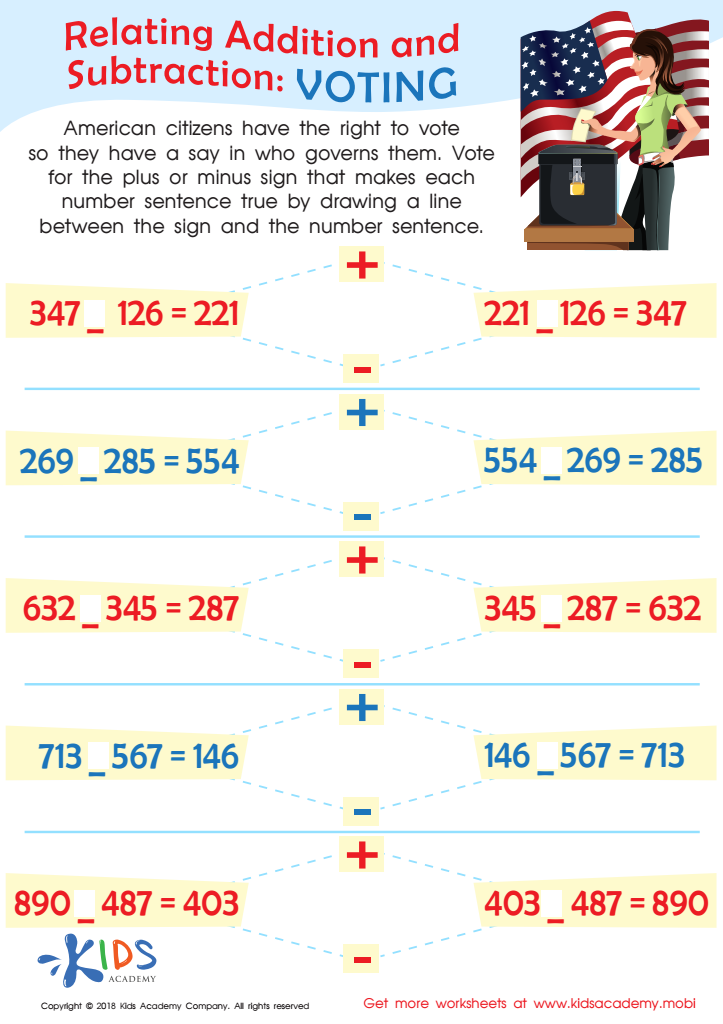
Voting Worksheet
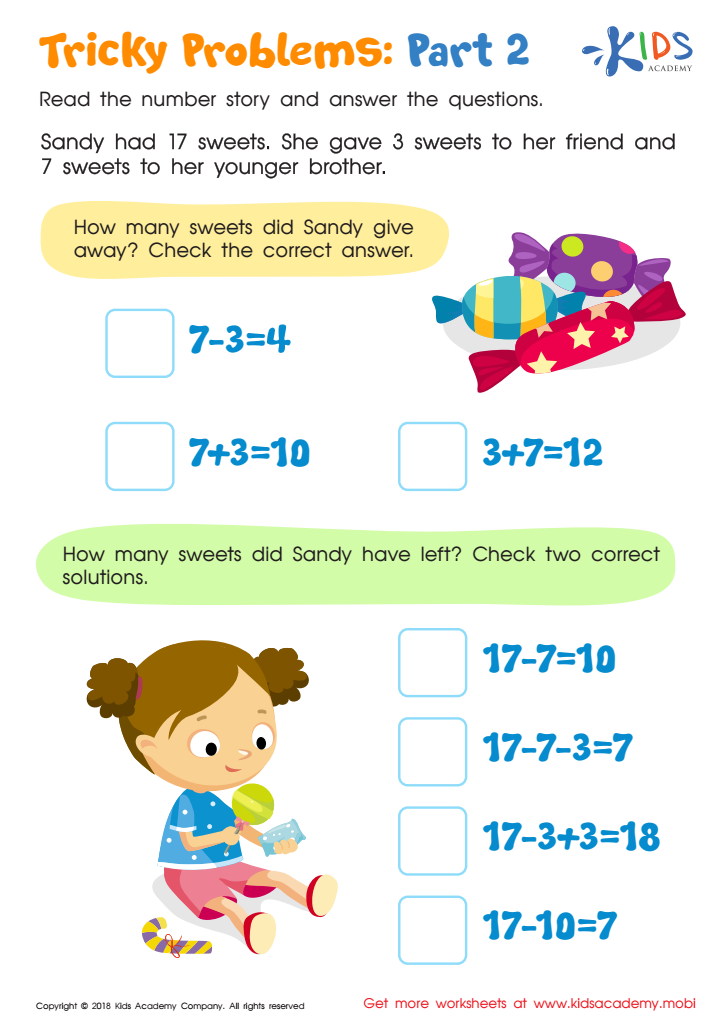
Tricky Problems Worksheet: Part 2
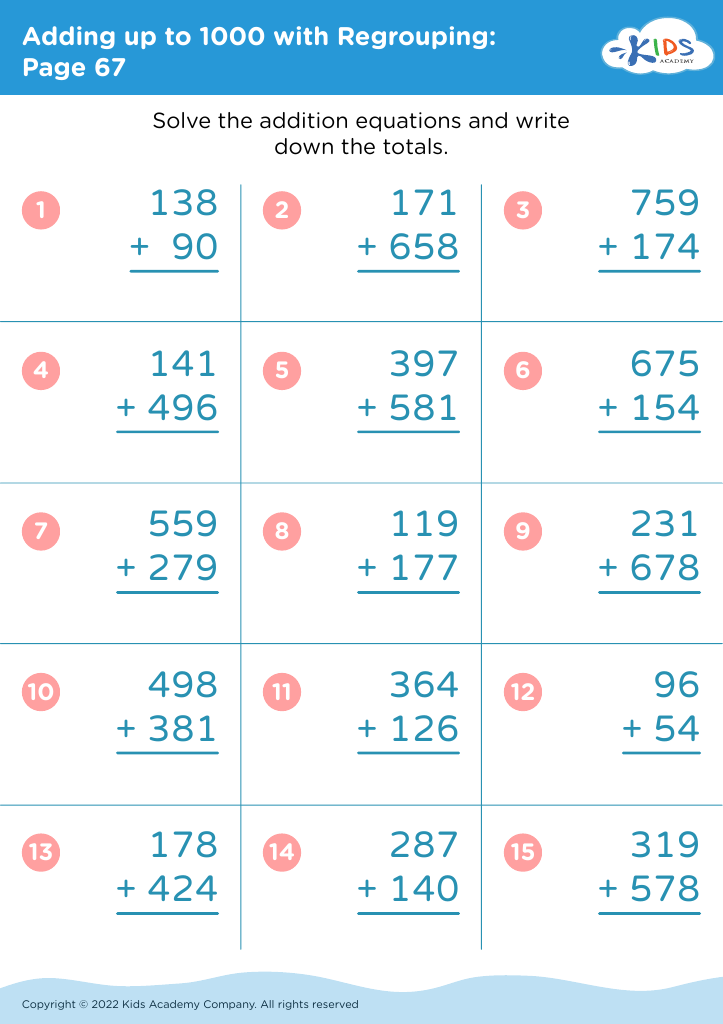
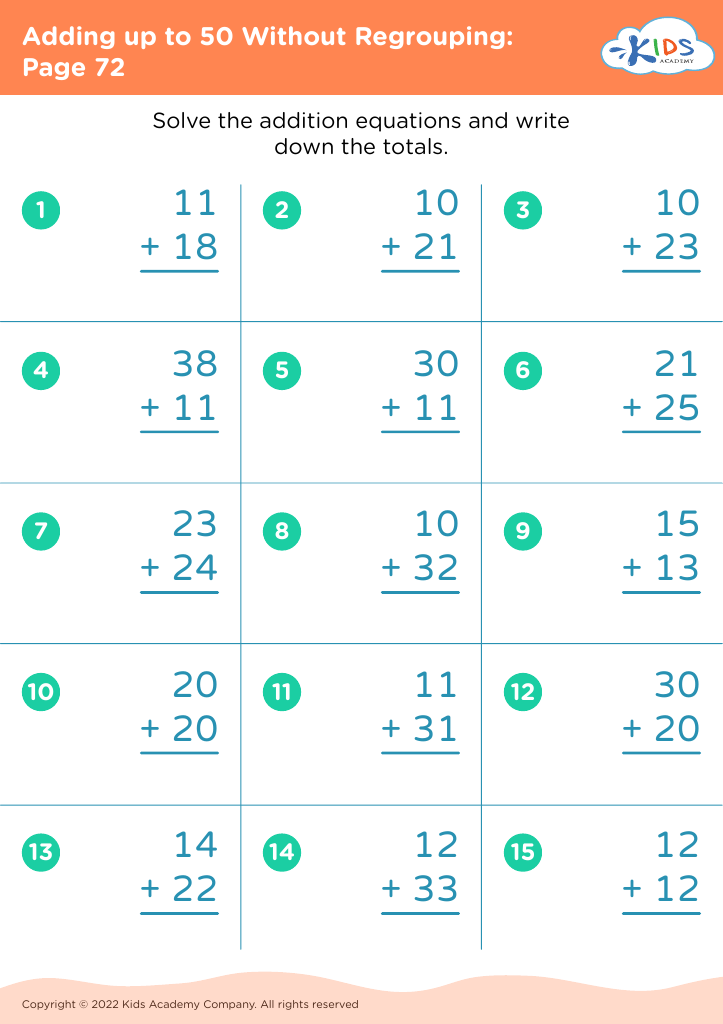
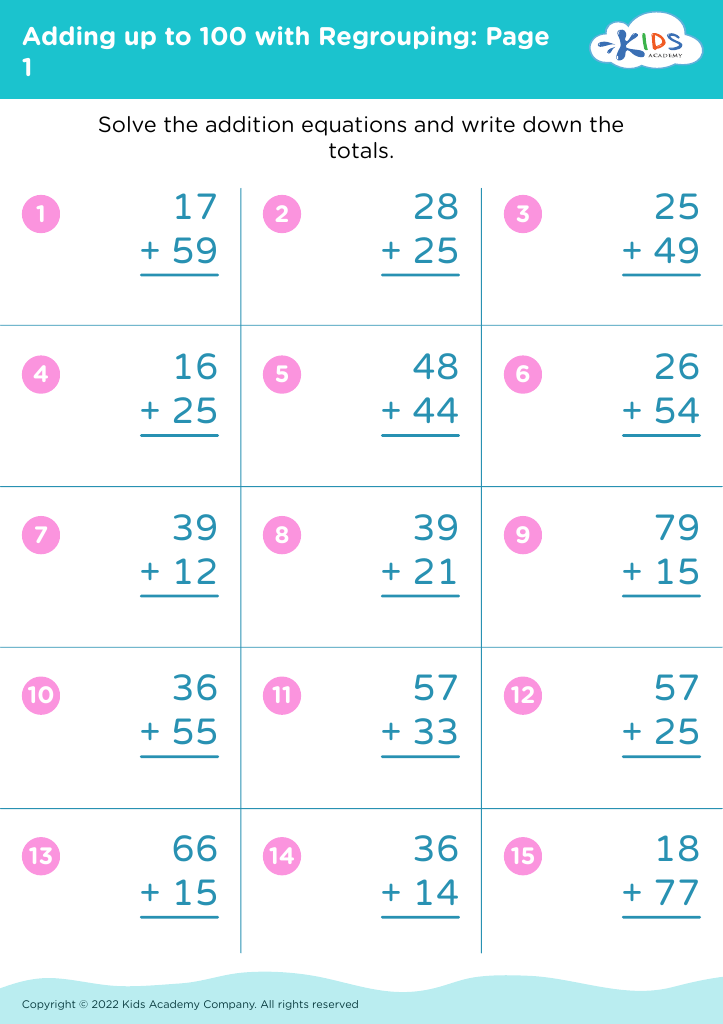
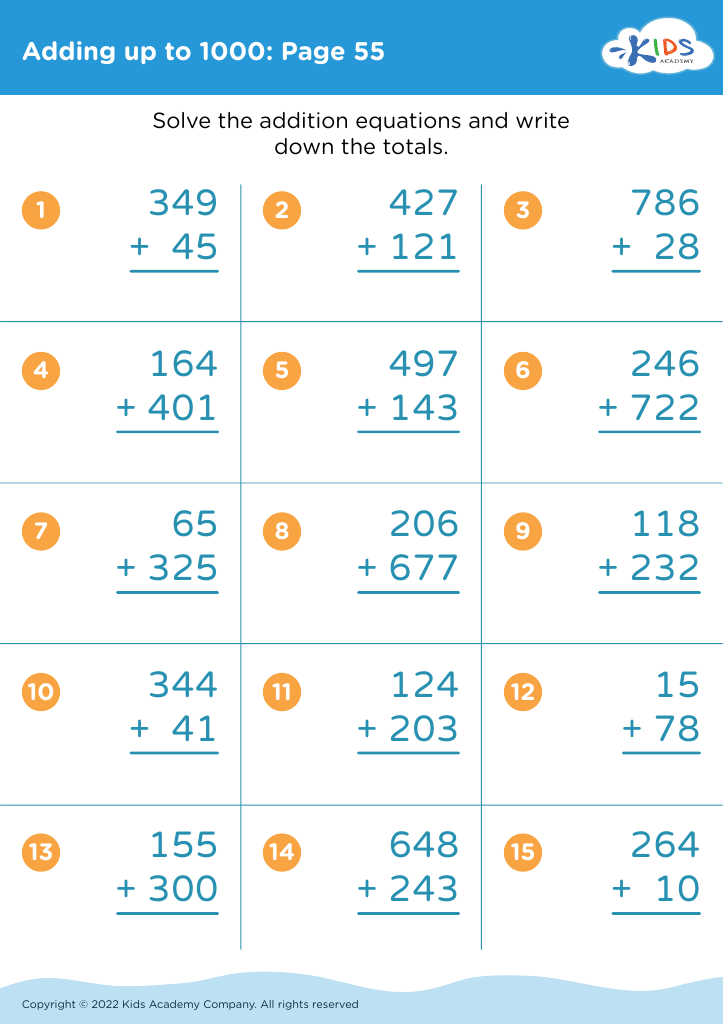








Logical thinking is a critical component of a child’s cognitive development, playing a fundamental role in their ability to solve problems, make decisions, and grasp complex concepts. For parents and teachers, fostering logical thinking through activities like addition lays a solid foundation for a child’s mathematical understanding. Early mastery of addition not only enhances numerical literacy but also promotes analytical skills, enabling children to approach problems with a structured thought process.
Moreover, logical thinking skills are transferable to various subjects and areas, aiding in reading comprehension, science experiments, and even social interactions. When children engage in adding numbers, they learn to recognize patterns, understand relationships between quantities, and develop consistent reasoning strategies. This not only builds confidence in math but also encourages perseverance in face of challenges.
By prioritizing the development of logical thinking through addition, parents and teachers can help children cultivate a growth mindset, fostering curiosity and resilience. This early focus paves the way for advanced problem-solving abilities, critical thinking skills, and a love for learning that can benefit them throughout their educational journey and beyond. Cultivating these skills is not just about understanding math; it's about preparing children for real-world situations they’ll encounter in life.








