Nature appreciation Addition Worksheets
5 filtered results
-
From - To
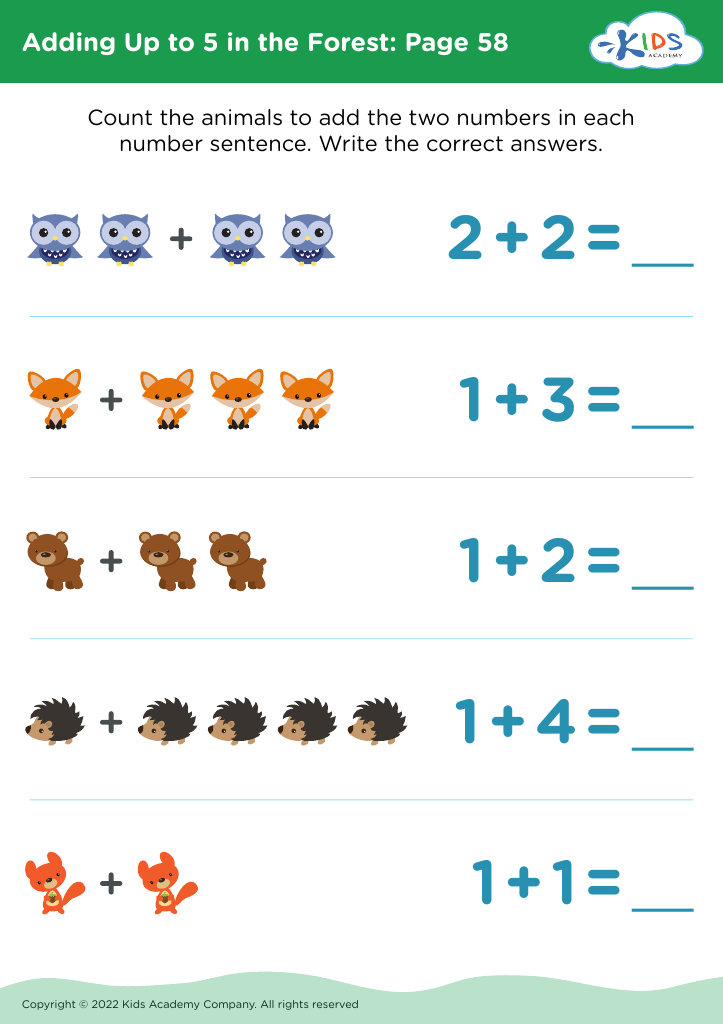
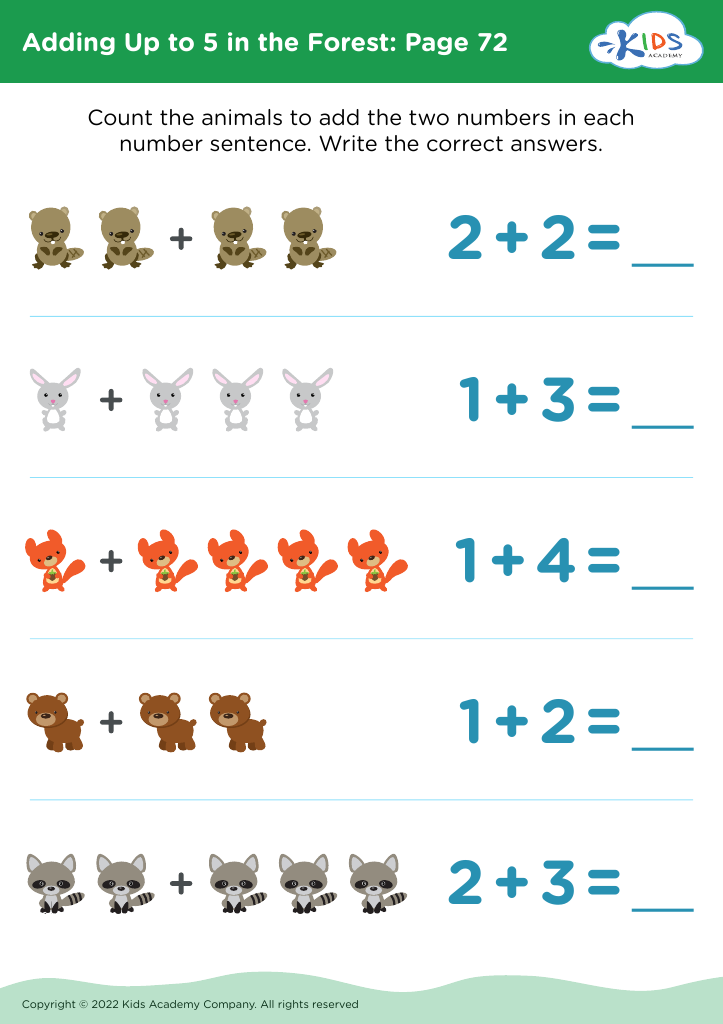
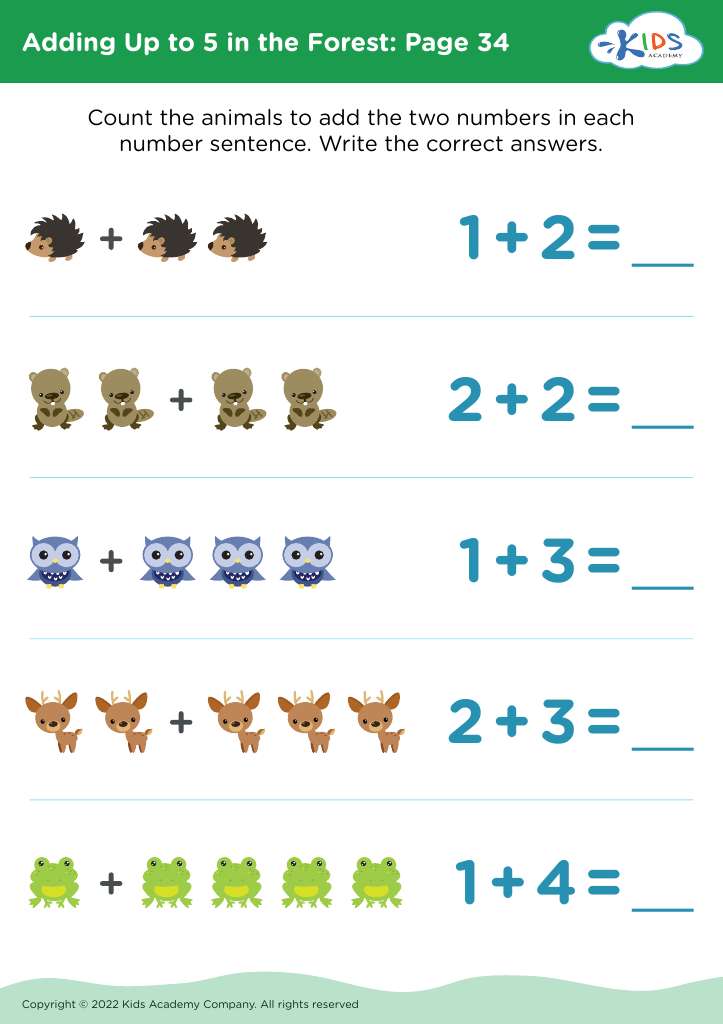
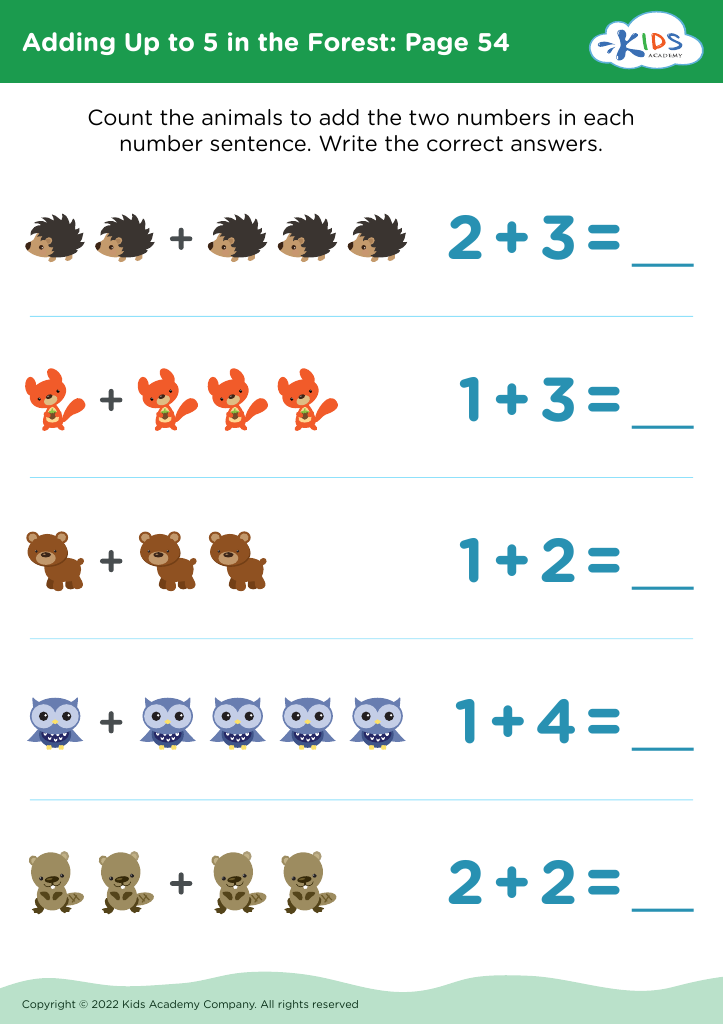
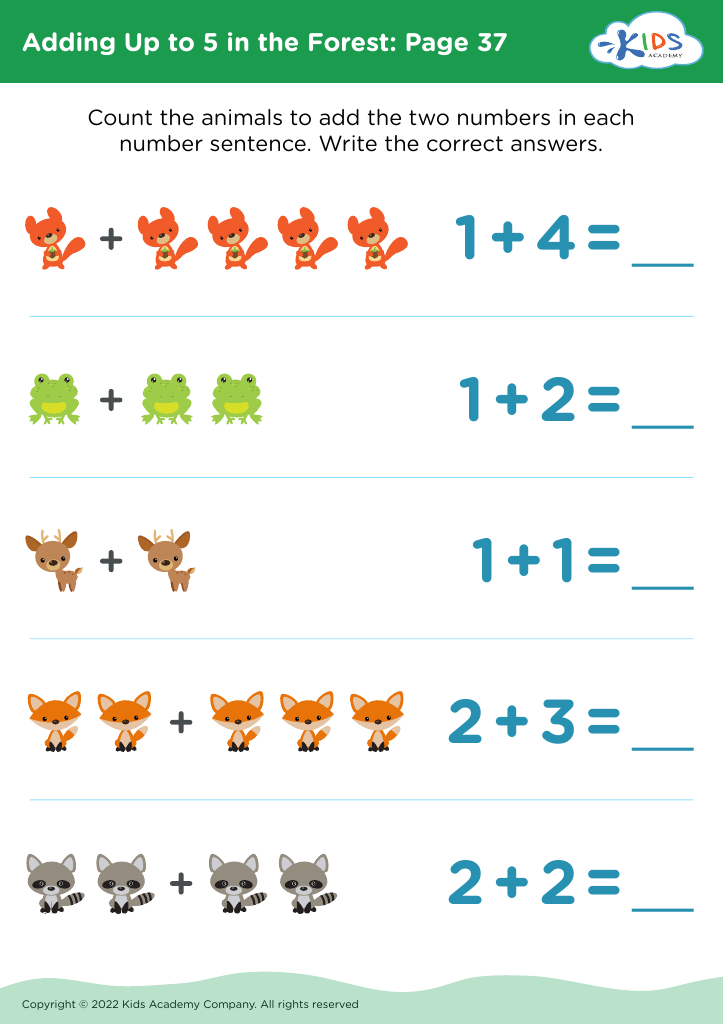
Explore our engaging Nature Appreciation Addition Worksheets, designed to combine learning and the beauty of the great outdoors! These printable worksheets help early learners develop essential addition skills while cultivating a love for nature. The vibrant illustrations and nature-themed problems make math enjoyable and relatable. Perfect for young students, these worksheets boost confidence in addition through hands-on, interactive experiences. Ideal for both classroom and home settings, they provide a fun way to practice math skills and foster an appreciation for the environment. Encourage your child's curiosity and mathematical talent with our Nature Appreciation Addition Worksheets today!



.jpg)




Nature appreciation is crucial for children's holistic development and fosters a deep-rooted connection to the environment. Both parents and teachers should prioritize this concept as it encourages curiosity, creativity, and critical thinking. Engaging with nature enhances children's observational skills, allowing them to learn about ecosystems, life cycles, and biodiversity firsthand. This experiential learning promotes not only intellectual growth but also emotional wellbeing; studies have shown that time spent in natural settings can reduce stress and anxiety levels.
Additionally, nature appreciation cultivates a sense of responsibility toward the environment, instilling values of sustainability and stewardship from an early age. As children learn to respect and care for nature, they become more conscious of their actions and their impact on the planet, paving the way for environmentally responsible adults.
Moreover, nature appreciation can bridge gaps in education by providing practical applications of subjects such as science and math. Interactive outdoor learning experiences can enhance classroom lessons, making education more engaging and meaningful.
Finally, by embracing nature appreciation, parents and teachers contribute to nurturing a generation that is knowledgeable, compassionate, and equipped to tackle future environmental challenges, ultimately fostering a healthier planet for all.








