Practice problem-solving Addition Worksheets
4 filtered results
-
From - To
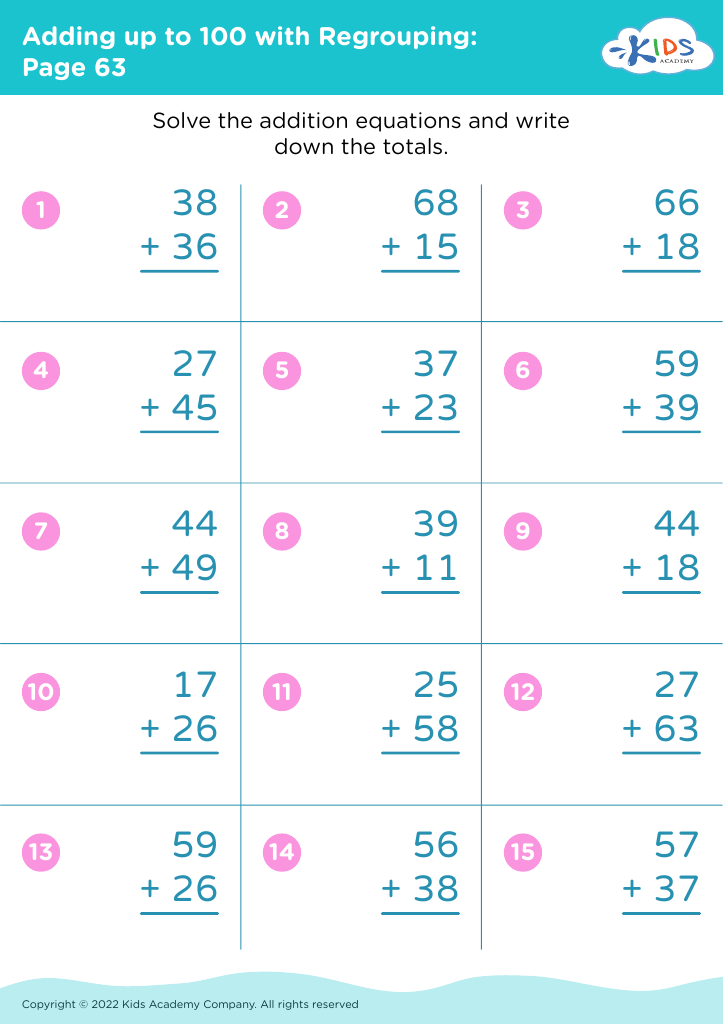
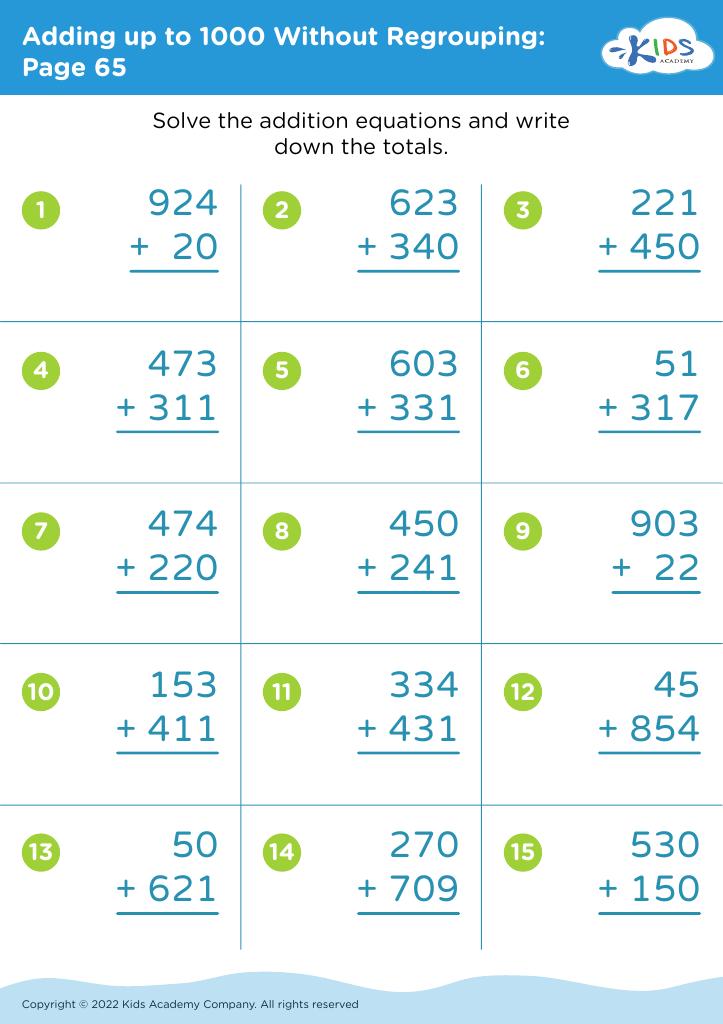
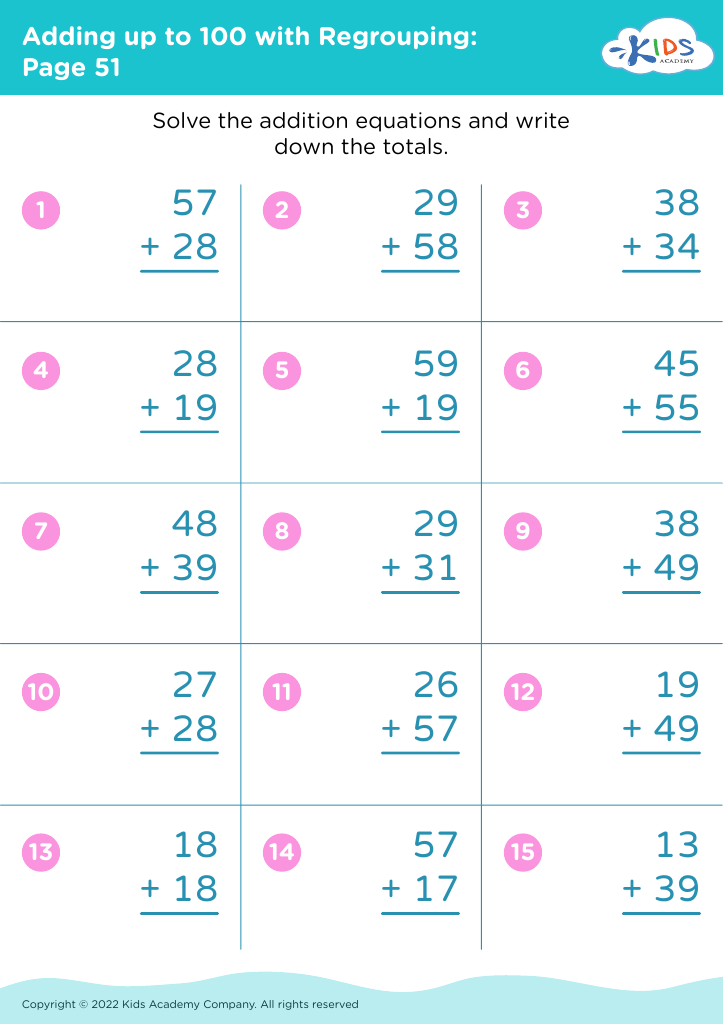
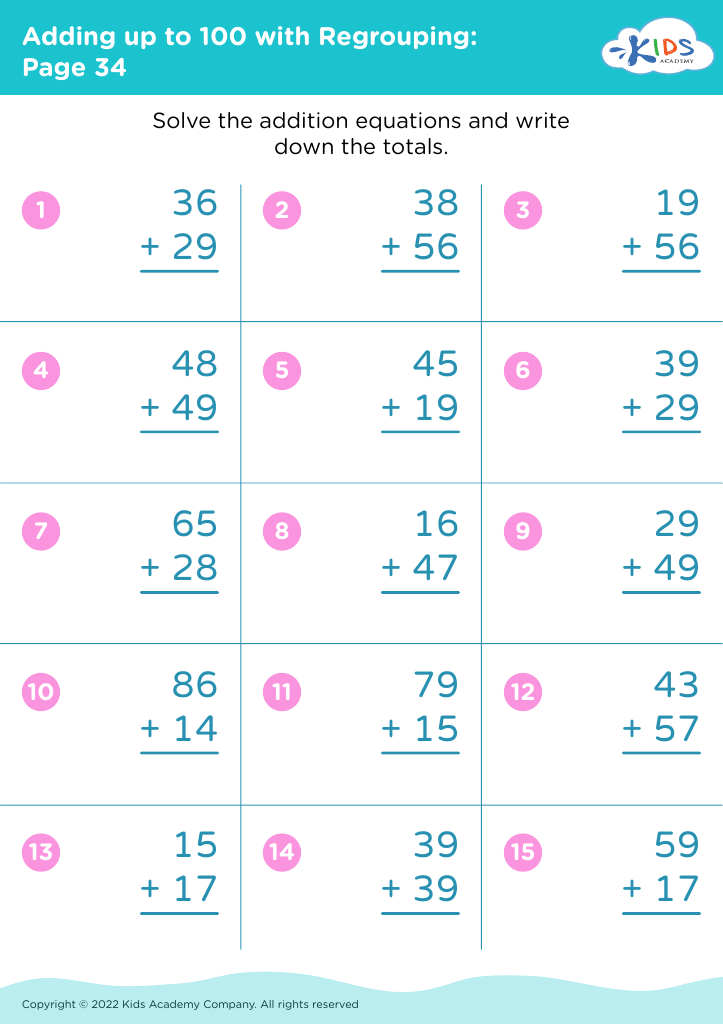
Our "Practice Problem-Solving Addition Worksheets" are designed to enhance young learners' addition skills through engaging, interactive exercises. These worksheets provide carefully crafted problems that challenge students to apply their mathematical understanding in fun and practical ways. Perfect for early grade students, these activities promote critical thinking, improve problem-solving abilities, and build a solid math foundation. Each sheet is visually appealing to capture children's interest and encourage independent learning. Parents and teachers can use these resources to support in-class lessons or as additional practice at home, ensuring kids develop confidence and proficiency in addition.








Parents and teachers should prioritize practice in problem-solving addition because it lays a crucial foundational skill in early childhood education. First and foremost, addition is one of the elementary operations in mathematics, serving as the building block for more complex mathematical concepts such as multiplication, division, and algebra. Children who grasp addition early find it easier to transition to these advanced topics, enhancing their overall academic performance.
Moreover, practicing problem-solving in addition fosters critical cognitive skills, including logical thinking, pattern recognition, and sequential processing. These skills are transferable and beneficial across various subjects and everyday life scenarios, such as budgeting, cooking, and even strategic planning.
Engaging with addition problems also improves children's confidence and independence when tackling new challenges. It promotes a growth mindset, encouraging them to view challenges as opportunities to learn rather than obstacles. This mindset is essential for lifelong learning and personal development.
Lastly, working on addition problems together strengthens the bond between parents, teachers, and children, offering opportunities for positive reinforcement and tailored support. It provides a platform for encouraging perseverance and nurturing a love for learning, equipping children with both the skills and the positive attitude necessary for future academic success.








