Practicing addition Addition Worksheets
3 filtered results
-
From - To
Enhance your child's math skills with our Practicing Addition Worksheets! Designed for early learners, these worksheets offer a fun and engaging way to master addition concepts. With a variety of exercises, including visuals and word problems, young students will develop confidence and competence in their addition abilities. Our easy-to-follow format helps children practice their skills at their own pace, ensuring a solid foundation for future math success. Whether at home or in the classroom, these printable resources are perfect for supplementary learning. Spark a love for math today, and watch your child excel in addition with our thoughtfully crafted worksheets!
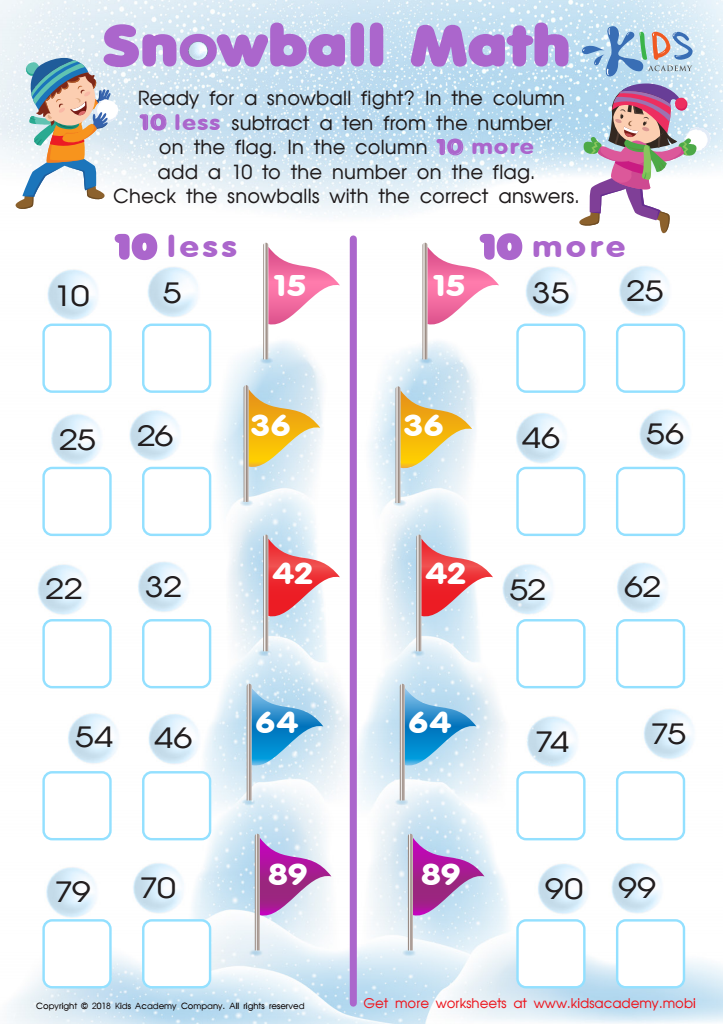
Snowball Math Worksheet
 Assign to My Students
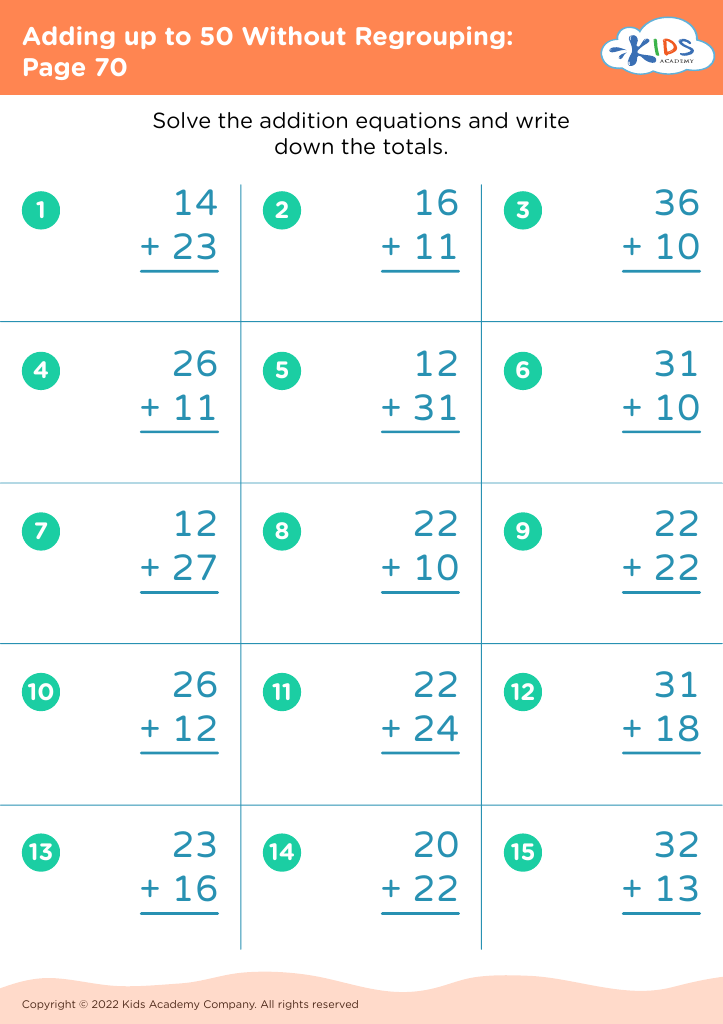
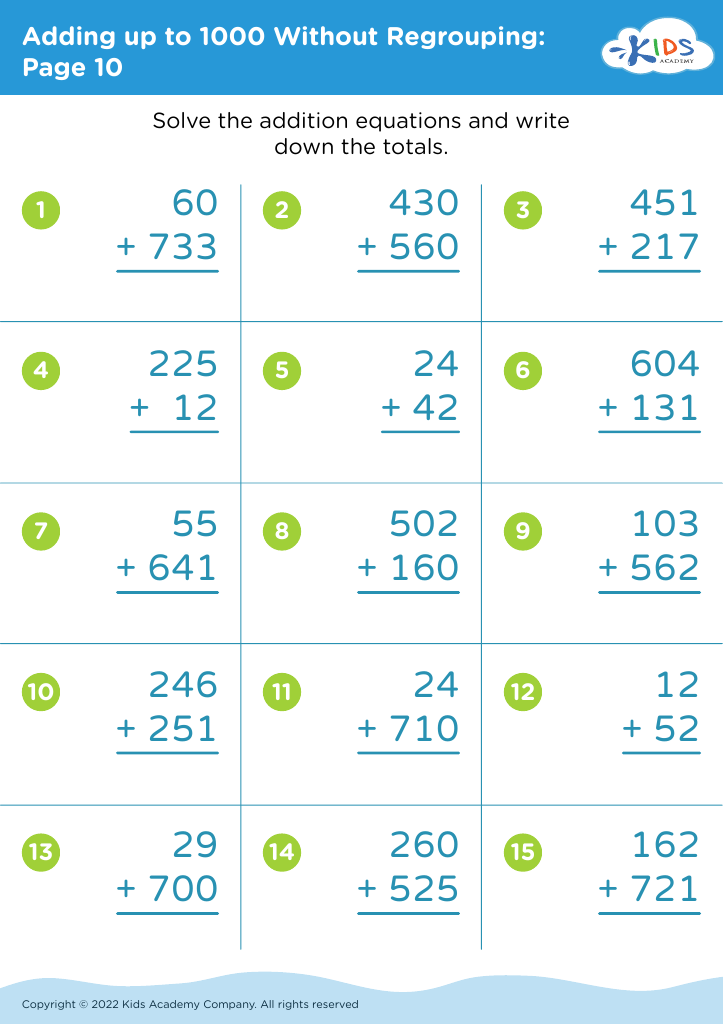








Practicing addition is essential for young learners as it forms the foundation for more complex mathematical concepts. For parents and teachers, emphasizing addition helps children develop critical thinking and problem-solving skills. Mastery of basic addition equips students with the confidence to tackle a variety of academic subjects, from science to economics, where quantitative reasoning is vital.
Moreover, a solid grasp of addition enhances a child’s everyday life skills, from managing money to understanding time and measurement. Parents and teachers can promote this skill through engaging activities, making learning both enjoyable and effective. When children practice addition regularly, they also improve their cognitive abilities, memory, and attention span, which are crucial for overall academic achievement.
Furthermore, focusing on addition can foster a positive attitude towards mathematics, reducing math anxiety and building perseverance in the face of challenges. Celebrating progress in addition skills can create a boost in motivation and self-esteem. In conclusion, practicing addition is not just about learning numbers; it’s about shaping well-rounded, capable learners who are prepared for future success both academically and in everyday situations. By prioritizing this skill, parents and teachers play a pivotal role in laying the groundwork for lifelong mathematical proficiency.








