Problem-Solving Skills Addition Worksheets - Page 7
149 filtered results
-
From - To
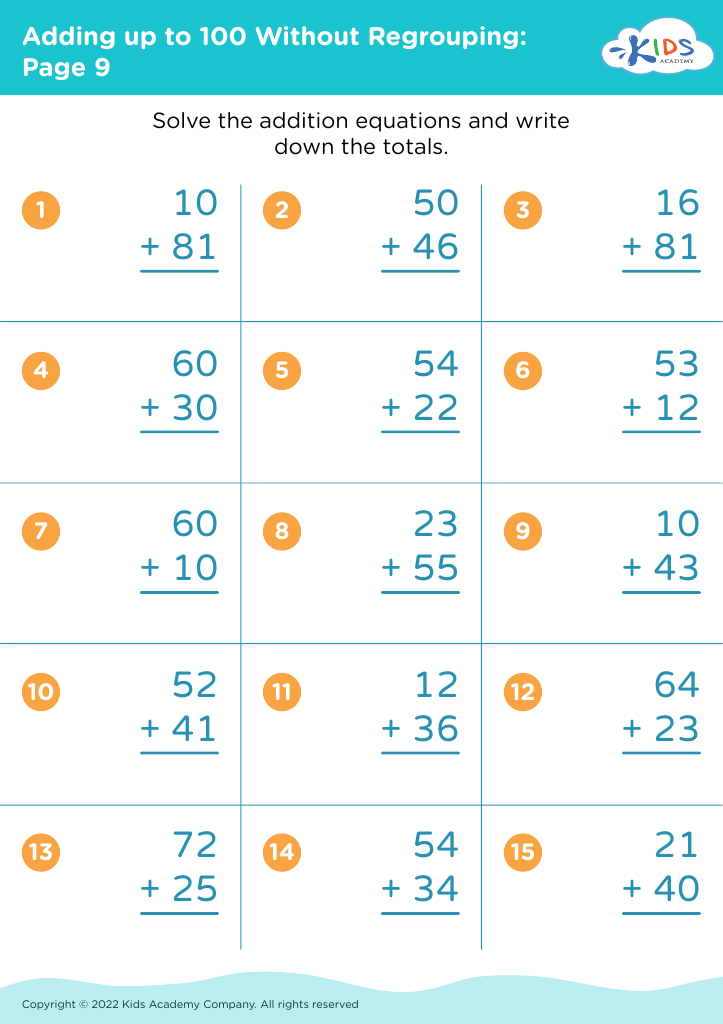
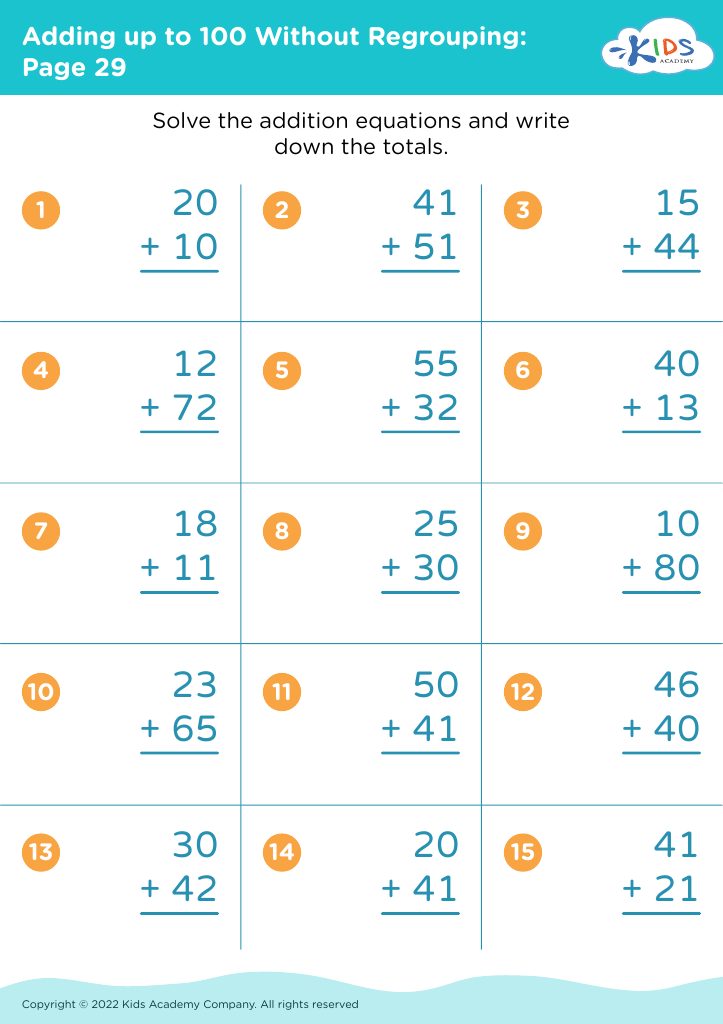
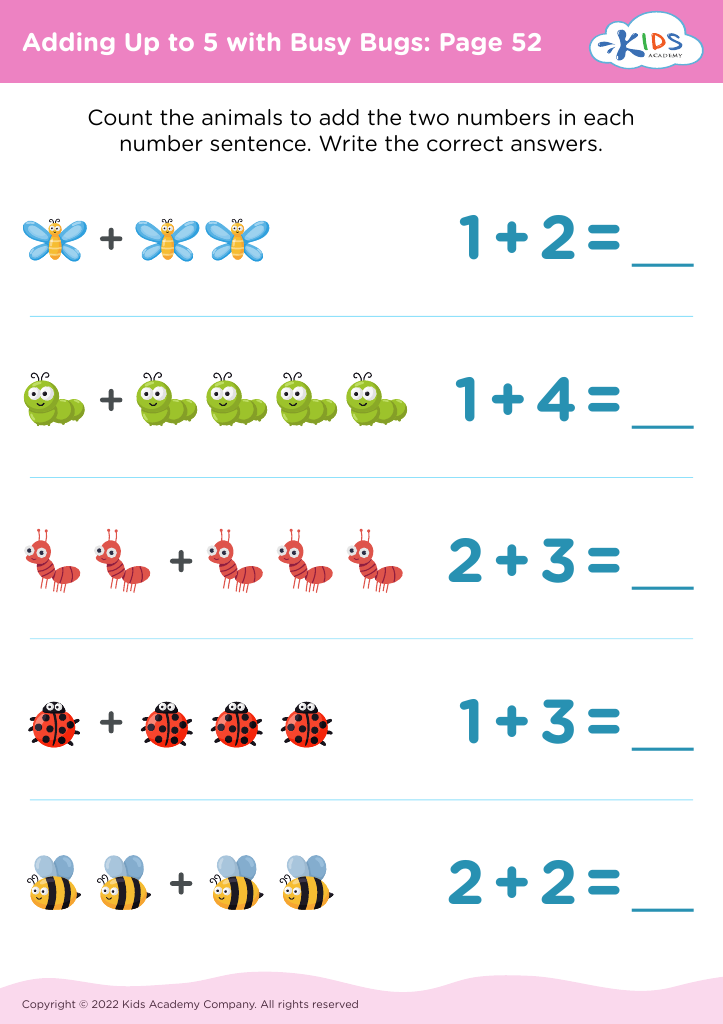
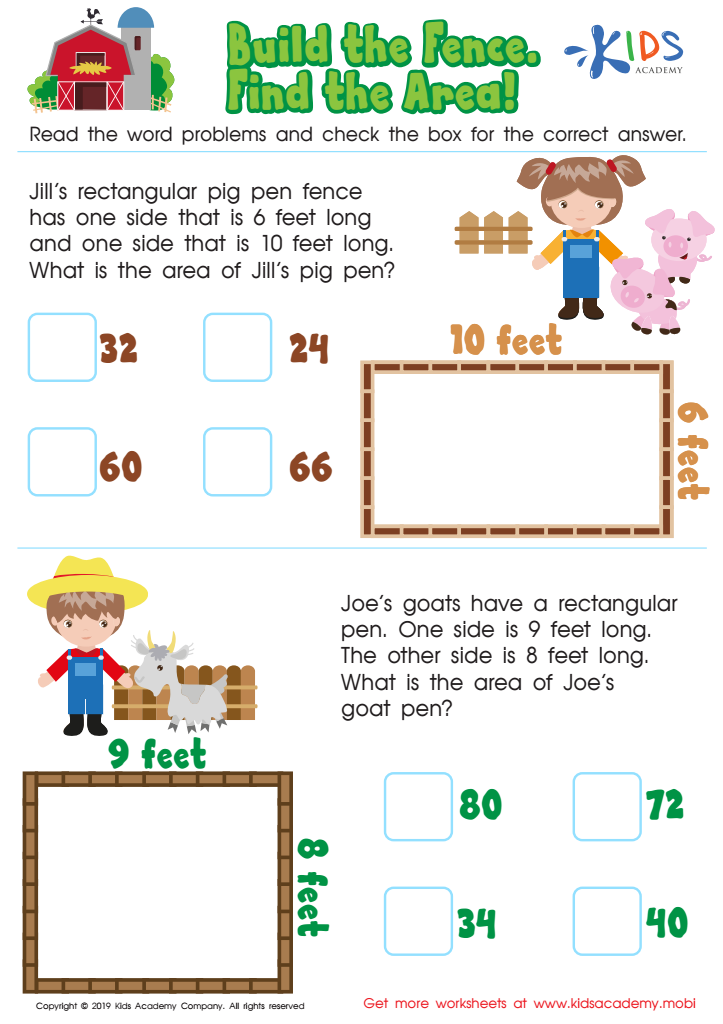
Build the Fence, Find the Area Worksheet
 Assign to My Students
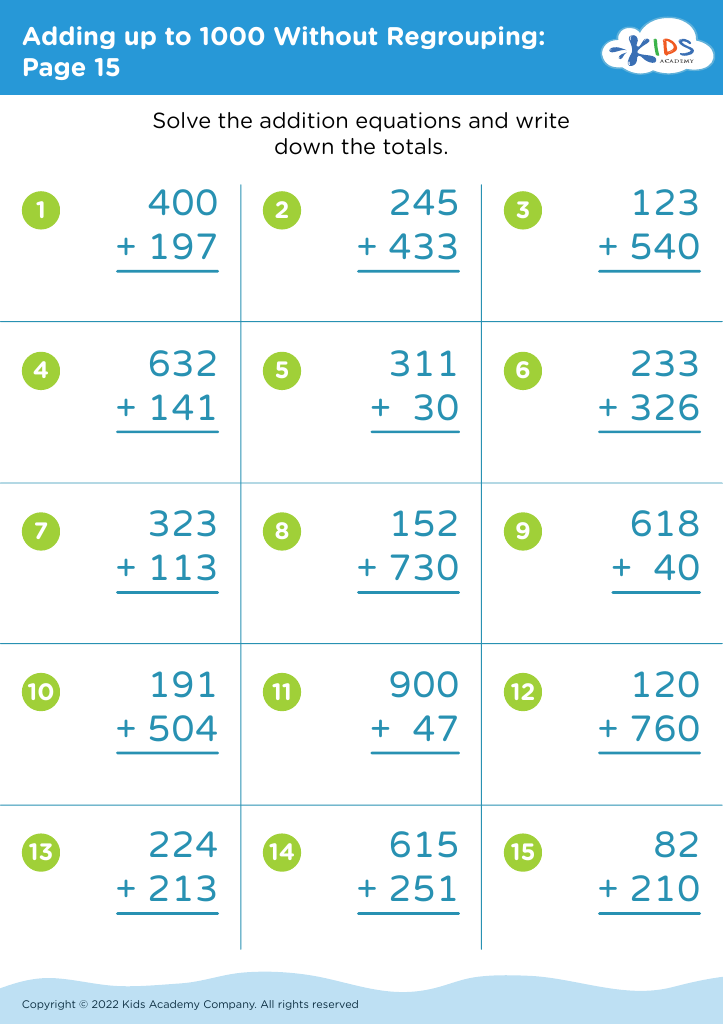








Problem-solving skills are essential for young learners, making it crucial for parents and teachers to prioritize their development, especially in topics like addition. Firstly, strong problem-solving skills lay the foundation for mathematical understanding; they help children identify and analyze problems, enabling them to approach addition with confidence and creativity. As children learn to break down complex problems into manageable steps, they become better equipped to tackle a wide range of challenges, both academically and in real-life situations.
Moreover, problem-solving fosters critical thinking and decision-making abilities, which are increasingly important in today’s rapidly changing world. Children who are adept at problem-solving are more resilient and resourceful, traits that will benefit them beyond the classroom.
Additionally, collaborative problem-solving encourages communication and teamwork among peers, helping to build social skills that are vital for their personal development. Teachers and parents play a key role in providing supportive environments that nurture these skills by incorporating engaging scenarios in lessons and fostering a growth mindset.
Ultimately, prioritizing problem-solving skills in addition not only enhances a child’s mathematical aptitude but also equips them with life skills that will serve them throughout their educational journey and beyond.








