Reading clocks Addition Worksheets
3 filtered results
-
From - To
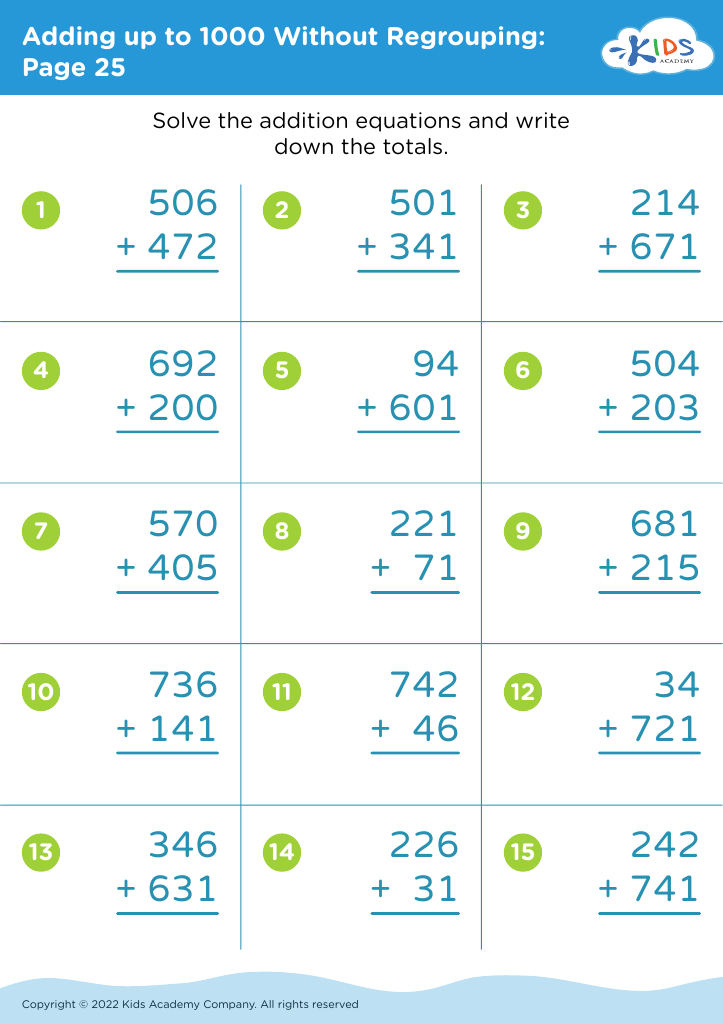
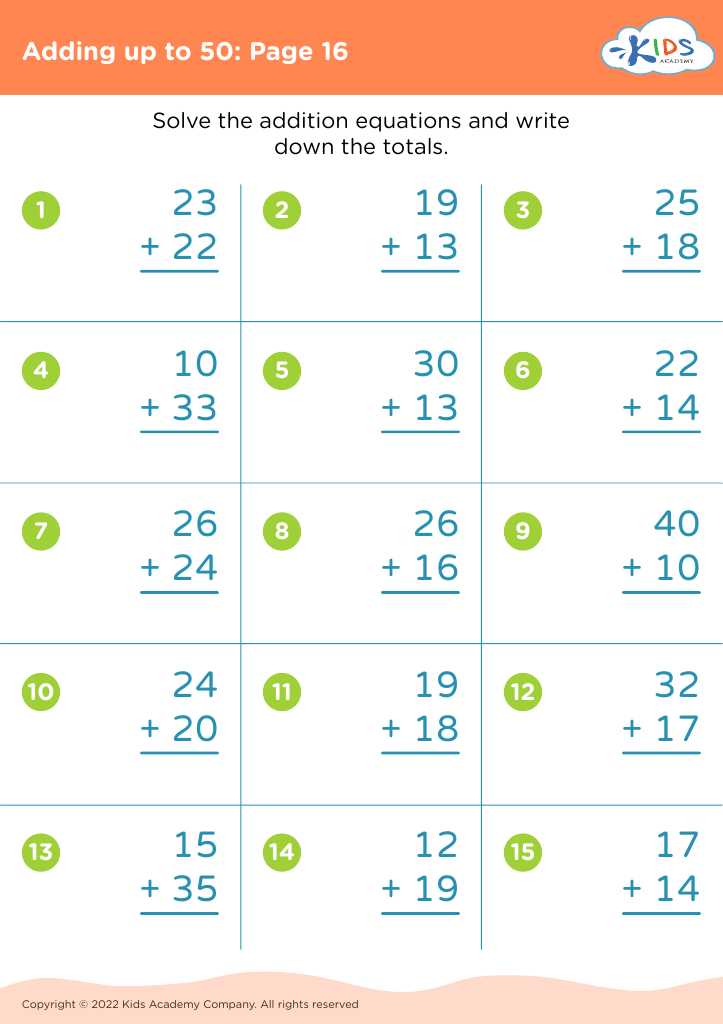
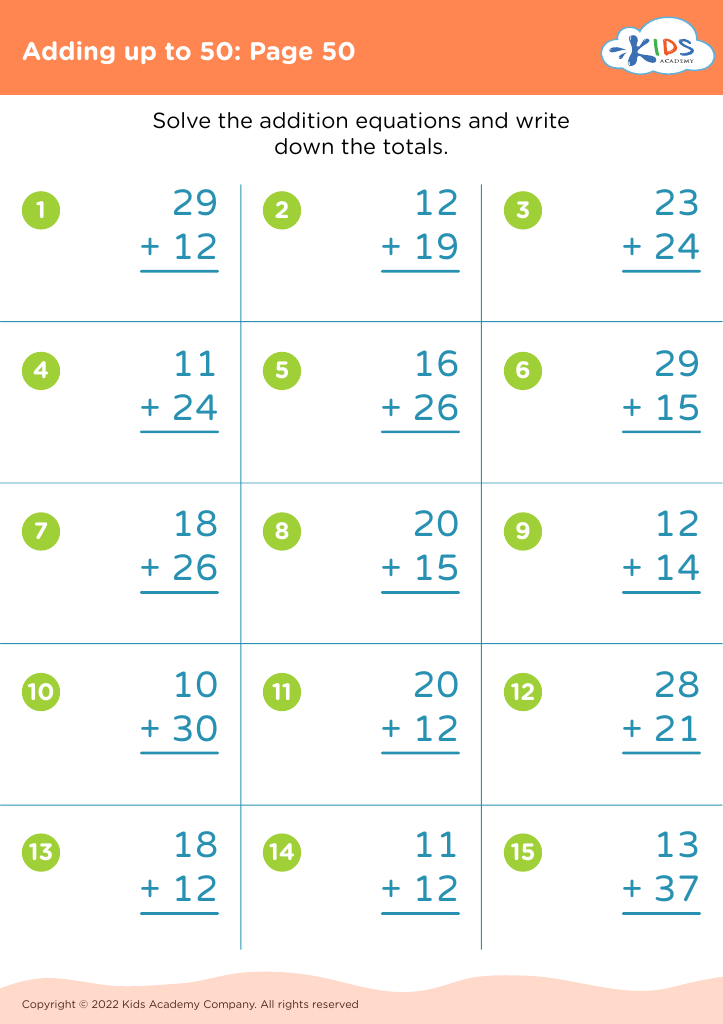
Unlock the world of time-telling with our "Reading Clocks Addition Worksheets" at Kids Academy! These engaging worksheets help young learners practice reading analog clocks while strengthening their addition skills. Designed for early grade students, each worksheet offers a fun and educational way to combine math and time-reading. Through various exercises, kids will learn to read hours and minutes, translate time to numbers, and perform simple addition problems. Perfect for classroom use or home learning, our worksheets provide an interactive and effective approach to mastering these essential skills. Equip your child with the knowledge confidence they need for lifelong learning!






.jpg)

Understanding how to read clocks is a fundamental life skill that helps children grasp the concept of time management and navigate daily routines effectively. When parents and teachers emphasize reading clocks and learning basic addition, they lay the groundwork for a child’s academic and social success.
Firstly, time-telling skills foster independence. Children who can read clocks can manage their schedules, understanding when it’s time for school, homework, or play. This builds a sense of responsibility and enables them to develop good time management skills, crucial for lifelong success.
Secondly, combining learning to read clocks with addition exercises strengthens cognitive development. Recognizing numbers, understanding sequences, and performing simple arithmetic engage different parts of the brain, promoting better problem-solving abilities and enhancing overall math proficiency crucial for future education.
Moreover, these skills are interconnected with everyday activities. Punctuality in school and extracurriculars hinges on telling time accurately. Addition, closely knit with numerical literacy, is foundational for more advanced math concepts and critical thinking exercises.
Lastly, fostering these skills early bridges knowledge gaps and boosts confidence. As children master telling time and simple arithmetic, they gain a sense of achievement, encouraging a positive attitude towards learning. Therefore, by integrating these essential skills into a child’s learning journey, parents and teachers support comprehensive mental and academic growth.








