Recognize shapes Addition Worksheets
9 filtered results
-
From - To
Discover our engaging Recognize Shapes Addition Worksheets, designed to help young learners develop essential math skills while exploring basic shapes. These worksheets feature vibrant illustrations of various shapes, fostering shape recognition as students practice addition. Ideal for early childhood education, our printable resources are created to make learning fun and interactive. Encourage your students to identify, sort, and add shapes through a variety of exercises that reinforce both math and visual perception. Perfect for classroom reinforcement or at-home practice, these worksheets support a well-rounded mathematical foundation, making learning exciting for children. Begin the journey of math mastery with our fun shape addition activities!
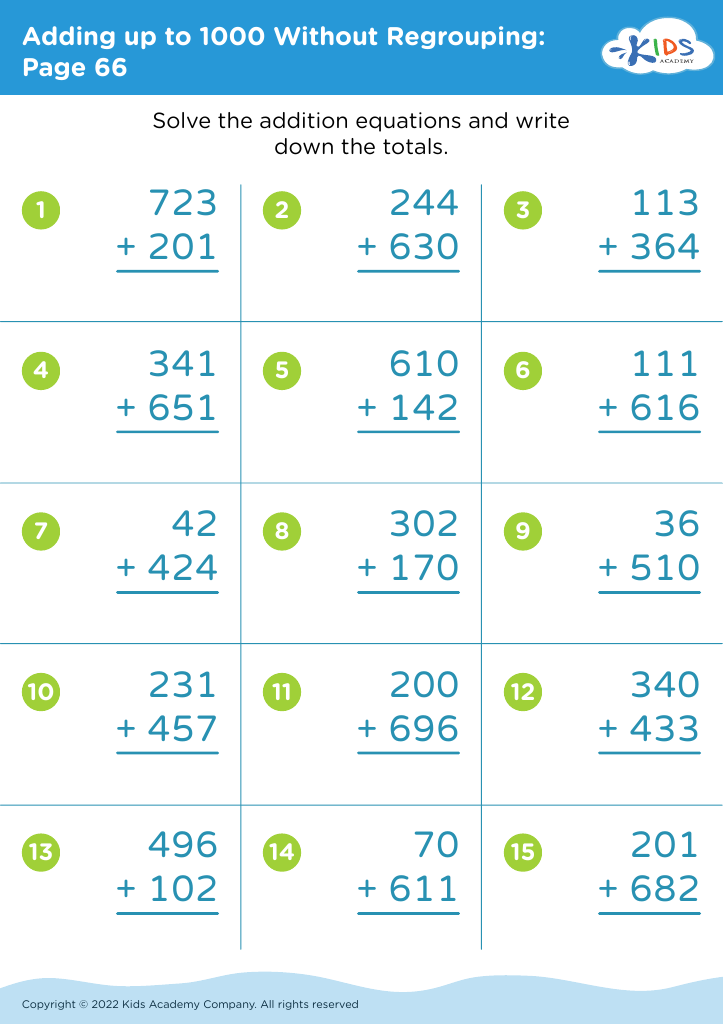
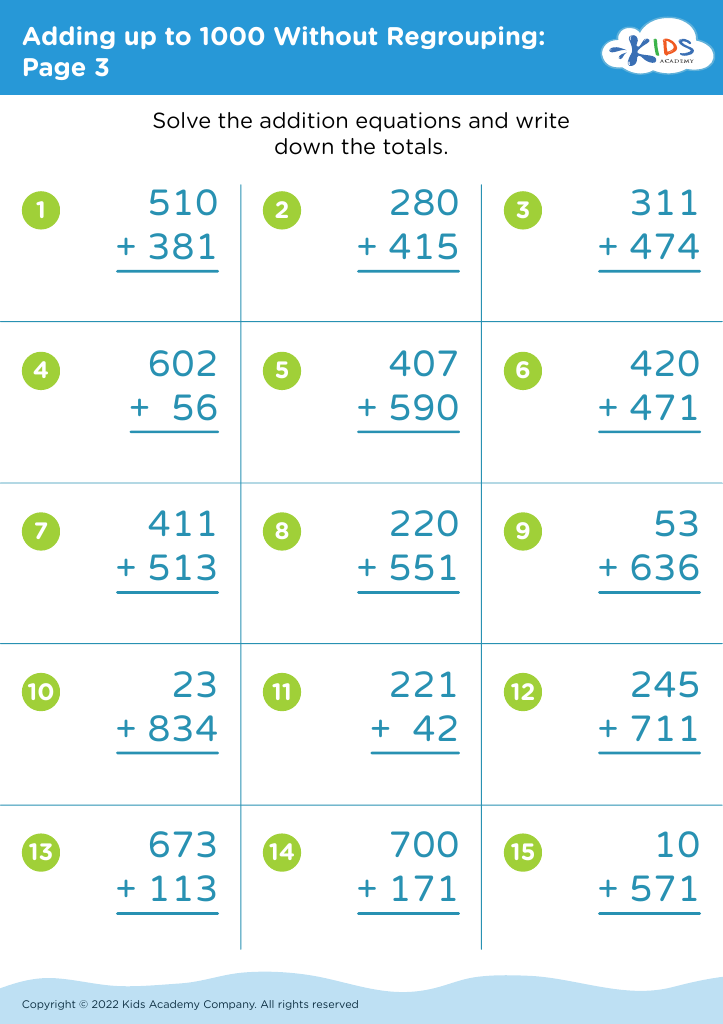
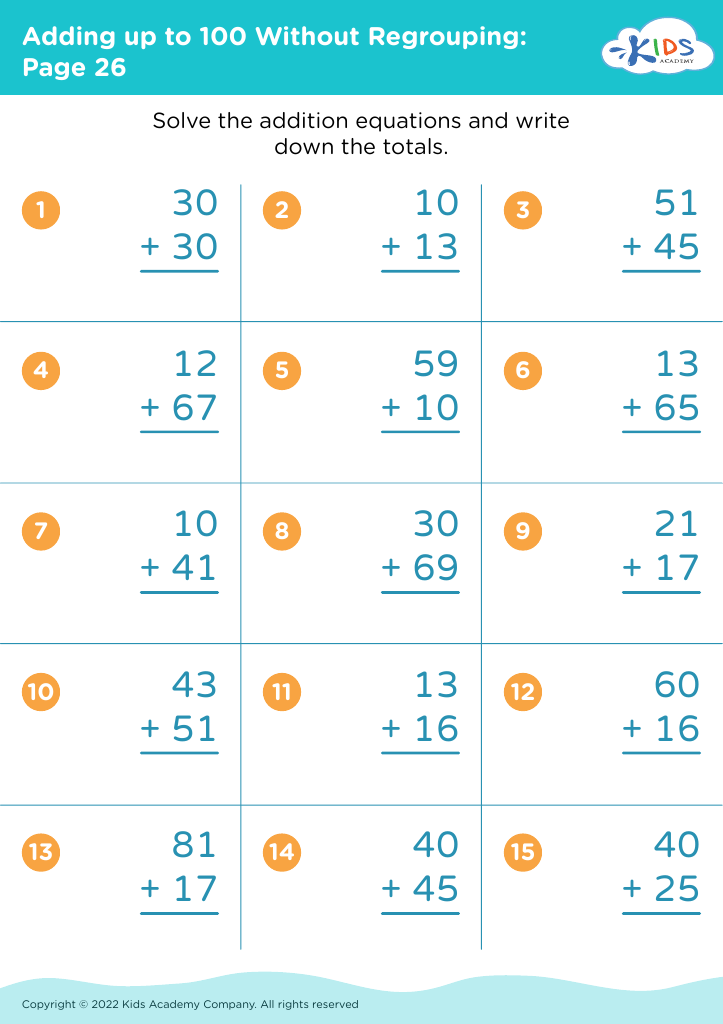
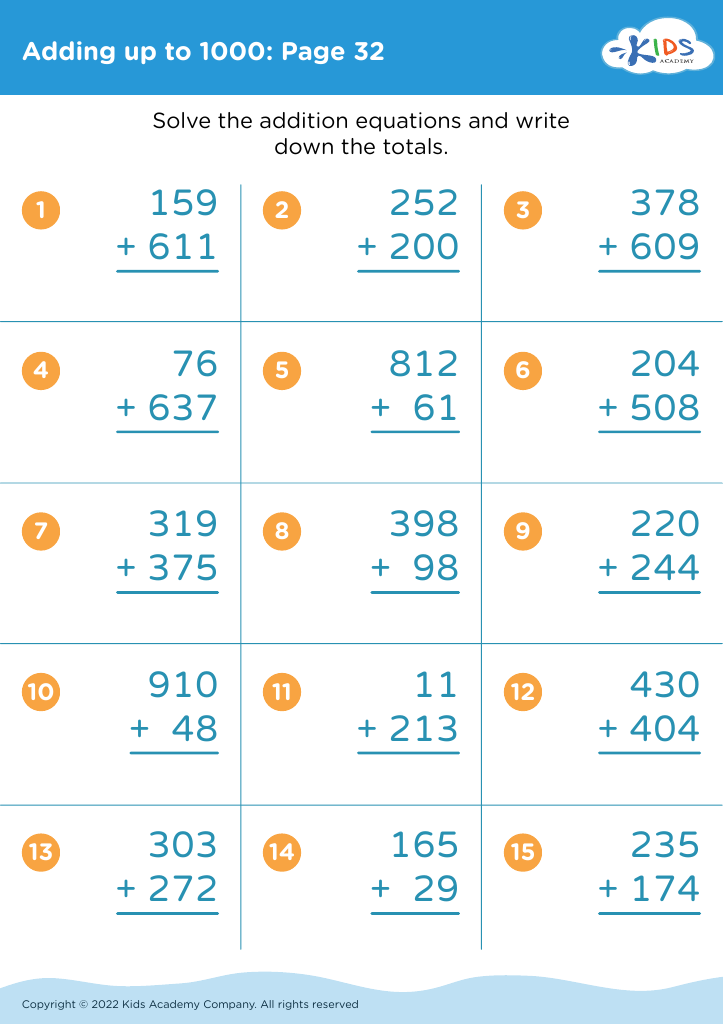
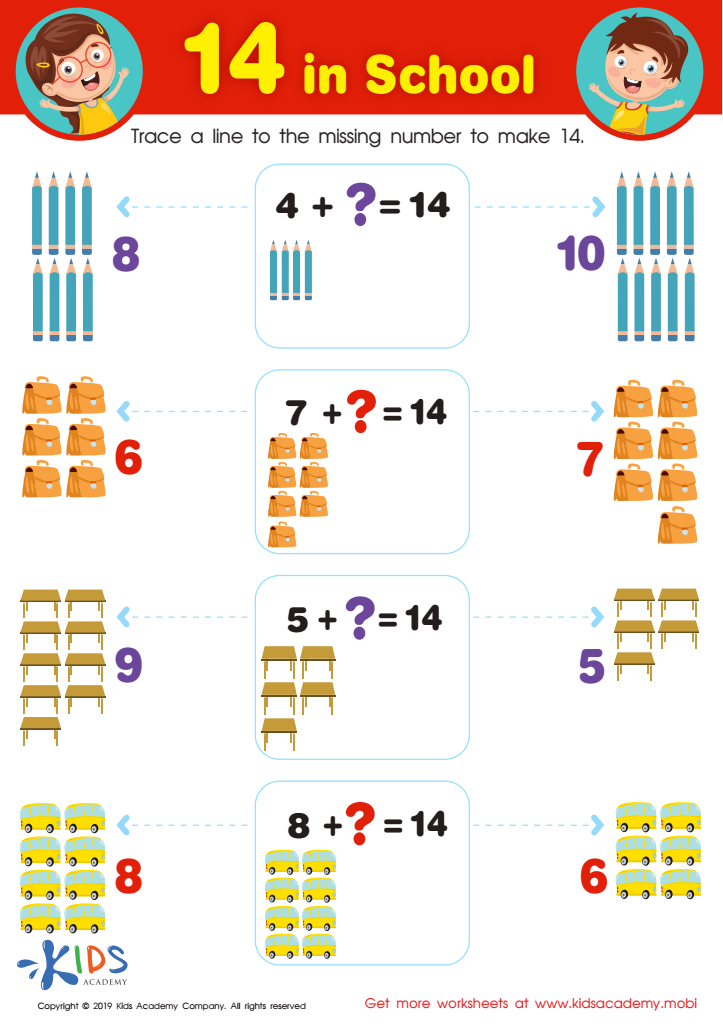
14 in School Worksheet
 Assign to My Students



.jpg)




Recognizing shapes and understanding addition are foundational skills in early childhood education. Parents and teachers should care about these concepts because they are critical for a child’s cognitive development and future learning.
Firstly, recognizing shapes helps children make sense of the world around them. Shapes are everywhere—in architecture, nature, and everyday objects. By identifying and categorizing shapes, children enhance their observation skills, boost spatial awareness, and develop problem-solving abilities. These skills are essential as they form the basis for more advanced mathematical concepts later in life.
Moreover, addition is one of the primary building blocks of mathematics. Early experiences with addition, such as counting objects or combining sets of shapes, lay the groundwork for understanding more complex arithmetic. Mastery of this skill promotes numerical fluency, enabling children to tackle future arithmetic challenges with confidence.
When parents and teachers actively engage in promoting shape recognition and addition, they contribute to a child’s overall academic success. Encouraging playful activities that integrate these concepts fosters an enjoyable learning environment while ensuring children develop essential skills for future academic and life endeavors. Thus, prioritizing shape recognition and addition is vital for empowering children to thrive in mathematics and beyond.








