Understand sequences Addition Worksheets
5 filtered results
-
From - To
Explore our "Understand Sequences Addition Worksheets" to enhance your child's math skills! These engaging worksheets simplify the concept of addition by introducing sequences, helping young learners recognize patterns and improve their problem-solving capabilities. Each worksheet is designed to be interactive and enjoyable, promoting a deeper understanding of addition in various contexts. As children complete these activities, they will build confidence in their math abilities while developing critical thinking skills. Perfect for reinforcing classroom learning at home, our worksheets cater to early graders, making math fun and accessible. Start your child’s journey to mastering addition sequences today!
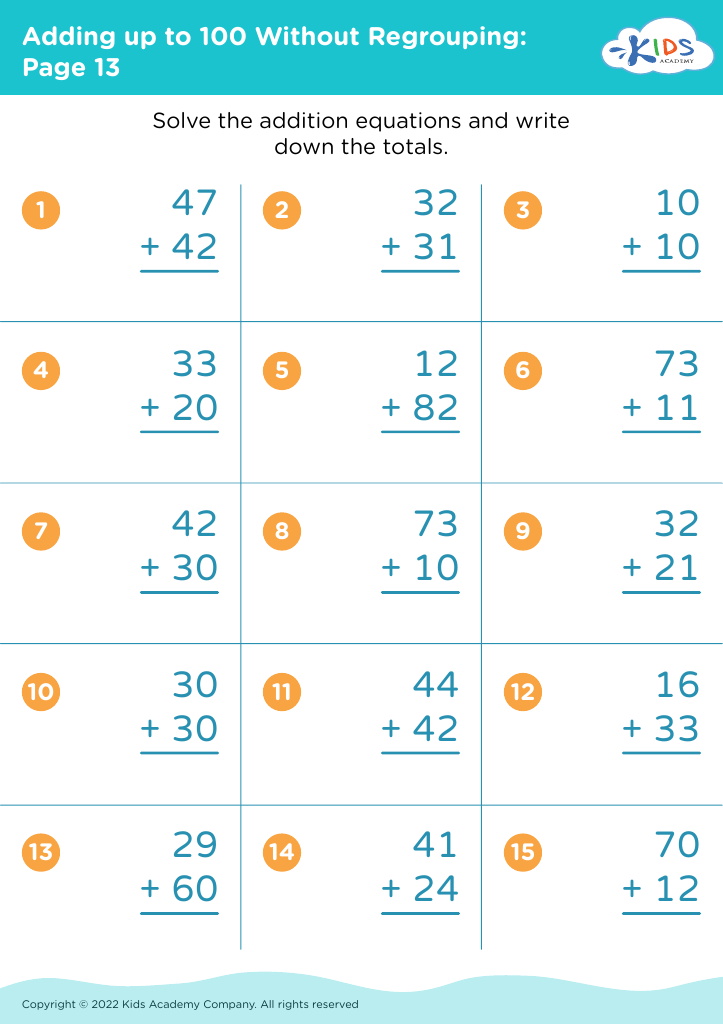
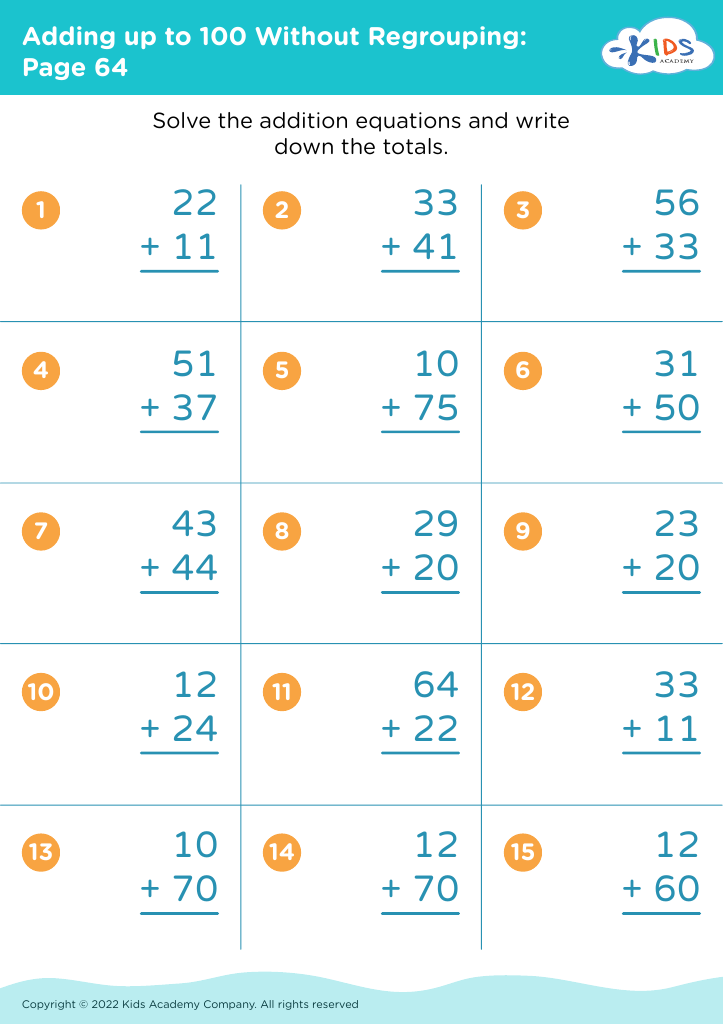
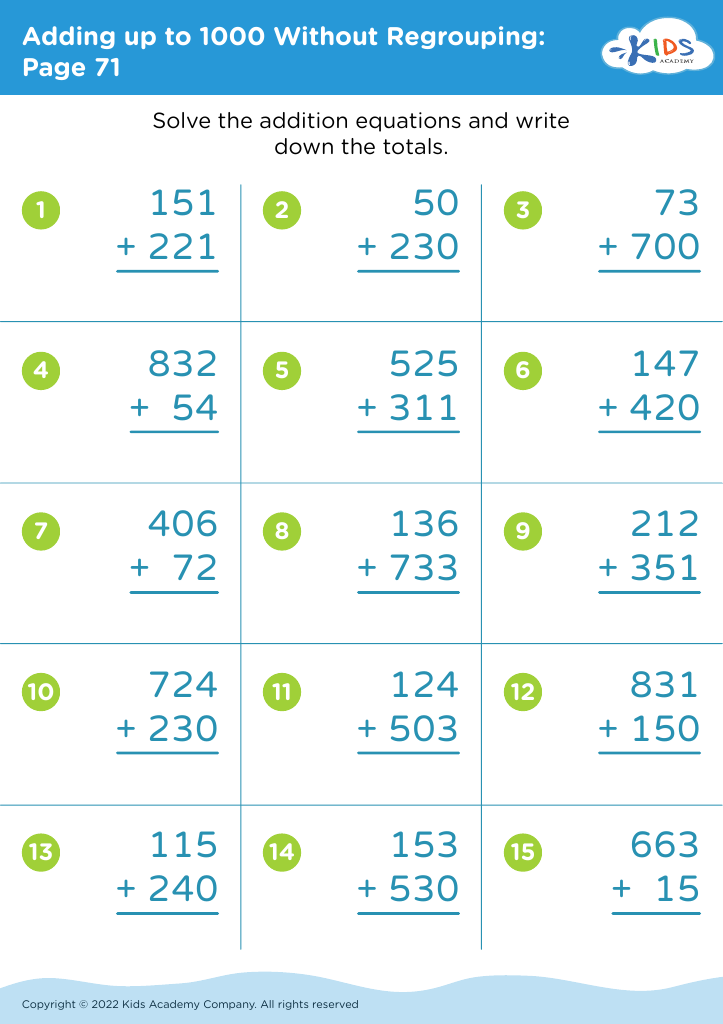
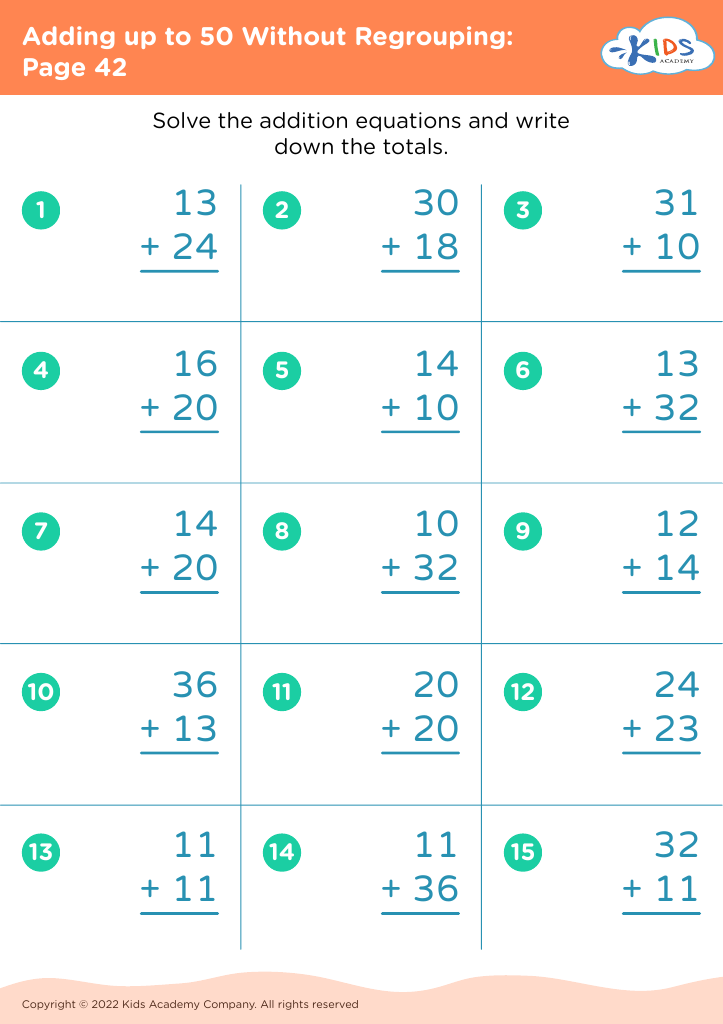
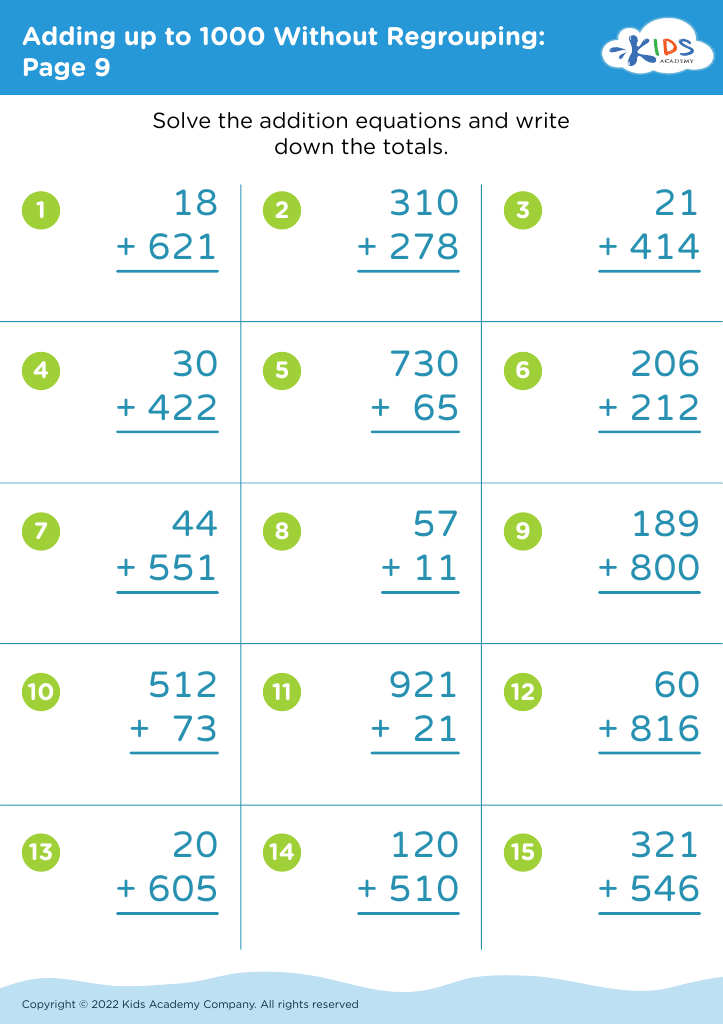








Understanding sequences in addition is fundamental for children's mathematical development and cognitive growth. When parents and teachers emphasize the concept of sequences in addition, they help students grasp the foundational idea of numbers working together, which enhances their problem-solving skills. Sequences encourage children to see patterns in numbers, promoting a deeper understanding of how addition works rather than rote memorization.
This comprehension is crucial as it lays the groundwork for future mathematical concepts, such as multiplication and algebra. By recognizing patterns and sequences, children can predict outcomes and engage more readily with numbers, fostering confidence in their math abilities.
Moreover, teaching sequences aids in improving mental math skills, enabling learners to perform calculations more efficiently. This is especially beneficial as they progress to more complex arithmetic and real-world applications.
In addition, comprehension of sequences supports logical reasoning. As children learn to identify and extend patterns in sequences, they cultivate critical thinking skills that are applicable across various areas of learning. Hence, caring about understanding sequences in addition equips children with essential mathematical and cognitive tools, setting them on a path to academic success and lifelong learning.








