Understanding sequencing Addition Worksheets
7 filtered results
-
From - To
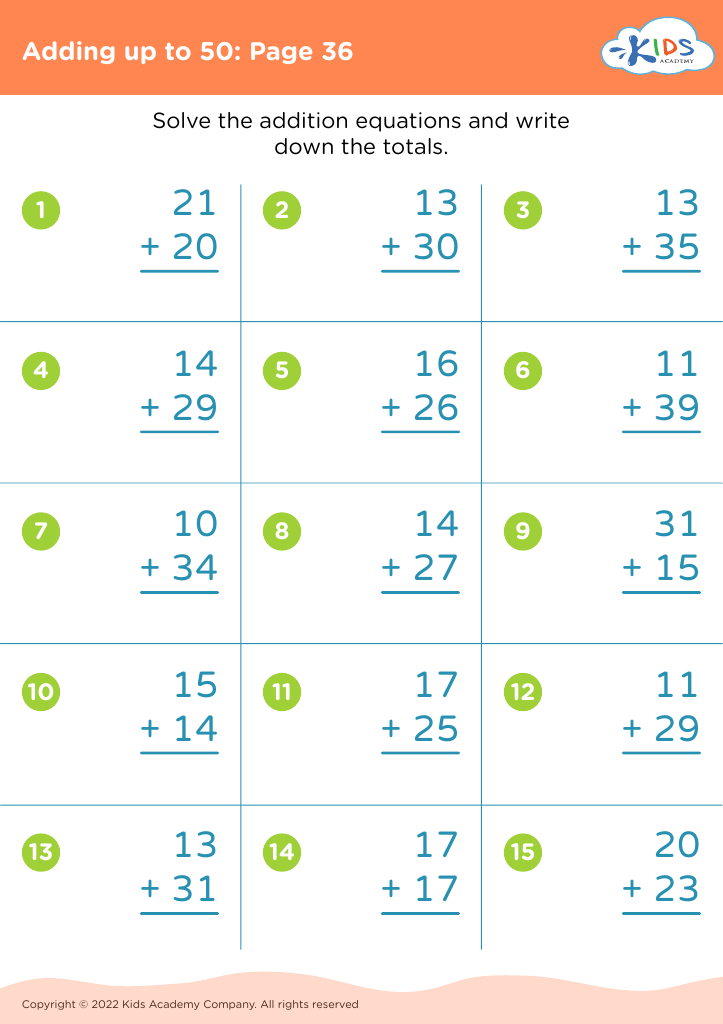
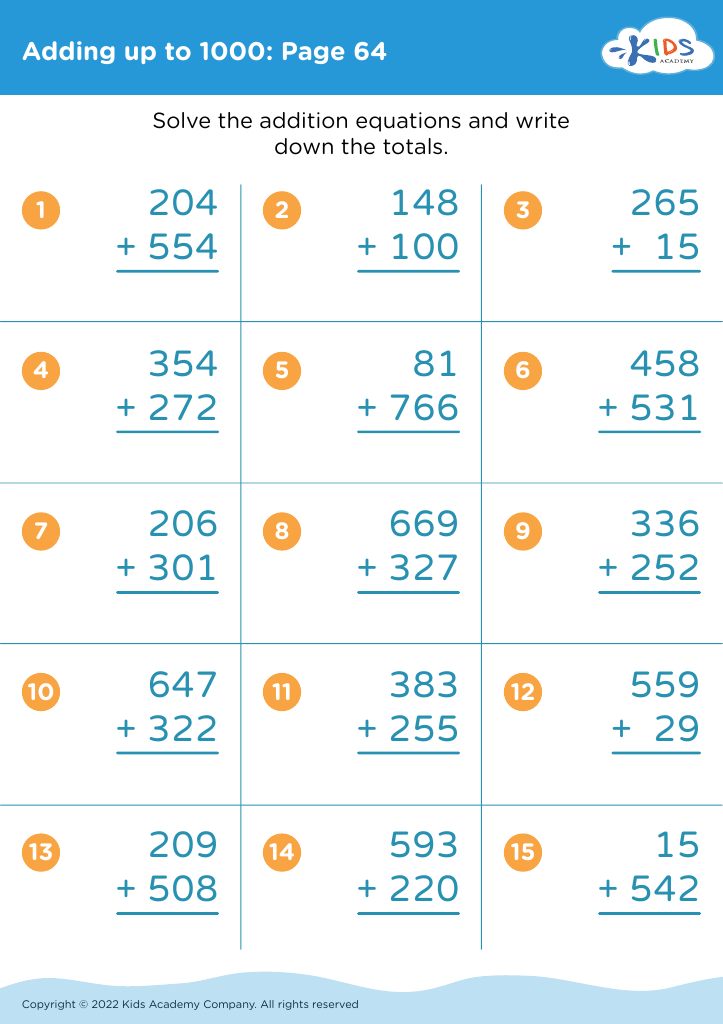
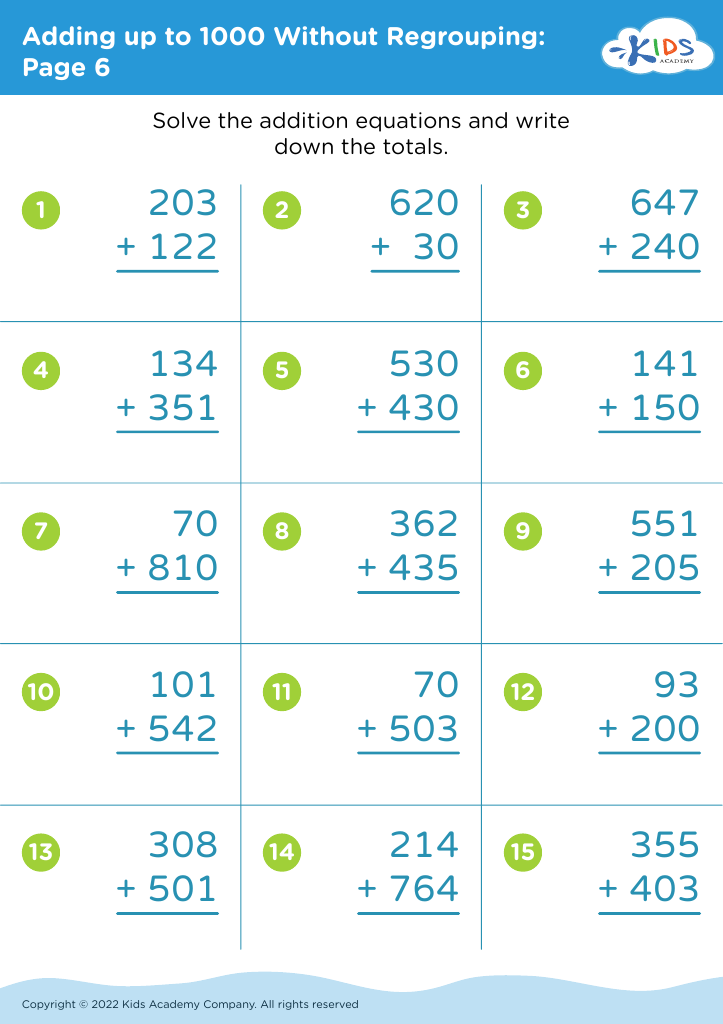
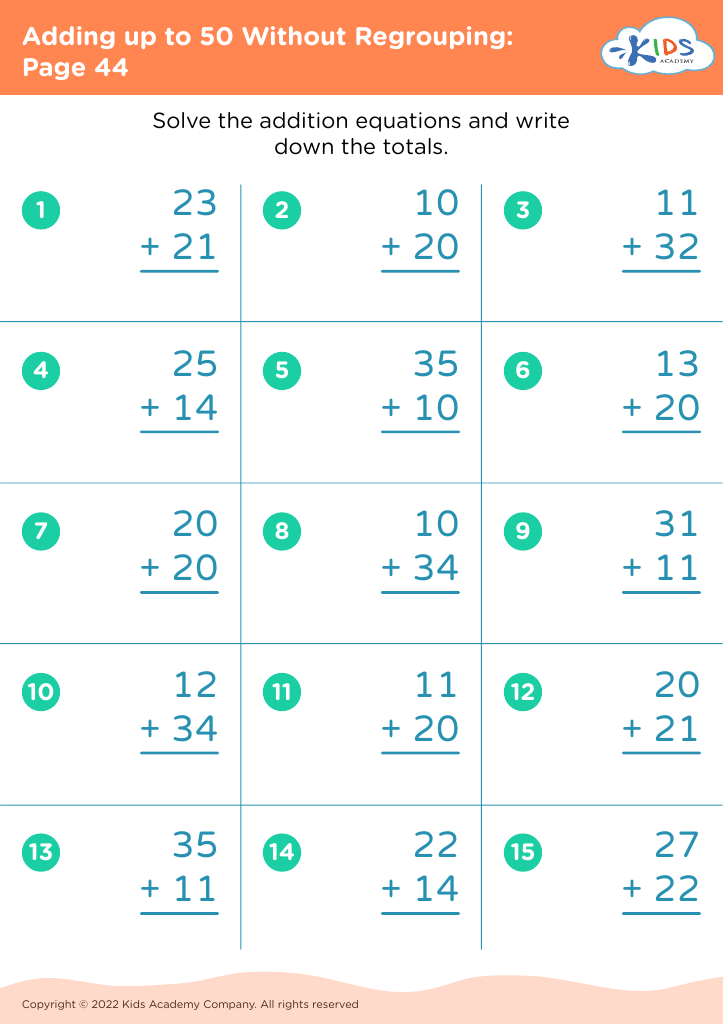
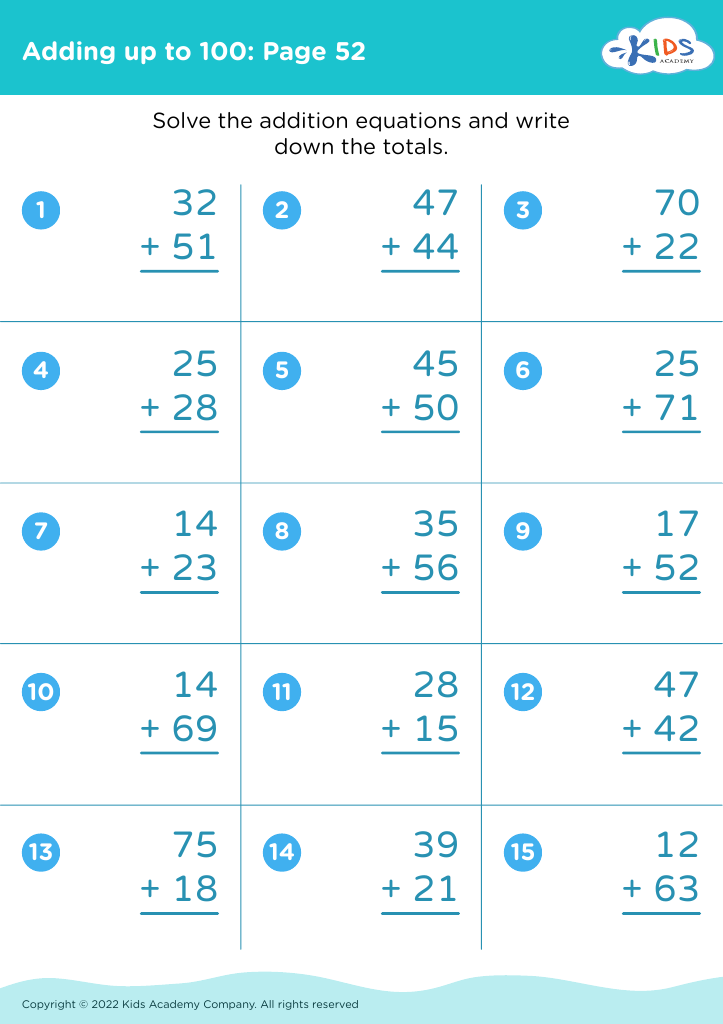
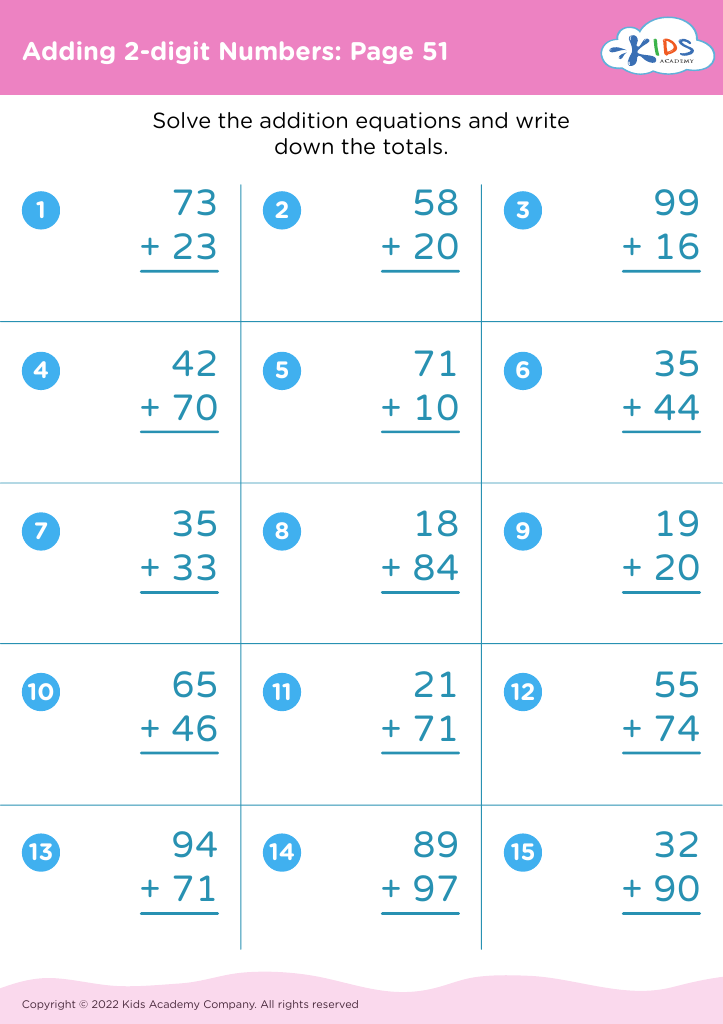
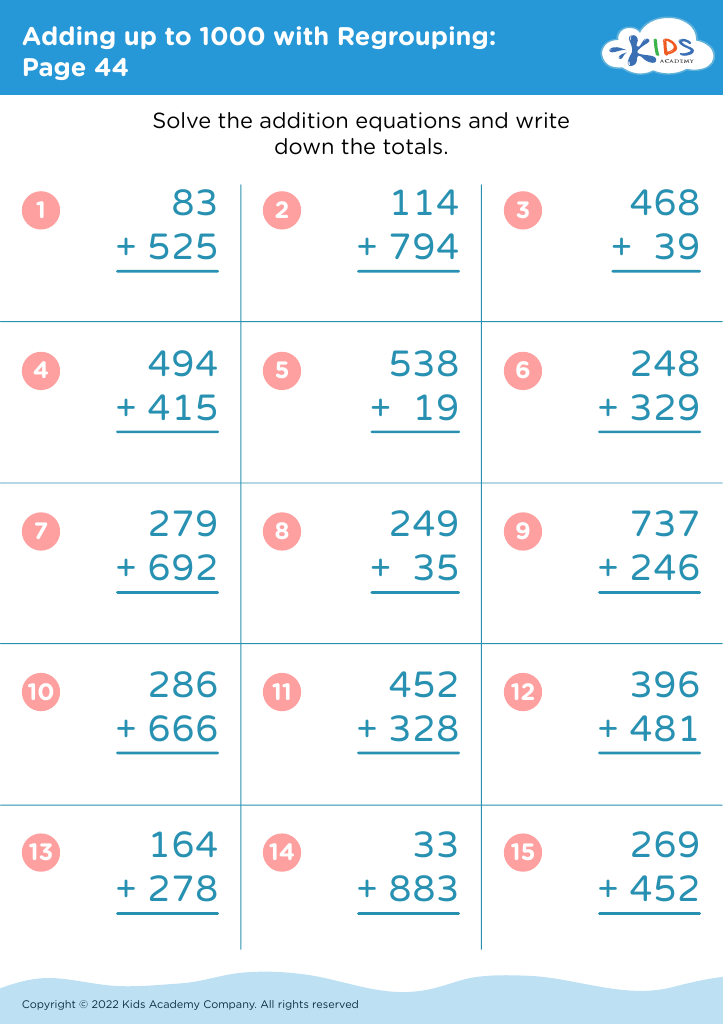
Understanding Sequencing Addition Worksheets are essential tools designed to enhance children's mathematical skills. These engaging worksheets help young learners grasp the concept of sequencing in addition through fun, interactive exercises. Students get to reinforce their understanding of number order and arithmetic while solving problems that gradually increase in complexity. Each worksheet is crafted to build foundational skills such as logical thinking, problem-solving, and number sense. Ideal for both classroom and home use, these worksheets ensure that kids gain confidence and proficiency in addition, setting them on a path to mastering more advanced math concepts in the future.





.jpg)


Understanding sequencing addition is crucial for young learners because it builds a strong foundation for their overall mathematical development. For parents and teachers, knowing how sequencing addition works enables them to better support children's learning journeys in essential ways.
Firstly, sequencing addition teaches children about the order and structure in mathematics. Comprehending that numbers follow a specific sequence helps them solve mathematical problems accurately. This grasp of order extends beyond mathematics in nurturing logical and critical thinking skills essential for all academic subjects.
Organization and consistency in learning are fostered through sequencing addition. These kids practice step-by-step addition, solidifying their ability to adhere to problem-solving methods systematically. It prepares them for complex arithmetic operations such as multiplication and division, laying the groundwork for advanced math topics.
Moreover, interactive and engaging activities like using visual aids, flashcards, or games within this concept can make learning enjoyable and effective. These tools cater to diverse learning styles, ensuring early skill acquisition. As children achieve success in sequencing addition, their confidence and motivation towards math grow, fostering a positive, lifelong relationship with learning and problem-solving.
Thus, a focus on sequencing addition by parents and teachers can immensely boost a child's cognitive and academic growth while making learning an enjoyable experience.








