Underwater animal identification Addition Worksheets
3 filtered results
-
From - To
Discover the magic of math with our Underwater Animal Identification Addition Worksheets. Perfect for early-grade learners, these engaging tools blend imaginative underwater scenes with essential addition exercises. Dive into a world of colorful sea creatures while reinforcing math skills in a fun and interactive way. Each worksheet is designed to capture young minds, helping them practice addition while identifying various aquatic animals. Ideal for classroom use or at-home practice, our worksheets make learning math exciting and relatable. Equip your child with the foundations of addition through an adventurous and educational underwater journey! Download now and start the adventure!
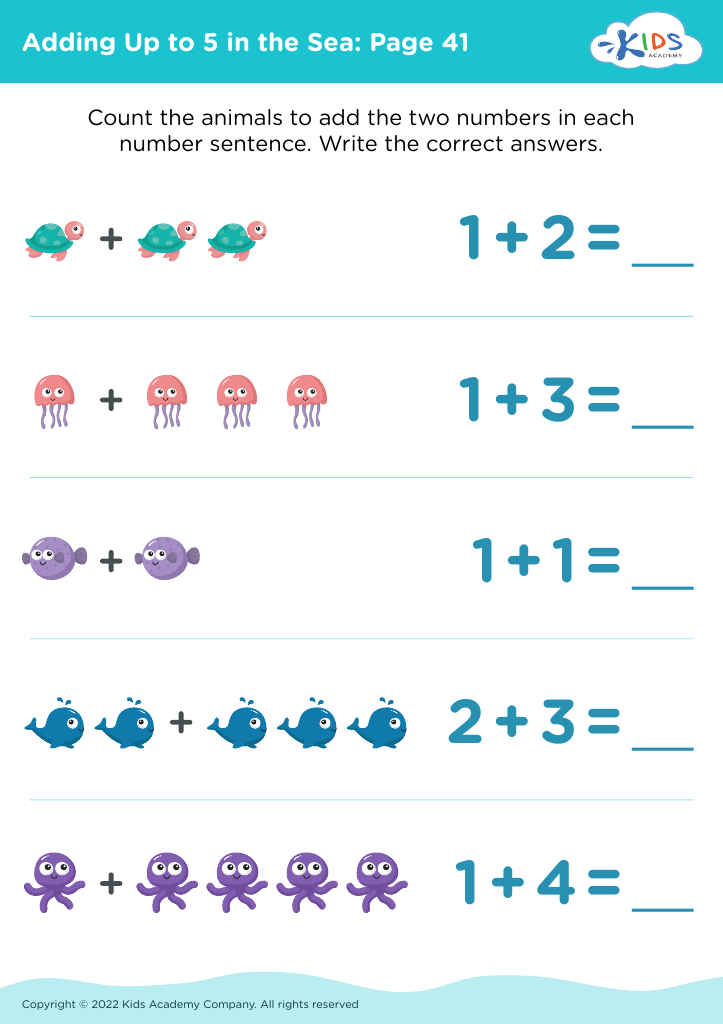
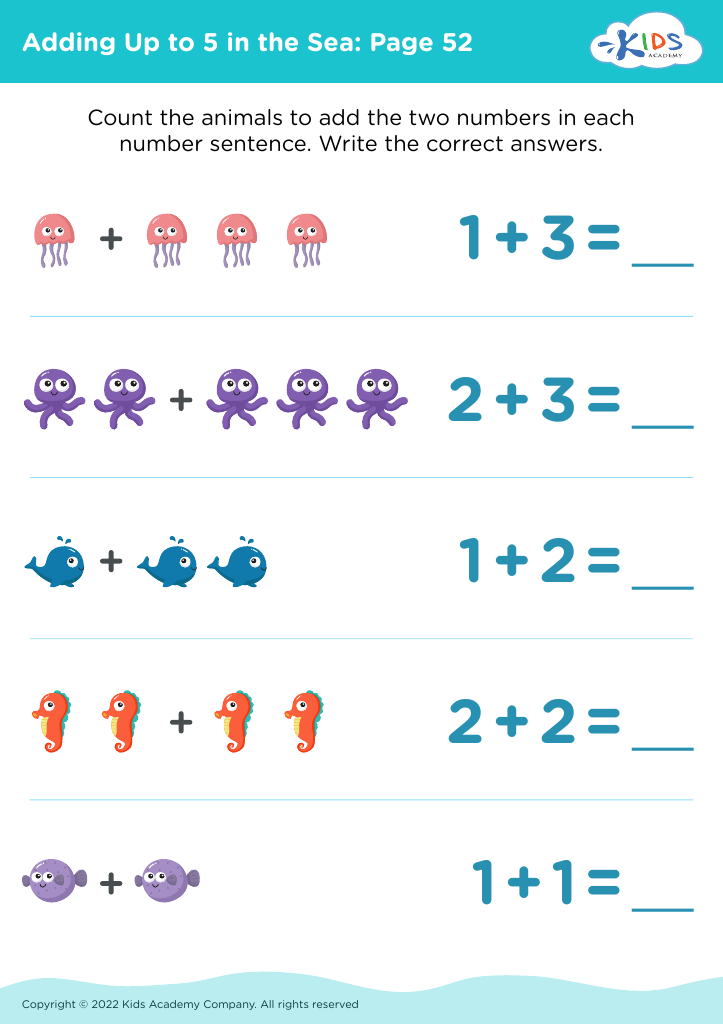
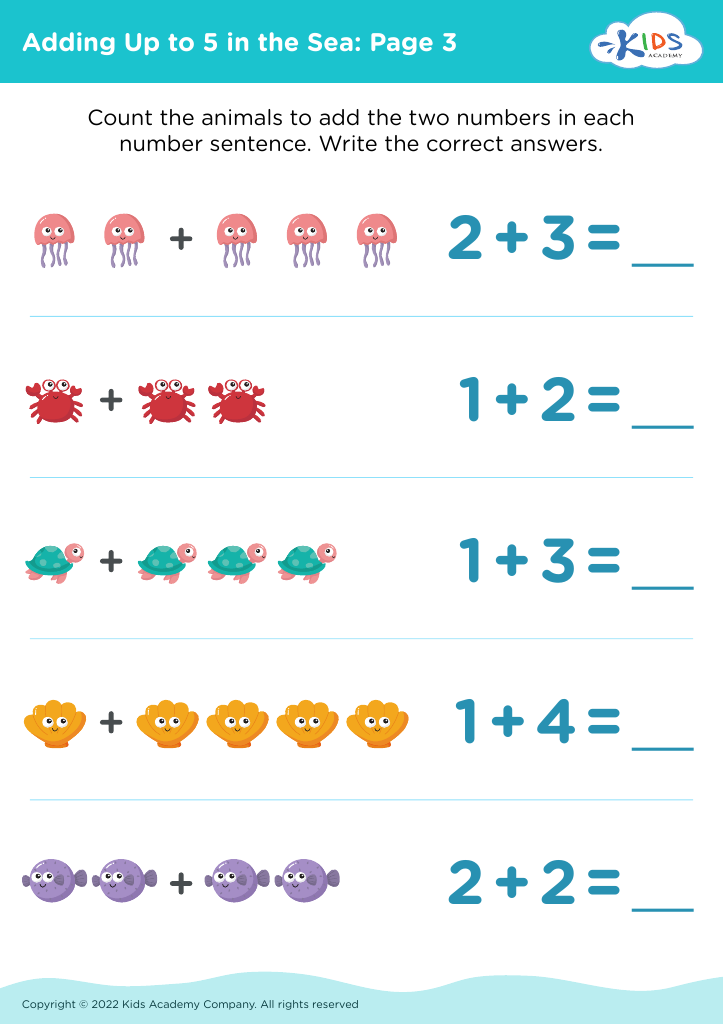








Understanding and engaging with underwater animal identification addition holds immense value for both parents and teachers, providing rich educational benefits and fostering environmental stewardship in young minds.
From an educational standpoint, identifying underwater animals introduces children to marine biology and ecology, sparking curiosity about the natural world. This multidisciplinary approach can enhance skills in science, critical thinking, and observation. Math skills are also reinforced as children practice addition in a context they find engaging and relevant. For example, adding groups of fish or sea turtles can provide a tangible application of addition concepts, making math feel more connected to real-life scenarios.
Environmentally, fostering an early appreciation for marine life can instill a sense of responsibility and stewardship towards nature. Knowing the creatures that inhabit underwater ecosystems helps children understand biodiversity and the importance of conservation. Parents and teachers who emphasize this learning can cultivate a generation that values and strives to protect marine habitats.
Furthermore, such activities can enhance social skills and teamwork, especially in group learning setups. Cooperation, communication, and shared discoveries can forge a communal respect for marine environments. By integrating underwater animal identification into learning experiences, parents and teachers create a holistic educational approach, combining academic growth with environmental consciousness.








